
Building embedding/vectorization models, customized for your domain and company, for better retrieval quality https://xitter.cf/t.co/MEAhTpBQqd
Palo Alto
Joined October 2023
- Tweets209
- Following210
- Followers4K
- Likes207



Pinned Tweet
📢 Introducing rerank-3 and rerank-3-lite, the next generation of Voyage rerankers.
A drop-in upgrade to the Rerank 2.5 series models, with focused improvements on long document and code retrieval.
📈 On standard retrieval, rerank-3 outperforms Cohere Rerank v4.0 Pro by 2.72% and Qwen3-Reranker-8B by 3.02%.
📚 On long document retrieval, rerank-3 outperforms rerank-2.5 by 3.35% and Cohere Rerank v4.0 Pro by 13.84%.
💰 rerank-3-lite now matches the retrieval quality of rerank-2.5 at 40% of the price.
Try it today. The first 200M tokens are free. mongodb.social/6016BGsoXp
Voyage AI by @MongoDB’s Rerank 3 series is now available on @vercel AI Gateway.
Why use a reranker? Search finds candidates. Rerankers bring the most relevant context to the top for your agents. Better context, better answers.
🎯 rerank-3: optimized for retrieval accuracy when precision matters.
⚡ rerank-3-lite: optimized for latency and cost when speed is most important.
Learn more at mongodb.social/6011BG7TRB

Voyage AI by MongoDB retweeted

A few people understandably asked for the receipts here/how I would fix the eval/what embedding models are better.
If you keep the same queries and docs, compare to stronger embedding models, and use GPT 5.6 luna + blitzrank to rank order the top 100 documents given every document returned in the top 100 by any embedding model (or bm25) in the comparison, you get a very different result.
With enough queries, you don't really have to believe that luna's ordering is perfect, just high enough signal to help provide a rank ordered preference for these kinds of queries.
You can use a stronger llm if you want, improve the diversity of the queries, use more realistic docs (no 1k token chunk cutoff) as well but I doubt fixing those things would change the conclusion about the performance of the two open source late interaction models shown in the image (I added Iso-ModernColBERT).
I've also used fastplaid here for late interaction retrieval to side step a discussion about how accurate MUVERA is for each model. FastPLAID recall should be good enough that it's not the issue and it allows us to look at the effects of quantization.
voyage-context-4 dominates the agreement@20 vs storage space pareto frontier and is also the highest performing model on this eval (and most of my evals...)
you can also evaluate the pareto frontier through the cost of embedding inference. I've just made up some numbers here for the late interaction models bc they're not available via api. You could probably lower the inference cost further if you wanted. The others are priced at real api pricing when that is available.
there's nothing special about agreement@20 here. It's just a reasonable quick metric when you're using a search agent, the conclusion doesn't change of you pick ndcg, recall, or other @ values.
generally, I'd say the mLateOn model is doing better on this eval than other times I've benchmarked it. It typically underperform voyage-4-nano for me. Interestingly, the medical fine tune is under performing the base model on this eval.


Quick rant bc this triggered me: this is unfortunately wildly misleading and incorrect.
In this eval, the candidates retrieved by each model are never evaluated to determine which returned the most relevant results...
Synthetic queries were generated with GPT 3.5 turbo, GPT-4-0613 (from 2023) was used to ensure that the chunks GPT 3.5 turbo used to generate those queries were actually factually accurate. And then it's assumed that there are no other chunks in the corpus that are better answers to the generated query. You can't even use this approach to produce good training data for an embedding model bc way too much of the time there's a better positive chunk in the corpus. You have to use better llms, a better synthetic query generation pipeline, and apply sensible filtering on those just to get usable training data, much less an eval...
These synthetic queries are also unusual in that there's clearly v high lexical overlap between the synthetic queries and the document chunks they were generated from (you can see this in how well bm25 does on the problematic eval).
And then none of the strongest "single vector" embedding models are included in the benchmark. Voyage-4-nano is good for its size but not being evaluated properly here.
When you fix this, every conclusion flips. The models at the bottom of this plot all start out performing the late interaction models and bm25.
I've never been able to actually recommend a late interaction model to anyone bc, without exception, they have underperformed the state of the art in dense embedding models every time I've benchmarked them.
I'm not talking about a plausible future state in retrieval. I'm not talking about what might someday happen if people train better late interaction models or a paper where they use the same training data, same compute and same param count. I'm talking about you building an app that needs good search where you're asking me to help you pick either a base to fine tune or the best off the shelf model for your task. There's almost a 0% chance you should consider using a late interaction model today. There are exactly 0 competitive open source late interaction models when you compare to the current state of the art "single vector" embedding models and it's not remotely close folks. Pls don't be confused by these terrible benchmarks.
It's not that I don't think late interaction models could someday be good if someone training one on a large, strong dataset. It's a cool idea. We need lots of different ideas to blossom but then we need to accurately assess which techniques are currently going to give builders the best results. But today, the available open source late interaction models are not good.
Today, we're excited to announce the public preview of data residency in Europe for the Atlas Embedding and Reranking API Service (ERAS).
European teams can now use Voyage AI embedding and reranking models through @MongoDB Atlas while keeping inference within the selected Europe geography—helping organizations meet data-residency requirements while building accurate AI-powered search and retrieval. mongodb.social/6010B1Af7A
We've partnered with @FireworksAI_HQ to bring Voyage AI models to their dedicated inference platform.
That means embed, retrieve, rerank, and generate all in one place, right alongside the open models you're already running. mongodb.social/6012B1suFy
voyage-code-4 is now available on @awscloud SageMaker Marketplace.
Our latest code embedding model is built for retrieval across codebases. State-of-the-art code embeddings now deployable directly in your AWS environment.
mongodb.social/6017B1sugP
Coding agents issue dozens of context-fetch calls per task across multi-file, evolving repos. Most embedding models were never trained for that.
📢 Introducing voyage-code-4 — trained on retrieval patterns from real issue-fixing pull requests. 32K context.
📈voyage-code-4 outperforms Cohere Embed v4 and Gemini Embedding 2 by an average of 28.25% and 31.03% on agentic code retrieval
Get started with voyage-code-4: mongodb.social/6018B1PJwy

We're excited to share that Voyage AI has joined OpenRouter! 🚀
Developers can now tap into Voyage's embedding and reranking capabilities through @OpenRouter's single, unified API which makes it easier than ever to bring high-quality retrieval into your stack.

You should not have to think about chunking.
voyage-context-4 makes that possible.
With auto-chunking, no 32K ceiling, and built-in overlap support, it delivers 2.1% better retrieval than voyage-context-3 at 33% lower cost.
A strong fit for retrieval over long documents and agent context engineering.
Learn more: mongodb.social/6013BDaj1v
🏆 VoyageAI just won the 2026 AI TechAward for Best Innovation in RAG Enablement!
voyage-4-large delivers frontier-level retrieval accuracy (without the compute bill) thanks to an industry-first MoE architecture and shared embedding space.
We’re incredibly proud of this team and we're just getting started!
Learn more about voyage-4-large ➡️ mongodb.social/6012BBwXos

☁️ Voyage AI + Microsoft @Azure AI Foundry
Voyage AI’s latest models are now available through Azure AI Foundry.
• The Voyage 4 Advantage: Switch between text models without re-indexing thanks to our shared embedding space.
• Enterprise Ready: Scalable deployment on Azure’s secure AI infrastructure.
• Superior Accuracy: Access the flagship voyage-4-large for industry-leading retrieval quality.
Get started with AI Foundry: ai.azure.com/catalog/publish…

The era of embedding models is evolving. 🚀
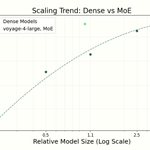
With voyage-4-large, we’ve moved to Mixture of Experts (MoE) to shatter the scaling ceiling.
The results: ✅ Massive drop in inference cost and latency ✅ New frontier for retrieval accuracy.
Curious about how we implement MoE embeddings?
Read the full technical breakdown of how we optimized design choices to push the Pareto frontier: mongodb.social/6017h7EUh

📢 ICYMI: We recently released the Voyage 4 model family.
Voyage 4 features an industry-first shared embedding space, eliminating the need to re-index your data when switching between models in the series.
This breakthrough is designed to solve the trade-off between frontier-level accuracy and production efficiency.

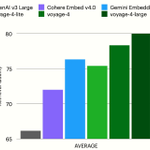
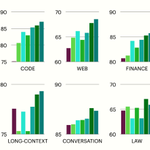
voyage-4-large sets a new accuracy standard, outperforming voyage-4, voyage-4-lite, Gemini Embedding 001, Cohere Embed v4, and OpenAI v3 Large by an average of 1.87%, 4.80%, 3.87%, 8.20%, and 14.05%, respectively.

The first 200 million tokens are free. Learn more in our release blog: mongodb.social/6017hmxNh

Voyage AI by MongoDB retweeted

Forget genres - what if you could search for a movie like this:
“Something uplifting after a rough day”
“A film that’ll make me cry”
In this new tutorial with @huggingface, Arek Borucki takes you through how to build a mood-based recommendation engine using voyage-4-nano and MongoDB Atlas Vector Search.
Give it a try! mongodb.social/6013hmoXl

Building Gen AI prototypes is easy. Scaling them to production is hard.
Our guide shows you how to optimize retrieval for accuracy, speed, AND cost.
Covers asymmetric retrieval using Voyage 4, vector quantization, and Matryoshka Learning.
Link below 👇
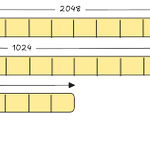
🪆 Matryoshka Learning: Train embeddings such that early dimensions capture the most important info information.
This allows you to truncate embeddings to reduce storage costs and speed up search while preserving semantic meaning. Voyage 4 supports 2048, 1024, 512, and 256 dimensions from a single model.

Read the full guide:
mongodb.social/6011h5mdf
