

Alanur retweeted

"After looking at seabed sediment stretching back 65 million years, we have found a previously undetected cycle" – Adriana Dutkiewicz, Dietmar Müller & Slah Boulila
Business Today: bit.ly/3IFQbmP
The Conversation : bit.ly/4ai8U3l
CNN: bit.ly/3x2kVvG

Alanur retweeted
Discover how Mars can move oceans on Earth and cause climate change! AuScope's EarthByte Group tracks “giant whirlpools” in research just published in Nature Communications: bit.ly/3vfzYl6
#spacenews #mars #NCRISimpact #AuScopeEnabledPaper
Alanur retweeted
Precompetitive Review covers AuScope’s $45 million funding boost.
Find out more:
bit.ly/43CmZXd
#NCRISImpact

Alanur retweeted
Researchers from the University of Melbourne and the University of Adelaide recently converged at @TERN_Aus's Calperum Critical Zone Observatory to embark on an AuScope NCRIS-enabled collaboration.
Find out more: bit.ly/3xchToN
#AuScope #Collaboration #Research #CZO

Alanur retweeted
In February @AuscopeGeochem brought together #NCRIS enabled AGN scientists from Australia’s top universities with national and global Earth science organisations to showcase projects and explore future digital infrastructure.
Find out more:
bit.ly/3VzKIFK

Alanur retweeted

Join us for the IODP Town Hall during #AGU23! Presentations will begin at 7:00 PM PST, with a reception to follow. Speakers will be announced soon.
IODP Town Hall
Westin St. Francis, 2nd Floor California Ballroom
335 Powell Street, San Francisco
#SciODatAGU23

ALT Flyer announcing the IODP Town Hall at AGU23. Wednesday, December 13. Westin St. Francis, California Ballroom 2nd Floor. 335 Powell Street. Presentations begin at 7pm PST, reception to follow.
Alanur retweeted
Drones are soaring to new heights in #CriticalMinerals. From stockpile surveys to gear checks, they're revolutionising operations.
Find out more in Steven Micklethwaite's recent publication in @MiningMagAus.
➡️bit.ly/3rtFyOT
#NCRISimpact

Associate Professor Steven Micklethwaite: How #drones are reshaping the future of #geology and #mining. bit.ly/2h7hRV0

Alanur retweeted
Congratulations @SetonMaria on your co-authorship of the new @theAGU Tectonics paper (and @CSIRO enabled research) behind this story:
popularmechanics.com/science…

Alanur retweeted
Nature Communications: Emplacement of the Argyle diamond deposit into an ancient rift zone triggered by supercontinent breakup.
@NatureComms
bit.ly/3sTRycG
Alanur retweeted
Unlock the mysteries of Argyle diamonds. AuScope enabled research published in Nature reveals insights into the formation of the world's largest natural diamond source.
The Conversation: bit.ly/462HWLt
New York Times: bit.ly/4573RQA
#NCRISimpact
@JDLCentre

Alanur retweeted

#CurtinUniversity researchers used laser beams smaller than the width of a human hair on rocks from WA’s Argyle volcano to uncover the missing third clue to finding valuable pink #diamond deposits. 💎 tinyurl.com/ypy7ra2f
@RioTinto #CurtinResearch
Alanur retweeted
This Quarterly, we dive into #ScienceWeek, earthquakes, MoUs, diamonds, awards and more!
Discover #AuScopeImpact with Geoscience is...
bit.ly/47sXFoh
@AusGovEducation
@modeltheearth
#NCRISimpact

Alanur retweeted

🚨New position alert: We are looking for a new post-doc researcher in experimental petrology/ high-T geochemistry @RiceEarthSci. Please spread the word and draw attention to the relevant candidates. DM me if you want to discuss.🌋☄️🌕🪐🌍

Alanur retweeted

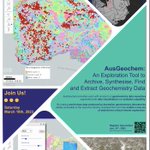
Last week, I had the great privilege to showcase the many potentials of the @ausgeochem data platform to very enthusiastic students & academics from Macquarie, ANU & UWA. Data interaction is the platform's keystone. Generating QR codes for archiving samples is 1 of many examples


Alanur retweeted

The layers tool on AusGeochem allows you to view your data against a variety of backdrops, including topography/hillshade, satellite imagery, and even local geological maps that increase in resolution as you zoom in!
Simply click the layers button on the toolbar to explore 🔬🌏

Alanur retweeted
In a new publication out in @SciReports, @AuscopeGeochem's @DrSamuelCBoone and co. present a new set of AusGeochem tools for interpreting thermochronology data in their 4D (3D through time) geological, topographic and paleo-tectonic contexts.
nature.com/articles/s41598-0…
#NCRISimpact

This Post is from an account that no longer exists. Learn more
Alanur retweeted
"The key point of difference is AusGeochem is designed as a tool for 4D (3D through time) data interrogation, in addition to being a repository of data."
@AuscopeGeochem #NCRISImpact @AuScope

David Upton of Precompetitive Review on the #NCRIS enabled @AusGeochem:
'...different to anything you have seen and quietly breathtaking in its capabilities.'
Discover the full review (free access for academia and government by request):
bit.ly/44hYXAV
Alanur retweeted

❗️So many WOWs in 1 presentation
The power of data-driven insights from the @ausgeochem database is truly jaw-dropping. Can't wait to see what new discoveries come from this powerful resource & see if we can integrate #IODP data in the future
ausgeochem.auscope.org.au/#/ @AuScope


Alanur retweeted
Do you like FAIR? CARE? PIDs? Physical samples? Data?
Erin Robinson, aka @connector_erin from #metadatagamechangers, will discuss the #fairislandproject this Thurs 24/3, to launch ARDC's Information Management for Physical Samples CoP.
Register now!

📆The Information Management for Physical Samples CoP is excited to host its inaugural meeting on 24 March.
Guest speaker, Erin Robinson from Metadata Game Changers, will discuss a #sampling project built with FAIR & CARE principles in mind: ardc.edu.au/event/informatio…
#RDM

Alanur retweeted
What's this AusGeochem open data repository thingy all about you may be asking? Wonder no more - all the answers can be found here in this recent open access publication: onlinelibrary.wiley.com/doi/…
