

I cover the latest advances in healthcare technology and what they actually mean for us.
Joined August 2025
- Tweets169
- Following127
- Followers31
- Likes113


The future of medicine isn’t one-size-fits-all. It’s devices designed to adapt, expand, and last.

Today, we approved the first heart valve device designed to grow with children. The Autus Size-Adjustable Valve, a surgically implanted pulmonary heart valve for pediatric patients with congenital pulmonary valve disease can be expanded after surgery to keep pace with growth. The adjustable valve may mean fewer repeat surgeries for children as they get older.
fda.gov/news-events/press-an…
Congenital heart defects are among the most common types of birth defects in the United States, affecting about 1 in every 100 births. The valve was approved through the premarket approval pathway, the FDA's most rigorous review process for medical devices.

ALT A child stands with a hand on their chest, while someone is holding a model of a heart. Text reads, "FDA approves first heart valve designed to grow with children." The FDA logo is visible.
Open-source AI is democratizing advanced medical simulation. MONAI Physio lets the global research community build subject-specific digital twins of the heart and lungs from everyday 3D/4D scans, a major step toward truly personalized medicine.

Introducing MONAI Physio at #MICCAI2026.
3D and 4D medical images ➡️ personalized cardiac and respiratory digital twins.
This open-source Project MONAI toolkit lets researchers model how the heart beats and lungs move for simulation, visualization, and reproducible research.
Explore the project 👉 nvda.ws/3VLmJFq
A brain gene that can still “jump” has been found inside a human poxvirus. The discovery could reshape how we think about cancer, Alzheimer’s, and gene mobility in medicine.

Scientists found a human genetic element in a poxvirus and discovered it was both an important gene for brain function and a jumping gene capable of moving and inserting itself in genomes.
A study published Sept. 24 in Science reports that the gene, called BC200, combines a mix of characteristics that have never been seen before.
Read more: news.cornell.edu/stories/202….

ALT A close-up of a DNA double helix, showing the twisting structure with vibrant blue, purple, and pink colors.
Exciting progress toward a single blood test for dozens of cancers. The caveat: sensitivity drops significantly for early-stage tumors, so a negative result doesn’t fully rule out developing cancer.

A US FDA panel recommended approval of a blood test that's designed to detect a variety of cancers but has raised concerns from some scientists
go.nature.com/4hcaZV5

Anthropic’s Claude has discovered a novel enzyme system hidden in bacteriophage DNA. The significance? We’re watching AI move from assisting research to driving fundamental biological breakthroughs, with major implications for the next generation of genetic medicines and AI.

Claude has discovered a previously unknown enzyme system hidden in the DNA of bacteriophages. Beside the enzyme’s gene sits a long array of repeating DNA—a structure that looks somewhat similar to CRISPR.
We don’t yet understand what this system does, but only a handful of known systems share its features, and all of them are able to cut, copy, and paste DNA. Historically, the discovery of such programmable systems has helped revolutionize medicine. CRISPR, for instance, is now the foundation of genetic medicines. But it will take much more work to learn what this system does, and whether it can be put to similar use.
Read more: anthropic.com/news/claude-di…

Cancer treatment is already complicated enough. Something that connects all the data and uses AI to support the full journey from diagnosis to recovery will have a meaningful impact.

Today we announced the new season Oracle Health Oncology EHR, purpose-built for the distinct demands of cancer care.
Read how this brings together oncology-specific workflows and AI-fueled clinical intelligence to support patient care from diagnosis through treatment and follow-up. social.ora.cl/6017BGg3YW

Big potential shift in MS research. An experimental drug from Inflammasome Therapeutics (K-9) didn’t just stop further damage in a multiple sclerosis mouse model, it helped animals recover vision and movement they had already lost.

NEWS: Modified HIV drug reverses vision loss and paralysis in multiple sclerosis model.
Read the full story ➡️ bit.ly/4rwr37x

ALT Press release title on a blue background reads: "Modified HIV drug reverses vision loss and paralysis in multiple sclerosis model." NIH logo at the bottom.
This could mean fewer trips to the hospital, less damage to healthy skin, and a new option for people who thought they were out of radiation choices. Early results, but genuinely encouraging.

Mayo Clinic researchers are the first to use a new radiation technique called minibeam radiotherapy to treat patients with treatment-resistant cancers in or near the skin in a clinical study. Nearly 93% of tumors shrank, disappeared or remained stable, providing a promising approach to treat difficult-to-treat cancers.
Learn more: mayocl.in/4ixDAFq

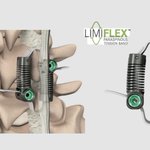
Do we really have to freeze two vertebrae together just to stop one from slipping? Stanford researchers spent two decades answering “no.” Their LimiFlex Dynamic Sagittal Tether is now in patients stabilizing the segment, preserving motion, and getting people back to daily life far faster than traditional fusion.


What this actually means for $TEM: they are trying to own the diagnostic step that makes a personalized cancer vaccine possible. That is a slice of economics, not Moderna/Merck’s drug franchise. This is feasible because Personalis was already in the clinical workflow and Tempus has oncologist distribution.
I wouldn’t bet on the stock surging because sequencing is switchable, the acquisition isn’t closed, and the vaccine still needs FDA approval plus payer coverage beyond melanoma.

Tempus AI could capture a lucrative slice of Moderna and Merck’s personalized cancer therapy business, with Personalis at the center of the bet. on.wsj.com/3UzYD02

This is a good pipeline print, not a stock-moving print.
$ABBV is too big for one late-line myeloma asset to re-rate the whole company.
What matters: monthly dosing, low CRS, and a path into earlier lines.
Solid news. Keep expectations in check.

New topline results are available from our Phase 3 study in patients with relapsed/refractory #MultipleMyeloma (RRMM), and we look forward to sharing the full data at this year’s @Myeloma_Society Annual Meeting. Read more: abbv.ie/8fa587 #IMS26
FDA is running a live experiment on generative AI in medicine. Cadence and Limbic are among the first companies allowed to deploy before full authorization. This will shape how clinical AI gets regulated for the next decade.

AI products from Cadence and Limbic are among four devices recently accepted into the FDA’s TEMPO pilot that will allow digital health companies to release products without marketing authorization. trib.al/5u3LSzi

They didn’t just image a fly brain. They wired it. 166k neurons, electron microscopes, and Google’s reconstruction AI. That’s the largest cellular brain map ever. The medical bet: learn the code in a simple animal, then use the same tools to ask why human circuits fail.

Introducing a complete map of the male fruit fly brain and central nervous system, created in partnership with @HHMIJanelia. With over 166,000 neurons, this is the largest cellular brain map to date. Learn more: goo.gle/4qQTtIW

3D-printed microneedle patches, developed by Queen’s University Belfast researchers, deliver anti-cancer drugs like curcumin and 5-fluorouracil directly into skin for cancer treatment.
The patch features tiny dissolving needles created in a one-step 3D printing process that allows high drug loading, controlled release, and skin penetration without drawing blood or causing pain.
This approach aims to simplify skin cancer therapy, reduce reliance on injections or repeated topicals, and minimize needle waste and patient discomfort.


Who would have guessed breast implants would be a secondary play on the GLP-1 wave? Might be worth adding $ESTA to your watchlist.

A breast implant maker's stock could climb as GLP-1 market booms, TD Securities says cnbc.com/2026/09/02/a-breast…

IV-to-SC is the new arms race. Novartis just signed a $3.2B-potential option deal with Alteogen so it can turn more of its biologics into short subcutaneous injections. Patient-friendly, clinic-friendly, and mostly paid only if they exercise the options.

Novartis signs deal worth up to $3.2 billion for Alteogen's drug delivery technology reut.rs/4cqAXkO reut.rs/4cqAXkO

Well said. Clinical-stage names trading at multi-billion valuations on early data, after 400–600% moves, while still burning cash, is exactly the late cycle setup we saw in 2021. It’d be wise to be very cautious with your investments at this point in time.

The Tulips of biotech:
When I look for names in biotech, I see a list of top companies in the $XBI that clearly seem like over bubbly tulip mania. Names like $RVMD at $45 billion, $KYMR, $SYRE and $ORKA all at big bubbly valuations on very early data. This is why the sector is in a bubble. Until all this meme money is taken out, there can be no real investing in the sector. Its just like 2021 again.
One shot. ~95–97% lower Lp(a) at 48 weeks in phase 1.
That’s the headline. Most RNA Lp(a) drugs still need monthly or quarterly injections. If this holds in people with actual heart disease, yearly dosing becomes realistic and that matters for a genetic risk you carry for life.

A phase 1 trial found a median Lp(a) reduction of up to 97% at 48 weeks after a single dose of a novel siRNA drug. What could this duration of effect mean for future dosing strategies? cle.clinic/4is9Iu7

Penn researchers are testing FLASH proton therapy: radiation delivered in milliseconds instead of minutes, in just 1–5 sessions instead of 30–40.
Early animal studies found it kills tumors while causing less damage to healthy tissue. Mice and dogs showed fewer side effects like fibrosis, skin problems, and swallowing issues, which led to a longer life-span as a result. A first-of-its-kind conformal (precisely targeted) human trial is now recruiting patients with recurrent head and neck cancers.
If it works in people, radiation treatment could become faster, easier, and gentler, with fewer long-term complications and a better chance to combine it with immunotherapy. That would be a real shift in how we treat cancer. @PennMedicine

This is what the next decade of diagnostics could look like. After just four hours of training, people with no ultrasound experience used AI guidance to capture usable heart images and flag a serious valve condition that often goes undetected until it’s advanced.
Tools like this won’t replace cardiologists, but they can put meaningful screening in far more hands and places. Healthcare access starts to look different when expertise can travel with the device.
Mayo Clinic researchers tested an approach that uses artificial intelligence (AI) to help people without previous ultrasound experience capture heart images and identify patients who may have a common and serious heart valve condition.
Learn more: mayocl.in/4646h5d

