

Head of Product @VelaFi_global ex @Binance | AI enthusiast | A dreamer learning how to build a lasting company.
Calgary, Alberta
Joined January 2008
- Tweets5.5K
- Following948
- Followers1.1K
- Likes4.9K





Vincent Chan retweeted

As a founder, you want both superpowers in your company: the fiery spirit of entrepreneurship and the icy discipline of management.


Vincent Chan retweeted
Two things early founders often get wrong, and should remember:
1) Building culture can feel like it's just fluff at the start. Until you start to raise capital or hire teams, and then you see how it shapes everything you do moving forward.
2) You should build a team so talented that it makes you slightly uncomfortable to be with them, because you know you are going to have to raise your game to keep up.



Vincent Chan retweeted

We're starting to leave the territory where you'd test an LLM by e.g. "create an svg of pelican on a bicycle". As one idea to generalize it, I was interested what Opus 5 would do if I gave it the first paragraph of the Lord of the Rings, a 1M token budget (~$10) and asked for three js render of it. Opus went off for ~2 hours and wrote 5500 lines of code that (procedurally) rendered the story. It's kind of janky but fun. But it's a bit mindboggling that the LLM has to place and orchestrate various polygon assets in (x,y,z) coordinates and write code that animates it all, and that it even does anything at all.
I also like this kind of examples because no one in their right mind would ever spend the time to write something this custom but LLMs have all the stamina and patience in the world, so it's an example where we go from "no one would ever do this" to "sure, why not, it's ~free". There might be a lot more. But I'm excited about creating hyper custom worlds that you can imagine dropping players into, e.g. here to participate in the LoTR story as a spectator NPC, or one of the characters, or etc. Something like an ephemeral GTA of X on demand.
Last thought is that the domain of worlds/games exposes a weakness in LLMs: they can't easily audit their work because they aren't able to efficiently and natively perceive videos or play games within them. Here, Opus 5 had to very slowly and painstakingly take screenshots at different points, and it messed up a few times and created a bunch of jank. An example of raw capability (multimodal, gameplay) that I think is still quite lacking.


Vincent Chan retweeted

Something I have been thinking about: in the past, the best engineers I knew spent a lot of time automating their work in various ways. Better vim/emacs automations, writing lint rules to catch repeat code issues, building up a suite of e2e tests so they don't need to smoke test the app manually. These kinds of things were the highest leverage activities an engineer could do, because it multiplied their own output, which in turn meant they could build more things.
I think many of these automations have become even more important now. This is true for a number of reasons.
First, infra and DevX automation speeds you up. And if you are running an army of agents, each of those agents will be sped up also. More automation == more output per unit of time.
Second, moving things to code improves efficiency. Your agent could fix an issue every time it sees that issue happen, but that uses tokens and might miss cases. If Claude instead writes a lint rule, CI step, or routine, that class of issue can be fully automated forever. This is really what people are talking about when they talk about loops -- it's about automating entire types of busywork rather than solving them one off. This isn't a new idea at all. Engineers have been doing this for a long time!
Third and most importantly, automation makes it possible for others to contribute to the codebase more easily. Increasingly what I am seeing is engineers are contributing to codebases on day one because Claude can navigate the codebase for them, and that non-engineers are able to contribute to a codebase as effectively as engineers can. What gets in the way of both of these is domain knowledge that lives in peoples' heads rather than in automation -- the stuff you used to have to learn when ramping up. What has changed thanks to agents is the domain knowledge that can be encoded as infrastructure is no longer limited to what is expressible in lint rules and types and tests; it can now capture nearly all domain knowledge, encoded as code comments and skills and CLAUDE.md rules and memories. If I put up a PR for an iOS codebase I don't know and a code reviewer rejects it because it doesn't use the right framework, or if a designer builds a new feature and it gets rejected because it doesn't follow the right architectural patterns, these are failures of automation.
Every team should be writing the CLAUDE.md's, REVIEW.md's, skills, and docs that enable agents to productively work in their codebase with zero additional context from the prompter. This sounds crazy, and at the same time is a natural extension of the stuff engineers have always done: automate, and encode domain knowledge as infrastructure. As the model gets smarter and as the harness matures, this task becomes easier. In the meantime, it is on every team to look for ways to convert their domain knowledge to infra so that Claude can write code better, so that code review catches issues automatically, and so the next person working on your codebase can contribute more easily.
Vincent Chan retweeted
As engineering, product, design, DS, etc. melt into a new kind of role, I was reflecting on what roles might look like in the future. For example, when I look at the Claude Code team I see what I think is five archetypes:
1. Prototyper: comes up with brand new ideas; churns out many ideas, most of which don't ship
2. Builder: quickly turns a prototype/idea into production-grade product/infra
3. Sweeper: cleans up the UI, simplifies the code and system, unships, optimizes performance
4. Grower: takes a product that has been built and iterates on it to improve Product-Market Fit
5. Maintainer: owns a mature system to make it secure, reliable, fast, and efficient as it scales
Many people span across 2 roles, and sometimes 3 roles. I also notice that these roles are not really tied to job function -- eg. across Anthropic, some designers match category 1, some 2, some 3; same for engineers, PM, DS.
A healthy team needs a mix of these, depending on the product:
- A product that is new and pre-PMF needs people that are strong at 1+2+3
- A product that is growing and has found PMF needs 2+3+4 and some 5
- A product that has strong PMF needs 3+4+5 and some 2
Maybe product roles of the future will look more like this, and less like the domain-specific roles of today?
Vincent Chan retweeted

At 15 years old, Liv Perrotto’s biggest dream was to meet @elonmusk. She had even written out a list of questions to ask him. Her mother @rebeccaperrotto told me that just days before she passed away from cancer, she had a chance to speak with Elon, but she was too tired and asked him to call later. The questions still sit on her nightstand, unanswered. Liv's mother shared them with me in hopes that Elon would change that today.
1) Are you going to make your own phone?
2) Are you expanding the Tesla Diner to new areas?
3) Will there be any new games with any upcoming Tesla updates?
4) What is your favorite anime?
5) Have you ever been to Japan? What was your favorite place/thing there?
6) Do you know who Hatsune Miku is?
7) Was Ani inspired from Misa from Death Note?
8) Can you make Asteroid (the Shiba Inu zero-g indicator she designed for the Polaris Dawn mission) the mascot for SpaceX?


Vincent Chan retweeted

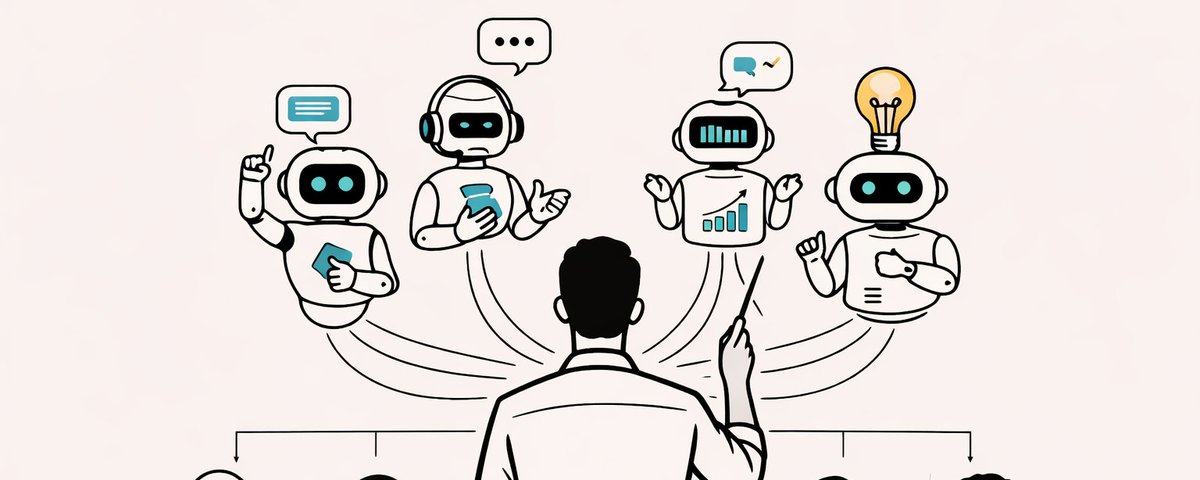
if you're a performance marketer, here's how I use a custom Claude Cowork plugin to manage Google Ads at @AnthropicAI. it connects to the Google Ads API via MCP, encodes my common paid search workflows into skills, and works on desktop and Dispatch.



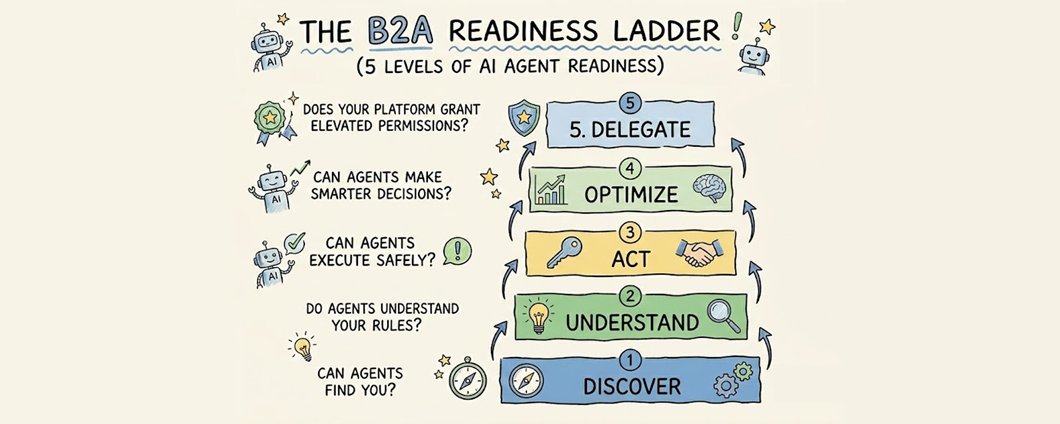
Hot take: most product roadmaps in 2026 are solving for the wrong user.
Not humans - agents.
I got obsessed with this after seeing the data. Stripe owns 91% of AI agent payments decisions. GitHub Actions 94% of CI/CD. shadcn 90% of UI.
Where there's a B2A-ready winner, agents pile in and never leave.
Where there isn't? Still wide open.
Wrote about my thought here.
The most interesting part of Coinbase's AI development case study isn't the speed gains - it's the "Judgment Moat."
AI handles ~40% of the code, but foundational product modeling (like relational logic between invoices and billing plans) stays human-only.
That's the real takeaway for PMs thinking about AI-assisted product development.

Smaller teams are prompting higher quality products into production in days & weeks at Coinbase, instead of the months+ it used to take.
It's all about the context.
And this was all done prior to 4.6 & 5.3 models. You cannot be AI pilled enough right now. 100x everything.
coinbase.com/blog/ai-across-…
