A workshop on inverse problems and geomechanics is being held on at the at the bucolic Fontainebleau campus of Mines Paris, France, 30 Sept.–3 Oct., 2025. The submission deadline has been extended to 10 July. Follow the link for details on how to submit!
geosciences.minesparis.psl.e…
Robert Viesca retweeted
A mysterious, unidentifiable seismic signal, a first-of-a-kind giant Greenland landslide, a 200m high tsunami, and a 9-day-long seiche explained by #HPC models.
It has been a tremendous honor (and - lots of fun) to be a tiny part of this collaboration published in Science today.
A rockslide-generated tsunami in a Greenland fjord rang Earth for 9 days | Science science.org/doi/10.1126/scie…
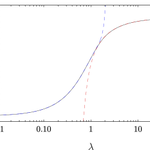
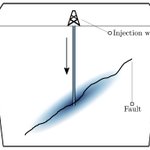
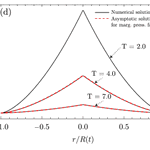
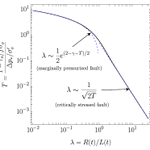
Interested in perturbation methods, fracture mechanics, or fluid-induced fault slip? Then check out a recently updated pre-print on asymptotic solutions for an aseismic shear rupture driven by fluid injection: arxiv.org/abs/2401.13828
This work follows up on leading-order solutions, featured in a series of recent works, and first included as part of this one:
xitter.cf/ViescaRobert/status/14…
Interested in how fluids induce fault slip? 1/n
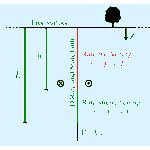
Check out the latest result from a project led by PhD student Alexis Sáez (@EPFL) with @BLecampion and @PathikritBhatt2. #OpenAccess
sciencedirect.com/science/ar…
191
Robert Viesca retweeted
I just submitted a new preprint, and this one is fascinating! We're zooming in on what is probably the biggest obstacle to DAS-based Earthquake Early Warning.
Preprint link: doi.org/10.31223/X5KH5R
Keep reading for a summary 👇 [1/N]
Robert Viesca retweeted
Soft Matter by @WimvanSaarloos, Vincenzo Vitelli, & Zorana Zeravcic introduces key phenomena and concepts in soft matter from a modern perspective, marrying established knowledge with the latest developments and applications.
Out March 26, learn more: hubs.ly/Q02n2RhK0
Robert Viesca retweeted
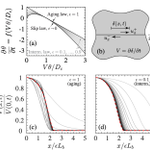
Our recent paper “cracks” the reason why fractures form in certain ways. Read more about the research from Harvard scientists in collaboration with Engineering researchers at @UniofNottingham in @physorg_com: phys.org/news/2024-01-explor…
Heading to AGU and wondering what more insight can we gain into models of the seismic cycle using rate- and state-dependent friction?
Check out Federico Ciardo’s presentation Tuesday, TA22-02, and be surprised.
agu.confex.com/agu/fm23/meet…
Robert Viesca retweeted
#Prix&Distinctions 🏅
Félicitations à @KlingerYann qui a reçu la médaille Stephan Mueller de l'@EuroGeosciences, qui vient récompenser les chercheurs contribuant à la compréhension de la structure de la lithosphère et de la tectonique des plaques.👏🌍
➡️ ipgp.fr/actus-et-agenda/actu…
Robert Viesca retweeted
Professor Luis Dorfmann and a colleague from the University of Glasgow recently published a review article in the prestigious journal Proceedings of the Royal Society A about the nonlinear theory of magnetoelasticity. bit.ly/45FPOBG
Robert Viesca retweeted
Come and join our group! (It’s not always this cloudy)
Two postdoc positions (2 years and 3.5 years) modelling fracture and friction processes in ice sheet models.
bas.ciphr-irecruit.com/appli…
Robert Viesca retweeted
Does aseismic slip before an impending earthquake necessarily correspond to the nucleation phase of a mainshock?🤔 In a recent article, PhD student Luc Moutote unveils a slow-slip event driving the 2017 Valparaiso sequence, from foreshocks to aftershocks: doi.org/10.1029/2023JB026603

ALT Summary of the seismic and geodetic measurements presented in the article. Panels (a) and (b) are cleaned HRGPS east positions at sites QTAY and STAC with the co-seismic steps removed (see Figure 7). (c) Normalized cumulative slip estimated from repeating earthquake (see Figure 5). (d) Cumulative number of event unexplained by the ETASI model since the time of the first foreshock (see Figure 2). (e) Cumulative number of event triggered by the external forcing in the model-independent stochastic declustering analysis (see Figure 4). (f) Times and magnitudes of ValEqt earthquakes. The blue star indicates the mainshock.
Robert Viesca retweeted
W. Jason Morgan, 1935-2023. Plate tectonics has a dozen parents, but he was in the top three.
washingtonpost.com/obituarie…