

Permission-less lending platform. Any token borrows, any stable lends. Leaf of @bonsai_dao 🌿
Not Liquidated
Joined February 2022
- Tweets954
- Following17
- Followers4.4K
- Likes855







Pinned Tweet
Your favorite token just became a money market.
⚖️Borrow Anything. 💱Lend Anything.
Vendor is now permissionless. ♾️
vendor.finance
PSA: The only official communication platforms that Vendor Finance uses are:
X/Twitter: xitter.cf/VendorFi
Discord: discord.vendor.finance/
We do NOT use telegram. We do not DM first.

Vendor Finance has now crossed $1M+ TVL.
Powering bonding and fixed-term credit for long-tail tokens.
vendor.finance/

👀👀👀
The PDT<>USDC pool from @ParagonsDAO was fully borrowed out in under 48 hours! As always, the early bird gets the worm.


Borrow USDC against your PDT!
We've launched our first treasury lending pool with @VendorFi
100k USDC available (for now)
90% LTV at $0.06 anchor ($0.054 collateral value)
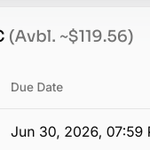
5% APR (~2.07% for the term ending June 30)
Please read important details in our Discord announcement
A proposal is live in @ParagonsDAO to pilot a fixed-term, non-liquidatable treasury lending program using Vendor.
The proposal outlines why fixed pricing and no liquidations were preferred for PDT-backed loans.
Discussion is ongoing in their governance forum.

Only a tiny bit left to borrow 🤏


Vendor Finance retweeted

Something for our trench warriors 👇🏼
We added $TRENCHES on @VendorFi powered by @Bonsai_DAO.
Borrow USDC against TRENCHES on:
vendor.finance/borrow/0x37da…
🪖
Alea Research covers Vendor as the credit Leaf 🌿 in the Bonsai ecosystem – fixed-term, oracle-light lending plugged into a MetaDAO treasury.
Cool to see the venture-studio model starting to click for people 😉

1/ The DAO model breaks when one token must represent everything.
It creates unclear value, slow decisions, and idle treasuries.
Bonsai’s answer: a MetaDAO that incubates standalone Leaves and channels their growth back to one asset, $BONSAI.
🧵

Listing fees? Vendor charges 0.
Ok ok, gas still exists. But that’s on God (@VitalikButerin )

Everyone outsourced price discovery to a box that stops working when things move too fast.
Synthetic prices feeding synthetic risk.
That’s why Vendor took a different route.
It’s not as flashy.
But when markets break, it’s the quiet systems that stay up.


"Don't use leverage"
This is often the advice we see on CT following large events like what we've seen on Friday. It all seems obvious (because it is!)
But what if I told you that >80% of everything you're doing in DeFi is hidden leverage.
And since people don't really know about it, it's even more dangerous than willingly going 100x on a perp exchange, because that leverage is most certainly underpriced at the moment.
Oracles are hidden leverage.
This is what this article is referencing: a 60M spot manipulation resulted in a multi-billion liquidation cascade. Amount spent < amount loss, the very definition of leverage.
Using oracles to price an underlying instrument makes it a derivative -> loans whose value is defined by an oracle are derivatives loans.
These derivatives loans, like any derivatives, are associated with more risks than their physical counterpart.
Oracles are also extremely fragile. Whether it's a Chainlink/Binance price feed, they are all tied to the liquidity of the underlying market.
And who provides that liquidity? Market makers.
Market makers have to widen the spread and ultimately stop quoting price is what market makers need to do survive. That's the cycle of life.
But think about this: if the oracle price is ultimately tied to market makers maintaining a healthy orderbook, these oracles will fail to return accurate data at any sign of volatility.
The system is designed to fail when it's the most stressed.
Oracle prices aren't physical prices.
Oracles are a representation of risk-averse liquidity depth that is guaranteed to disappear during extreme volatility. Oracles are paper tigers, folding at the earliest sign of trouble.
So while the advice is "don't use leverage," DeFi's blind overreliance on oracles has baked a systemic form of it into the very foundation of the system.
The events of Friday was the result of that hidden risk bubbling up to the surface and breaking everything.
That makes me extremely uncomfortable. And it should make you cautious too. The biggest risks in DeFi are hiding behind oracles.


Volatile few days!
Vendor didn’t have any liquidations. How? Because the system doesn’t use oracles or liquidation bots.
If someone can’t repay, it’s just a default between lender and borrower.
That’s it. No cascade. No panic.

Why does this matter?
No more waiting for listings.
No governance votes.
No liquidation bots nuking your bags.
If there’s demand, you can lend against it.
That’s what permissionless credit looks like.

Vendor = credit without permission.
No liquidations. Ever.
Any token borrows.
Any token lends.
👉 vendor.finance
