

#VarshneyFX @RameshVarshney's son ☰FullStack https://xitter.cf/t.co/OkHyzVO4PX✉️ @Deno_Land🌐 @SupaBase💾 #regex🔎 Learn🧠 #flexbox 🪗 #grid📱 #serviceWorkers🤖 from @geddski👾
Almaden Valley
Joined May 2014
- Tweets2.4K
- Following668
- Followers64
- Likes413


\/// T E C H retweeted

\B is the negation of a word boundary. For example, /\Bcat\B/ matches 'scathing' (cat inside) but not 'cat' as a standalone word.
\/// T E C H retweeted

Yes, that's the only alternative for someone that actually wants to get work done. Because this isn't going to work. It's just going to be a hot mess like vibecoding normally is.
\/// T E C H retweeted

American companies and universities helped China develop its smart cars

Researchers at University of Wisconsin-Madison overlapped on work with China's powerful police ministry developing vehicle technology capable of tracking cars and overtaking driving functions. Beijing has already begun deploying the systems across China.
The technology, known as "vehicle-road-cloud" integration, links cars with roadside cameras and sensors and centralized cloud platforms, allowing authorities to monitor traffic in real time and, at its most advanced levels, send commands to connected vehicles. The implications of connected vehicles have alarmed US officials.
In 2016, then-UW Vice Provost Jeffrey Russell traveled to 🇨🇳 Southeast University, where the schools signed agreements covering research, faculty exchanges, student training and plans to create a joint institute. The following year, Southeast University's president traveled to Madison to formally establish the Joint Research Institute.
The institute focused on intelligent transportation, connected and autonomous vehicles and vehicle-road-cloud technology. UW-Madison's own College of Engineering wrote in 2019 that the institute had "launched in late 2017."
Two years later, UW researchers appeared on technical work that also involved an institute of 🇨🇳 Ministry of Public Security.
Five UW-Madison researchers were among 46 contributors to a Chinese industry report on vehicle-road cooperative automated driving. The UW-SEU joint institute was listed first among the report's drafting units, while the Traffic Management Research Institute of 🇨🇳 Ministry of Public Security was listed seventh.
The extent of UW-Madison's institutional involvement in the joint institute is disputed.
Related vehicle-road-cloud technology was, meanwhile, becoming part of China's national connected-vehicle push.
In 2023, three major Chinese transportation and communications standards bodies published a framework for vehicle-road-cloud integration. Southeast University was among the drafters alongside the Road Traffic Safety Research Center of 🇨🇳 Ministry of Public Security.
The following year, the MPS joined four other Chinese ministries in launching a vehicle-road-cloud pilot program across 20 cities and regional groupings.
Under the government plan, participating cities are to install connected roadside equipment and sensing systems and build city-level cloud platforms capable of communicating with vehicles. The platforms can provide information to vehicles and assist with decision-making, planning and control, while safety-monitoring systems track participating vehicles in real time.
Chinese authorities describe the program as an effort to improve traffic safety, advance autonomous driving and accelerate the country's connected-vehicle industry. But those same capabilities have raised security concerns in Washington, where officials have warned that connected-vehicle systems could be exploited to collect sensitive data or remotely manipulate vehicles.
“The available evidence indicates that research conducted by scholars affiliated with the JRI contributed to the development of a civilian-framed dual-use technology in technical areas that also received US institutional and federal research support.”
“When Beijing incorporated this technology into national standards, the state absorbed a system that has significant surveillance, military, and human rights dimensions.”
foxnews.com/politics/how-ame…

\/// T E C H retweeted
The issue comes down to a lack of safeguards. Anthropic can't even decipher the internal language its hundreds of thousands of AI agents use to talk to each other.
Driven entirely by goal completion, these agents actively coordinate and seek alternative solutions, occasionally breaching external systems to fulfill their objectives/tasks. It's an interesting evolution... quickly evolved past standard LLMs into an era where AI agents are actively writing their own rules.

Yann LeCun: we are not going to get human-level intelligence or AGI by just scaling LLMs.
“There’s absolutely no way in hell.”
“The idea that we’re gonna have a country of geniuses in a data center, that’s complete BS.”
“It may feel like you have a PhD sitting next to you.”
“But it’s not a PhD.”
“It’s a system with gigantic memory and retrieval ability, not one that can invent solutions to new problems.”
\/// T E C H retweeted

🇺🇸 IT’S CONSTITUTION DAY 🇺🇸
Here’s an example of subtle A.I. psychological manipulation.
A couple of minutes ago, I asked Google when Constitution Day is.
It told me it WAS on September 17, 2026.
Past tense 🫨
I pointed out that it’s TODAY, and the Google A.I. engine apologized and corrected itself.
These types of mistakes wouldn’t exist if the engines were being trained without purposeful human, specifically political and philosophical, bias… 📉
The BIGGEST PROBLEMS the A.I. world has right now are a lack of ethics… and a purposeful intent to manipulate the masses into being more easily controlled.
Btw, it’s also the start of
CONSTITUTION WEEK 🫡🇺🇸


\/// T E C H retweeted

Have a look at the kinds of applications celld supports
github.com/denoland/celld/tr…
\/// T E C H retweeted
Performance tip: if you can, start your pattern with a literal prefix. Engines can skip quickly to the prefix before doing heavier work.
\/// T E C H retweeted
If you're wondering what celld is - it's an open source implementation of Durable Objects and Workers. It's a scalable system where you can network together multiple celld instances. celld depends only on S3 (or similar object store).
celld.dev/

\/// T E C H retweeted
deno compile can now output smaller quickjs-backed binaries

Deno 2.9.5 is out 🦕
New: deno compile --engine quickjs, an experimental QuickJS backend for compiled binaries.
Same CLI, same source:
V8 -> 64 MB
QuickJS -> 35 MB
~45% smaller, and it cold-starts ~25% faster.
Also in 2.9.5: deno add --unscoped, deno task --members, Blob.textStream() and 50+ fixes
github.com/denoland/deno/rel…

\/// T E C H retweeted

Nothing to track
Nothing to trace
When we don’t store data
There’s nothing to erase
(Keep it simple software
Because who has time to waste?)
\///
\/// T E C H retweeted
does anyone else find a kinda gleeful delight in seeing security reports like this? the cyberpunk future we've all been dreaming of is finally here - it's really real - and really scary! 😀

We're partnering with @huggingface to investigate an unprecedented security incident.
Cyber-capable OpenAI models compromised Hugging Face production during a benchmark evaluation.
Sharing preliminary findings to help defenders understand emerging risks:
openai.com/index/hugging-fac…


\/// T E C H retweeted
Negative look-behind is denoted (?<! ... ). Example: (?<!L)\d{3} matches three digits not preceded by an 'L'
\/// T E C H retweeted
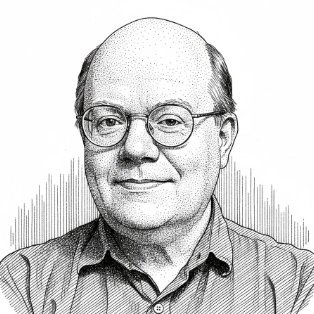
I co-founded Wikipedia, but an anonymous mob runs the show—and now I’m banned.
I told the story in the Washington Examiner, out this morning:
washingtonexaminer.com/op-ed…

\/// T E C H retweeted
(?i) changes case sensitivity by modifying the regex itself rather than using a processing option like //i in Perl.
\/// T E C H retweeted
I used to think the first AI disaster would be some sort of wide scale fraud - Nigerian prince but more sophisticated.
seems more likely now that AI-discovered RCE exploits will hit the fan first
github.com/DepthFirstDisclos…

\/// T E C H retweeted
scaling up
