

Oil markets macroanalysis. Credible. Consistent. Concise. Email us: [email protected]
Singapore
Joined June 2021
- Tweets3.3K
- Following181
- Followers592
- Likes2.3K





🛢️ Crude Watch | Asia Open – 23 Oct 2026
👉 Brent extends gains after surging 4% as US-Iran tensions escalate.
👉 Tehran threatens US bases and critical infrastructure, while Hormuz attacks intensify.
❗️Could the next confrontation threaten both Gulf and Red Sea oil flows?
🛢️ Crude Watch | Asia Open – 22 Oct 2026
Crude surges as signs of US-Israeli preparations for renewed strikes on Iran mount.
Netanyahu calls for regime change, while Houthis hit a Saudi oil field.
Is another escalation imminent — and what would it mean for Hormuz?
🛢️ Crude Watch | Asia Open – 21 Oct 2026
Crude rebounds as Iran rejects renewed US talks, reversing Tuesday's sharp sell-off.
With Tehran refusing to compromise on enriched uranium, is the geopolitical risk premium lifting Brent towards $110 becoming more durable?
Vanda Insights retweeted

Rates for #crude #tankers down double digits vs highs due to lower charterer demand but still massively profitable. See story (free to read) for rate data + coverage of US energy secretary comments on ‘misunderstood’ plan to use shadow tankers: #shipping. tinyurl.com/2a34rb3k

Vanda Insights retweeted

The Iran war has exposed a critical blind spot in global energy security — the need to diversify not just crude oil supply, but refining capacity too.
Could Nigeria’s Dangote refinery point the way to a bigger role for Africa in global fuel markets?
My column in @energyconnects_ :
energyconnects.com/opinion/t…

🛢️ Crude Watch | Asia Open – 19 Oct 2026
Crude retreats as Friday's panic buying unwinds. No fresh Saudi supply disruptions over the weekend and Trump's waiver of Russia sanctions ease nerves, despite fresh Ukrainian drone strikes and persistent Hormuz risks.
Vanda Insights retweeted
Interesting observation and thought-provoking questions around the US administration’s continued “strategies” to try and tamp down prices.
As an aside, how many times will the US and the EU/G7 use the SAME March 2026 agreement for the SAME release of 400 mil bbl of emergency stocks in an attempt to tilt sentiment towards bearish?

On Friday evening in London, the price of oil for most of the world moved almost 10% in minutes.
Nothing major happened in the Middle East that afternoon. No new macro data. Just a U.S. government announcement timed right before the key physical oil window closed.
Most people have no idea how oil prices are actually set. Some prefer it that way.
Not me..
On Friday (Oct 16), around 3:15pm London time, the U.S. DOE offered 17 million barrels from the Strategic Petroleum Reserve as an exchange. The offer itself wasn’t shocking. It was the remaining piece of the 172 million barrels the U.S. committed under the March IEA deal. Earlier big offers months earlier in 2026 had seen almost no take-up because of the high return premiums required.
What was unusual this last Friday was the timing.
The SPR announcement landed just as the Platts London physical Brent window was about to start. That window concentrates activity in a short period (roughly 4-4:30pm London). Liquidity is often thin on a Friday afternoon.
Oil market participants had almost no time to digest the news before books were marked to the assessment that sets a key global physical benchmark.
Prior large SPR offers months earlier had typically come earlier in the day with multi-day bid deadlines.
This one arrived late, right before the Friday evening close.
The effect was immediate in the physical market. Dated Brent printed sharply lower (down over $10 on the day). The physical differential collapsed. Prompt scarcity premiums were sold. Related futures shorts later covered as paper (futures try to track physical cash prices) moved the other way.
The result: one of the largest one-day physical-cash price down / paper-oil (futures) up divergences on record.
The physical oil market is concentrated. A small number of players in London, trading a thin set of cargoes, can move the assessment that prices a huge share of the world’s crude. A well-timed headline can whip that group around.
Governments regularly complain about oil price “manipulation.” They are quieter when the move comes from their own reserve announcement landing at the exact moment it can have the biggest effect on the physical benchmark.
Whether the Friday afternoon timing was deliberate or just when the paperwork finished is not stated in official sources.
What is clear is that it worked as a real-time catalyst in a thin Friday evening oil market.
How oil prices are set is more mechanical, and more sensitive to a handful of actors and announcements, than most people realize.
Is global oil a fair and free market when it has a very specific closing time (and clear headline target risk) and a tiny list of 5–6 people who effectively get to vote on what 8 billion people pay ?
Vanda Insights retweeted

Following Russia’s devastating overnight attacks that heavily targeted Ukraine’s energy grid, Ukrainian President Volodymyr Zelensky took to X today to decry recent actions by the White House that saw additional Russian sanctions waived on top of the current 6 month oil and gas export waiver implemented in the last two weeks.
Vanda Insights retweeted

BREAKING: Iran has announced that ANOTHER vessel has been struck in the Strait of Hormuz, once again claiming that the vessel struck a mine.
While there is yet to be… ANY evidence to support that vessels are striking mines in the Strait of Hormuz, there is plenty of evidence now to support that Iran is significantly escalating the SEVERITY of their strikes against vessels transiting Hormuz, as well as in the Gulf of Oman and Persian Gulf.
Vessels are being completely sunk, set ablaze, blacked out, or disabled.
These aren’t “minor hits” anymore… This is unsustainable.


Vanda Insights retweeted

🚨🇮🇷🇺🇸 Britain's shipping watchdog says ships hit in Hormuz are refusing to report it, and traffic is still 70% below prewar levels
UKMTO logged 12 attacks in its latest week, 10 inside the strait, with one ship lost and two left dead in the water.
Then it admitted the number is wrong: most vessels that get hit aren't calling it in, and reports from other channels can't be verified.
In three cases nobody even knows what happened to the ship.
Owners have a reason to stay quiet. A reported attack means an insurance claim, a war-risk premium hike, and a vessel flagged in every broker's database, so captains take the hit and keep sailing.
The number that cuts through both sides' claims is the 70%.
CENTCOM says it controls the strait and Iran says it's closed, and UKMTO says it can't verify the American escort figures either.
The truth sits in the traffic count: seven months in, seven out of ten ships that used to transit Hormuz still don't, and the ones that do are getting hit at a rate nobody can fully see.
Source: UK Maritime Trade Operations / Writer: Daniel
Vanda Insights retweeted
Tankers have aged like fine wine! 🍷
Today a 10-yr-old VLCC at $180 mil costs 38% more than a new one ($130 mil, delivered 2029).
A 5-yr-old VLCC at $210m costs 62% more.
The last time secondhand ships cost more than news ones was 2008, just before GFC.
More Gulf oil producers are buying their own tankers, which pushes up prices further.
The vintage that matters: available NOW. (h/t @PotenPartners)
Vanda Insights retweeted

API Inventory Moves 10/14 (including the rest of the data)
Crude -11.12 million
Gasoline +1.1 million
Distillates -1.5 million
Cushing +1.823 million
SPR actual +0
#oott #crudeoil #gasoline #distillates #API
🛢️ Crude Watch | Asia Open – 14 Oct 2026
Brent holds above $104 early Wed in Asia as Iranian attacks on shipping around Hormuz intensify, threatening the recovery in Gulf oil flows. Houthi strikes add to the risk premium, though Saudi oil output and exports remain unaffected.
Vanda Insights retweeted

This Reuters report is pretty crazy and weirdly insightful.
DUBAI/LONDON/WASHINGTON, Oct 14 (Reuters) - Iran is deploying new tactics to target ships sailing through the Strait of Hormuz as it seeks to keep oil prices high and influence the US midterm elections, two senior Iranian officials told Reuters.
Tehran has tried to exert control over the Strait of Hormuz since the US and Israel launched strikes against Iran on February 28. It has restricted passage through the waterway, which carried about a fifth of global oil and liquefied natural gas trade before the war, in an effort to gain leverage over Washington.
Its threats and attacks have severely curtailed traffic through the strait, driving up oil prices, though some oil has continued to transit.
The two officials declined to provide details of the new strategy, but one said that Iran had started using different offensive tactics against vessels it considered in violation of its restrictions about 10 days ago, adding that this had led to an increase in attacks on such ships.
The strategy included a change in the type as well as the pace of attacks, with one goal being to influence the outcome of the US vote, they said.
"The aim is to frustrate efforts by the United States and its allies to bring down global oil prices," one of the two officials said.
The decision to adopt the new strategy had been taken at the highest levels of Iran’s leadership and was fully coordinated across the country’s ruling system, the officials said.
IRAN USING SPOTTERS
A US military official, speaking on condition of anonymity, confirmed that Iran had changed tactics in one significant way: after the US destroyed much of Iran’s radar capabilities, Iran's Islamic Revolutionary Guard Corps (IRGC) had started using unarmed spotters in small boats to identify potential targets, including US naval vessels, the official said.
Last week, in a previously unreported incident, the US military determined that Iranian spotters were operating from a dhow, calling in targets to the IRGC, the official said. US forces confronted the vessel, told its occupants to abandon ship and then destroyed it. There were no casualties, the US official said.
Unwilling to risk its remaining fast boats, Iran had been unable to prevent a ramp-up in oil exports through the strait, the official said, particularly after US strikes devastated its navy.
The war — and its $3 billion monthly price tag — has become a key issue on the US campaign trail for November's midterm elections, which will decide control of Congress.
US President Donald Trump has been weighing next steps against Iran, but has said he will not attack again before the vote.
The US has meanwhile been pressing its own naval blockade of Iranian ports and extending sanctions as it tries to pile economic pressure on Tehran to reach a deal to end the conflict.
The standoff over Hormuz has left global energy markets exposed to further disruption, with the threat of attacks and high shipping and insurance costs complicating efforts to restore normal traffic.
In recent days, attacks on commercial ships still sailing through the strait have surged to their highest level since the war began, according to independent data.
There have been at least five incidents in the past 48 hours involving tankers and other commercial ships around the Hormuz area, including drone strikes, according to data analysis from maritime security sources and incidents reported to British navy-affiliated agency United Kingdom Maritime Trade Operations (UKMTO).
That approximately mirrored the rate of attacks on October 3-5, pointing to a new escalation, according to data from the UN shipping agency, the International Maritime Organization.
"There is a tempo increase in strikes, which looks deliberate," one maritime security source said.
ATTACKS OVER AN EXPANDED AREA
As part of the new strategy, Tehran will also expand the geographical scope of its operations beyond the Strait of Hormuz to the Gulf of Oman and waters further afield, the officials said.
Analysis by maritime security sources based on attacks reported to UKMTO and maritime security companies in the region suggest this may already be happening. They show Iran targeting ships in areas beyond the Strait of Hormuz, including waters off the coast of Qatar and the United Arab Emirates, in recent days.
The second Iranian official added that Tehran would not allow Trump to bring down oil prices before the November elections.
"Just when they think they are getting close to the point where prices will fall, we will push them away from it. This is a game of chess,” the second official said.
"Such vessels would be safe nowhere, even outside the Strait of Hormuz."
The Pentagon and Iran's Foreign Ministry did not immediately respond to requests for comment.
COMPLETE CLOSURE OF HORMUZ SOON, SAYS IRANIAN OFFICIAL
Both Iranian officials said Tehran is moving towards a situation in which no vessel violating its restrictions would be able to pass through the strait. "It will be complete closure soon," one of the officials said.
In its latest report on Sunday, the US Navy-led Joint Maritime Information Center (JMIC) said the threat to merchant shipping in the Strait of Hormuz remained "severe", the second-highest level.
"IRGC attacks, attempted attacks, and/or harassment activity persisted including UAV overflight, targeted surveillance of merchant shipping, and occasional VHF hailing," JMIC said.
🛢️ Crude Watch | Asia Open – 13 Oct 2026
Oil risks remain skewed to the upside despite a pullback early Tue. US-Iran diplomacy has little chance of making meaningful near-term progress, raising the likelihood that Tehran sustains its stepped-up pressure on shipping in SoH.
Vanda Insights retweeted

How are governments redefining energy resilience after Hormuz? EMF 2026's National Policy Panel explored infrastructure security, regional cooperation, strategic redundancy and evolving global supply chains.
Spotify: tinyurl.com/56batnwj
SoundCloud: tinyurl.com/ybvmy4x7
Apple: tinyurl.com/3c7yn4sh
@VandanaHari_SG @ADNOCGroup @EnergySPG @MPA_Singapore @VandaInsights #DailyEnergyMarkets #EnergyMarkets #EnergySecurity #FujairahEnergyMarketsForum #GlobalEnergy #EnergyResilience #OilMarkets #MaritimeTrade #ADNOC #GulfIntelligence

Vanda Insights retweeted
It was my pleasure and privilege to moderate this panel on "Building Resilience Strategies for a Just-in-Case World" at the @gulf_intel forum in Fujairah earlier this week.
Great insights from H.E. Abdullah bin Ahmed Al Khalifa, Minister of Transport and Communications, Bahrain
Ang Wee Keong, CEO, Maritime and Port Authority of Singapore, and
Richard Swann, Head of Market Reporting, Oil, Shipping and Chemicals, S&P Global Energy.
Succinct recap follows below in 🧵.

Thank You for Joining Us at the 14th Energy Markets Forum 2026!
Two days of insightful discussions, valuable connections and meaningful dialogue on the future of global energy markets.
We look forward to welcoming you back next year!
#EnergyMarketsForum2026 #Fujairah #EnergyMarkets #GlobalEnergy #EnergySecurity #EnergyResilience #GulfIntelligence #ADNOC #FujairahPortsAuthority #EMF2026 @ADNOCGroup @EnergySPG @aramco @enoc_official @vitolnews @NBFUAE @Vortexa @DanaGasUAE @BBEnergyGroup @Sharjahoil @RoyalVopak @FOIZ_UAE @Kpler @fge_nexanteca @ADPortsGroup @DowJonesEnergy

Vanda Insights retweeted
More rail connections -- that's the way to go for the Middle Eastern countries!
Always felt that way, but been travelling across the region by road for about a week now, and am even more convinced that's a key resilience plank in this new world.

Saudi Arabia, UAE sign MoU to boost power grid interconnection, rail connectivity ara.tv/rk433

Vanda Insights retweeted
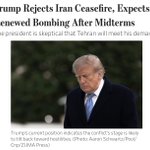
Crude has cooled off a bit after yesterday's surge, helped by Trump saying US does not plan to bomb Iran before the Nov midterms.
But that jawboning may wear off soon.
Unless the Gulf and Strait of Hormuz attacks subside and oil flows climb back towards 70-80% of pre-war levels, the upward pressure on crude will sustain.
Much of what I told India's NDTV Profit in this interview (by phone while on the road to Muscat, as it so happened) still holds!
youtu.be/Pu-OlrRLTZs
