

Uranium 75% of my portfolio. Trying to learn more and spread the word in Dutch on Youtube. Website: https://xitter.cf/t.co/n7oB214YVG
Netherlands
Joined February 2022
- Tweets4.4K
- Following170
- Followers486
- Likes5.9K




Value Consultant retweeted

Value Consultant retweeted

Dear Shareholders and Friends,
October brought strong trading and continued progress at Buen Retiro despite a tough market for juniors. Median daily volume on the TSX-V rose to approximately 207,000 shares (up 39% on September). On 30 October we traded 846,584 shares and closed higher.
New drill results from October 5th:
🔘 BRT-DDH110: 30.5 m @ 2.48% Cu from surface to end of hole, ending in mineralization
🔘 BRT-DDH121: 18 m @ 2.50% Cu from 163 m, including 10 m @ 4.00% Cu
🔘 BRT-DDH117: 166 m @ 0.37% Cu from 81 m, including 30 m @ 1.23% Cu
🔘 BRT-DDH115: 43 m @ 0.83% Cu from 115 m, including 32 m @ 0.98% Cu
2026 totals as of 30 September: 22,697 m diamond + 2,780 m RC.
Three rigs are still turning. Maiden MRE and PEA work continues (mostly M&I expected at Tenorita, mostly Inferred at Ortúzar). An additional 3,300 m approved to convert Inferred to M&I. A 5,000 m program has also started on nine new Fleet Space machine-learning targets.
Caballos remains ready but is delayed by El Niño rains and high river levels. Full early exercise of the October 2024 warrants raised approximately C$1.95 million (approximately C$3.5 million combined with September exercises).
November focus: continued drilling (including ML targets), resource and engineering work toward the MRE and PEA, Caballos as soon as access allows, and investor meetings in Zurich, Frankfurt and London.
Momentum continues to build!
Best regards,
Fitzroy Minerals Team
#GoCopper #GoFitzroy $FTZ.V $FTZFF 🇨🇱


Value Consultant retweeted

Here is a chart to ponder over the weekend.
Silver is trading almost 30% below its 200-day moving average.
The last time we saw similar levels was March 2020.
We are likely approaching another important inflection point for metals and mining.
tavicosta.substack.com/p/top…

Value Consultant retweeted

While the term price of uranium has gone up substantially over the past few years, the supply side has been riddled with project after project not being on time nor on budget
Each missed timeline adds a fracture to the whole structure. In my view, $150 is inevitable due to this

As many of U know, Mike Alkin - CIO of @SachemCove Capital Management - is IMHO the Godfather of the #Uranium sector investing thesis🧙♂️⚛️⛏️💰 who way back in 2018 began giving investor conference presentations outlining his well-researched belief that fuel buyers are being overly complacent & suffering with recency bias in their expectations that their future reactor fuel needs can be easily met by new emerging uranium supply at a low cost, especially with their reliance on Kazakhstan to flood the market with cheap uranium for decades to come.♒️😆
🧮He's spent thousands of hours crunching the numbers, definitively making the case that the coming uranium bull market will make a lot of investors very wealthy as prices skyrocket far beyond the old unrealistic conservative estimates tossed around by fuel market analysts with their head in the sand.🙈
👨💼When he gave his presentation to a room full of fuel buyers back in 2019 at the NEI's International Uranium Fuel Seminar he was basically laughed out of the room, dismissing his numbers and conclusions as ridiculous.🤡
Now, 7 years later, as the Spot price has since risen nearly 4X from $25 to $90 and the long-term contract price has steadily soared to an all-time industry high of $97/lb, he just gave the same group a new presentation, IMHO his best ever!🌟👨💼 This time, instead of laughter, the room was filled with the worried faces of fuel buyers who, having ignored his 2019 warnings, are now facing a deep structural supply deficit in a "seller's market" with producers demanding ceiling prices in new long-term supply contracts at $150-160 or with no ceilings at all! Laughter was notably absent.🦗😒
Below is a synopsis of Mike's presentation. I've not been given permission to publicly post his proprietary charts and graphics so will instead just share with you the key points in his talk. I hope he doesn't mind, but I am posting 1 slide of his that will blow your mind!🤯
THE DIE IS CAST ON URANIUM’S COST CURVE. WHAT THE LOWEST COST PRODUCER JUST TOLD YOU ABOUT EVERYONE ELSE
"For a decade, the industry met today’s reactor requirements with uranium produced yesterday. What happens when that bridge is gone?"
WHAT THE MARKET BELIEVED
SUPPLY: Inventory liquidation and underfeeding could keep filling the gap.
COST: Historical mine economics were a reasonable guide to future supply
Over the past decade fuel buyers have been lulled into believing that Uranium supply has been in a structural surplus when in fact, due to the misleading way the industry consultants count inventory drawdown as "supply", the market has been under-supplied.🗜️
Actual new mined uranium coming into the market versus that consumed by reactors was ~58 Million lbs below requirements from 2016 to 2025, while the drawdown of stockpiles and supply from underfeeding was counted as 172 Million lbs of supply over the same period, giving fuel buyers the false illusion of a +115 Million lbs supply surplus.😳
The thing is, stockpiles are finite. Once they are sold, they're gone. Underfeeding is a source of supply when SWU is cheap and enrichment demand is low, but now SWU prices have skyrocketed and demand is high, so enrichers are switching from underfeeding to overfeeding, which is drastically reducing that source of "secondary supply" from 11% to less than 2% of global supply over the next 5 years.
In 2017, industry consultant forecasts estimated 10 years of 8M lbs per year from inventory drawdowns as "supply", but actual drawdowns have been 29M lbs per year providing 14% of global supply! As stockpiles have depleted, that misleading source of supply is becoming scarce.🏜️
Then the market delivered its verdict
"Uranium prices rose sharply despite a market widely characterized as adequately supplied. If the market was truly oversupplied, why did price rise?"😲
The 2016 the consensus estimates showed a 115M lb surplus. Prices more than tripled anyway. Commodity prices don’t do that in a market that is truly oversupplied.
Houston –We Got A Problem –Mining Costs Are Soaring 🚀🌜
“You can’t run a mine if you can’t afford to run a company. The cash cost of mining a pound is not the economic cost of sustaining a business."
Since 2018 the reported C1 cash costs for Kazatomprom, the world's lowest cost miner, have soared +127%, but that increase is actually +227% if the mask of currency depreciation is removed. 2026 C1 cash cost guidance is +150% higher than in 2018.⏫
Over the same period, Kazatomprom's All-In Sustaining Costs have soared +164%, a staggering +280% with that currency depreciation mask removed. 2026 AISC guidance is +182% higher than 2018.⏫
However, their realized Uranium prices have risen just +99% over that same timeframe. AISC has risen far faster than the prices realized in their sales.
Uranium: Missed Targets and Runaway Costs, 2022–2026
From the largest producer to the newest ISR start-up, the industry has delivered less supply than promised, at far higher costs per pound.
Production shortfall vs. original target:
Peninsula Lance CY2026 ⬇️ -70%
Ur-Energy Lost Creek 2024 ⬇️ -56%
enCore Alta Mesa (vs design) ⬇️ -50%
Boss Honeymoon (vs 2021 EFS) ⬇️ -42%
Paladin Langer Heinrich FY25 ⬇️ -29%
Husab (vs design) ⬇️ -26%
Cameco McArthur River 2025 ⬇️ -19%
Kazatomprom 2025 ⬇️ -17%
Kazatomprom 2024 ⬇️ -14%
Operating costs: study vs. actual:
Kazatomprom AISC ⬆️ ~2.4x
Kazatomprom C1 ⬆️ ~2.1x
Boss Honeymoon AISC⬆️ ~+95%
NexGen Arrow opex ⬆️ ~+83%
Paladin Langer Heinrich ⬆️ ~+126%
US ISR (Ur-Energy, enCore, UEC) ⬆️ ~2x
You Can’t Run A Mine if You Can’t Sustain The COMPANY
"In 2019, At This Conference, I Argued The Industry Cost Curve Was Wrong As it Excluded A Lot of The Costs Uranium Companies Incur."
There are 3 very different costs for mining uranium:
01 CASH COST
What it costs to produce the next pound today.
02 ALL-IN SUSTAINING COST (AISC):
World Gold Council framework: operating costs plus sustaining capital, corporate overhead, sustaining exploration and reclamation. What does it cost to sustain production today?
03 FULL-CYCLE INCENTIVE PRICE
What a new mine must earn to recover development capital, financing costs and a risk-adjusted return. What price finances replacement supply?
YOU CANNOT SUSTAIN AN INDUSTRY ON CASH COSTS —OR BUILD NEW MINES ON AISC ALONE.
“New Realities are signaling that the era of cheap uranium is fading away “
MeirzhanYussupov, CEO Kazatomprom, August 21, 2026, Half-year results call
Producers Now Require Higher Prices Given Cost Structures Have Risen Materially and to Make Up for a Decade of Poor Returns to Investors During a Low-Price Environment
Over the past 5 years the average production cost estimates for major western producing uranium mines have doubled from ~20/lb to ~40/lb
Those fuel buyers still holding out for lower prices will need to see the industry magically reverse course.🪄📉↪️📈🤪
1 Existing mines must deliver the assumed production volumes.
2 New mines must start and ramp on the modeled schedules.
3 Secondary supplies must remain available in modeled quantities.
4 Incremental supply must be financeable at prevailing contract prices.
History Rhymes
Uranium prices soared during the last bull market cycle despite looming surpluses.
This cycle, there are supply deficits and rapidly shrinking secondary supply.
Global investment banks are now forecasting supply deficits in each of the next 10 years:
~10 Million lbs (4% of global demand) in 2026 growing to over 45 Million lbs (18% of demand) in 2035
BUT, Utilities have only signed supply contracts for on average 55% of their total reactor fuel requirements since 2015, far below that needed to replace the fuel being consumed each year.⚠️
Given how much the economic and strategic realities of uranium have changed over the past decade, as Nuclear fuel demand has shifted from an expected decline to surprisingly strong global growth, how high must uranium prices rise to prevent supply from disappearing? 🤔💲🛢️☢️
Are prices high enough to finance the uranium supply the world needs tomorrow?
Can new mines get built on on-time? Can they get financed? At what cost of debt? Do financing costs make prior assumptions more difficult to achieve?
What gives fuel buyers comfort that certain pounds from new mines will be offered to them for use in reactors?
What gives fuel buyers comfort that the strategic value of pounds from potential mines is not more valuable staying in the ground for longer than projected than producing at a time the utilities want and need?
What happens IF?
SUPPLY FORECASTS ARE TOO OPTIMISTIC
Project delays, slower ramp-ups and fewer deliverable pounds than forecast.
SECONDARY SUPPLY SHRINKS FASTER
Inventory drawdowns and underfeeding cannot bridge the gap at historical rates.
INCENTIVE PRICES ARE TOO LOW
New mine commitments slip while the capital and development clock keeps running.
The risk to fuel buyers today is not simply a higher uranium price. It's discovering too late that expected supply cannot arrive on time!
In closing, Mike offers up what sounds like his final warning to fuel buyers:
The cost of securing supply early is visible. The cost of discovering a shortage too late may be much greater. ⚠️😱
In other words... if fuel buyers continue to hold out for unrealistic lower uranium prices that have a snowball's chance in hell of materializing, instead of going full-on into replacement-rate contracting now at the prices and terms being asked by producers, then the mines those fuel buyers are counting on in future may not ever go into production! The risk then is that reactors will not get the fuel they need, at any price. The choice is theirs.🎭
IMHO... No matter the choice, uranium prices are going much much higher. History rhymes.
The end. Cheers and best of luck with your investments! ☘️🌈💰🤠🐂

Value Consultant retweeted
Had an insightful chat with Lucijan about my experience at the WNA, for those who want to give it a listen
For anyone wonders why it looks like my evil twin brother on the thumbnail, my webcam is broken and I have not received a new one yet, but I promise it's me
Enjoy the chat

My interview with Mart is out.
The Uranium Market Is Running Out of Shock Breakers — BIG WNA Takeaways from @Yellowbull11
#uranium #nuclearenergy
youtu.be/YxvdrxWvRvg?si=kx1A…

Value Consultant retweeted

Increasing geopolitical unrest = Dutch central bank moves 12.8% of its #Gold reserves from US and 1.2% from Canada to UK.
"In view of increasing geopolitical unrest, DNB is strengthening its crisis preparedness. Improving the liquidity and tradability of the Dutch gold reserves is part of these preparations.....
... to London, which is regarded worldwide as a major trading centre for physical gold. Gold that is held with the Bank of England must meet modern international trade standards and is regarded as the world's most easily tradable gold and will therefore be the most readily available for DNB in a crisis situation. The gold reserves held in New York and Ottawa cannot be utilised as quickly and directly in such a situation.
Keeping a larger share of the gold reserves in London strengthens the function of gold as an anchor of trust. Gold is seen as the ultimate reserve asset because it is ideally suited to hedge extreme systemic risks. "
dnb.nl/en/general-news/press…
#oott


Value Consultant retweeted
Just chop some wood so you can keep the stove going in winter, people!
Europe’s Next Energy Crisis? Trader Ferg on LNG, Platinum and Uranium youtu.be/gxHyF_MjOQg?si=b_lj… via @YouTube

Value Consultant retweeted
#NaturalGas #LNG #GasStorage #TTF #Energy We could be facing a big problem in the Netherlands this coming winter! Following my interview with @trader_ferg (watch the video!), I went looking for information about the Dutch gas supply. I was shocked by what I found...

Value Consultant retweeted
Is copper the new AI play?
Why are equity prices down while copper prices hit record highs? What is noise, and what is signal?
CEO Merlin Marr-Johnson walks through the data and shows that copper faces a supply crisis decades in the making.
Watch the full video here: youtu.be/8_-15-FvyLc?si=OaPa… $FTZ.V $FTZFF


Value Consultant retweeted
KAN ZILVER 1000% STIJGEN? youtu.be/-AlxLw7kGMI?is=eqXf… via @YouTube


Value Consultant retweeted

💥Glencore's Kazzinc, Kazakhstan's largest producer of zinc, lead, copper, gold, and silver just had a deadly explosion.
2 dead, 5 injured, building partially collapsed.
The critical minerals supply chain isn't just concentrated. It's fragile.
Value Consultant retweeted

According to IEA head Fatih Birol, the Middle East conflict is set to accelerate #nuclear #energy’s return. Birol stated that he is “100% sure” nuclear energy is coming back, with a strong resurgence expected across the Americas, Europe & Asia.
LINK: barchart.com/story/news/1566…

Value Consultant retweeted

Got nuclear?

You cannot buy a new gas turbine until 2030. Order books at GE, Siemens, and Mitsubishi stretch to 2029. Turbine prices have nearly tripled since 2019. Every AI data center needs power and every gas plant needs a turbine. And every turbine has one part that bottlenecks the entire industry: The blade. It has to survive in gas 500°C above the melting point of the metal it's made from and spin at up to 20,000 RPM under 10,000 g of centrifugal force. Each blade is grown as a single crystal of nickel superalloy, pulled through a vacuum furnace at 3 mm per minute. A set of blades costs $600,000 and takes 90 weeks to grow. The same metallurgy powers modern jet engines. Only 3 companies on Earth can build one. China spent $42 billion trying to catch up. They bought a Russian fighter engine, took it apart, and copied every part. Their copy ran 30 hours between overhauls versus 400 for the original. Modern Western engines run 4,000. You can reverse engineer the shape of a turbine blade. You cannot reverse engineer 60 years of metallurgy.

ALT Siemens SGT5-8000H gas turbine in assembly
Value Consultant retweeted

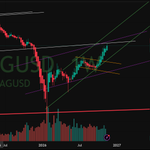
$XAUUSD / $XAGUSD 6M;
When the gold-silver ratio finally breaks this 50-year trendline, the mining sector is going to deliver returns we haven’t seen in decades.
We’re talking about numerous stocks with the potential to return 10x, 20x, or even 50x.
The mining sector will very likely become the strongest performing asset class by a wide margin — and it’s already one of the strongest sectors
#gold #silver $GDX $SIL $SILJ $GDXJ $AG $HL $CDE

Value Consultant retweeted

Let me explain what just happened 👇
5 minutes before the President announced a halt to attacks on Iran… someone placed a $1.5 BILLION bet on stocks going up and dumped $192 million in oil.
5 minutes…
These trades were 4 to 6 times larger than anything else in the entire market. Whoever did this wasn’t guessing. You don’t risk $1.5 billion on a hunch.
There was zero public indication this announcement was coming. No leaks. No press. Nothing. The only people who knew were in the room when the decision was made.
Someone in that room picked up a phone.
And within minutes they made more money than most Americans will earn in a thousand lifetimes. In a single trade. On a war that cost you $4+ a gallon gas and $16 billion in tax dollars.
American citizens funded this war. Politicians are profiting from it.
This is not the first time. Every major announcement from this administration has had massive suspicious trades right before it dropped. Tariff reversals. Policy shifts. War decisions.
This is the most blatant insider trading operation in the history of American politics. It’s not even close. And it’s happening over and over in broad daylight.
You would go to federal prison for trading on a tip from your cousin. These people are front running war decisions with billion dollar bets and nobody will ever ask a single question.
Nobody will be investigated. Nobody will be charged. By tomorrow this will be buried under the next satisfying headline. Just like last time. And the time before that.
The game is rigged. And they’re not even trying to hide it anymore…

BREAKING: Just five minutes before Trump's announcement to halt the attacks on Iran, massive trades reportedly hit the market.
In one move, $1.5 billion in S&P 500 (ES) futures was bought while $192 million in oil (CL) futures was sold.
These orders were 4–6x larger than anything else at the time.
The trader seemingly made huge gains.
Unusual.
Value Consultant retweeted
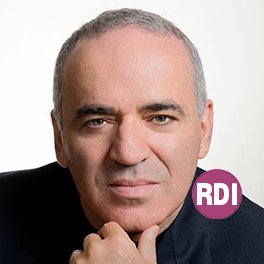
RIP to the great Dutch Grandmaster Jan Timman. He was the leader of the new Western generation after Fischer. Unlike many, he was a serious analyst and researcher who loved every aspect of the game, including compositions. He was at his powerful peak through the 1980s to 1993, when he lost matches to his peer Karpov and Nigel Short of the new generation. We dueled many times, including his victory in my "heaviest" game ever, where our moves were mirrored by machines moving huge shipping containers as pieces in Rotterdam! We also argued many times, as he also cared deeply about the future of our beloved game. He was my first opponent after I became world champion in 1985, pictured here in Hilversum, NED, before game 5 of our match on Dec 20, I believe.

Value Consultant retweeted

Netherlands To Tax Unrealized Gains: EU Wealth Grab And Global Implications zerohedge.com/political/neth…

Value Consultant retweeted
Greenland has at the center of the ongoing critical mineral debate and a lot of the narrative surrounding the country comes from the idea that the country possess vast resources of rare earth elements (REE) 🇬🇱
While true on paper, it requires alot of nuance that I want to discuss. Indeed, systematic studies suggest the island has around 10 significant rare earth deposits and could hold an estimated 36 million tonnes of rare earth oxides in total. In theory, that would rank Greenland among the world’s largest REE holders, perhaps second only to China. This enormous geological endowment, along with geopolitical jockeying has fed a narrative that Greenland is a coveted treasure trove of critical minerals. However, the reality is far more nuanced and I hope you have a good cup of coffee next to you before reading this, because there is a lot to cover. Not a single rare earth mine is operating in Greenland today, and only about 1.5 million tonnes of those resources are currently proven, economically viable reserves (again, on paper). Before Greenland’s rare earth riches can make a dent in global supply, major challenges in geology, composition, feasibility, economics, and infrastructure must be overcome. This deep dive hopefully provides a counterweight to the hype by examining Greenland’s REE deposits in detail, from their unique geological settings to the harsh practicalities of mining in the Arctic. The goal is to show that while Greenland’s rare earth potential is real, turning potential into production is a complex puzzle that involves much more than just having the right elements in the ground.
Geologically, Greenland is richly endowed with rare earth mineralization in several distinct settings. The ice-free land (about the size of California for scale) contains diverse REE deposit types scattered around the coasts. Broadly, these include three parts. Starting with the Mesoproterozoic Gardar Province in southern Greenland hosts two of the world’s largest known REE deposits, that being Kvanefjeld (Kuannersuit) and Kringlerne (Killavaat Alannguat). Both lie within the Ilímaussaq intrusion, a ~1.16 billion-year-old layered nepheline syenite complex enriched in a suite of unusual elements, not just rare earths but also uranium (U), thorium (Th), niobium (Nb), tantalum (Ta), beryllium (Be), zirconium (Zr), lithium (Li), fluorine (F), and others. These southern deposits are giant in size, for instance, Kringlerne has been quoted as having billions of tonnes of rock, but they are also geochemically complex and carry significant coproduct elements (like uranium at Kvanefjeld) that complicate extraction.
Greenland also hosts several REE-rich carbonatite intrusions along its west coast. These are more akin to the classic REE deposits found elsewhere in the world (like Mountain Pass in the U.S. or Bayan Obo in China) and typically contain minerals such as bastnäsite, monazite, or other REE carbonates. The most notable example is the Sarfartoq carbonatite near Kangerlussuaq, which is enriched in the magnet metals neodymium (Nd) and praseodymium (Pr). In fact, Sarfartoq’s ore has a particularly high proportion of Nd-Pr, the critical elements for high-strength permanent magnets, making it an attractive target in terms of REE mix. Other known carbonatites include Qaqarssuk (also spelled Qeqertaasaq) and Tikiusaaq in West Greenland. Beyond the major southern and western deposits, Greenland has a smattering of smaller or more unusual REE occurrences. For example, a Jurassic-age heavy mineral placer on Milne Land (East Greenland) contains monazite- and zircon-rich sandstones, essentially fossil beach sands concentrated in rare earth-bearing minerals. In North-Central Greenland, a couple of small high-grade REE showings (Niaqornakavsak and Umiamako Nuna in the Karrat Group) have been identified in metamorphic rocks, though these are more curiosities than mineable deposits. By and large, serious attention remains focused on the southwest to southern tip of Greenland, where the easiest logistics and the biggest known deposits coincide.
One of the biggest under-appreciated issues with Greenland’s rare earth deposits is ore grade, the concentration of rare earth oxides (REO for short) in the rock. Many of Greenland’s “world-class” deposits are indeed huge in tonnage, but they are comparatively low in REE concentration when measured against operating mines elsewhere. For perspective, successful rare earth mines like Mt. Weld (Australia), Mountain Pass (USA), or advanced projects like Nolans (Australia) and Bear Lodge (USA) typically boast ore grades in the 4–8% REO range. By contrast, Greenland’s flagship deposits are an order of magnitude leaner. The Kvanefjeld deposit carries about 1.4% total rare earth oxides, and the Tanbreez/Kringlerne deposit is estimated at only ~0.4% REO on average. In fact, when the Tanbreez owners were forced to disclose their confidential resource report, it revealed “considerably disappointing” grades and characteristics relative to initial claims. Such low grades mean any mine would have to move and process a huge volume of rock to produce a given amount of rare earths, driving up costs for fuel, chemicals, and milling equipment, and generating large waste streams. In Greenland’s case, it might necessitate massive open-pits and tailings facilities in sensitive Arctic environments, a tough sell both economically and environmentally.
Compounding the grade challenge is the complex mineralogy of Greenland’s REE ores. The dominant rare earth minerals in Kvanefjeld and Kringlerne are steenstrupine and eudialyte, respectively. These are not your run-of-the-mill REE ore minerals from what I have been able to find, as they are complex zirconium-silicate minerals embedded in a hard silicate rock matrix. To date, no one has developed a commercially proven process to economically extract rare earths from eudialyte-rich ore on a production scale. These minerals tend to require fine grinding and strong chemical attack (e.g. aggressive acids) to liberate the rare earths, as opposed to the relatively simpler treatment of bastnäsite (the fluorocarbonate mineral mined at Mountain Pass) or ionic clays (the source of heavy REEs in southern China, which can be extracted by salt leaching). An expert in the field succinctly noted that Greenland’s rare earths are “encased in a complex type of rock called eudialyte, and no one has ever developed a profitable process to extract [REEs] from that type of rock”. In other words, the metallurgy is as much a challenge as the geology, any company attempting to mine these deposits must essentially pioneer new processing flowsheets, which is costly, time-consuming, and risky.
By contrast, many of the world’s established or near-term rare earth sources are geologically “friendlier.” For example, China’s Bayan Obo deposit (the world’s largest REE mine) contains REEs largely in bastnäsite and monazite, and Chinese producers have spent decades perfecting the extraction from these minerals. Similarly, the Sarfartoq deposit in Greenland, being a carbonatite, likely contains REEs in minerals more familiar to industry, which could be easier to process (early indications suggest significant bastnäsite and monazite there). But Sarfartoq is a much smaller project by tonnage and still only at exploration stage.
I could write an entire book as to why it also matters what sort of REEs are present in these deposits, as not every REE is created equal, but we will leave that for another post. Moving on, another complication in Greenland is that rare earths often occur alongside radioactive elements in these deposits. Kvanefjeld, for instance, has an extremely high uranium content (estimates suggest the project holds one of the world’s larger uranium resources, intertwined with the REEs). Eudialyte and steenstrupine both incorporate uranium and thorium in their crystal structure. This creates regulatory hurdles and waste management dilemmas as any mine would have to handle and dispose of radioactive tailings safely, and in Kvanefjeld’s case, the presence of uranium became a flashpoint (there has been plenty of political fallout). Even beyond the radiation issue, processing rare earth ore is a messy business. It involves cracking the minerals and separating the REEs through multiple stages of chemical treatment, often using hot concentrated acids or alkalis, producing toxic waste solutions and acidic tailings. In Greenland’s pristine environment, the use of “toxic chemicals to separate the minerals out from the rock” is a serious concern, as experts point out. Any misstep could threaten local air, water, or the fishing grounds that coastal communities rely on. The bottom line is that Greenland’s rare earth deposits are not as plug-and-play as some would have you believe. They will require extensive R&D to refine extraction techniques, careful environmental management, and likely higher operating costs due to the inherent challenges of the ore itself. It’s a classic case of “grade is king” in mining, and high-grade, easily treated ore is something Greenland’s REE deposits largely lack, despite their large bulk.
Geology aside, Greenland’s physical environment and lack of infrastructure pose major barriers to any mining project, perhaps even more so than in typical remote mining regions. It’s often said that Greenland has fewer than 100 miles of roads in total, and outside a handful of small towns, “roads and railroads simply do not exist”. There is no road connecting the various coastal settlements; travel is only by boat, helicopter, or small plane. This means that a mining venture in Greenland’s interior or along a roadless coast must build all necessary infrastructure from scratch, roads or all-terrain vehicle trails to the deposit, ports or airstrips for access, accommodations for workers, and so on. The harsh Arctic climate compounds the difficulty: much of the ground is frozen or waterlogged depending on season, making construction challenging. As one analysis noted, it’s generally “too cold in Greenland to construct durable roads from concrete and asphalt”, so even basic transport links require special engineering or seasonal compromises. Moreover, coastal waters in the far north can be ice-choked for much of the year, limiting shipping windows. In the south (where Kvanefjeld and Tanbreez are located) the fjords freeze for shorter periods, but even there a mine would need ice-class vessels and year-round logistics planning around weather extremes.
Experts point out that transportation of materials can be as expensive as or even more expensive than the actual mining process in such settings. Every piece of heavy equipment, fuel, and supplies would have to be brought in by ship or air. Ore concentrates or mineral products would have to be shipped out via newly built port facilities. All this “greatly increases costs and complexity” compared to mining in places with existing roads, rail, and power. Notably, Greenland has no domestic power grid to tap for large-scale industrial projects. Any mine would have to generate its own power, likely through diesel generators or (if the site has a river) a dedicated hydroelectric installation. This further adds to up-front capital costs. Skilled labor is another bottleneck, with only ~57,000 people living in Greenland (and most of those not mining experts), projects would need to fly in crews of miners, engineers, and other specialists on rotations. Housing and feeding a remote workforce in polar conditions is expensive, and the labour costs would be high (potentially requiring incentives for people to work in such isolated, cold environments). All these factors make Greenland one of the world’s most expensive mining jurisdictions by some estimates.
It’s helpful to put Greenland’s situation in context by comparing it to other rare earth producing regions. China, as the dominant producer, benefits from high-grade deposits, massive economies of scale, and a fully built supply chain (from mining to refining to manufacturing). Projects in more accessible locales like Australia, the United States, and Canada have also been moving forward while Greenland’s remain stuck. For instance, Australia’s Mount Weld (Lynas Corporation’s mine) has been operating for over a decade and processes ore with about 7% REO grade, shipping concentrate to a cracking plant in Malaysia. The USA’s Mountain Pass mine in California is back in production, producing separated light rare earths from ore around 6% REO. Canada’s Nechalacho in the Northwest Territories began small-scale production of a rare earth concentrate from near-surface mineralization (though it ships the material overseas for final processing). New heavy rare earth projects like Browns Range in Australia (xenotime ore) and various ionic clay projects in Southeast Asia are also in late-stage development.
Compared to these, Greenland’s leading projects are at best in the pre-feasibility or exploration stage, with significant hurdles to clear. Take Sarfartoq, though promising for Nd-Pr content, it would need extensive drilling, environmental assessment, and infrastructure (it’s about 60 km from the nearest settlement and would need a road or fly-in operation). Kvanefjeld and Tanbreez, despite decades of attention, are essentially stalled, Kvanefjeld by political decree and Tanbreez by the need for better data and partners. Some industry observers argue that rather than trying to open up frontier mines in Greenland (or other challenging places like deep-sea beds or conflict zones), it makes more sense to support expansions of known projects in friendly, infrastructure-rich jurisdictions that can come online sooner. In fact, by the time Greenland could hypothetically produce its first rare earth oxide, existing producers and advanced projects in places like the U.S., Australia, Canada, or even Africa (e.g. projects in Tanzania or Botswana) could have already ramped up output.
In essence, Greenland’s rare earth deposits are often geologically compared to Saudi Arabia’s oil reserves, huge on paper. But the apt comparison for their development trajectory might be closer to the oil in the Arctic National Wildlife Refuge: known to exist, very tempting, yet locked behind layers of environmental, technical, and political barriers that will take considerable time and effort to surmount. Greenland undeniably sits on significant rare earth resources, and it will likely play a role in the future supply of critical minerals, but that role will be realized only with patience, investment, and a lot of ingenuity. All these factors serve as a counterweight to the simplistic narrative that Greenland is a treasure chest just waiting to be opened. There are a lot more things that could be said, from the aforementioned REE composition of the deposits to the political view with regards to mining in the country, but I will leave that for another time. In the world of critical minerals, as in so much else, things that sound too good to be true usually are, and Greenland’s rare earth bonanza is no exception without significant nuance and effort and I hope that this deep dive helps provide some clarity on that.
