

The official Upwind Security MDR Team. Essential defense built on three values: SPEED, SPEED, SPEED. Up & up 🏄♂️
Joined April 2026
- Tweets1.9K
- Following72
- Followers410
- Likes32






🚨 CRITICAL - Unauthenticated RCE in React Server Components (GHSA-xqc2-xf4c-x3h3)
A critical vulnerability in React Server Components packages (react-server-dom-webpack, react-server-dom-turbopack, react-server-dom-parcel) allows unauthenticated remote attackers to execute arbitrary code via crafted RSC Flight payload responses transporting multiple typed arrays and attacker-controlled values.
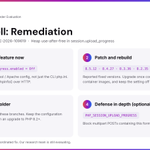
👉 Affected: Versions 19.0.0–19.0.8, 19.1.0–19.1.9, 19.2.0–19.2.8, 19.3.0 | Upgrade immediately to 19.0.9, 19.1.10, 19.2.9, or 19.3.1 (or Next.js 16.4.1 / 15.5.28)
github.com/react/react/secur…

🚨High - SSSD HBAC Trust Username Collision Access Bypass (CVE-2026-104048)
In SSSD trust-enabled setups, HBAC evaluation strips domain qualifiers and compares only short usernames. An authenticated user from a trusted domain sharing a username with an allowed local account can bypass HBAC and access protected services/hosts. Non-trust deployments aren’t impacted.
👉Affected: sssd (trust-enabled HBAC) | openshift/ose-rhel-coreos-8, openshift/ose-rhel-coreos-9
🚨High - Keycloak Dynamic Client Registration Claim Injection/Impersonation (CVE-2026-92857)
Keycloak Dynamic Client Registration request validation allows a malicious client to set protocol mappers that copy attacker-controlled profile fields into protected claims. With valid registration/admin tokens, an attacker can mint signed tokens with forged sub/aud to impersonate users and access relying services.
👉Affected: keycloak/rhbk-openshift-rhel9, keycloak-services, rhbk/keycloak-rhel9
🚨 CRITICAL - Memory-Safety Vulnerabilities in AWS Babelfish for Aurora PostgreSQL
AWS has disclosed two memory-safety vulnerabilities in the Tabular Data Stream (TDS) protocol layer of Babelfish for Aurora PostgreSQL:
• CVE-2026-119923: Flaw in TDS connection-handshake handling allowing unauthenticated remote attackers to compromise database confidentiality, integrity, and availability.
• CVE-2026-119924: RPC request-handling flaw allowing authenticated attackers to read adjacent process memory or cause Denial of Service.
👉 Affected / Remediation: Upgrade Aurora PostgreSQL clusters to the latest patched minor versions (e.g., 18.4.1 / 17.10.1 / 16.14.1 / 15.18.1 / 14.23.1 / 13.23.3) or open-source extensions 4.10, 5.6, 6.1+. Immediate mitigation: Restrict port 1433 via VPC security groups.
🚨Critical - AWS REX SSM Document Provisioning Script OS Command Injection (CVE-2026-122193)
The example provisioning script for AWS Trusted Remote Execution (REX) creates Rex-RO/Rex-RW SSM documents with unsafe parameter handling, enabling OS command injection. Any authenticated principal allowed to invoke Rex-RO or Rex-RW can run arbitrary commands as root on the managed instance, bypassing Cedar policy enforcement. Not impacted if you never deployed these example-created SSM documents.
👉Affected: rex-runner (REX example SSM doc provisioning script before 2026-07-28)
🚨Critical - OpenAM Session Token Leak via Liberty ID-FF Forward to Notifications WebSocket (CVE-2026-123551)
OpenAM’s notifications WebSocket leaks live iPlanetDirectoryPro session tokens to unauthenticated clients when an agent-only check is bypassed via an unvalidated internal forward from legacy Liberty ID-FF endpoints. Attackers can harvest tokens and hijack user/admin sessions. Non-Liberty ID-FF deployments aren’t impacted.
👉Affected: OpenAM 14.0.0 < 16.1.4 | Upgrade to 16.1.4
🚨High - Google::Auth OAuth Loopback State Validation Bypass (CVE-2026-74760)
Google::Auth (Perl) gcloud-auth loopback login callback fails to validate the OAuth state and accepts the first authorization code received. A local attacker can race the loopback listener and inject their own auth code, causing the CLI to store the attacker’s refresh token and run subsequent actions under the attacker’s Google account.
👉Affected: Google-Auth 0.11-0.12
🚨High - aiohttp DoS via multipart/form-data Infinite Loop (CVE-2024-30251)
aiohttp's multipart/form-data POST parser can be driven into an infinite loop by a specially crafted malformed multipart request, consuming the event loop and preventing the server from handling further requests after a single hit. Non-multipart handlers aren’t affected.
👉Affected: aiohttp < 3.9.4 | Upgrade to 3.9.4
🚨Critical - Kyverno Cross-Namespace PrivEsc via CEL targetMatchConstraints (CVE-2026-122313)
Kyverno NamespacedMutatingPolicy targetMatchConstraints.expression (CEL) output lacks namespace enforcement. A namespace-scoped tenant can return a literal cross-namespace target; the cluster-wide background controller applies mutations to that object, enabling edits to RoleBindings/Roles/NetworkPolicies/ConfigMaps outside the tenant namespace.
👉Affected: github.com/kyverno/kyverno >= 1.17.0, < 1.19.2 | Upgrade to 1.19.2

🚨Critical - Kyverno Admission Controller Namespace Escape via resource.get()/post() Path Traversal (CVE-2026-122311)
Kyverno fails to validate path segments in the resource argument to resource.get() and resource.post(). A tenant who can create a NamespacedValidatingPolicy can inject '..' to traverse out of the namespace and read/write arbitrary cluster objects using the admission controller ServiceAccount, leading to potential cluster takeover.
👉Affected: github.com/kyverno/kyverno >= 1.16.0 < 1.19.2 | Upgrade to 1.19.2
🚨High - Microsoft Paint OOB Read Remote Code Execution (CVE-2026-83844)
Windows Microsoft Paint mishandles crafted image parsing, triggering an out-of-bounds read that can be leveraged for remote code execution when a victim opens a malicious file delivered over the network (e.g., SMB/WebDAV/download). No auth required; user interaction is required.
👉Affected: Microsoft Paint 11.0.0.0 to < 11.2605.91.0 | Upgrade to 11.2605.91.0
🚨Critical - Docker Desktop WSL2 seccomp AF_VSOCK bypass via 32-bit socketcall (CVE-2026-112917)
In Docker Desktop for Windows using the WSL2 backend, an unprivileged Linux container can invoke 32-bit socketcall to bypass the default seccomp block on AF_VSOCK, reaching host-facing vsock services. This can expose Windows files accessible to the logged-in user on affected x86-64 WSL2 systems; LinuxKit-based backends are not impacted.
👉Affected: Docker Desktop for Windows (WSL2 backend) < 4.98.0 and/or WSL < 3.0.3 | Upgrade to Docker Desktop 4.98.0 + WSL 3.0.3
🚨Critical - Wanderer Unauth SSRF via trail download (CVE-2026-71495)
Wanderer’s unauthenticated POST /api/v1/trail/download is SSRF when PUBLIC_PRIVATE_INSTANCE is not set to true: the handler passes attacker-controlled JSON url into event.fetch() and returns the response. Enables access to internal services/cloud metadata, data exposure, recon, and DoS.
👉Affected: open-wanderer/wanderer < 0.20.0 | Upgrade to 0.20.0
🚨 CRITICAL - Unauthenticated Privilege Escalation in Microsoft Entra ID Device Registration (CVE-2026-109469)
An authorization bypass via user-controlled key flaw has been addressed in Microsoft Entra Device Registration Service. The flaw allows unauthenticated remote attackers to manipulate key attributes over the network, bypass tenant device registration authorization checks, and achieve unauthorized privilege escalation.
👉 Remediation: Cloud-hosted Microsoft Entra services have been mitigated centrally by Microsoft; hybrid/on-prem federation and registration endpoints should verify latest servicing guidance and audit unexpected device registrations.
🚨 CRITICAL - *sshole: Authentication Bypass in OpenSSH on musl Linux Since 2016
A critical security vulnerability has been revealed affecting OpenSSH running on musl libc systems. Accounts intended to reject password authentication entirely (e.g., locked root, key-only deploy accounts, LDAP users, or default cloud image users) will accept any password longer than 256 characters.
👉 Affected: musl-based distributions using OpenSSH (Alpine, OpenWrt, Buildroot, Yocto, Docker containers) | Audit exposed SSH ports, explicitly disable password authentication in sshd_config (PasswordAuthentication no), and apply upstream patches immediately.
sshhole.com/

🚨High - rsync rrsync TOCTOU Symlink Escape (CVE-2026-53783)
A TOCTOU race in rsync’s rrsync restricted shell wrapper lets an authenticated client pass path validation then swap in a symlink before transfer processing, escaping the enforced directory subtree. Abuse of allowed flags like --copy-unsafe-links, -D, and --log-file can enable read/write outside the permitted root. Standard rsync without rrsync restrictions isn’t impacted.
👉Affected: rsync (rrsync) < 3.5.0 | Upgrade to 3.5.0
🚨CRITICAL - Multiple Vulnerabilities Discovered in Google::Auth Perl Module
The Google::Auth Perl module is affected by multiple high-impact security flaws. These include a critical Server-Side Request Forgery (SSRF) vulnerability via AWS external_account credential_source URLs due to missing host validation (CVE-2026-74759), and a high-severity OAuth state validation bypass in the loopback callback allowing local attackers to inject authorization codes (CVE-2026-74760). These issues can lead to arbitrary internal host requests or unauthorized account actions.
👉Affected: Google-Auth 0.11–0.12 | No patched release available yet, until then only use trusted credential configs and run gcloud-auth login with --no-browser.
🚨Critical - FreeSWITCH SIP MESSAGE "api" Chat Protocol RCE (CVE-2026-116779)
FreeSWITCH < 1.11.3 misparses inbound SIP MESSAGE where part of the To user is treated as a chat protocol selector; attackers can force the "api" chat protocol and reach switch_api_execute() to run arbitrary FreeSWITCH API commands. Impact includes config/credential disclosure, call control, and OS command execution as the FreeSWITCH daemon; exploitation observed in the wild.
👉Affected: FreeSWITCH < 1.11.3 | Upgrade to 1.11.3
🚨Critical - Firefox & Thunderbird: three sandbox escapes in graphics and widget code (CVE-2026-117988, CVE-2026-117990, CVE-2026-117997)
Malicious web content can break out of the content sandbox three ways: incorrect boundary conditions in CanvasWebGL and in WebRender, plus a use-after-free in the Widget component. All are remote, unauthenticated and need only that the victim loads the page — scope-changed 9.6, meaning code running outside the sandbox on the host.
👉Affected: Firefox < 159, ESR < 153.6, Thunderbird < 159 / < 153.6 (117997 is Firefox only) | Upgrade now
🚨Critical - GPUStack Auth Bypass via Localhost IP Spoofing (CVE-2026-102895)
GPUStack’s auth logic maps localhost (127.0.0.1) requests to the built-in administrator when force_auth_localhost=false. Remote attackers can spoof the client IP via a same-host reverse proxy peer or by sending X-GPUStack-Real-IP: 127.0.0.1, gaining unauthenticated admin access and reaching POST /v2/inference-backends/from-yaml for RCE.
👉Affected: gpustack < 2.2.0 | Upgrade to 2.2.0