

Gyve: Middle English; origin unknown; sounds like jive; means to shackle or fetter; ungyve \un-jive\ v:[Middle English] to unshackle, unfetter, unchain
Boston
Joined December 2010
- Tweets1.1K
- Following181
- Followers101
- Likes256




Pinned Tweet
Truth is an arrow
And the gate is narrow
That it passes through
— Bob Dylan, from "When He Returns" | The Lyrics: Since 1962

100 Miles at Monkfish
@GregHopkinsJazz
The Mad MonkfishCambridge, MA
Thursday, October 29 • 7 PM - 8:30 PM
"Miles at 100, Greg at 80"
The Greg Hopkins Nonet
AKA: The Cryogenic Renaissance Orchestra
Plays The Mad Monkfish in Cambridge
Thursday, October 29th, 2026 -- 7:00PM


Un-Gyve Limited retweeted

This is one of the most famous paintings in the world, and almost no one knows the haunting story of the woman lying in the water...
This is Ophelia, by John Everett Millais, finished in 1852. The scene is from Hamlet, the young woman who loses her mind after the man she loves kills her father, and drowns in a stream while singing and gathering flowers.
Millais caught the instant before she goes under, hands open, lips still parted in song, her gown pulling her down. In the play, her death is almost a throwaway. It happens offstage, and the queen simply reports it afterward:
"There is a willow grows aslant a brook... When down her weedy trophies and herself fell in the weeping brook."
A few more lines, and the story moves on. Millais took that half-second and spent the better part of a year on it.
Every flower in the water is real, painted with the obsessive botanical precision the Pre-Raphaelites were famous for, and almost every one carries a hidden meaning. The pansies floating on her dress stood for love in vain. The violets around her neck meant faithfulness. The daisy near her hand, innocence. The weeping willow leaning over her was the old symbol of forsaken love. And bright against her gown, one red poppy: the flower of sleep and death, which Shakespeare never mentioned, and which Millais added himself. He built the whole tragedy into the foliage, in a language his Victorian viewers could read like text, and which we drift right past today.
To get the water right, Millais did something extraordinary: he painted the river first, outdoors, on the banks of a stream in Surrey, sitting there for five months, recording every leaf and reed. Then, through the following winter, he painted the girl. Her name was Elizabeth Siddal. She was twenty-two, discovered working in a hat shop, and she would become the great tragic figure of this whole story.
To pose as the drowning Ophelia, Siddal lay for hours in a bathtub of water in Millais’s studio, wearing an antique silver gown he had bought for the purpose. It was winter, so he set oil lamps beneath the tub to keep the water warm. One day, absorbed in his work, Millais did not notice that the lamps had gone out. Siddal, the perfect model, said nothing and did not move, and lay there in the freezing water until the session ended. She caught a severe cold that turned to pneumonia.
She recovered, but never fully, and she never posed for Millais again. And here is the detail that turns this painting into something almost unbearable to look at: ten years later Elizabeth Siddal died of an overdose of laudanum, the opium drug that Victorians took by the spoonful. She was thirty-two.
Look again at that single red poppy Millais slipped into the picture, the flower that has always meant both sleep and death, and that opium is made from.
He painted a beautiful young woman playing a girl who drowns. He could not have known he was also depicting her fate.
Some paintings do not stay inside their frames...

Un-Gyve Limited retweeted

Fun fact, this photo was actually shot by Stanley Kubrick in 1949 during his time as a photojournalist for Look Magazine!
📸Library of Congress

Like a Rolling Stone @bobdylan, Javon Jackson @javonjackson
allaboutjazz.com/media/track…
javonjackson.com/album/jacks…
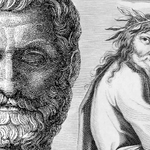
May 28, 585 BC eclipse of Thales, the earliest recorded predicted solar eclipse brought about peace between the armies of King Aylattes of Lydia and King Cyaxares of the Medes.
Jerry Garcia Band "Shining Star" 11/13/91 Worcester, MA
youtu.be/mfTn05kNCQM?si=QPqx…
May 28, 585 BC eclipse of Thales, the earliest recorded predicted solar eclipse brought about peace between the armies of King Aylattes of Lydia and King Cyaxares of the Medes.
Composite rendering of Thales, Wilhelm Meyer, 1875; Thales, Jean Couvay a. Claude Vignon, ca 1639-1640

Un-Gyve Limited retweeted

5/9 GREG HOPKINS QUINTET
May 09, 2026 07:00 PM until May 09, 2026 10:00 PM
Greg Hopkins, trumpet
Bill Jones, tenor saxophone
Consuelo Candalaria,piano
John Lockwood, bass
Mark Walker, drums
@markwalkerdrums @mwdrums
themadmonkfish.com/event/59-…




Un-Gyve Limited retweeted

Joan Goldin, oil painted photograph, 7 x 5 inches; Collected Works Joan Goldin (Un-Gyve Press) un-gyvepress.com/-logue/2023… • isolegalleries.com/joan-gold… • isolegalleries.com/releases/…

“Thank you, Berklee College of Music, for bestowing on me this prestigious honor. What a pleasant surprise. Who knows what path my career might have taken if I’d been fortunate enough to learn from some of the great musicians who taught at Berklee. It’s something to think about.”

ALT Bob Dylan Awarded Honorary Doctorate from Berklee College of Music
18th Annual Rivers Jazz Festival: Greg Hopkins Jazz Orchestra & Rivers Honors Jazz band celebrate 50th anniversary of Rivers School Conservatory of Music premiere of @GregHopkinsJazz composition commission “Reflecting On Rivers”
riversschoolconservatory.org…

Matt Glaser @BerkleeCollege presents @bobdylan Roots Salute berklee.edu/berklee-now/news… recognizing Un-Gyve Press’s Christopher Ricks @ a pre-show reception “Bob Dylan has been a transcendent force in American and global culture” said Glaser, who performed w/Dylan @ BU in 2000.


Un-Gyve Limited retweeted

A Festschrift for Christopher Ricks--with stories of how a formidable critic's magnanimity (his love for the littlest ones, textual variants & children alike), and art's "power not only to voice gratitude but to prompt it," changed my life and others'--is out now, link below

What'll I Do, CHRONOGRAPHY, The Greg Hopkins Jazz Orchestra (Then & Now)
youtu.be/6UlNU4b9w4E?si=zT2j…
greghopkinsjazz.com
Photo by Judith Aronson

In Goldin’s art, all is contemplated with the singular equanimity by which a figural artist (of judgement ever awake and steady self-possession) can compose collected works.
— Christopher Ricks, The Eye’s Mind, Collected Works Joan Goldin Un-Gyve Press
joangoldin.art


"In Goldin’s art, all is contemplated with the singular equanimity by which a figural artist (of judgement ever
awake and steady self-possession) can compose collected works." — Christopher Ricks, "The Eye's Mind" Collected Works, Joan Goldin (archival pigment print, 34" x 44").

ALT archival pigment print, 34 x 44 inches, Copyright © Joan Goldin