

History..... Despite its wretched pain, Can not be un lived, But if faced with courage, Need not be lived again
Uganda
Joined October 2024
- Tweets6.6K
- Following641
- Followers4.3K
- Likes293




Conflict and Collaboration.
The Kingdoms of Western Uganda, 1890-1907, Chapter VI.
The Establishment of Collaboration
(Part 1: The Submission of the Nyoro Chiefs and the Bunyoro Arrangement, 1895-1901).
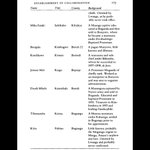
The establishment of colonial rule in Western Uganda did not wait for the final capture of Kabarega; instead, a new regime of collaboration emerged behind the lines of battle, built upon a body of chiefs willing to work with the invaders.
In Bunyoro, the defeat of Kabarega's forces in April 1895 triggered large-scale defections, beginning with his top general, Rwarubudongo, and quickly followed by the county chief Byabacwezi.
While Kabarega sent Byabacwezi back as a fifth columnist to feign collaboration and hasten his own restoration, the plan backfired disastrously.
Byabacwezi instead became the keystone of the British administration, turning against his former king and proving indispensable to the pacification of the kingdom due to his chiefly rank, legitimacy, and localized power.
The British struggled to construct a coherent administrative hierarchy from these defectors.
Rwarubudongo, a military leader rather than a territorial chief, was initially placed over southern Bunyoro, creating friction with Byabacwezi.
When Rwarubudongo was removed for failing to administer his remote district, the British turned to a regency model.
In 1898, Kabarega's ten-year-old son, Kitahimbwa, was installed as Mukama under a three-man regency council, transplanting a Ganda-style chieftaincy system onto Bunyoro.
However, the rivalry between Rwarubudongo and Byabacwezi persisted, poisoning the administration.
It was only after Rwarubudongo's death in 1900 that Byabacwezi, the Protestant, Buganda-phile "progressive," became the unchallenged arch-collaborator.
The formalization of this new order came with the Bunyoro Arrangement of 1901. Guided by the Ganda tutor Jemusi Miti, the leading Bunyoro chiefs submitted a "Proposed System of Chieftaincy," dividing the kingdom into ten counties under Ganda titles.
Recruitment into this new elite was drawn from two distinct pools: former barusura military leaders accustomed to personal achievement and loyalty to a superior, and "alien" men of cross-cultural experience, primarily educated Christian converts from Buganda or elsewhere.
Notably absent from the new hierarchy were the Bito royal clan and Kabarega's Banyonya relatives, whose traditional claims to power were systematically eliminated.
By favoring these new men, the British effectively replaced the old ruling aristocracy with a collaborating class whose authority depended entirely on imperial recognition.
#UgHistory #Tooro #ankole #Bunyoro


Conflict and Collaboration.
The Kingdoms of Western Uganda.
1890-1907.
Chapter V.
Mbaguta and Ankole Collaboration.
The crisis that transformed Ankole began in July 1895 with the death of Mugabe Ntare V, marked by ritual wailing, the suicide of royal relatives, and the scattering of Hima chiefs.
Ntare died of pneumonia, but the kingdom was already reeling from hardship.
Between 1891 and 1895, rinderpest and smallpox had devastated Ankole, decimating the cattle herds underpinning the pastoral economy, clientage system, and chiefly authority.
Smallpox disproportionately struck the bahima elite, killing thirteen major chiefs and Ntare's only son, Kabumbire.
This left no heir apparent and fostered intense paranoia at court, culminating in Ntare's jealous execution of his popular uncle, Prince Nkuranga, carried out by a young commoner chief named Mbaguta and his newly organized abangonya fusiliers.
The 1895-1899 succession crisis was a bitter scramble among Bahinda Princes.
Prince Kahitsi seized the royal drum and regalia, while Prince Igumira emerged as a leading military figure.
Because both were disqualified from the throne by physical imperfections, they put forward a young proxy: Kahaya, Ntare's adopted son and Igumira's biological son.
Mbaguta, a Mushambo commoner, positioned himself as the crucial intermediary between this faction and the external powers of Buganda and the British, leveraging his fluent Luganda and leadership of Christian Baganda refugees.
In late 1895, British officer George Wilson validated Kahaya's claim at the Lunga conference, swayed by the boy's resemblance to Ntare.
Kahitsi and Igumira became joint regents, but Kahitsi's independence and retention of royal herds sparked conflict, leading to his military defeat by British-backed forces and retirement into pastoral obscurity by 1899.
From 1899 to 1901, Mbaguta consolidated his role as keystone of the new colonial order.
With the arrival of R. J. D. Macallister, the first British Collector, in December 1898, a new administration was established at Mbarara.
Mbaguta, officially recognized as the Enganzi, became the primary liaison between the royal court and the British Protectorate, exploiting his position to undermine his chief rival, Prince Igumira.
When Igumira claimed territory against Musinga of Igara in 1900, Mbaguta turned the new British Collector against him, resulting in Igumira's arrest and exile to Kisumu, Kenya.
His lands and chieftaincy were distributed to Mbaguta and loyal collaborators, eliminating the last major source of Bahinda resistance.
By August 1901, the new Ankole kingdom was established under the titular sovereignty of Mugabe Kahaya, British protection, and the effective rule of Mbaguta and a new class of collaborating chiefs.
In his "Discussion," Steinhart argues this revolution resulted from a decade-long crisis exposing structural weaknesses in the Ankole polity.
The traditional Bahinda leadership failed to mount serious resistance, becoming bogged down in internal factionalism and competition for the role of kingmaker.
They failed to recognize the threat to their sovereignty or mobilize the masses.
The emergence of a second tier of leadership, willing to compromise and collaborate, sealed Ankole's fate.
Mbaguta, the "arch-collaborator," exemplified this shift.
As a high-ranking commoner outside the royal lineage, he posed no threat to the titular sovereignty of the dynasty, allowing him to accumulate vast governmental powers never before possessed by a non-royal official.
He became the ultimate power broker, translating the collapse of the old regime into a new order of colonial collaboration.
#ughistory #Ankole #Tooro #Bunyoro


Conflict and Collaboration.
The Kingdoms of Western Uganda, 1890-1907.
Chapter IV: Kasagama and Toro Clientage.
Part 2: Religious Strife, Cultural Nationalism, and the Transformation to Colonial Dependency, 1896-1900.
Kasagama's journey to Kampala marked a turning point.
He returned to Tooro in April 1896, having been baptized as Daudi (David) into the Anglican Church, deeply indebted to the Protestant missionaries and Baganda chiefs who had supported his appeal against Ashburnham.
This began a period where religion and state became inextricably linked.
Kasagama sought to make Protestantism the de facto state religion, appointing Protestant chiefs and favoring his Baganda Protestant patrons, which provoked intense rivalry with Roman Catholic missionaries and their Bairu converts.
This religious tension, coupled with the distractions of the Mwanga rebellion and the Sudanese mutiny in Buganda in 1897, allowed Kasagama to consolidate his power.
Byakweyamba, isolated and thwarted in his ambitions, committed suicide in 1897, removing a major internal rival.
However, a new form of resistance emerged from Kasagama's own sister, Bagaya, who led a cultural nationalist backlash against the overwhelming Buganda influence at court, rejecting the Luganda language, Buganda customs, and Protestant monogamy in favor of traditional Tooro practices and polygyny.
This cultural revival coincided with a critical shift in British colonial policy.
The arrival of Stephen Bagge as the new district officer in March 1899 signaled the end of the chaotic clientage system.
Bagge reversed the previous policy of undermining the monarch, instead choosing to rely on Kasagama and his chiefs for tax collection and local administration, thereby strengthening royal authority.
The culmination of this transformation was the Toro Agreement of June 1900, which formalized the system of royal collaboration.
In his "Discussion," Steinhart argues that Tooro's unique response to imperialism lay in this concept of "royal clientage."
Kasagama walked a tightrope, owing simultaneous allegiance to both his British and Ganda patrons.
While this dual allegiance created friction and accusations of insubordination, the British ultimately proved to be the more advantageous patrons, they demanded less homage and provided better protection than the Ganda subimperialists.
By 1900, the era of Toro as a precarious client state had ended, giving way to a stable, formalized colonial dependency under the Uganda Protectorate.
#ughistory #Ankole #Tooro #Bunyoro #Buganda


Conflict and Collaboration.
The Kingdoms of Western Uganda.
1890-1907.
Chapter IV: Kasagama and Tooro Clientage
Part 1.
The Foundation and Crises of Clientage.
1891-1895.
The establishment of Tooro as a British client state began in 1891 when Lugard reinstated the young Prince Kasagama as Mukama.
However, Lugard left behind two critical checks on the new monarch's authority: a string of Sudanese garrisons to protect Tooro from Bunyoro, and a British officer in charge of "southern Unyoro."
The Sudanese troops, undisciplined and left to fend for themselves, soon became a scourge on the local population, committing theft, rape, and murder, which the local British officer, DeWinton, was powerless to stop before his death in 1892.
Kasagama attempted to establish his own hierarchy of county chiefs, mostly drawn from exiles returning from Ankole, but his authority was immediately challenged by the continued presence of Kabarega's Bunyoro administration and the ambitions of his own mentor and guardian, Yafeti Byakweyamba.
Byakweyamba, a Mubito aristocrat and Protestant convert who had raised Kasagama in Buganda, proved to be a deeply ambivalent figure.
He harbored his own aspirations for an independent kingdom in Mwenge and refused to subordinate himself to Kasagama, demanding an equal division of the kingdom.
This secessionist tension, along with the threat from Kabarega's forces, created a volatile situation.
By 1895, this erupted into a full-blown crisis.
In January, the Munyoro commander Rwarubudongo raided Mwenge, exposing the Batoro's inability to resist without British arms.
Later that year, a succession dispute in Kyaka between Byakweyamba's candidate and the British-backed candidate led to open conflict.
The final breaking point came when Kasagama clashed with the inexperienced British officer, Ashburnham, over the treatment of the surrendered Munyoro chief Rwarubudongo and the collection of ivory tribute.
Ashburnham arrested, shackled, and flogged Kasagama, prompting the young monarch to flee to the mountains of Bukonjo, and subsequently to Kampala to appeal directly to the British Commissioner, bypassing the local administration entirely.
#UgHistory #Tooro #Bunyoro #Ankole


