
Make tutor time as awesome as you can! A daily slide with content and questions, by @mrbakerphysics and @drwilkinsonsci
- Tweets933
- Following12
- Followers1.7K
- Likes49





ALT A wide field view showcases Jupiter in the upper right quadrant. The planet’s swirling horizontal stripes are rendered in blues, browns, and cream. Electric blue auroras glow above Jupiter’s north and south poles. A white glow emanates out from the auroras. Along the planet’s equator, rings glow in a faint white. These rings are one million times fainter than the planet itself! At the far left edge of the rings, a moon appears as a tiny white dot. This moon is only about 12 miles (20 km) across. Slightly further to the left, another moon, about 100 miles (150 km) across, glows with tiny white diffraction spikes. The rest of the image is the blackness of space, with faintly glowing white galaxies in the distance.

ALT The background is mostly dark. At the center is a dark orange-brown circle, surrounded by several blazing bright, thick, horizontal whiteish rings. This is Saturn and its rings. There are three tiny dots in the image—one to the upper left of the planet, one to the direct left of the planet, and the lower left of the planet. These are three of Saturn’s moons: Dione, Enceladus, and Tethys, respectively. There is a slightly darker tint at the northern and southern poles of the planet. The rings surrounding Saturn are mostly broad, with a few singular narrow gaps between the broader rings. There is an innermost, thicker ring, and next to that is a brighter, wider ring. Traveling farther outward, there is a small dark gap before another thicker ring. In the thicker ring, there is a narrow faint band. There is then an outermost, faintest, thinnest ring.

ALT The planet Uranus on a black background. The planet appears light blue with a large, white patch on the right side. On the edge of that patch at the upper left is a bright white spot. Another white spot is located on the left side of the planet at the 9 o’clock position. Around the planet is a system of nested rings. The outermost ring is the brightest while the innermost ring is the faintest. Unlike Saturn’s horizontal rings, the rings of Uranus are vertical and so they appear to surround the planet.

ALT In this Webb image, Neptune resembles a pearl with rings that look like ethereal concentric ovals around it. There are 2 thinner, crisper rings and 2 broader, fainter rings. A few extremely bright patches on the lower half of Neptune represent methane ice clouds. Six tiny white dots, which are six of Neptune’s 14 moons, are scattered among the rings. The background of the image is black.



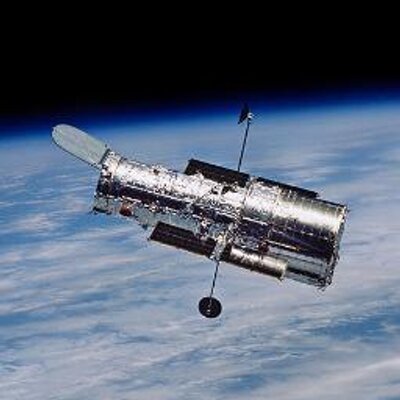

ALT A massive galaxy shines with a bright center and spiraling arms dotted with young blue stars.


ALT NASA’s James Webb Space Telescope has delivered the deepest and sharpest infrared image of the distant universe so far. Webb’s First Deep Field is galaxy cluster SMACS 0723, and it is teeming with thousands of galaxies – including the faintest objects ever observed in the infrared. Webb’s image is approximately the size of a grain of sand held at arm’s length, a tiny sliver of the vast universe. The combined mass of this galaxy cluster acts as a gravitational lens, magnifying more distant galaxies, including some seen when the universe was less than a billion years old. This deep field, taken by Webb’s Near-Infrared Camera (NIRCam), is a composite made from images at different wavelengths, totaling 12.5 hours – achieving depths at infrared wavelengths beyond the Hubble Space Telescope’s deepest fields, which took weeks. And this is only the beginning. Researchers will continue to use Webb to take longer exposures, revealing more of our vast universe. This image shows the galaxy clut.

ALT With its powerful, infrared vision and extremely high spatial resolution, Webb shows never-before-seen details in this galaxy group. Sparkling clusters of millions of young stars and starburst regions of fresh star birth grace the image. Sweeping tails of gas, dust and stars are being pulled from several of the galaxies due to gravitational interactions. Most dramatically, Webb captures huge shock waves as one of the galaxies, NGC 7318B, smashes through the cluster. Together, the five galaxies of Stephan’s Quintet are also known as the Hickson Compact Group 92 (HCG 92). Although called a “quintet,” only four of the galaxies are truly close together and caught up in a cosmic dance. The fifth and leftmost galaxy, called NGC 7320, is well in the foreground compared with the other four. NGC 7320 resides 40 million light-years from Earth, while the other four galaxies (NGC 7317, NGC 7318A, NGC 7318B, and NGC 7319) are about 290 million light-years away.

ALT Two stars, which are locked in a tight orbit, shape the local landscape. Webb's infrared images feature new details in this complex system. The stars – and their layers of light – are prominent in the image from Webb’s Near-Infrared Camera (NIRCam) on the left, while the image from Webb’s Mid-Infrared Instrument (MIRI) on the right shows for the first time that the second star is surrounded by dust. The brighter star is in an earlier stage of its stellar evolution and will probably eject its own planetary nebula in the future.

ALT This landscape of “mountains” and “valleys” speckled with glittering stars is actually the edge of a nearby, young, star-forming region called NGC 3324 in the Carina Nebula. Captured in infrared light by NASA’s new James Webb Space Telescope, this image reveals for the first time previously invisible areas of star birth. Called the Cosmic Cliffs, Webb’s seemingly three-dimensional picture looks like craggy mountains on a moonlit evening. In reality, it is the edge of the giant, gaseous cavity within NGC 3324, and the tallest “peaks” in this image are about 7 light-years high. The cavernous area has been carved from the nebula by the intense ultraviolet radiation and stellar winds from extremely massive, hot, young stars located in the center of the bubble, above the area shown in this image. The blistering, ultraviolet radiation from the young stars is sculpting the nebula’s wall by slowly eroding it away. Dramatic pillars tower above the glowing wall of gas.


ALT The background of space is black. Thousands of galaxies appear all across the view. Their shapes and colors vary. Some are various shades of orange, others are white. Most stars appear blue, and are sometimes as large as more distant galaxies that appear next to them. A very bright star is just above and left of center. It has eight bright blue, long diffraction spikes. Between 4 o’clock and 6 o’clock in its spikes are several very bright galaxies. A group of three are in the middle, and two are closer to 4 o’clock. These galaxies are part of the galaxy cluster SMACS 0723, and they are warping the appearances of galaxies seen around them. Long orange arcs appear at left and right toward the center.


ALT Wide-angle view Soyuz rocket launch

ALT Soyuz leaving launch pad

ALT Soyuz leaving launch pad


