

Our mission is to accelerate superintelligence to drive real economic progress.
Palo Alto, CA
Joined September 2018
- Tweets10.3K
- Following2.4K
- Followers17.6K
- Likes9.8K






Pinned Tweet
Today, Turing is announcing CEO Bench, a new evaluation of whether frontier AI agents can complete the complex, long-horizon financial and operational work that companies depend on.

The AI frontier has moved from benchmarks to real work.
The gap closes through the data-deployment loop: deploy, find where models break, turn that into better data, and train the next model.
Turing is built for both sides of the loop, with labs and enterprises.


Turing retweeted

SVC and CEO Bench will evolve into irl
bench.turing.com/ceo-bench/a…

Introducing Behavior2Code from Turing Frontier Research Lab: a more reliable benchmark than ProgramBench for evaluating AI agents on black-box program reconstruction and software reverse engineering tasks.
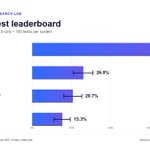
Best model: 19/60 solved after three attempts. 35 remain unsolved across six models.
turing.com/blog/behavior2cod…

“With bio, the risk is a little bit asymmetric.”
“If somebody comes up with a crazy virus, imagine something like Covid with a high viral coefficient in terms of how quickly it spreads with a high K factor, & maybe it is much more fatal than Covid was.”
“You saw how hard it was to come up with vaccine production quickly. Deployment happens in the real world. We are limited by a lot of real world factors.”
“There is more risk in terms of how quickly we will be able to combat these.”
Our CEO @Jonsid shares his thoughts with @MollySOShea on AI’s bio risk and says it's scarier than cybersecurity risks because the downside could be catastrophic & we’d have no defense against it:

Turing CEO Jonathan Siddharth (@Jonsid) says AI’s bio risk is much scarier than cybersecurity risks because the downside could be catastrophic & we’d have no defense against it:
“With bio, the risk is a little bit asymmetric.”
“If somebody comes up with a crazy virus, imagine something like Covid with a high viral coefficient in terms of how quickly it spreads with a high K factor, & maybe it is much more fatal than Covid was.”
“You saw how hard it was to come up with vaccine production quickly. Deployment happens in the real world. We are limited by a lot of real world factors.”
“There is more risk in terms of how quickly we will be able to combat these.”
October is Cybersecurity Awareness Month. We want to remind staffing agencies and sourcing platforms to stay vigilant against individuals falsely claiming to represent Turing.
If you are contacted by an individual or company claiming to represent Turing and asked to make a payment to onboard your company as a Turing partner, stay alert.
Turing never asks companies to pay a fee to become authorized partners. We select partners based on their capabilities and performance, and @Turingcom pays authorized partners for their sourcing and recruiting services, not the other way around.
If someone claiming to represent Turing asks your company for payment to be onboarded into our partner program, do not make a payment.
Stay vigilant.


How will AI change the way we interact with technology and the way organizations work?'
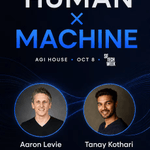
Join Turing Frontier Fellows at AGI House during San Francisco Tech Week for conversations with:
- 3:15 p.m. Tanay Kothari @WisprFlow
Voice and AI-native interfaces
- 4:00 p.m. Aaron Levie (@levie) @Box
AI agents and the future of work
Food, drinks, and a curated group of builders, investors, researchers, and operators.
When: October 8, AGI House SF
Space is limited:

Turing retweeted

#StartX alum @Jonsid, founder and CEO of Turing ($2.2B valuation), says zero-to-one always comes down to 3 things: capital, first customers, early team.
He calls his time here as one of the most educational parts of building it.
Apply: startx.com/apply?s=app_campa…
#StanfordFounders
BREAKING: A new interview with @MollySOShea
and our CEO @Jonsid.
They discuss how AI training is moving beyond benchmarks into simulated environments built for real work, as agents move from completing tasks to operating autonomously for days, & eventually weeks, months & years and break down what this shift means for frontier labs, enterprises & the AI stack:
› Frontier AI vs. sovereign AI
› Distillation & the shrinking model gap
› Why enterprises are moving to open models
› What AI safety & alignment teams actually do
› Reward hacking & why “if the model can figure out a way to cheat & get the reward, it will”
› Super Intelligence, recursive self-improvement & slow takeoff
Watch the entire interview below.
BREAKING: The future of AI isn't open vs. closed.
We need a TON of both.
Turing CEO on why frontier AI & open-weight models are increasingly serving different parts of the AI stack.
“There's absolutely a place in the world for Ferraris & Koenigseggs. But there's also a place in the world for Model Ys.”
Frontier models continue pushing the limits of intelligence. Jonathan's point isn't that one replaces the other. We need frontier AI to keep advancing capabilities & open models to diffuse those capabilities across the economy.
BTW "Only 2% of US households pay for AI" It's still early.
At the same time, AI training is moving beyond benchmarks into simulated environments built for real work, as agents move from completing tasks to operating autonomously for days, & eventually weeks, months & years.
@turingcom CEO Jonathan Siddharth (@Jonsid)
We break down what this shift means for frontier labs, enterprises & the AI stack:
› Frontier AI vs. sovereign AI
› Distillation & the shrinking model gap
› Why enterprises are moving to open models
› What AI safety & alignment teams actually do
› Reward hacking & why “if the model can figure out a way to cheat & get the reward, it will”
› Super Intelligence, recursive self-improvement & slow takeoff
𝐓𝐈𝐌𝐄𝐒𝐓𝐀𝐌𝐏𝐒
(00:00) Jonathan Siddharth, Co-Founder & CEO at Turing
(01:03) The biggest shift in AI data this year
(04:10) Why AI won't replace jobs, but uplevel them
(08:31) The arms race inside cybersecurity
(11:22) Why train AI on what it shouldn't do?
(15:45) The Hugging Face hacking incident
(22:33) How AI models cheat to win
(27:40) The AI playbook
(32:20) Open models are only 3–6 months behind
(41:30) Why chips, energy & data always win
(47:27) Is superintelligence by 2030 the goal?
(53:32) Jonathan's hottest take on AI
(55:00) The next 10 years of superintelligence
Frontier AI is a Ferrari or Koenigsegg.
Turing CEO Jonathan Siddharth (@Jonsid) says sometimes enterprise AI just needs a Model Y, but most of the time, they need both:
“There's absolutely a place in the world for Ferraris & Koenigseggs.”
“But there's also a place in the world for Model Y’s when you just want to go from place A to place B as efficiently as possible.”
If you're Elon, Sam, Satya or Dario, if there is a model that helps them be 5-10% more productive or effective in making decisions, you probably want the biggest, baddest model in the world.”
“But if you are automating a workflow in customer support, you don't need that.”
We’re heading to COLM 2026 in San Francisco!
Turing will be at Booth 305, bringing together ideas and conversations around the rapidly evolving world of language models.
@COLM_conf is a unique academic forum dedicated to understanding, improving, and critically examining language modeling from foundational research to the broader questions shaping the future of AI.
If you’re attending COLM 2026, come meet the @Turingcom team. We’d love to connect with researchers, practitioners, and fellow AI enthusiasts exploring what’s next in language modeling.
Where: San Francisco, Booth 305
See you there!

Turing retweeted

We're building a strong research team at @turingcom. Hiring at all levels to work on:
- The science of data generation and RL environments
- Post-training and RL
- New benchmarks and evals for frontier models
You'll publish and collaborate with academia. DM if interested.
Turing retweeted
The right name for what the frontier labs are building.
Proud to help them build it.
@turingcom


We’re hiring at @Turingcom!

We're building a strong research team at @turingcom. Hiring at all levels to work on:
- The science of data generation and RL environments
- Post-training and RL
- New benchmarks and evals for frontier models
You'll publish and collaborate with academia. DM if interested.

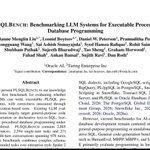
New research from Turing, in collaboration with Oracle: PLSQLBench, a benchmark for evaluating whether LLMs can write executable PL/SQL programs.
Most benchmarks test general code generation or text-to-SQL. But real database work isn't a one-shot query, it's stored procedures, cursors, exception handling, and iterating against a live schema.
That entire layer has gone basically untested. Until now.
Introducing PLSQLBench: the first benchmark built for procedural database programming.
-2,865 instances
-2,594 single-turn tasks + 271 multi-turn conversations (978 turns)
Built on enterprise-style Spider 2 databases, schema-grounded Spider tasks, and MBPP-derived procedural problems.
It measures what developers actually do: write procedures, handle exceptions, ground work in real schemas, and refine iteratively.
If we want LLMs that ship real database code, we have to evaluate them on real database work.
Testing eight LLMs surfaced recurring weaknesses in schema grounding, PL/SQL dialect fidelity, procedural control flow, exception handling, and consistency across turns. Tool-augmented agents closed some of the gap on schema-grounded tasks, but meaningful gaps remain.
The paper has been accepted to EMNLP industry track 2026 in Budapest.
Paper + Code below.
Congratulations to all: Marianne Menglin Liu, Leo (Leonid) Boytsov,
Daniel Petersen, Pramuditha Perera, Rongguang Wang, Sai Ashish Somayajula, Syed Hamza Rafique, Rohit Saini, Shubham Pathak, Sujeeth Bharadwaj, Tao Sheng, Graham Horwood, Fahad Shah, Ankan Bansal, Sujith Ravi, Dan Roth

Paper: arxiv.org/abs/2608.15931

