
Biblical truth for the narrow way. Essays, connected ideas, Scripture journeys, and questions for the heart. https://xitter.cf/t.co/DHq95YPbUC
Joined April 2024
- Tweets460
- Following34.6K
- Followers41K
- Likes2.7K




Pinned Tweet
Welcome to The Unbeaten Path.
This is not a collection of motivational quotes.
It is a connected library of biblical essays, ideas, Scripture journeys, and recurring questions about obedience, faith, suffering, temptation, stewardship, death, purpose, and the life of God.
If you are carrying a question, begin here:
theunbeatenpath.org
Which is harder for you:
Praying when God seems silent, or accepting an answer that is not the one you asked for?
David knew both in the same week. (2 Samuel 12:16–23)
I would value your answer below.
1/ We can pray with all our hearts and still not receive what we ask.
David fasted and lay on the ground all night for his child. On the seventh day, the child died. (2 Samuel 12)
Yet James says the prayer of a righteous man avails much. What makes the difference?
4/ Prayer cannot overrule God's will.
In Gethsemane the cup did not pass. Paul's thorn remained. Both were heard. (Matthew 26:39; 2 Corinthians 12:7–10)
A prayer can be heard without the burden being lifted.
5/ Our need gives us reason to ask. It does not give us authority to decide the answer.
The full essay: The Prayer That Does Not Avail Much
theunbeatenpath.org/essays/t…
Earnest prayer cannot replace repentance, cancel every consequence of sin, or overrule God’s will. When a request is not granted, Scripture calls us to examine our conduct, our petition, and what God has revealed, and to bring our desires with a heart willing to forsake sin and a will submitted to His. theunbeatenpath.org/essays/t…

Sin is not limited to deliberate acts of wrongdoing. Scripture also exposes the spiritual seriousness of omission—knowing that love, mercy, repentance, obedience, or faithful action is required and choosing not to respond. Matthew 25 warns that neglected obedience is not morally empty. What we repeatedly refuse to do forms the heart just as surely as what we actively practise. The gospel therefore calls us beyond merely avoiding evil toward repentance, renewed life, active goodness, and obedience that bears visible fruit. #TheUnbeatenPath

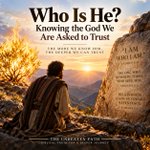
Trust depends upon the character of the one being trusted. Scripture therefore does not call us to blind belief in an undefined deity; God reveals who He is. In Exodus He identifies Himself as “I AM”—the self-existent God who does not depend upon creation for His being. Hebrews teaches that approaching Him requires believing that He is and that He responds to those who genuinely seek Him. Romans reveals that even His patience and kindness have moral purpose, drawing the human heart toward repentance. Growing faith therefore requires more than believing that God exists; it requires learning who He is, what He is like, and responding to Him accordingly.

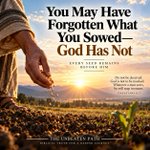
Every choice plants something. Scripture's law of sowing and reaping is not karma, fate, or an impersonal universe balancing accounts; it operates under the sovereign God who sees, remembers, judges, rewards, forgives, and governs the harvest. Evil does not become harmless because consequences are delayed, and faithful obedience does not become fruitless because its reward is unseen. Yet suffering must never be carelessly reverse-engineered into proof of hidden sin: Job, Joseph, and Jesus show that suffering may also be testing, preparation, persecution, or participation in a greater purpose. Man chooses what he sows; God governs the season, measure, and form of the harvest.

Nothing in the human heart is hidden from God. Scripture teaches that His sight reaches beyond outward behaviour into motives, thoughts, desires, intentions, and secrets. This makes God's omniscience a warning against hypocrisy and hidden sin, but also a source of profound comfort: misunderstood obedience, unseen suffering, quiet faithfulness, and injustice overlooked by others are all fully known to Him. Wisdom therefore learns to live before God's eyes rather than merely before the opinions of people.

Trusting God with all the heart does not mean refusing to think. It means refusing to enthrone our own understanding. Human reasoning is real and valuable, but limited by what we know, what we can see, and how accurately we interpret circumstances. Proverbs therefore calls us to acknowledge God in every path and to obey Him even when His direction exceeds our present comprehension. Faith does not begin where reason disappears; it begins where reason recognizes that God sees farther than we do.
theunbeatenpath.org/essays/t…

Why does temptation so often succeed before we realise we are being tempted?
Because temptation rarely presents the destruction.
It presents the apparent benefit.
The bait is visible. The hook is not.
I explored this more deeply here:
The Temptation →
theunbeatenpath.org/essays/t…

Post 3/5 — The Closed Hand
God gives with an open hand.
We receive with an open hand.
But slowly, our fingers may close.
“This is a gift” becomes:
“I need this.”
Then:
“I cannot lose this.”
And finally:
“God, You may touch everything — except this.”
Abraham’s greatest sacrifice on Moriah may not have been Isaac.
It was the death of the claim:
“This is mine.”
#Surrender #TrustGod #Abraham #BibleTruth #FaithJourney
