
Biologist, Photographer
Anchorage, Alaska
Joined December 2013
- Tweets10.2K
- Following266
- Followers3.4K
- Likes60.1K


Declan Troy retweeted

July 1968, Powerline Pass in Chugach State Park near Anchorage. Via Anchorage Museum #alaskahistory #alaska #anchoragehistory


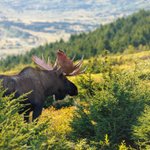
The antlers are grown, the velvet is gone, let the rut begin! Moose ready for action in Chugach State Park #Alaska

Declan Troy retweeted

On Sept 12, Arctic sea ice reached its annual minimum extent of 4.60 million square kilometers (1.78 million square miles), tying for tenth lowest with 2008, 2010, and 2025. The last 20 years are the lowest 20 sea ice extents in the satellite record. bit.ly/4Ate4Yl

Declan Troy retweeted

A single bird has just accomplished one of the most extraordinary feats in the animal kingdom — flying nearly one-third of the way around the Earth without stopping to eat, drink, or rest.
The record-breaker is a five-month-old Bar-tailed Godwit that flew nonstop from Alaska to Tasmania, Australia. Covering 8,425 miles in just over 11 days, it set a new record for the longest nonstop flight ever documented in any bird.
What makes this journey even more astonishing is that it was the young godwit’s very first migration. The entire route took place over the open Pacific Ocean, with no chance to land. Despite that, the bird navigated thousands of miles of featureless water with pinpoint accuracy.
This incredible endurance is made possible by remarkable physiological adaptations. Before takeoff, the godwit packs on enormous fat reserves — nearly half its body weight — to fuel the flight. At the same time, many of its internal organs, including parts of the digestive system, temporarily shrink to lighten the load and maximize energy efficiency.
Unlike many seabirds that depend heavily on gliding, this godwit flapped continuously for the entire journey, battling shifting winds and weather systems the whole way.
Researchers at the Pūkōroro Auckland Shorebird Centre say discoveries like this are transforming our understanding of migratory birds. Their astonishing endurance, navigation skills, and energy management demonstrate biological capabilities that can match — and in some ways surpass — even the most advanced human engineering.


Bug-eating plant found near Iqaluit, far north of usual habitat ici.radio-canada.ca/rci/en/n…
Pink Penguin Guano Provides Diet Clues science.nasa.gov/earth/earth… via @NASA

Declan Troy retweeted

TRIBUTE TO A COLLEAGUE AND FRIEND --
Very sad to report that long-time Alaska and Anchorage Daily News photographer Bob Hallinen passed away yesterday morning following a recent bout with brain cancer.


Least Auklets, the smallest alcid, coming ashore to inspect their nesting colony in a boulder field on St. Lawrence Island #Alaska

Declan Troy retweeted
Circa 1942 construction of the Alaska Highway at Suicide Hill in British Columbia, Canada. For obvious reasons, the highway now follows a slightly different route to avoid the hill. #alaskahistory #alaska #cdnhist


Declan Troy retweeted
You've seen them all over Alaska, but have you ever wondered how Arctic ground squirrels live? See this 2000 Dial-A-Mattress commercial. #alaskahistory #alaska
Declan Troy retweeted
Circa 1935-1936 people in skijoring (hooky bobbing) behind a car in downtown Fairbanks. #alaskahistory #alaska
Declan Troy retweeted
Bob Hallinen, a talented photographer, is facing a tough battle after surgery. His family needs urgent help with medical bills and housing costs. Consider donating or sharing to support them during this challenging time. gofund.me/205c11ce0

Declan Troy retweeted
2000's Big Al's Pizza of Fairbanks commercial. Always enunciate when ordering pizza or risk getting the owl. #alaskahistory #alaska
Declan Troy retweeted
A month & a half after Binky the Alaska Zoo polar bear famously attacked a tourist in 1994, a drunk teenager tried to jump into Binky's pen. That idiot, 19 y/o Joshua Huyett, got a leg mauled to the bone, $50k medical bill, & 40 hours community service. #alaska #alaskahistory


Signs of Thaw in the Bering Sea science.nasa.gov/earth/earth… via @NASA
