R.I.P. Liam Fletcher 💙 Up The Toffees 💙
Liverpool United Kingdom
Joined September 2010
- Tweets19.3K
- Following983
- Followers652
- Likes27K




Tom Parker retweeted

If your first console had memory cards, wired controllers, AND no party chat…
you’ve earned unc status. 😭
Fair fucks 99.9% of fighters would try justify the result got to admire & respect the pure honesty

A touch of class from Louie O'Doherty who has taken to Instagram to reveal that he believes Michael Gomez Jnr beat him 8-4 on Saturday night despite the judges scoring it a controversial draw 👏🏼
Respect 👊🏼
🎬 louieodoherty1 (IG)
#LouieODoherty | #MichaelGomezJnr | #DuboisWardley2
That Dubois jab is too destructive over distance, Wardley just can’t let him off the hook if he gets him down again. My head says Dubois

Tom Parker retweeted
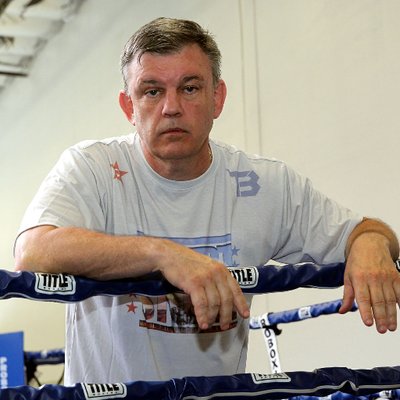
Leave it up to Boxing on the eve of a much anticipated H. Wt. Rematch for it to give itself another Black Eye robbing Michael Gomez Jr from his Title. Awful! 🤦♂️ #DuboisWardley2
Tom Parker retweeted

Thank goodness Branthwaite is up. That looked scary. Hope Martinez will be ok too.

Tom Parker retweeted

Remembering Howard Kendall
Today marks the 11th anniversary of the passing of former Manchester City manager Howard Kendall, who died on 17 October 2015, aged 69.
A giant of English football, Kendall will always be most closely associated with his beloved Everton, both as a player and as a manager.
As a player, he formed part of Everton's legendary midfield trio, alongside Colin Harvey and another future Manchester City manager, Alan Ball. Together, they were instrumental in Everton's First Division title success in 1969/70.
Kendall arrived at Maine Road in December 1989, following chairman Peter Swales' decision to dismiss Mel Machin.
He immediately set about transforming a struggling City side, and there was certainly no room for sentiment.
Kendall was ruthless in his rebuilding. Several players were sacrificed, including two popular figures among the City faithful, Ian Bishop and Trevor Morley, who departed for West Ham United in a deal that brought Mark Ward in the opposite direction.
Ward brought the grit, steel, determination and fighting spirit that Kendall believed City desperately needed.
Slowly but surely, the transformation began.
City climbed away from the relegation places and secured their First Division status. Despite suffering a 3–1 defeat at Tottenham on the opening day of the 1990/91 season, there was a growing feeling that Kendall was putting together a very useful side.
He had assembled an exciting blend of youth and experience. Several members of City's famous 1986 FA Youth Cup-winning side were beginning to find their feet in the First Division, developing alongside the more experienced players Kendall had brought to the club.
The likes of Paul Lake, David White, Andy Hinchcliffe, Ian Brightwell and Steve Redmond were part of a generation that gave City supporters genuine reasons for optimism.
Following that opening-day defeat at Spurs, City embarked on a ten-match unbeaten league run. Confidence was growing, results were improving, and there was a sense that something special might be developing at Maine Road.
Then, completely out of the blue, came the bombshell.
In November 1990, following the dismissal of Colin Harvey at Everton, Kendall decided to return to Goodison Park.
His first love had come calling.
He famously described his time at Manchester City as a love affair, while Everton was his marriage.
For many City supporters, his sudden departure was a bitter disappointment. Peter Reid, who had been such an important part of Kendall's plans, was appointed City's first player-manager.
I have always believed that Howard Kendall was building something genuinely special at Manchester City.
Had he stayed, I honestly believe that within another couple of seasons City could have been challenging for the First Division title, and perhaps even lifting the FA Cup.
Of course, we will never know.
Reid continued much of Kendall's good work, guiding City to consecutive fifth-place finishes, but there will always be that lingering question of just how far Kendall might have taken us.
Sadly, his return to Everton never brought the same extraordinary success he had enjoyed during the mid-1980s.
During that remarkable period, Kendall had built arguably one of the finest English club sides of its generation, winning two First Division championships, the FA Cup and the European Cup Winners' Cup.
One of football's great injustices was that his Everton side never had the opportunity to compete for the European Cup following the ban on English clubs after the Heysel disaster in 1985.
A magnificent manager, a tremendous football man, and someone whose relatively brief spell at Maine Road left a lasting impression.
For me, Howard Kendall will always be one of Manchester City's great what might have been stories.
RIP Howard Kendall - 1946–2015. Never forgotten.