

Japanese stocks are the last great deep value trade on earth. Rock solid balance sheets. Monster cash flows. Dirt cheap prices. I find them and buy them
Dumpster
Joined March 2026
- Tweets448
- Following11
- Followers35.6K
- Likes289


Pinned Tweet
Japanese stocks are the last great deep value trade on earth. Rock solid balance sheets. Monster cash flows. Dirt cheap prices. I find them, trade them, and do it all over again. Follow for the best deep value plays in Japan nobody else is talking about.
Tokyo Deep Value retweeted

Tax-loss selling is starting early this year. Earlier than I've seen in years.
Millions of investors are dumping stocks right now for one reason: taxes.
Not earnings. Not guidance. Not fundamentals.
That forced selling is pushing good companies below what they're actually worth.
Here's the mistake almost everyone makes when hunting for these bargains:
They screen for the biggest losers of the year.
Wrong number.
Someone who bought in 2019 might still be sitting on a gain. They have nothing to harvest. They're not selling.
The number that matters is how far a stock trades below this year's average purchase price, its year-to-date VWAP.
That tells you how many holders are underwater right now, and how much selling pressure is still coming.
Big gap below YTD VWAP = lots of trapped holders = more forced selling = bigger dislocation.
I built a screener to find exactly these setups.
Over the next few weeks I'll be sharing the best ideas it surfaces.
Follow along.
taxlossseason.com
The Nikkei peaked in December 1989.
It didn't get back to that level until February 2024.
34 years. An entire generation of investors was told "stocks always go up in the long run."
Japan was the footnote.
wife came up to me exhausted
"Can you take out the trash?"
I pulled out my Bloomberg terminal
Trading below book value.
No buyback announced.
Still holding cross-shareholdings with her sister's family.
"Until you present a credible plan to improve capital efficiency and raise ROE above 8%, I won't be allocating any resources to this."
She said that's not how marriage works
I reminded her the Tokyo Stock Exchange asked every company to fix this in 2023 and she has still not filed a disclosure
I went right back to my 4am Nikkei session and buying more trading houses because Warren Buffett would never take out the trash during market hou
Tokyo Deep Value retweeted

I bought a house in 2021 for $500k.
It had a 3% interest rate.
Shortly after I got a divorce.
I then found Dave Ramesy and learned about financial independence.
Today I just paid the mortgage off.
I am free! No more debt for me!
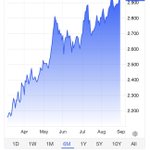
Japan's 10-year JGB touched 3.00% on September 15, a level unseen in three decades.
Producer prices rose 7.6% in August, and the Bank of Japan is now widely expected to raise its policy rate to 1.25% on Friday, the highest since April 1995. Large manufacturer sentiment just hit its strongest reading since Q4 2021.
Every basis point on that curve raises the discount rate on every sub-book stock screen in the market. It also raises the floor real yield Japanese insurers and pension funds can earn at home instead of chasing yield abroad.
The BOJ hasn't moved yet, but the market has already priced the hike into the curve.
Honda Motor (7267) carries ¥5.3T of net cash against a ¥6.5T market cap, and trades at 0.56x tangible book with an EV/EBITDA of 0.91.
The company's most recent release, filed August 5, showed Q1 FY2027 revenue of ¥6.06T,
rising to ¥5,034.48 billions and net income to ¥450.92 billions, significantly higher than a year earlier
. Basic EPS came in at ¥115.84 against ¥46.80 a year prior.
Management didn't just beat, it raised.
The upgraded FY2027 guidance leans heavily on a weaker yen and higher expected operating profit of ¥650,000 million
. That comes after last year's first annual loss, driven by the EV strategy writedown.
A ¥6.5T car company where the cash alone covers most of the market cap, filing a quarterly that finally shows the hybrid and motorcycle business absorbing the EV reset instead of bleeding from it.
Japan's actual tariff rate on US-bound exports is 12.5%, not the 15% headline that dominated 2025.
The 15% country-wide rate died quietly.
Executive Order 14389 had already ended the IEEPA duties imposed under Executive Order 14257 on February 20, 2026, and no Federal Register notice has since reimposed a country-wide rate.
Section 232 elements of these agreements survive and continue to be implemented separately.
Pharma is the next layer to watch.
The Section 232 action on pharmaceuticals took effect for listed companies, with all remaining companies following on September 29, 2026, at 100 percent ad valorem on patented pharmaceuticals, reduced to 15 percent for Japan, the EU, South Korea, and Switzerland and Liechtenstein jointly.
Everyone still quoting last year's 15% framework number missed that the underlying legal basis for it got struck down in February. The autos and steel carve-outs are the part still doing the work.
Japan revised Q2 GDP to 0.4% quarterly growth. Private consumption added exactly zero.
That's the third straight quarter of expansion, but the composition is what deep value people should sit with.
It was the third straight quarter of expansion, amid an upward revision in government spending (1.7% vs 1.6% in the preliminary reading, after a 0.4% rise in Q1).
Meanwhile, external demand contributed positively (0.5 ppts), as exports rose (0.4% vs 1.7% in Q1) while imports fell (-1.7% vs 0.3%).
Households did nothing.
Private consumption, which accounts for more than half of the economy, was flat, matching the earlier estimate and reversing from 0.4% growth in Q1, as elevated cost pressures weighed on household spending.
Business investment held up better than feared but still contracted.
Business investment fell less than anticipated (-0.9% vs -1.2% in flash figures, after a 1.0% decline in Q1), suggesting relatively resilient corporate spending.
Growth carried by government spending and net trade while the consumer sits dead flat is exactly the kind of print that gets used to justify a rate move regardless of what it says about the underlying economy. Whatever the BOJ does with this number becomes the discount rate on every net cash balance sheet in the country.
Japan's 10-year JGB yield hit 3% this month, the highest since 1996.
Hawkish comments helped lift the yield on the two-year Japanese government bond to 1.830%, the highest since 1995.
Ueda confirmed
the Bank of Japan will debate raising interest rates including in September with a focus on whether inflationary risks were heightening.
He also noted
"we've raised rates five times so far, so we need to carefully assess the cumulative impact on the economy."
Board member Takata went further, arguing
the BOJ should raise rates nimbly in response to inflationary pressures, rather than at a fixed semiannual pace, to forestall risks of an inflation overshoot.
The comments landed right before the blackout period ahead of
the upcoming policy meeting on September 17-18.
A rising discount rate is exactly the thing that turns a cheap balance sheet into a genuinely cheap balance sheet. Net cash stops being dead weight once JGB yields actually pay you something for holding it.
BREAKING: Kioxia is weighing a $10 billion US ADR listing, weeks after its stock cratered 54% from June highs.
Bloomberg reports Kioxia has been in talks with Bank of America, Goldman Sachs and JPMorgan on a listing targeted for 2027. The stock had ripped almost 400% earlier this year on AI memory demand, pushed a 3-for-1 split and an ¥800 billion buyback, then gave back more than half of it as cloud capex fears hit the whole chip complex.
Market cap still sits near $180 billion. The ADR pitch is about liquidity and index inclusion, following SK Hynix's record $26.5 billion US listing in July.
A name that went from unlisted NAND spinout to Nikkei-moving mega cap in under three years, now trying to time a US listing through a drawdown instead of a peak.
Nitchitsu (7021) trades at 0.36x tangible book with net cash covering nearly half its ¥4.4B market cap.
The company filed Q1 FY2027 numbers on August 7.
Ordinary profit for the April-June quarter came in down 3% year over year.
Full year guidance points the same way:
operating profit is expected to rise to ¥230 million even as ordinary profit is guided down, with revenue seen falling to ¥8,800 million and ordinary profit down 13.0%.
Shareholder returns are getting trimmed to match.
This year's dividend came to ¥18 at year end for an annual ¥35, split with a ¥17 interim payment, and next year is guided to ¥15 interim and ¥15 at year end for an annual ¥30.
The company also disclosed a no cost capital reduction,
cutting registered capital from ¥1,100,000,000 to ¥100,000,000 by shifting the difference to other capital surplus, with no change to net assets.
A capital reduction like that is usually about the tax bracket, not the business. Hatch covers and silica powder don't excite anyone, but at 2.58x EV/EBITDA and a 15.6% FCF yield, they don't need to.
Oasis Management spent roughly ¥27.9 billion building a stake in a power line construction company nobody talks about.
Comsys Holdings (1721) disclosed Oasis at 6.32% back in May, then an increase to 7.36% as of June 30, pushing for corporate governance and capital policy changes. Stock trades around ¥5,433 with a $3.9 billion market cap.
Comsys builds and maintains electrical infrastructure for railways and utilities, the kind of steady, capital-heavy business that tends to sit on more cash and cross-holdings than it needs. Oasis clearly thinks there's room to unlock.
Another case where the target isn't glamorous, the activist doesn't need it to be.
33% of Tokyo-listed companies still trade below book value.
That's 1,417 of 4,313 names screening under 1x P/B as of August 8, versus 18% on NYSE and Nasdaq combined, 1,164 of 6,662. Japan's problem is structurally bigger, not just noisier.
Disclosure compliance isn't the issue anymore. 59% of Prime companies had published a capital efficiency plan by February 2024, 90% by year end, and TSE says the rate has held above 90% since March 2025. Toyota, Mitsubishi and Honda are all on record with plans and all still earn returns on equity below their cost of equity.
Activism is quieter too. Proxy contests in the first half of 2026 ran a third below the prior year and two thirds below 2024, with activists trading fights for negotiated board seats instead.
Everyone filed the paperwork. A third of the exchange still trades like the paperwork was the whole plan.
KYCOM Holdings (9685) trades at 0.55x tangible book with an 8.4% FCF yield and net cash sitting against a ¥2.9B market cap.
The Fukui-based IT holding company filed Q1 results on August 7.
Consolidated ordinary profit for the first quarter of the fiscal year ending March 2027 came in at ¥87 million
, up from ¥82 million in the same quarter a year earlier.
Its core operations include information processing, software development, system consulting, and wireless solutions, alongside real estate and car rental segments, built on long-term relationships with local governments and mid-to-large scale corporate clients.
A diversified IT holding company running four unrelated segments out of a prefecture most investors couldn't find on a map.
EV/EBITDA of 2.74 for a company that just posted its fourth straight year of profit growth. Nobody outside Fukui is pricing this one correctly.
MBK Partners is taking Sharingtechnology (3989) private at a 55.8% premium, except that number is measured against where the stock traded before June rumors leaked. Against last Wednesday's close, the premium is 5.8%.
The gap is the whole story. Once talk of a deal surfaced in June, the stock had already run most of the way there. AVI Japan Opportunity Trust held it as its largest position, 11.11% of NAV, and calls it the first third party tender offer for one of its holdings since February 2025.
Headline premiums in Japan take-privates keep getting measured from whatever price existed before the leak, not from where the stock actually sat the week before the offer. Read the second number, not the first.
Japan spent a record ¥15.4 trillion, about $98 billion, defending the yen between July 30 and August 26.
That's the biggest intervention bill on record, and it still wasn't enough to hold the line. The yen broke back below 155 per dollar on September 3, its strongest since early August, only after Vice Finance Minister Atsushi Mimura said
authorities were "neither satisfied nor reassured"
by where things stood.
Meanwhile the 10-year JGB sits near 2.9% and the 30-year traded near its highest level since the tenor launched in 1999. The BOJ is widely expected to hike to 1.25% next week, which would be the highest policy rate in roughly 31 years.
Every one of these sub-book names just got repriced by a higher discount rate whether the filings mention it or not.
Ichibanya jumped 15.94% to limit-up at ¥1,091 the day its parent floated selling it.
House Foods Group took the CoCo Ichibanya curry chain private via tender offer back in 2015, then kept it listed as a subsidiary for eleven years. On August 31 a Nikkei report said House Foods is weighing a sale of its stake, including full deconsolidation, and the company confirmed it is
considering various options including taking Ichibanya private to enhance corporate and shareholder value, with no specific decision made at this point
.
Both companies have already lined up financial advisors and
multiple investment funds have already expressed interest in a potential acquisition, with formal proposals expected to be solicited soon
. House Foods' own shares rose alongside it.
Another parent-sub structure that sat there for over a decade finally cracking, and the market front-ran the takeout premium in one session.
Japan's foreign reserves fell $79.6 billion in a single month, the largest drop since records began.
Reserves stood at $1.208 trillion at the end of August, down from $1.287 trillion in July, a 6.18% decline. The ministry spent 15.4 trillion yen, about $98.66 billion, defending the currency between July 30 and August 26, the biggest single month intervention on record, funded largely by selling US Treasuries.
That comes on top of 11.73 trillion yen spent in April and May. Combined, 27.1 trillion yen deployed this year already tops the previous full year record of 20.4 trillion set in 2003. The yen had hit a 40 year low of 163.98 on July 23 before the intervention pushed it back to 155.98.
This is the machinery setting the discount rate on every sub-book name in the screener. When the MOF is burning reserves at this pace to defend the currency, JGB yields and the yen stop being background noise and start being the whole conversation.
Japan just finalized the first rewrite of its Corporate Governance Code since 2021, and it puts idle cash on trial.
The FSA and TSE closed the process on August 3 after a public consultation that ran from April 10 to May 15 and drew comments from 147 individuals and institutions. The new language directly asks boards to assess whether excess holdings of
cash, deposits and real estate may be impairing capital efficiency
.
Norges Bank's own submission flagged the catch: capital management lost its standalone principle status and got folded into a broader strategic direction clause, which risks burying the signal that made the 2023 sub-1x P/B request actually work.
The TSE's March 2023 request to Prime and Standard Market companies has demonstrated that direct, targeted expectations produce measurable changes in company practices
.
Companies now have to reflect the revised code in their governance reports by July 2027. That's a full year for every balance sheet sitting on a decade of hoarded cash to either explain itself or start writing checks.