
Ecosystem Development Partner - crowdvcs | Podcast Producer & Editor at @podcastaqua
Brooklyn
Joined July 2012
- Tweets60.9K
- Following617
- Followers776
- Likes46.5K


Pinned Tweet
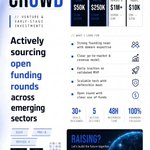
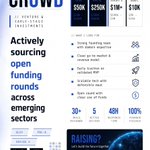
The next unicorn is being built right now - and I’m looking to back it early.
Strong traction or exceptional founding teams
AI/ML · Web3 · SaaS · Fintech · Climate Tech
If you’re building something ambitious, let’s connect
#VentureCapital #Startups #EarlyStage #Investing

TokenZenRogue retweeted

This is so funny. China is doing god's work for the world by producing all these open source models tbh

TokenZenRogue retweeted

we just launched a dashboard showing who has completed deep funding jury duty!
pick 10 out of 98 OS repos impactful to ethereum, make judgments b/w them & get yourself up on the wall of honor!
this data is used to train & test AI models in @JoinPond & @seer_pm , link in QT


Visit Verdict, our new tool. You'll get 10 repos and compare them on their value to Ethereum. Your comparisons help decide where funding goes. Login with your ENS name and try it out! deepfundingjury.com/
TokenZenRogue retweeted

This is a good post on the impact of surveillance in Iran:
myprivacy.blog/the-digital-i…
It's worth reading.
IMO one mistake that freedom advocates often make is that we talk about privacy violation and surveillance as "dystopian", using the word as a semantic stop sign: we know it means "bad", we nod along, and don't really go further to clarify why it's bad. I worry that this approach is long-run unhealthy: when we criticize various companies and countries for being "dystopian" and stop there, then to someone who's not already in the same memeplex, it sounds like we're basically criticizing companies and countries for not complying with our culture's aesthetic preferences. Which is ... duh, companies and countries are *supposed* to not comply with each other's aesthetic preferences, that's the whole point of the "pluralism" thing.
What the above article makes clear so well is that "dystopian" surveillance is not bad because it's "dystopian", it's bad because it makes a concrete property of the world worse: the power balance between individual and state. Surveillance enables an outcome where basically everyone other than police and security forces has no opportunity whatsoever to challenge the political status quo without being punished. This means an outcome where a political regime can remain in power forever, without satisfying more than a very small coalition of people who have the eyes and the guns (now drones).
The Dictator's Handbook talks about "large coalition" and "small coalition" governments; large coalition governments are the ones that are more pro-human, because they, well, have to keep a large coalition happy. Small coalition ones are the really nasty ones. Here is the near-term dark outcome of dictatorship + automated warfare + surveillance: a regime can literally survive with a coalition of size 1, because an army of all-seeing eyes and robots can defeat the entire populace in battle if needed. In Iran, we see what *just* dictatorship with surveillance can do, once you add automated police, you get to the unholy trifecta.
I don't know of a good solution to this. Privacy technology, as well as more work on censorship-resistant internet (I think we should strive for at least basic-quality internet, eg. 1 Mbps, being a global human right outside the domain of nation-state sovereignty), can help somewhat to reduce the possibility of total government control. But what else?
---
BTW one implicit frame in the article I take some issue with is framing Iran + Russia + China as the unique antagonists (both in surveillance they do internally, and in the technology they export to other countries). They do a lot of dystopian shit of both types. However, Israeli and US tech companies, and undoubtedly tech companies from other Western nations, also do a lot of dystopian shit.
Perhaps one key difference between the surveillance described above, and the Western type, is:
* The surveillance in the above article is about exercising *great control over a medium area*: you can see everything, but it requires active participation of the government of the territory being surveilled.
* The Israeli / US / Western flavor is about exercising *medium control over a great area*: there are more limits to how much they can do, but their surveillance is global: they know what people are doing even in countries and territories they have no presence in.
The distinction is not absolute: Israeli surveillance backstops a lot of its human rights abuse in Palestine, US surveillance reinforces ICE abuses (see the recent article about Homeland Security demanding social media firms reveal names of anti-ICE protesters), etc, and "transnational repression" is done by anti-Western countries. But *on average*, the above seems to be the pattern.
The two are differently scary. The former for the reasons I described above. The latter because it allows global projection of power: a politician or civil servant in one country now has to worry about being blackmailed, droned or otherwise attacked from other countries. The USA has shown willingness to go after individual EU officials, ICC officials (see recent articles on both), and others. Ultimately, I suspect that even democratic governments will want more privacy to protect themselves, and we will have to have deep conversations about what "democratic accountability" means: how can a civil servant be accountable to the people, but not accountable to foreign spooks?
My high-level frame is: privacy generally helps whoever is weaker. "Weaker" does not mean "moral": sometimes the weaker side is criminal. But in the 21st century, we are at serious risk of stronger factions using modern technologies to establish unbreakable lock-in to power. And so on average, reducing the gradient of power, giving the weak a fighting chance, is something that the world desperately needs.

TokenZenRogue retweeted
This is the right way to "make Ethereum be the home for AI".
Don't just do what everyone else would do anyway, just on rails with an octahedron logo instead of a square or circle or pentagon logo. Make something fundamentally better, using meaningful technological improvements in ZK privacy-preserving payments and reputation.

The internet made access identity-based.
Every API call tied to your email, card, or wallet.
AI will make it worse.
Our proposal:
Replace identity with stake.
Deposit once.
Make thousands of API calls.
Stay unlinkable.
Abuse gets slashed.
New post with @VitalikButerin 👇

TokenZenRogue retweeted

TheDAO is back. BULLISH
A decade later, we’re opening a new chapter.
TheDAO Security Fund: activating 75,000+ ETH to strengthen Ethereum security.
thedao.fund/
TokenZenRogue retweeted

It's remarkable, and depressing, to realize how few people are truly polycentric / classically liberal. Particularly amongst highly educated elites. They may mood affiliate but it doesn't take much for them to eventually demand some desire to prohibit/limit things that don't affect them, justified on the basis of some arbitrary higher principle or some double standard.
As soon as the tables turn and they're in power, they will display the same caveman behaviours as those they claimed to be in the wrong. Identity politics is evil until it's your identity that wins. Political ideology based discrimination is evil until yours has power. Free speech is good until it's exercised by the outgroup. Academic fraud is bad unless it's convenient and kinda pushing for the thing I like. Trade is good unless people trade stuff I don't like.
Illiberals are also much louder: the person who thinks "I find this distasteful but it's not my business to prohibit" doesn't write op-eds, doesn't build movements, doesn't get amplified. Principled tolerance is quiet by nature, and I wonder what wound have to change for institutional and social rewards for principled consistency and freedom maximising norms to be stronger.
It's also funny how to some people, democracy just means majoritarian decision making. They point to a large group wanting to do something and that's sufficient to mean 'democratic'. Absurd and horrible system if some sort of collective can crush any diversity, dissent, and difference just because they happen to be numerous. The tyranny of the majority should still terrify you, and your political principles should not flip as soon as it's convenient.
TokenZenRogue retweeted

As an advisor to the @ethereumfndn
To our community in Iran, our eyes and thoughts are with you and the entire Iranian population. We see you bravely fighting tyranny and being brutally silenced, all your rights scraped, and communications cut
Many of you travelled from Iran to attend @EFDevcon @EFDevconnect and @ETHGlobal. You volunteer, hack, cocreate our gatherings, tools and work on a free, decentralised, censorship resistant future alongside us
We call for your safety from violence and oppression. For a world where no one can be cut from internet and information. Together with you, we stand for lasting freedom.
TokenZenRogue retweeted
I agree with maybe 60% of this, but one bit that is particularly important to highlight is the explicit separation between what the poster calls "the open web" (really, the corposlop web), and "the sovereign web".
xitter.cf/tom777kruise/status/20…
This is a distinction I did not realize until recently, and I must admit the bitcoin maximalists were far ahead: a big part of their resistance to ICOs, tokens other than bitcoin, arbitrary financial applications, etc was precisely about keeping bitcoin "sovereign" and not "corposlop". The big error that many of them made was trying to achieve this goal with either government crackdowns or user disempowerment (keeping bitcoin script limited, and rejecting many categories of applications entirely), but their fear was real.
So what is corposlop? In essence, it is the combination of three things:
* Corporate optimization power
* An aura of respectableness of being a company with sleek polished branding
* Behavior that the exact opposite of respectable, because that's what's needed to maximize profit
Corposlop includes things like:
* Social media that maximizes dopamine, outrage, other methods of short-term engagement, at the expense of long-term value and fulfillment
* Needless mass data collection from users, often followed by managing it carelessly or even casually selling it to third parties
* Walled gardens charging monopolistic high fees and actively preventing people from even linking to other platforms
* Hollywood releasing the 7th sequel to some tired franchise, because that's the most risk-averse thing to do
* Every corporation that rallied around slogans of diversity and equity and the need to overturn society to fight racism in 2020, and then publicly mocked those causes for engagement in 2025
This is all digital corposlop; there are big and important analogues to this in the physical world too.
Corposlop is soulless: trend-following homogeneity that is both evil and lame vitalik.eth.limo/general/202…
These are things that appear to serve the user, but actually disempower the user.
I have many qualms with Apple, but aside from their monopolistic practices, they actually have many non-corposlop traits. They serve users not by constantly asking "what do users want this quarter", but by having an opinionated long-term vision. They have a strong emphasis on privacy. They resist and create trends rather than following them. I just wish they could take the brave step of ending their monopolistic practices and switch to an open source first strategy. It may damage their market cap, but man must live for something higher than market caps.
Zac from Aztec was also early to recognize the importance of this, with a post that is on the whole very pro-freedom, but at the same time does not shrink back from labeling what is essentially corposlop a primary enemy, even when it does not violate the libertarian non-aggression principle.
xitter.cf/Zac_Aztec/status/19860…
In 2000, the understanding of "sovereignty" largely focused on avoiding the iron fist of government. Today, "sovereignty" also means securing your digital privacy through cryptography, and securing your own mind from corporate mind warfare trying to extract your attention and your dollars. It also means doing things because you believe in them, and declaring independence from the homogenizing and soul-sucking concept of "the meta".
These are the kinds of tools that we should build more of. Build tools like:
* Privacy-preserving local-first applications that minimize dependence on and data leaks to third parties
* Social media platforms and tools that let the user take control of what content they see. Appeal to people's long-term goals, not short-term impulses
* Financial tools that help users grow their wealth, and do not encourage 50x leverage or sports betting or taking out a loan to pay for a burrito
* AI tools that are maximally open and privacy and local-friendly, and that maximize productivity from merging the power of human and bot, rather than encouraging the user to sit back and let the bot do all the work, so they learn nothing
* Applications, companies, and physical environments that take an opinionated view on the kind of world they want to see, and have an opinionated culture
* DAOs that can support organizations and communities that steadfastly pursue a unique objective, and do not all get captured by the same groups. Privacy-preserving and non-tokenholder-driven voting can help here
Be sovereign. Reject corposlop. Believe in somETHing.

2026-30 predictions
-globalism is dead. resilience is the new god. countries and individuals are racing for sovereign compute and mineral sovereignty. if you can't produce your own energy, food, and intelligence locally, you're a vassal
-the winner in robotics is the company whose humanoids can navigate a messy, 70s built warehouse. general purpose labor becomes a purchasable SKU, starting in logistics and moving toward elderly care
-the west stops moralizing about mining and starts treating lithium, cobalt, and copper with the same ruthless blood for oil energy of the 20th century
-the line between peace and war permanently dissolves. conflict shifts to gray zone operations. constant cyber attrition, undersea cable "accidents" and satellite interference. no more grand declarations, just a baseline of chaos
-the internet officially splinters. you now have the "open web" (chaotic, bot heavy, western), the "fortress web" (highly censored, eastern), and the "sovereign web" (encrypted, boutique, and high trust)
-neuralink and its competitors move from clinical trials to high performance enhancement for the wealthy. the augmented vs natural cognitive divide begins to show its first cracks in the social fabric
-control over freshwater sources becomes the primary driver of regional skirmishes, replacing traditional border disputes
-corporations with bigger balance sheets than countries (the big 5) begin negotiating directly with governments for territorial autonomy to host their own data centers and energy grids
-the alliance between the New Tech Right and traditional populism fractures. SV realizes that nationalism is bad for the global talent flow they need for AGI. they pivot toward techno statehood and local city states.
-being unreachable is the new wealth. the always-on worker is seen as a low level cog
-content with errors, rough edges, and physical presence becomes 10x more valuable than polished, AI generated perfection
-the Ivy League degree finally loses its power for good. Proof of Work becomes the only resume that matters
-high performers begin taking analog sabbats. deleting all apps for a month to reset dopamine receptors. a requirement for mental elite status
-after a year of AI-slop, the low-fi aesthetic wins. grainy film, handwritten notes, and physical gatherings become the only signs of authenticity
-micro schools and high level apprenticeship guilds replace the bloated university model. learning becomes a high stakes, boutique experience
-physical neighborhoods begin self organizing around shared values (techno-optimism, homeschooling, fitness, etc) rather than just proximity
-infinite scroll is viewed with the same social stigma as indoor smoking
-massive cultural pivot back to the importance of circadian rhythms, mineral balance, and real world movement as the bio-hacks that actually work
-AI is no longer a tech trend. it’s a national utility like electricity. small, high IQ nations pull ahead by building proprietary national models, while large bureaucracies choke on regulation
-high production value is now synonymous with fake or corporate. the most viral content is raw, unedited, and intentionally flawed. if it looks like it could have been made by an AI, it’s ignored
TokenZenRogue retweeted

> There is no law of physics that prevents combining extreme scale with decentralization
based
Also glad to see anonymity of validators mentioned. Very underrated and important

Increasing bandwidth is safer than reducing latency
With PeerDAS and ZKPs, we know how to scale, and potentially we can scale thousands of times compared to the status quo. The numbers become far more favorable than before (eg. see analysis here, pre and post-sharding vitalik.eth.limo/general/202… ). There is no law of physics that prevents combining extreme scale with decentralization.
Reducing latency is not like this. We are fundamentally constrained by speed of light, and on top of that we are also constrained by:
* Need to support nodes (especially attesters) in rural environments, worldwide, and in home or commercial environments outside of data centers.
* Need to support censorship-resistance and anonymity for nodes (especially proposers and attesters).
* The fact that running a node in a non-super-concentrated location must be not only possible, but also economically viable. If staking outside NYC drops your revenues by 10%, over time more and more people will stake in NYC.
Ethereum itself must pass the walkaway test, and so we cannot build a blockchain that depends on constant social re-juggling to ensure decentralization. Economics cannot handle the entire load, but it must handle most.
Now, we can decrease latency quite a bit from the present-day situation without making tradeoffs. In particular:
* P2P improvements (esp erasure coding) can decrease message propagation times without requiring individual nodes to have lower bandwidth
* An available chain with a smaller node count per slot (eg. 512 instead of 30,000) can remove the need for an aggregation step, allowing the entire hot path to happen in one subnet
This plausibly buys us 3-6x. Hence, I think moderate latency decreases, to a 2-4s level, are very much in the realm of possibility.
But Ethereum is NOT the world video game server, it is the world heartbeat.
If you need to build applications that are faster than the heartbeat, they will need to have offchain components. This is a big part of why L2s will continue to have a role even in a greatly scaled Ethereum (there are other reasons too, around VM customization, and around applications that need _even more scale_).
Ultimately, AI will necessitate applications that go faster than the heartbeat no matter what we do. If an AI can think 1000x faster than humans, then to the AI, the "subjective speed of light" is only 300 km/s. Hence, it can talk near-instantly within the scope of a city, but not further. As a result, there will inevitably be AI-focused applications that will need "city chains", potentially even chains localized to a single building. These will have to be L2s.
And on the flipside, it would be too much of a cost to make it viable to run a staking node on Mars. Even Bitcoin does not strive for this. Ultimately, Ethereum belongs to Terra, and its L2s will serve both hyper-localized needs in its cities, and hyper-scaled needs planet-wide, and users on other worlds.
Milady.
TokenZenRogue retweeted
deep funding markets showing relative importance of 98 OSS repos is live!
currently, foundry & go-ethereum comprising 10%. We'll be using this price feed to allocate $350,000 in @gitcoin GG24!
see weights that feel off? that's your chance to make money trading
someone trying to artificially increase their repos weight? their attempt to game the system is your profit margin
if you are a trader or work on AI models, heres how you can participate
1. connect your wallet to the site in QT
2. Click on "create trade wallet" and ensure it has sUSDS on OP Mainnet
3. Create a model to output weights b/w the 98 repos.
Submit a CSV by clicking on "upload predictions" and see how your answers are differing from the current price feed
4. if you're confident in your model, click on "start trading"
this will show you how many repos are over or undervalued according to your predictions.
Pull the trigger by pressing "execute strategy"
5. and you're done!
once markets resolve, you earn profit or loss depending on closeness of your predictions to human collected data
BONUS: we also have a market live to determine funding a repo should pass on to their dependencies
an originality score of 100 means a repo is self-sufficient, 0 is a complete passthrough to dependencies
you can buy up or down shares based on your models prediction of its originality
Exciting to finally have deep funding markets live for allocating public goods funding!
Get in touch for help in model building or troubleshooting
Good luck predictooors


⁸Markets are live at deep.seer.pm
Want to participate? Come say hi in our telegram: t.me/AgentAllocators to get all the info.
All of this possible thanks to a grant from @ethereumfndn.
TokenZenRogue retweeted
Help Needed: Volunteers for evaluating the contribution of open source repos to Ethereum
Your task
- Research 10 repos
- Make comparisons between 2 repos at a time & provide good reasoning
- These comparisons then select winning AI models that distribute funding to repos
Here’s a step by step guide for providing evaluations on the app;
1. Sybil Check
Authenticate with your ENS name to access the app, as a loose check on spam voters. We can also issue you a subdomain from deep-funding!
2. Repo Selection
Choose the top 3 repos. Get assigned another 7 at random. You can also eliminate repos you don’t want in your comparison set.
3. Make Comparisons
Click on the repo you think is more impactful and then enter the multiplier.
You can also review the AI suggested judgment if helpful
4. Gauge Originality
For 3 of the 10 repos, give a score showing how much they depend on their dependencies. These are used to determine funding staying with repos vs the share passed down to dependencies
5. You're done!
These judgments will be vetted by a meta juror committee to discard bad reasoning
The accepted comparisons & scores will help resolve deep funding markets for public goods
Finally, we can move away from quadratic funding's wisdom of the crowds ('becoz the crowds are retarded', to quote osho) towards an algorithmic approach leveraging expert insight
But for that, we need the time of experts and ethereum developers!
Link to the voting app in Allans QT, also get in touch for more


Ethereum Developers! We need your help get funds to ETH's open source software. @VitalikButerin designed Deep Funding to scale human judgment - but to make it work, we need you.
🧵 👇 with links

TokenZenRogue retweeted

Does your wallet actually work using your own node, anon?


TokenZenRogue retweeted

Right, who wants to talk about Fast Finality on Ethereum?
We're figuring out where the theoretical meets the practical: if finality matters to you, let's talk!
🏗️ Infrastructure: L2s, Bridges, Interop protocols
🏦 Liquidity: Exchanges, Staking pools, Apps
💻 Protocol: Client devs & researchers
❓ Others...
The Hard Questions:
- How fast is fast enough to make a difference? Is it quantifiable?
- Which trade-offs are ok? Economic safety <33%? Higher finalisation threshold? Lower fork-choice participation per slot? Slot length? Validator set cap?
- Where does FF sit among all our other priorities?
DM to set up a call - tell me who you are and why you care.
(Note: This is distinct from the fast confirmation rule - talk to @corcoranwill for that.)

I left paid work almost a year ago saying that only something spectacular would drag me out of retirement.
Well, it happened - I am now with @ethereumfndn helping to shepherd fast finality to Mainnet.
It's going to be quite the journey, but I am very excited! 🚀
