

AI Research Scientist
Amsterdam
Joined March 2013
- Tweets134
- Following468
- Followers8K
- Likes1.6K



Tim Salimans retweeted

🚀 Excited to share my @GoogleDeepMind student researcher project: Dual-Rate Diffusion✨
⚡ A simple construction that speeds up both regular diffusion and distilled models by interleaving a heavy context encoder with a light conditional denoiser.
🧵👇

Tim Salimans retweeted

New blog post on our recent paper: Beyond Single Tokens, Distilling Discrete Diffusion.
D-MMD lands on the Pareto frontier of gen PPL vs. diversity, outperforming continuous diffusion distillation approaches — while staying native to discrete tokens.
ehoogeboom.github.io/post/di…

Touching down now in SF for onboarding at Anthropic! After 7 great years at Google, I'm excited to take on a new challenge and help make Claude even better. Grateful for everything I learned at Google DeepMind and Brain, looking forward to what's next.
Myth: Discrete diffusion models are naturally fast out of the box. 🤔
Reality: Naive sampling is actually quite slow and inefficient. 🐢
Solution: In our new paper, we show how the right step distillation technique unlocks massive speedups. ⚡️👇


VAEs are back! 🚀 By co-training a diffusion prior with an encoder and diffusion decoder we obtain a powerful recipe for compressing visual data into a controllable number of bits. By modeling this VAE latent space we obtain SOTA results with smaller models and fewer FLOPs!

1/6 Introducing Unified Latents: what if your diffusion model's latents were measured in bits? Instead of relying on dimensionality reduction, we learn a latent AE with explicit bitrate control.
Paper: arxiv.org/abs/2602.17270
@emiel_hoogeboom, @TimSalimans


Really awesome to see the full potential of real-time generative modeling being realized! Helping to enable this has been a driving goal of our research in efficient generative models for a long time!

Tim Salimans retweeted

Veo 2 and the new Imagen 3 update just dropped. Amazing effort by the team!!
Today, we’re announcing Veo 2: our state-of-the-art video generation model which produces realistic, high-quality clips from text or image prompts. 🎥
We’re also releasing an improved version of our text-to-image model, Imagen 3 - available to use in ImageFX through @LabsDotGoogle. → goo.gle/veo-2-imagen-3

ALT Prompt: An extreme close-up of a craftsperson's hands shaping a glowing piece of pottery on a wheel. Threads of golden, luminous energy connect the potter’s hands to the clay, swirling dynamically with their movements.

ALT Prompt: A portrait of an Asian woman with neon green lights in the background, shallow depth of field.
Are you a current PhD student working in generative modeling? Our team at GDM Amsterdam is looking to hire a student researcher / intern to help us develop the next generation of models. Apply before 𝐃𝐞𝐜𝐞𝐦𝐛𝐞𝐫 𝟏𝟑! google.com/about/careers/app…
On my way to Vancouver for NeurIPS. Looking forward to catching up with everyone and sharing the work we've been doing in making diffusion models fast and efficient!
Tim Salimans retweeted

A common question nowadays: Which is better, diffusion or flow matching? 🤔
Our answer: They’re two sides of the same coin. We wrote a blog post to show how diffusion models and Gaussian flow matching are equivalent. That’s great: It means you can use them interchangeably.

Tim Salimans retweeted
Is pixel diffusion passé?
In 'Simpler Diffusion' (arxiv.org/abs/2410.19324) , we achieve 1.5 FID on ImageNet512, and SOTA on 128x128 and 256x256.
We ablated out a lot of complexity, making it truly 'simpler'. w/ @tejmensink @JonathanHeek @KayLamerigts @RuiqiGao @TimSalimans

ALT Pixel-space diffusion performance over the years.
Tim Salimans retweeted

We are hiring on the Generative Media team in London: boards.greenhouse.io/deepmin…
We work on Imagen, Veo, Lyria and all that good stuff. Come work with us! If you're interested, don't delay -- apply before 5PM tomorrow (UK time).
Tim Salimans retweeted

🚀 Interested in time series generation?⏲️Excited to share my @GoogleDeepMind Amsterdam student researcher project: Rolling Diffusion Models!
arxiv.org/abs/2402.09470 (to appear at ICML 2024)
Thanks for the great collaboration @emiel_hoogeboom, @JonathanHeek, @TimSalimans! 🧵1/4
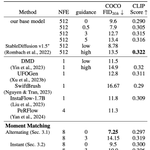
We have a new distillation method that actually *improves* upon its teacher.
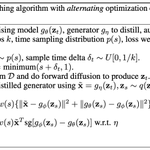
Moment Matching distillation (arxiv.org/abs/2406.04103) creates fast stochastic samplers by matching data expectations between teacher and student.
Work with @emiel_hoogeboom @JonathanHeek @tejmensin.
1/4

oops dropped a k there: That's my highly valued colleague Thomas Mensink @tejmensink of course!
A unique advantage of our method compared to previous approaches (consistency models, Diff-Instruct, DMD, GANs), is that the moment matching perspective gives us a well-defined loss function we can use to monitor progress and convergence of the distillation algorithm.
4/4

My team in Amsterdam is hiring a research scientist with experience in generative modeling. Please apply if you want to help us build the next generation of Google's generative models!
boards.greenhouse.io/deepmin…