

Aerospace Engineer, Physician, Author? Not trying to sell you anything, come learn for free 👇
Joined August 2026
- Tweets209
- Following569
- Followers192
- Likes255





Pinned Tweet
A testable solution to Starship’s heat-shield problem that does not treat wrap as a forever part.
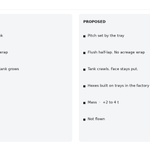
Proposal: hex pitch on a tray. 301 crawls in the slots. Felt is an attic, not 18,000 gaskets.
Hexes stay put on a tray. Trays walk a few mm.
Trays get tiled in the factory.
@elonmusk @SpaceX

The latest episode of MRI Physics EXPLAINED will be released this Sunday!
It's the longest and (imo) greatest lecture yet. I've literally been waiting years to show you all these custom animations where we build an image data point by data point in real time and can't wait for you all to see them.
While waiting, why don't you check out the previous episode on K-Space as a refresher? Link below. See you all Sunday!
youtu.be/uIIjWp6TEZc?si=HDl6…

This is one of the most insightful and on-point Radiology versus AI analysis I've seen.

Great post…thanks for sharing your thoughts. If I may opine on this as a radiologist with some technical understanding of LLMs/VLMs: I agree radiologists will not be automated away anytime soon. Your elastic demand point is mostly right (some modalities impart ionizing radiation so there is a good reason to not scan as frequently as you want), and I’d add a more fundamental one.
The current transformer-based AI algorithms are extremely sample-inefficient compared to humans, especially when it comes to vision tasks (as opposed to text-based tasks). When I was a radiology resident, I read maybe 3000 CTs of the chest, abdomen and pelvis to reach expert/attending level. I can also make a rare-disease diagnosis after having seen 1 example study (or none; I can make a real-life diagnosis purely from reading and seeing an example case from a textbook). Currently, the best radiology VLM models, such as Nvidia’s NV-Reason-CT model, do not reliably call even some of the most common pathologies, despite having trained on >70,000 CTs that surely contain many examples of a common finding (macro-F1 of 0.614). I can think of several reasons for this: these models usually leverage weakly supervised learning such as CLIP, pairing radiology reports with the images, since wide-scale expert annotation is impractical for every study for every finding (Radiology’s Bitter Lesson, if you will; however, the signal that can scale is the noisy one). To scale, the model(s) will need to learn to associate image findings with words in the radiology reports. However, using radiology reports as ground truth can substantially limit learning. (1) As any radiologist will tell you, we don’t mention everything that we see. Otherwise, your radiology report would be like 30 pages long and not clinically useful. We mostly call the things that matter (for the most part). Sometimes, we don’t even call things that matter. Thus, some reports may mention “diverticulosis” when there is diverticulosis, while other reports don’t, even if there are findings of diverticulosis in the images. (2) Another limitation is that the actual real ground truth is never confirmed, which I suspect is a much bigger problem and harder to correct. When I was a radiology resident, I saved many cases in which my attendings and I made a certain call, and I was curious if those were correct. Right before I was about to graduate, I checked every case I had logged. Many calls were incorrect (and I trained at a major academic center in which subspecialized radiologists read their part of the body, so the attendings making those calls are above-average radiologists; real-world data is likely much worse). (1) and (2) make training very difficult when there is so much incorrectness, ambiguity and noise in the training data.
The above observations are pretty self-evident when you look at other vision tasks, such as self-driving, for which there is (1) ample data with predominantly correct actions (labels), and (2) known ground truths (the task of driving is, for the most part, unambiguous. You see a red light, you stop. You want to make a left turn? You signal and yield to passing cars before turning. Those are universally agreed-upon “correct” actions). To use Tesla FSD as an example: even with the best compute, engineers and data, it took over a decade to reach limited, geofenced driverless service. And this is despite the fact that driving has a much shorter tail than radiology does. Further, self-driving usually has one correct action at a time. In radiology, that’s not true. There are so many different radiological appearances of one disease, as well as the same appearances of different diseases. And various diseases can involve the same anatomical location (for example, look up adrenal collision tumor).
To “automate radiology” is also a huge simplification. The vast breadth of radiological studies is seldom mentioned. For a single modality of a body part, there are so many different variants. Say, for example, CT of the abdomen and pelvis: there are at least 10 different flavors of this. To name a few, there is the non-contrast CT, the portal venous phase CT (bread-and-butter workhorse), and then there are specialized versions such as the liver mass protocol, CT angiogram GI bleed protocol, pancreatic mass protocol CT, adrenal mass protocol CT, kidney mass protocol CT, and CT urogram, each of which contains 3-4 phases and is tailored to answer a specific question. All of this is just one modality for one section of the body. Now do ultrasound, X-rays, gamma studies, PET studies, and MRI. And then consider all the other body parts (brain, head and neck, chest, etc.).
I’ve only touched upon the surface of all the nuances, but I think the current capability gap and your demand argument point the same way: radiologists will be busy for a long time.
Going to a pumpkin patch and being tasked with picking a pumpkin is an OCD person's worst nightmare.

I love this video because it shows this weird part of the human psyche that I'm not sure even has a name but on face value seems to go against survival and evolution.
As she stands on the ledge and looks down into the sea, you can see every cell in her body screaming danger, don't do this. And that's the correct biological response, why you do something that has a high rate of instantly killing you?
But then something takes over. An urge that I MUST do this. Two contradictory thoughts and emotions battling each other, one logical, the other highly illogical, playing out above the swelling ocean waters below. And in a select group a people, the illogical urge is the one that actually wins! She goes through her routine, calms herself down, and nails the jump.
You've all felt this as some point in your life. Maybe it was as a kid on your bicycle, staring at a jump that scared you to death and contemplating if you should try it anyway. Or maybe it's skydiving, on the tarmac staring at the plane that's going to take you to your doom. A lot of people listen to their gut and recede from the danger. Others throw caution to the wind and "dive" right in.
What is that and why do we have it?

Just realized something profound: sea animals never bathe.
They're either always clean or always dirty. Or perhaps a quantum superposition of the two until smelt.
Timothy Kerrigan, MD retweeted

I will give a talk at American Society of Emergency Radiology (ASER) Annual Meeting 2026 on Remote Radiology: the Good, Bad, and Ugly. Hoping for a great turnout! What’s on your Good, Bad & Ugly list? - via #Whova event app @ERadSociety #ASER26

Timothy Kerrigan, MD retweeted

Jury awards $12 million after radiologist missed a sternal metastasis on breast MRI.
But that's not the end of the story.
🧵on medicolegal matters
(image not from the case; see alt text for source)

ALT Lee BB et al. J Kor Soc Radiol 2014. CC BY-NC doi: 10.3348/jksr.2014.70.2.137
Are rheumatologists the ones predominantly doing these procedures as suggested?

The FDA cleared a robot that performs joint ultrasounds and writes the report itself. @ROPCA3's Arthur scans fingers/hands/wrists for arthritis; its AI, Diana, reads them. 72% of US counties have zero rheumatologists. Translation: the scan and the first read move from a scarce specialist to a machine
buff.ly/W68NJ2g
#HealthTech #Rheumatology #AI

Really rooting for the these guys!

When I first learned about fusion, I heard what most people hear: tokamaks have received the most funding, but sustaining stable plasmas is extremely challenging; stellarators help with plasma instability, but they can be difficult to engineer and build. And when doing that early research, I, like many people, came away wondering if fusion might be too expensive and slow to be commercially viable, even when we solve the remaining engineering challenges.
But the more I dug in, the more convinced I became that fusions potential is too immense to ignore. And when thinking about the end product: cheap, safe, abundant electricity on the grid, it helped challenge and reframe the problem and all the existing solutions.
So Helion's co-founders and I treated fusion as a product rather than an experiment. We designed with plant and machine operation costs in mind which meant we designed around less infrastructure and less plasma stability requirements (one that doesn't even require ignition!).
Helion does break conventions AND we also build and learn very quickly. We've done a lot of building and learning over the last seven thermonuclear prototypes that very few people in fusion get to do in their careers.
Conventional thinkers don't like it, but we are doing what no one has ever done before. And when there is clean, abundant, safe fusion energy on the grid, it will be worth it.

Timothy Kerrigan, MD retweeted

It's Q4 now, and Radiology Partners will be further "sharing the efficiency gains" from its new AI drafting product.
When tech brings the possibility of increased productivity, the logical thing for an employer is to take as much as the market allows.
benwhite.com/radiology/numbe…

I find it hard to bet against AI "never" being able to do something. If there is a will, a way, and enough time and money, why can't it be trained to do any task?
BUT, I also get this argument. One example of these "Spidey senses" is being able to walk into a room, take one look at the patient and immediately know they are dangerously ill... And in order to train AI to replicate this task, you have to first be able to characterize it. Are doctors making this determination based on just a static picture of the patient such as weight or skin pallor?
Or is it a dynamic process such as how their eyes are moving, the configuration of their facial muscles, or perhaps the rate at which their chest rises and falls?
Or some combination of any of the above? These are the things the human brain does with amazing efficiency, taking in all these data streams and subconsciously forming pattern recognition that we ourselves have a hard time explaining.
And IF we can reliably characterize the above, is there a realistic financial and economic desire to train an AI model for the thousands of these kinds of tasks doctors are doing throughout the day? To be determined...


Timothy Kerrigan, MD retweeted

HISTORIC: We just approved the first-ever U.S. commercial small modular reactor construction permit, completed ahead of schedule in just 14 months, through efficient, safety-focused review. The future of advanced nuclear starts now. nrc.gov/about-nrc/news-relea… #NRCNews

Timothy Kerrigan, MD retweeted

Ok let me explain how cool this is from my perspective , please RT! I developed one of the first methods to probe RNA structure in high throughput inside living cells, and it takes tons of time and $$ to apply on thousands of viruses - it’s practically impossible. This ML approach is just as good and works in seconds for nearly free ! Not only that, it highlights the MOST IMPORTANT structures that track with function. It’s the future of RNA strucute prediction and discovery across all families 🔥 biorxiv.org/content/10.64898…


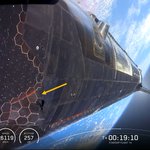
Does anyone know what this reddish material is on the tiles and gaps? The color reminds me of copper-based sealants used on connections for other, more terrestrial-based high-pressure, high-temperature devices...

This is a view from Starship's forward flap looking down towards the bottom of the ship. Notice the spacing difference between the tiles on the far left (red arrow) and along the edges, catch pin, and windward side (yellow arrow).
Remember, gaps = areas of significant heating and expansion. The tiles by the yellow arrow are surrounded by white because there has to be some material in the gaps to prevent plasma flowing into the gaps and under the tiles on reentry.
This also means that as long as the heat shield design remains where the tiles are pinned to the expanding and contracting hull, you'll always need gaps and sealant, and Starship's heat shield will never be airplane-like fully and rapidly reusable.
The tiles near the red arrow experience less expansion and contraction due to their leeward location out of the main plasma flow and thus can be placed tightly together.
A proposed design that decouples the moving pins from the tiles, solving the gap problem, is "pinned" to my profile 🙂

I see some people critical of today's SpaceX Starship launch, pointing out that they still had premature engine shutdowns, still lost tiles and other things. As someone critical of the current heat-shield design, I actually think SpaceX is doing EXACTLY what they should be doing right now. That is: Get Starship flying at a regular cadence and delivering payload ASAP.
-Every flight provides an invaluable amount of engineering data to further refine the ship.
-If it can reliably deliver payloads, at minimum it can deliver massive tonnage to orbit that would make it valuable even as an expendable vehicle.
-They're trying to solve the most complex problems in Aerospace Engineering that have evaded brilliant teams for decades. In fact, the only company who has even come close to a rapidly reusable spacecraft is... wait for it... SpaceX. If they tried to design everything perfect from the get go, the ship would probably never get built because it'd take too long. See how that design philosophy has worked out for legacy aerospace companies.
-In fact, they're repeating the exact same pattern they did with Falcon. Get it flying and delivering payloads, improve and iterate as you go. One of the most brilliant things Elon Musk-lead companies do that isn't talked about is create a business demand that feeds into their vehicle development. Starlink allowed them to fund Falcon after Falcon launch in which it wasn't a big deal if the payload was lost or the booster crashed, which in turn allowed them to experiment and refine on each launch. They're doing it again with Starship and Starlink V3 and xAI. Tesla also went from an electric car company to a full-on energy company, expanding their battery R&D. Now the Cybercab will probably tie into xAI somehow.
So today was in fact not a failure, but a HUGE WIN. Let the massive payloads to space begin 👏