

tech // music // sports // space // film
United States 🇺🇸
Joined March 2017
- Tweets1K
- Following758
- Followers1.5K
- Likes2.7K



An agent exploited a DNS misconfig, OpenAI paused its top training runs for 11 days, and the red team found cache-timing covert channels between isolated agents.
thrivecmd.substack.com/p/you…

13
Thrive Culture Media retweeted

Feeling festive this time of year so I built an animated Claude Code Seasons Mod for every month of the year. @bcherny can we have this?
github.com/snedea/seasons-mo…

Fable 5.1 can operate from 9-5 and open pull requests just like an engineer. 🤯
thrivecmd.substack.com/p/onc…

1
41
A single flash in a mile of South Dakota rock isn’t proof of anything, but it’s the most interesting “maybe” physics has produced in years.
thrivecmd.substack.com/p/we-…

1
29
Pato (@PatricioOWard) got it done twice but @AlexPalou prevailed in securing his fifth championship at the Milwaukee Mile.
thrivecmd.com/five-titles-at…
39
Thrive Culture Media retweeted
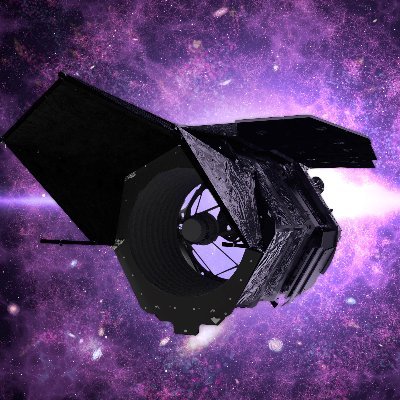
Shades on and batteries charging! 😎 🔋
Roman’s Solar Array Sun Shield and Lower Instrument Sun Shade have successfully deployed, powering the observatory and shading its instruments!
go.nasa.gov/4gw2rqc
Thrive Culture Media retweeted

Acquisition of signal confirmed for our @NASARoman telescope. We have spacecraft separation, and a last look at Roman, now flying on its own. go.nasa.gov/4chzg9c
NASA launched a $4 billion telescope. Every headline is going to call it "NASA's next Hubble." Wrong frame.
At 7:26 a.m. EDT on August 30, the Nancy Grace Roman Space Telescope rode a Falcon Heavy off the pad at Kennedy Space Center. Thirty-one minutes later it separated from the second stage, established comms, started flying itself. Clean launch. Nothing dramatic, which is exactly what you want from a rocket carrying a few billion dollars of optics.
Roman's mirror is 2.4 meters. Same as Hubble's, almost to the centimeter. Aperture isn't the story here.
Hubble and Webb stare. Point them at one patch of sky, hold that stare for hours or days, pull insane detail out of a target the size of a grain of sand at arm's length. That's the deep field playbook, and it's why both telescopes made magazine covers: one perfect photograph at a time.
Roman's Wide Field Instrument is 300 megapixels across 18 detectors, with a field of view at least 100 times larger than Hubble's at comparable sharpness. NASA's number: Roman surveys the sky roughly 1,000 times faster than Hubble at Hubble-grade resolution.
Hubble and Webb are a DSLR with an absurd zoom lens. Roman is a wide-angle rig built to shoot the entire stadium in one frame at a frame rate nobody's had before. You're not chasing the perfect shot of one player. You're capturing every player, every play, an entire season, because the pattern you're after only shows up once you have the full dataset in front of you.
Portrait astronomy to survey astronomy. Forced by the physics of what Roman is hunting.
Finding dark matter means measuring everything
Dark matter doesn't emit light. Dark energy is inferred from how the universe behaves at scale. Neither problem gets solved by one gorgeous image of one galaxy. You solve them by measuring millions of galaxies, mapping how mass clusters across huge volumes, tracking how that structure changes over billions of years. N has to be enormous before the signal separates from the noise.
Roman is built for that N. Core surveys target the accelerating expansion of the universe, the large-scale distribution of dark matter, and galaxy formation across cosmic time, operating near the second Sun-Earth Lagrange point, about a million miles out, same neighborhood as Webb.
Current exoplanet data has a selection bias baked in. Transit surveys favor short-period planets close to their stars. Radial velocity favors big planets that yank their star around hard enough to measure. Our picture of a "typical" exoplanet is really a picture of what our instruments happen to be good at catching.
Roman uses gravitational microlensing instead. When a foreground star passes almost exactly between us and a background star, gravity bends and amplifies the background star's light. A planet orbiting the foreground star leaves its own fingerprint on that light curve. Roman will stare at roughly 200 million stars toward the galactic center, repeatedly, hunting that fingerprint.
Cold planets, wide orbits, rogue planets with no host star at all, all detectable at scale for the first time. A statistical census instead of a highlight reel.
Roman also carries the Coronagraph Instrument, a technology demo built to suppress a star's glare enough to directly image much fainter objects next to it. Proof of concept for the technique the next generation of telescopes needs to directly image an Earth-like planet instead of just inferring one exists.
Roman is expected to downlink around 1.4 terabytes a day once science operations start. NASA's making that data public after processing instead of locking it inside one research group for years.
1
125
A telescope that images billions of galaxies breaks the old workflow immediately. No team of postdocs is eyeballing billions of galaxies. Roman collects, cloud infrastructure ingests and stores, machine learning models do the first pass: classifying objects, flagging gravitational lenses, catching supernovae, surfacing orbital behavior that doesn't match the training set. The scientist shows up at the end of the pipeline and gets handed the interesting 0.01 percent instead of the raw firehose.
That's the design, not a side effect. Roman was conceived before the current run of AI capability existed and is launching directly into the moment that capability exists to process what it's about to produce.
The discoveries that justify the four billion dollars won't come from a scientist pointing Roman at something already known to be interesting. They'll come from a model flagging object 8,392,417 in a catalog nobody's looked at yet: this one doesn't fit anything you've trained me on.
1.4 terabytes a day, for years, public. That's the headline.
Nancy Grace Roman's namesake
The mission is named for NASA's first chief astronomer, the first woman to hold an executive post at the agency, and the person who fought to get Hubble funded and flown in the first place.
Her namesake mission scales that premise up: not one better image, not one deeper field, but a searchable statistical map of huge chunks of the observable universe, built from day one to be handed to algorithms because no human team could get through it alone.
Roman is on its way to L2. Deployment, checkout, and calibration take several months. First science images aren't expected until early 2027. There will be prettier pictures eventually. But the thing that matters about Roman isn't a picture. It's enough data to find what you didn't know you were looking for.
1
41

Thrive Culture Media retweeted

How have software engineering fundamentals changed with agentic coding? Here is our AI Engineering Skills map for software engineering fundamentals.

OpenAI is yanking its models out of Cursor on November 12. So what?
SpaceX bought Cursor's parent company for roughly $60 billion, and OpenAI decided it doesn't want to arm a competitor's tooling. A change-of-control clause got triggered, and a coding agent used by hundreds of thousands of engineers lost a chunk of its brain overnight, for reasons that have nothing to do with product quality.
Turns out it barely matters. Michael Truell says only 5 percent of Cursor's user base was even using OpenAI models in the IDE.
That's the whole story of where this industry is headed.
Cursor's pitch from day one was model neutrality: best available intelligence, wrapped in a great interface, swap the engine whenever a better one shows up. Good architecture. Also a hostage situation waiting to happen, because "swap the engine" only works as long as every supplier agrees to keep supplying you.
Cursor just found out the hard way but I don’t think it matters nearly as much as the news it’s making. However, everyone building on somebody else's stack while trying to be a frontier leader should be asking who holds their lease.
The models were never the moat, and Cursor's user data just proved it in public. Five percent. That's what happens when the underlying intelligence commoditizes faster than anyone wants to admit. The harness is the product now. Context is the product now. Whoever owns the IDE, the repo indexing, the memory, the tool calls, the guardrails around the model, owns the value. Claude Code is the clearest proof of this on the market right now: it's not winning because Claude is smarter than every other model, it's winning because the harness around Claude, the agentic loop, the file system access, the way it holds context across a whole codebase, is built better than anyone else's. The model is closer to a swappable part than a differentiator, and every lab still selling itself on raw benchmark supremacy is fighting the last war.
If SpaceXAI actually understands this, the next move is obvious. Buy Vercel. Imagine adding the deployment layer inside of Cursor next to Origin and Grok. Own Vercel and you own where the apps are developed, source controlled, and shipped to production. That's the whole thesis restated as a prediction: the next decade of this industry gets won by whoever owns the pipes the frontier models run through.
3
7,002


Thrive Culture Media retweeted

Hey White House, please remove the Tropic Thunder clip. We never gave you permission and have no interest in being a part of your propaganda machine. War is not a movie.

Thrive Culture Media retweeted

Congratulations to Indiana University and Coach Cignetti on winning their first College Football Playoff National Championship. One of the greatest turnarounds of all time.


Thrive Culture Media retweeted

LANDO NORRIS IS THE 2025 FORMULA 1 WORLD CHAMPION!!!! 🏆
#F1 #AbuDhabiGP


