Chicago, Ill.
Joined November 2013
- Tweets4.6K
- Following1.3K
- Followers1.2K
- Likes9.9K





Thomas Day retweeted

“we will pay any price….to assure the success and survival of liberty.” Is this still true? Do we prize liberty or do we prize power and purse? No more clear test than the choice between Ukraine and Russia. Abandon Ukraine and we abandon liberty. Eventually even our own.
Thomas Day retweeted

Chicago has the privilege of being one of few U.S. cities to claim a world-class public transit network; but, for a city of our size, we have plenty of work to do to get more Chicagoans confident in riding our busses and trains.


This midterm election feels like it’s moved from a standard wave to something much, much more historically significant.


The question of closing a 98% empty school — damn near zeroed out anyway — is not a matter for public debate. It’s a simple check of one’s ability to think freely and critically. #twill

The candidate backed by the Chicago Teachers Union opposes school closures. Two are open to closing schools, but only after hearing from communities. And one pointed to how consolidations can benefit students. chicago.suntimes.com/educati…

Thomas Day retweeted

I just want to make it clear. This wasn’t run of the mill “we will increase your pensions” type of ad. This was a full-blown justification of the war against Ukraine. The same one that is killing babies in hospitals. Utterly shameful @Capitals

In response to Alex Ovechkin appearing in a campaign commercial for United Russia, the Capitals have issued the following statement to multiple outlets:

ALT “Alex Ovechkin is a Russian citizen who lives in Moscow with his family during the offseason and will live there following his retirement. As the longest-tenured athlete in Washington, D.C., and a pillar of the community, his focus and ours is on the season ahead and the continued impact he makes on the ice and in our city.”
Thomas Day retweeted
Chicago should be a city where working families can afford to stay, put down roots, and build a future.
That means building more housing, updating outdated zoning rules, ending aldermanic prerogative, and taking a housing-first approach to homelessness.


Thomas Day retweeted

"My father Michael Massaroli...you do my dad's legacy and the legacy of all these victims no honor by using this tragedy to spread hate. We have seen a medley of people come up today, of all races, all religions, all creeds and this tragedy is just that, it's a tragedy. I've had to grow up and spend the past 25 years seeing people use it to hate on our Muslim brothers and sisters, to hate on people who don't look like them. That's wrong. That does no honor to the victims here...please stop."
Full video here: youtube.com/live/Wkl0vAMmU0I…
Thomas Day retweeted

New Yorkers should be proud of the character and sensitivity with which their mayor represented them today and during the days leading up to the 9/11 commemoration. He kept the focus where it belonged.
nytimes.com/2026/09/11/nyreg… via @NYTimes

Thomas Day retweeted

Todd Beamer was the passenger on United Airlines Flight 93 who rallied fellow passengers to fight back against the 9/11 hijackers with the phrase "Let's roll" and stopped it from reaching Washington, DC.
This is his daughter, Morgan, who was born 4 months after his death and went on to play women's soccer at his alma mater, Wheaton College.
Imagine how proud he would be. 🇺🇸 #neverforget

ALT #911remembrance #september11 #911 #america
Thomas Day retweeted
Last night, we officially launched my campaign for 35th Ward Alderman.
Being joined by so many neighbors and supporters of the campaign reminded me why I’m running: we all love Chicago and wish to see it thrive. But, to reach that reality we need leadership who delivers.


Thomas Day retweeted
RSVP for the launch of my campaign for 35th Ward Alderman in Logan Square with @ChiGrowthProj next Wednesday!
shorturl.at/p0owo
Thomas Day retweeted

We are deeply saddened by the passing of Matt Suhey. Our hearts and prayers are with all who loved him. 💙


Thomas Day retweeted

Six days after 9/11, George W. Bush visited a mosque and said, “Islam is peace.”


State College, Pa. ▶️ Chicago. A legend in both places I’ve called home. RIP.

Suhey played at Penn State before playing 10 seasons in the NFL, all in Chicago.
cbsnews.com/chicago/news/mat…



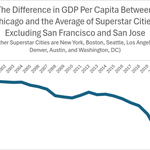
Public data cannot be any clearer: The economic gap between Chicago and the “superstar cities” is only growing. In today's @FirstBreakfast, I wrote about a recent report that might offer a roadmap for our regional economy and others to potentially chart a new trajectory. #twill


The White House Office of Science and Technology Policy has released “Science: A New Golden Age,” a comprehensive R&D roadmap that represents the most significant rethink of American science and innovation since Vannevar Bush wrote “Science, the Endless Frontier.”
The report challenges how the federal government funds research. And it could shape where American innovation happens. Here’s how.
THE PRIMACY OF PEOPLE
Instead of channeling money through universities, it proposes directing resources directly to scientists with grants that are portable if recipients move institutions or start companies. It advocates for longer funding horizons and empowers program managers to make substantial bets on breakthrough research, similar to DARPA's portfolio approach.
The report argues that the old, institutional model of R&D is bloated and unsuited to developing long-term talent and commercial breakthroughs. Universities extract significant overhead while relying on temporary PhD candidates for core research. Academic incentives prioritize publications over genuine exploration. This model, the report argues, undermines long-term knowledge retention and risk-taking.
PROVING GROUNDS FOR INNOVATION
Beyond funding, the report emphasizes that innovation requires ecosystems for testing and tinkering. It highlights the importance of testing infrastructure like the proving grounds that developed American aerospace in the last century. New public-private research organizations, mission-focused consortia, and tight integration between scientific breakthroughs and domestic manufacturing capacity are equally essential.
PRODUCTION POWER
The report also stresses the importance of linking innovation to production. Too often, the United States has invented cutting-edge tech only for foreign countries to scale and produce that tech. American taxpayers ended up funding the prosperity and power of other countries.
The lesson is clear: American innovation must translate to American production.
The report is sure to provoke the administrators and institutions who depend on the old model of science and innovation funding. But a new era of technological competition calls for new approaches, and this report deserves serious attention from policymakers, researchers, and regional leaders.
Read @ThomasLDay’s full assessment of the OSTP report and the opportunity for regional innovation. 👇

Thomas Day retweeted

The White House Office of Science and Technology Policy has released “Science: A New Golden Age,” a comprehensive R&D roadmap that represents the most significant rethink of American science and innovation since Vannevar Bush wrote “Science, the Endless Frontier.”
The report challenges how the federal government funds research. And it could shape where American innovation happens. Here’s how.
THE PRIMACY OF PEOPLE
Instead of channeling money through universities, it proposes directing resources directly to scientists with grants that are portable if recipients move institutions or start companies. It advocates for longer funding horizons and empowers program managers to make substantial bets on breakthrough research, similar to DARPA's portfolio approach.
The report argues that the old, institutional model of R&D is bloated and unsuited to developing long-term talent and commercial breakthroughs. Universities extract significant overhead while relying on temporary PhD candidates for core research. Academic incentives prioritize publications over genuine exploration. This model, the report argues, undermines long-term knowledge retention and risk-taking.
PROVING GROUNDS FOR INNOVATION
Beyond funding, the report emphasizes that innovation requires ecosystems for testing and tinkering. It highlights the importance of testing infrastructure like the proving grounds that developed American aerospace in the last century. New public-private research organizations, mission-focused consortia, and tight integration between scientific breakthroughs and domestic manufacturing capacity are equally essential.
PRODUCTION POWER
The report also stresses the importance of linking innovation to production. Too often, the United States has invented cutting-edge tech only for foreign countries to scale and produce that tech. American taxpayers ended up funding the prosperity and power of other countries.
The lesson is clear: American innovation must translate to American production.
The report is sure to provoke the administrators and institutions who depend on the old model of science and innovation funding. But a new era of technological competition calls for new approaches, and this report deserves serious attention from policymakers, researchers, and regional leaders.
Read @ThomasLDay’s full assessment of the OSTP report and the opportunity for regional innovation. 👇