

Pioneering the Science of Coexistence Within People, Animals & Waste Systems | A Think Tank hosted @NCBS_Bangalore & @OxfordBiology | PI @_NishantK
Delhi | Bengaluru | Oxford
Joined October 2021
- Tweets470
- Following287
- Followers228
- Likes522





THINKPAWS retweeted

🫣 We call ourselves Homo sapiens—the wise storytellers who shape the world through shared narratives. But when we look at our overflowing landfills and toxic ecologies, perhaps an obscure qualifier is more fitting: Homo sapiens sapiens, the ultimate waste-generating humans.
If you are ready to rethink our legacy of trash, join us for the Workshop on Socio-Ecological Crises of Waste in India on Friday, 25 September 2026. This is a critical deep dive into the complex relationships between waste generation and the marginalized human and non-human lives entangled within these environments.
A massive shoutout to convener Dr. @AparnaAgarwal91 (@JindalGlobalUNI (JGU)) for her immense effort and vision in bringing together this multi-disciplinary roster of scholars, data scientists, and field experts to make this urgent dialogue happen. We have Prof. @Barbara Harriss-White et al. as experts (see the poster for details).
Drop a DM for the Zoom link to secure your virtual seat in the room. (Note: All workshop timings are from 8:30 AM to 7:00 PM in IST).
Are we the wise ones, or just the ones who leave the biggest mess?

THINKPAWS retweeted

Serious concerns regarding the efficacy of #Rabies vaccine available in Delhi!
Here is what has been found
In samples collected from Mukherjee Nagar, it has been found that the vial’s collected and labelled as #Abhayrab was not of standard quality and even misbranded
The vials were tested in Kasauli.
The Manufacturer - Indian Immunologicals says the vials are not its product and has asked authorities to trace their source.
Rabies kills thousands across india and inspite of the vaccine being administered in time, victims die….
Counterfeit anti rabies vaccines are the biggest reason!

THINKPAWS retweeted
At #ECBB2026, Prof. Andy Radford (Bristol Univ) left these pearls of wisdom at the end of his plenary talk. Science is important, but it is more important to understand the kind of scientists we are/shall become... and possibilities are endless. Keep a tab; be kind!


THINKPAWS retweeted
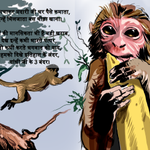
There are unfortunate aspects of culturally entrenched livelihood practices that link very distant lands: India and Brazil. Fantastic keynote in the Primate Symposium #ECBB2026. मदारी
THINKPAWS retweeted
#ECBB2026 has Kickstarted with a fantastic plenary by Prof. Andy Radford from the @Uni_Bristol

THINKPAWS retweeted
🧐On International #Dog Day!🚨 Academics Fear Reviewer #2. Then Comes Reviewer #2 Billion.
Academics spend years fearing Reviewer #2. Then your paper reaches the newspaper and suddenly peer review feels like soft music. 😌 From “bullshit” to questioning whether my mother fed me—welcome to public peer review! Science entering society will encounter resistance. Sometimes, that resistance simply hardens the resolve to keep asking questions. #PublicReerReview
If you wish to read the paper in @NatCities: nature.com/articles/s44284-0…
The Hindu coverage: thehindu.com/sci-tech/scienc…
THINKPAWS retweeted

A new study on the Indian street dog states that “food subsidies” — availability of abundant, predictable food through garbage and intentional feeding — have an impact on their population in the country’s urban ecosystems.
thehindu.com/news/national/k…

THINKPAWS retweeted
@ThinkpawsOrg team is glad to see this feature in @the_hindu , giving a succinct account of the paper that came in @NatCities (nature.com/articles/s44284-0…). There are scores of derogatory comments from dog lover group...but they fail to realise that coexistence with free ranging dogs has been made possible only because people love animals, in general. However, this is not a status quo and there are countless tales of human as well as animal suffering. Some cultural perspectives previously helped coexistence. But in the 21st century, large scale changes warrant active and thoughtful scientific assessments and interventions. We have discussed the same in the piece. Happy reading about an ongoing fellowship at @NCBS_Bangalore and @OxfordBiology , funded by @India_Alliance.


A new study on the Indian street dog states that “food subsidies” — availability of abundant, predictable food through garbage and intentional feeding — have an impact on their population in the country’s urban ecosystems.
thehindu.com/news/national/k…
Our group lead, @_NishantK 's recent paper that made to the cover of @NatCities has now been featured in @the_hindu. Do give it a read!
A new study on the Indian street dog states that “food subsidies” — availability of abundant, predictable food through garbage and intentional feeding — have an impact on their population in the country’s urban ecosystems.
thehindu.com/news/national/k…
THINKPAWS retweeted
Come along, in person / online, at @terischool on 24th Aug 2026. Details in the poster.

THINKPAWS retweeted
🐕🐕🐕 Codes of human-dog coexistence 😇😇. A short video explaining how human-dog 🐕😇, dog-dog🐕🐕, and human-human 😇😇social dynamic dyads have overseen age-old negotiations and evolution, ever since wolf-like ancestors of modern-day dogs occupied the niche of prehistoric humans some 20,000 years ago. There is no fixed time and space to hint when and where exactly domestication happened: it was a tenet of long-drawn mutual niche reciprocation. We have reached inflexion points regarding mutual benefits, and there are countless cases of harm to people and dogs resulting from individual or organizational decisions.
A set of upcoming research articles on solutions (ecoevorxiv.org/repository/vi…) and the ecology of urban, multispecies coexistence (ecoevorxiv.org/repository/vi…) can be accessed in the form of preprints. Do let us know if it resonates with your experiences. 🐕 Video by @Gulshan Singh
THINKPAWS retweeted
Felt cool 😎 examining this landmark usage by the leaf cutter bees.. check the video !
THINKPAWS retweeted

Between June 2024 and January 2025, a full 62% of commercial honey bee colonies in the United States died, according to an extensive survey.
As soon as scientists at the U.S. Department of Agriculture (USDA) caught wind of the die-offs, they sprang into action—but their efforts were slowed by a series of federal funding cuts and layoffs. 6 months later, USDA scientists finally identified a culprit.
According to a preprint posted last June, nearly all the dead colonies tested positive for bee viruses spread by parasitic mites. Alarmingly, every single one of the mites the researchers screened was resistant to amitraz, the only viable mite-specific pesticide—or miticide—of its kind left in humans’ arsenal.
Tracking the rise of miticide resistance is critical, experts say. Honey bees pollinate more than 90 commercial crops in the U.S., generate between $20 billion and $30 billion in agricultural revenue, and play a key role in keeping the U.S. food supply stable.
Learn more on #NationalHoneyBeeDay: scim.ag/3TW8UmR

ALT Scientists identify culprit behind biggest ever U.S. honey bee die-off
THINKPAWS retweeted

By 2039, India, Nepal, Bangladesh, Sri Lanka together will have lower number of people living in extreme poverty than both North America and Europe according to World Bank.
India in the last 12 years has lifted some 250 million people out of extreme poverty. And another 200 million for 10 years before that. Huge achievement over successive governments. ourworldindata.org/grapher/p…

THINKPAWS retweeted
😇 A rather special moment on India's Independence Day! 🐕
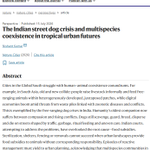
Our work on “The Indian street dog crisis and multispecies coexistence in tropical urban futures” has made it to the cover of @NatCities (Link: nature.com/articles/s44284-0…)
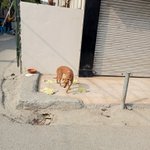
— and onto the journal’s website banner (nature.com/natcities/). But what pleases me most is how the #Thinkpaws team has invested in what the cover depicts. It is not an iconic skyline, a monumental building or a manicured urban landscape, but an ordinary Indian street, with people, dogs, food, traffic, homes, trees and all the negotiations that make a city alive.
1) We argue that Cities have never been exclusively human spaces.
Across the Global South, humans and other life forms have shared streets, food systems, waste streams, infrastructure and cultural practices for centuries. Rapid urbanisation is now changing those relationships faster than our institutions, policies and perhaps even our ecological imagination can keep pace.
2) In this Perspective, I argue that the street-dog crisis in India cannot simply be understood through sterilisation, removal, feeding or compassion in isolation. Dogs are embedded within a much larger social–ecological system shaped by food subsidies, waste, infrastructure, human behaviour, animal movement and public health.
Perhaps the more interesting question is therefore not simply:
How do we manage animals in cities?
But:
What kinds of cities are we building for a future that will inevitably remain multispecies?
Coexistence is not a fixed state. It is a relationship that requires constant steering. Very grateful to see that conversation represented on the cover of Nature Cities (nature.com/natcities/volumes…).
Grateful to the @India_Alliance (DBT/Wellcome Trust India Alliance fellowship based at the National Centre for Biological Sciences (@NCBS_Bangalore) and the Department of Biology, University of Oxford (@OxfordBiology).
#NatureCities #UrbanEcology #MultispeciesCities #HumanAnimalCoexistence #OneHealth #UrbanPlanning #FreeRangingDogs #UrbanBiodiversity

THINKPAWS retweeted
🐕Dog bite victims with medical prescriptions at Bhikshu Hospital, New Delhi. There was a dog bite victim at the hospital/30 min. The situation warrants major attention and systemic solutioning, unlike the knee jerk reactions by the Indian Supreme Court. nature.com/articles/s44284-0…

THINKPAWS retweeted

What counts as a city? 🏙️Our July issue explores how cities are defined, why measurement choices matter, and how the relationship between urban and rural areas is evolving.
🔗Read the full issue: nature.com/natcities/volumes…

THINKPAWS retweeted
🚨Dog Gone?🚨In this 🐶 new @NatCities Perspective, I argue the crisis is not simply about dogs. Conversations on India's street-dog crisis revolve around managing dogs. The fundamental Q concerns coexistence futures we are trying to build? 🧐Link: nature.com/articles/s44284-0…

🚨Dog Gone?🚨In this 🐶 new @NatCities Perspective, I argue the crisis is not simply about dogs. Conversations on India's street-dog crisis revolve around managing dogs. The fundamental Q concerns coexistence futures we are trying to build? 🧐Link: nature.com/articles/s44284-0…

