
Keep in thinking, love math and computer science
Joined December 2019
- Tweets621
- Following307
- Followers102
- Likes595


Theigrams retweeted

A few big upgrades for Chrome users today! We’re bringing the power of computer use to anyone who uses Chrome.
First up: ChatGPT can now use your tabs in Chrome to make answers more useful and get things done for you.
If you’re in Chat, it can look across your open tabs and gather info.
If you’re in Work, ChatGPT can control your Chrome tabs to get things, like sending messages, filling out forms, or downloading files. It can even help you organize and group that pile of tabs you have open.


Theigrams retweeted

cool comment: FLOPs were intelligence; parameters were knowledge!

An excellent history of scaling laws from @jietang.
In 2020, we explored the limits of sparsity in Switch Transformers by routing each token to only 1 out of 2048 experts (in retrospect, a bold choice). The model had fewer than 3B activated parameters, but 1.6T total parameters (comparable to today's frontier models).
The 1.6T model achieved better C4 perplexities than the T5 models using far less compute, set a new SOTA on TriviaQA, but was dumb as bricks on reasoning tasks like SuperGLUE.
The lesson was that the optimal tokens-per-parameter ratio is highly task-dependent. Or as @NShazeer had already intuited: FLOPs were intelligence; parameters were knowledge!

Theigrams retweeted
Thoughts About Scaling Law
Scaling, but not only of parameters. Every model release now ends with the same question: how many parameters? It isn't a question that can be answered on its own. Parameter count is only meaningful alongside three others — how much data you have, where you intend to spend your compute, and who will run the model, under what conditions.
The field learned this the hard way. Kaplan et al. (2020) fit an exponent that told everyone to grow parameters faster than data — roughly 2.7:1 — and the industry complied: GPT-3, Gopher, MT-NLG. Hoffmann et al. (2022) redid the experiment across four hundred models and found the compute-optimal split is closer to 20 tokens per parameter, and that with sufficient compute the two should grow at the same rate rather than drifting apart. The error in the earlier fit compounded with every order of magnitude of compute, which is why the largest models of that generation were the most misallocated. The trillion-parameter round was, in retrospect, a detour the whole field took together and then reversed.
Chinchilla wasn't the end either. It optimized training compute for models that would be trained once and evaluated. Today a model is called billions of times a day and inference dominates lifetime cost. Put inference into the objective and the optimum moves toward smaller models trained far longer — deliberate over-training, which is what Llama-2-7B and Gemma-2-9B were doing at roughly 290 and 889 tokens per parameter.
Sparsity moved the target again. In a MoE model two quantities have to be kept apart: total parameters govern roughly how much the model can hold — knowledge, facts, the long tail — while activated parameters and effective depth govern roughly how far it can think, how many steps of a causal chain it can carry before it comes apart. A dense 20:1 ratio does not transfer. And the ratio isn't a single number at all: Roberts et al. (2025) find the optimal tokens-per-parameter is task-dependent, with memorization favoring more parameters and reasoning favoring more data. Follow-up work on MoE observes that at fixed TPP, pushing total parameters higher actually degrades reasoning, while activating more experts reliably helps it.
This matters for what we are building toward. Finding a vulnerability is not a retrieval problem. It doesn't come from having memorized more CVEs; it comes from carrying a twenty-step chain of inference to the end without losing the thread. That capability does not live in total parameter count.
Which brings us to this release. Total parameters appear to matter up to a threshold — enough to hold the world — after which additional capability comes from scaling elsewhere: effective depth per forward pass, and above all post-training. GLM-5.3 is our controlled experiment on that claim. Same base, same architecture, same total and activated parameters as GLM-5.2. One month of scaling long-horizon environments and RL. The gains are not marginal. Well, scaling has more than one dial. We turned the post-training one this time because it had the most slack left in it — not because the others are finished. Base model size, pretraining data, compute spent per forward pass: all of them are still on the table, and we will come back to each. What this experiment taught us is that the dials do not have to be turned together, and that the one worth turning next is rarely the one that was worth turning last. We are not done scaling. Next time, maybe mid-training, pre-training, and even more.
Theigrams retweeted

没想到上条帖子被很多朋友看到,索性再整理一些和@FanqingMengAI 录制的播客中的更多 insights 吧:
1/ 模型竞争到最后,拼的到底是什么?
人才肯花钱就能招(比如我们最近聊下来,发现混元密集招了很多人);数据肯花钱也能买。那么最后是不是仍然要拼卡,大厂是否会长期占据更大的优势?
以上因素固然重要,但最后可能要拼组织架构。
大家在技术上拼的东西可能越来越接近,最终比的是谁能把人才、算力、数据和决策机制真正协同好。
(这也呼应了《晚点》前不久那篇关于混元的文章:姚顺雨加入后,混元在组织上进行了一系列调整,至少从那篇报道来看,这轮组织调整可能是混元回到正确轨道的重要原因之一。)
所以,即使大厂掌握着更多资源,也未必真的能吃掉 Kimi、智谱和 MiniMax。
2/ 蒸馏并不是国内模型变强的决定性因素。
我们之前交流过的很多 researchers 都认为,国内模型真正的进步,更多来自资源有限倒逼出来的底层架构和工程创新;蒸馏只是一个加速手段。
即使没有 Claude API,一方面,国内模型已经可以生成合成数据;另一方面,如果真的下决心建设数据基础设施,凭借国内的人力规模,也未必做不出来。
因此,蒸馏可以缩短追赶时间,但并不是国模变强的唯一原因,更不是最底层的原因。
3/国内真正的优势是 Pre-training。这是卡的匮乏倒逼出来的。
Pre-training 更拼少数研究员的聪明才智;Post-training 则更吃工程、数据积累和组织协作,需要大量人力和长期沉淀。海外公司开始得更早,因此在 Post-training 上其实更有优势。
4/ Post-training 背景的人,比 Pre-training 背景的人更容易创业。
逻辑很简单:Pre-training 非常吃资源,初创公司很难 cover 相应的成本。而 Post-training 的创业方向相对明确:一是做数据,二是做平台类的事情。后者有点抽象,可以简单理解成做 Benchmark 和 Eval。
5/ 模型持续变强,甚至未来 Self-evolving RSI 取得进步,也不一定会直接吃掉第三方的机会,尤其是在垂直领域。
拿 Harness 来举例,且不说这一层会不会越来越薄(@istdrc 就认为 agent harness 会越来越厚),即便会变薄,模型也未必能完全吃掉这部分空间。
一方面,未来并不是所有需求都必须调用最顶级的模型。(事实上,大多数普通用户已经很难感知新旧模型之间的能力差异。)
另一方面,垂直场景里仍然存在安全、隐私、工作流和行业知识等需求。
6/ Benchmark 和 Eval 在发生变化。
以前主要考 AI 会不会做题,现在还要考 AI 会不会做事。
比如,AI 能不能真正用好飞书、Notion,能不能进入一个真实的软件环境,把一项任务从头做到尾。
7/ 训练模型的门槛已经大幅降低,技术往往会向更简单、更直面结果的方向收敛。
比如在 Pre-training 领域,从 Transformer 架构到 rule-based RL 这类训练方法,最后真正有效的方案往往都很简洁。
Post-training 可能也会经历类似的过程:大家越来越不需要纠结具体的算法,最后还是要回到最本质的问题——有没有高质量的数据。
8/ 模型对数据的需求,大致经历了三波:
第一波是 Scale AI 式的普通人标注;
第二波是 Mercor 这类专家数据,对应 o1、DeepSeek-R1 之后提升模型推理能力的需求;
第三波是合成数据,以及带有真实操作轨迹的人类数据。
第三波之所以兴起,是因为模型开始强调 Agentic 能力。模型不仅要会回答问题,还要真正上手做事,因此需要搭建大量环境,或者把真人操作软件的完整轨迹保存下来。
这些数据的成本并不低。一条高质量的专家数据可能卖到 1000~2000 元,一些复杂的合成数据甚至要几千元。
模型厂仍然愿意购买,一方面是因为现阶段数据依然多多益善;另一方面,完全由自己生产的数据,很容易带有内部团队的 bias。
不过,合成数据这一波可能已经走到中后期。下一波机会可能是 RSI 数据,比如用大模型训小模型过程中产生的训练轨迹。但这件事的门槛更高,需要真正懂模型训练的人参与。
9/ 下一阶段一个比较有共识的方向,是 Auto Research / Self-evolving / RSI。
它们要解决的问题是:给模型一个工作环境和一个目标,它能不能持续行动,根据结果反馈不断调整之前的策略,最终突破原本的能力上限?
10/ RSI 可以被理解成一个更聪明版本的 DFS。
DFS 遇到死路,就回溯到上一个节点;RSI 也类似。比如,模型写了一个 GPU kernel,得到评分后,如果发现结果不好,就回到前面的节点,换一条路径继续探索。
区别是,在 RSI 里,什么时候回溯、回到哪里、下一步走哪条路,更多是由 LLM 来判断的。
而所谓「更聪明」,很大程度上就体现在剪枝:让模型少走明显错误的路,把算力集中在成功概率更高的方向。
11/ 如果 RSI 真的成立,一个很自然的猜想是:创业公司能不能利用 RSI,直接训练出更好的基模?
但这个方向可能并不成立,主要有两个原因:
1)RSI 的训练和评测,本来就是模型厂自己在做的事情。创业公司更应该寻找与模型厂正交的机会。
2)RSI 能否继续进步,取决于两件事:一是世界知识和 Value Model;二是 Context 窗口能否变得更长。前者决定模型记住了多少东西,后者决定模型能不能回溯到更远的地方。这两件事都不太是创业公司应该做的。
12/ 最近有一种说法很流行:
「算法就是数据,数据就是 infra,infra 就是算法。」怎么理解?
算法就是数据,是因为算法最终可能会收敛到相对简单的形式,差异越来越多地体现在喂给模型什么数据。
数据就是 infra,是因为数据有没有价值,取决于基础设施能否把它高效地组织和利用起来。
Infra 就是算法,是因为模型尺寸变大以后,GPU 并行、Context 并行和训练效率,会反过来决定哪些训练方法真正可行。
13/ 蒸馏也分水平高低。
「硬蒸」的环境很简单,比如只是让模型回答数学题。
更有技术含量的蒸馏,一方面需要造出足够复杂、接近真实世界的环境,并完成可靠的 Eval;另一方面,要给模型出足够好的题,并设计出正确的评分标准。
(Btw,最近字节一直强调自己不做蒸馏,可能是因为蒸馏相当于抄近道,而抄近道有时也会让人错过探索过程中产生的 insights。)
14/ AI for Science 火起来的原因之一,可能是模型已经没有太多方式证明自己的智力了。
以前是卷做题,后来卷奥赛,现在开始卷诺贝尔奖。
当 Benchmark 一路被做穿,科学发现就成了新的 Benchmark。
【完整收听链接】
小宇宙: xiaoyuzhoufm.com/episode/6a7…
Spotify: open.spotify.com/episode/77b…
Apple Podcast: podcasts.apple.com/cn/podcas…
最后,北京时间 8 月 22 日上午 10:30,我们会请繁青来办一场线上活动,还会有数十位 model researchers 参加。
活动免费,欢迎非投资背景的朋友报名,一起来交流、认识新朋友~报名链接:my.feishu.cn/share/base/form…

Theigrams retweeted

最近,我终于意识到连续的微积分可能只是人类智力制造的一种工程妥协。
起源是我瑞士的同学给我发来一本书,是一本厚达 1200 页的巨著 A New Kind of Science (NKS)。
这本书的作者,就是我一直关注的天才学者,Stephen Wolfram。
如果你顺着他的思路往下剥,就会发现这种微积分是工程妥协的直觉并非毫无根据,甚至在某种意义上触及了现代物理学与计算理论最深刻的矛盾之一。
1. 为什么说是工程妥协?
在牛顿和莱布尼茨的时代,人类根本没有大规模算力。如果你想预测行星轨道、流体流动或者热量扩散,面对一个由无数微观粒子组成的离散世界,你根本不可能逐个去计算它们的相互作用。
为了获得解析解,我们人类大脑做出了一个极其天才但也极其妥协的假设:
连续性与可微性。
我们把离散的原子抹平,假设空间和时间可以无限分割;把极度复杂的非线性离散迭代,近似为光滑的微分方程;
我们用积分和极限定理,换取了可以用纸笔算出的精确解。
微积分的本质,是用连续光滑的宏观流形,去粗粒化微观上极其复杂、甚至是不可预测的离散状态。它是人类在算力极其匮乏的时代,为了理解世界而不得不做的一种宏观平滑近似。
2. 关于NKS 的离散宇宙观
Wolfram 在 NKS 中展现的逻辑非常粗暴且震撼。
极其简单的离散规则,加上时间的不断迭代,就能自发产生极其复杂的结构与混沌行为。(这里我要提到著名的 Rule 30)。
在传统的微积分视角下,复杂性往往来自于连续方程里的复杂系数或高维耦合x但
在 Wolfram 的视角下,宇宙的底层根本不需要“连续”的概念。空间可能是极其庞大的离散节点图,时间只是图结构的重写规则。
我们所看到的连续时空、广义相对论和量子力学,可能仅仅是这个巨大的离散计算网络在宏观尺度下的热力学极限。
就好比你在屏幕上看到的光滑画面(看似连续),本质上全是一个个独立的像素点(离散)在高速刷新。
微积分研究的是像素平滑后的图像,而 NKS 想直接拆开显示器看电路。
我的解释,应该足够具体了。
3. 连续性遇到计算不可归约性
更深层的震撼在于计算不可归约性。
传统微积分的精髓在于预测未来。
只要给出微分方程和初始条件,带入 t,就能直接用公式算出未来的状态,这就是计算被归约了。
但如果宇宙底层是离散的元胞自动机,很多系统的演化是不可归约的,这意味着不存在任何数学捷径可以让你跨越过程直接预测结果,你唯一的办法就是把规则一步一步运行下去。
微积分之所以看起来无所不能,是因为人类只挑了那些计算可归约的狭窄领域,比如简单轨道、线性波动进行工程应用。
而面对真实世界的大多数复杂系统,像我之前提到的湍流、意识、金融市场、量子引力,连续的微分方程往往迅速陷入发散或奇异点,那正是工程妥协达到极限的警报声。
从连续回到离散,是认知工具在算力纪元的一次彻底解放。
我不可否认,微积分是人类用纸笔征服光滑宏观世界的伟大史诗。
但宇宙的终极底牌,或许真的写在那些极其简单的离散比特与图重写规则之中。


Theigrams retweeted

我原以为,买显卡自托管大模型多久回本,主要是硬件性能问题。真正把账算完才发现,决定答案的首先不是显卡,而是你准备替代哪张云端账单。
在 24×7 满载、只计硬件与电费的理论口径下:
冷请求 API:GLM 约 1.15 年,DeepSeek 约 1.77 年。
长上下文 Agentic API:GLM 约 2.3–2.9 个月,DeepSeek 约 10.5 个月。
如果拿一台服务器只替代一个 Max 订阅席位,连节点年电费都覆盖不了,没有有限回本期。
即使把节点满载产能映射成 29 个席位的同量配额数学下界,回本期仍然会拉长到 21.8–27.3 年。
这些数字并不矛盾。API 按 token 线性计费,订阅席位则把大量配额打包进固定月费。换一个替代对象,分母就完全变了。
所以评估自托管 ROI 的第一步,不是先找最快的卡,而是先固定 workload、缓存命中率,以及你真正想替代的购买单位。
完整计算、吞吐假设和六组结果:
yage.ai/share/self-host-glm-…
K3 里主要用到三个技术:AttnRes,KDA 和 LatentMoE ,其中前两个都是 Kimi 自家提出来的,后者 LatentMoE 是NVIDIA 在接近2月提出来的,K3在7月发布,也就是说,中国Lab将前沿技术从发表到吸收、优化、落地到3T大模型训练完成,仅仅只需要5个月


Theigrams retweeted

不记得在哪里看到过一句话
说你应该给自己设定一个很高的时薪,低于这个时薪的事情都不要做
这样就能过滤掉很多无效的事情
这个理念和后来挺火的《10x is easier than 2x》不谋而合
如果你找到了一件能实现 10 倍目标的事情,那么所有只能帮你达成 2 倍目标的事情就都是错的
这个概念对时间成本很高的人来说没什么用,当你的时间很值钱,你很容易意识到这一点
最应该相信这件事的其实是那些从 0 到 1 还没有积累起资产的人
可偏偏这批人也是最不愿意相信这一点的人,他们总觉得应该先解决眼前的问题,which is 缘木求鱼
Theigrams retweeted

One thing I’ve noticed after attending academic conferences like CVPR:
Many students still approach robotics from an algorithm-first perspective.
They think in terms of CV, RL, Control, architectures, or scaling laws—as if robotics were simply stitching these pieces together.
But the frontier is increasingly about bridging abstraction layers: from foundation models and high-level reasoning, through perception, planning, and control, all the way down to actuator-level motor commands.
One realization that really changed my perspective was understanding that state ≠ action.
Even in something as “simple” as the Shadow Hand, the state represents the robot and the world, while the action is the low-level motor command—not just another vector of joint angles.
That gap in abstraction is, I think, still one of the biggest gaps in how many students think about robotics today.
Which is also why researchers with genuine full-stack robotics experience, like @TairanHe99, have such a difficult-to-replicate advantage.
Theigrams retweeted

Love this blog post "MLE is not intuitive" from Nathan Cantafio.
It interrogates assumptions about MLE many take for granted. Very accessible writing, and dabbles into some light theory. Link below.


Theigrams retweeted

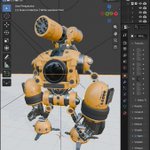
Just let Claude Fable 5 rawdog your CAD software
One @adamdotnew prompt and it designs an entire Boeing 747 in Autodesk Fusion
Theigrams retweeted

new release for text-to-cad, an open source CAD harness and skills for codex / claude:
- mechanism validation (go from text prompt to functional mechanical design)
- parameters + animations for step files
- extended sdf, srdf, urdf support
3k stars, 10k downloads, we cooking
Theigrams retweeted

For intelligence, compression is not the goal. It is a means to an end. The true goal is to gain information that helps reduce uncertainty, which is entirely measurable. For any particular data of interest, to obtain a most informative representation of its distribution (also called memory or knowledge), an intelligent system tries to learn the most effective and efficient compressing operations (say layers of a network). This is what I have been saying: We learn to compress, and we compress to learn! This is precisely the main theme of our new open book.
Theigrams retweeted

生成式AI的数学基础 primer 来了 👀
这本《The Little Book of Generative AI Foundations: An Intuitive Mathematical Primer》把 latent algebra(PCA、SVD、autoencoders)→ PPCA → VAE(ELBO + 重参数化)→ Diffusion(从噪声到去噪 + score-based 连续时间)→ flows、自回归、GANs 和 energy-based models 的整个脉络,用 derivation-oriented 的方式讲得非常清晰直观。
对我们做 agentic engineering 的人来说尤其实用:理解 latent space 的结构、variational inference 的本质,以及 iterative denoising 的 dynamics,能让我们在设计 context memory、self-healing loops 和 generative components 时更有底气,而不是只停留在 surface prompting。
数学确实是 AI 里唯一不会每半年就 deprecate 的根基。
推荐阅读(有 HTML 版,体验不错):
This is indeed a topic worth researching.

one specific limitation of gpt 5.5 and opus 4.7 is their inability to notice small details in images
the verification loop for CAD is image-based: generate a model, take a pic, look for issues, iterate
the result is that minor issues in smaller parts are missed, which compounds into major issues in complex assemblies
