

🚀Hands on science tools fueling curiosity and empowering educators🚀 Also join us for Science is Cool, a free all-day virtual science conferences
San Jose, CA
Joined May 2014
- Tweets3.7K
- Following1.7K
- Followers2.8K
- Likes3.8K




How do scientists study humpback whales?
From tail identification to drone surveys, NOAA researchers collect evidence to better understand whale populations.
Explore the classroom connections in Science is Cool Unplugged by PocketLab.
hubs.ly/Q04Bp_Z70

Science teachers: Explore practical strategies for using supplemental science materials, bilingual resources and virtual labs in grades 3–8 and Biology.
Join PocketLab + Accelerating Success on Oct. 28 at 4:30 p.m. CT.
Register: thepocketlab.com/events/acce…
#ScienceEducation

A rocket launch becomes a physics investigation when students analyze their own flight data.
See how one high school club used PocketLab Voyager 2 to connect motion, measurement and engineering:
hubs.ly/Q04ySgFK0

Run it again.
Did the pattern repeat? What changed? What could explain the variation?
Repeated trials give students evidence to compare, patterns to evaluate and a stronger basis for deciding what the data supports.
Collect. Compare. Explain.

Use technology to reduce friction, not student thinking.
Find the lesson. Organize the investigation. Collect the data.
Then let students analyze the evidence, question the results and explain what the data supports.
Technology supports the process. Students do the science.
Explore PocketLab Notebook.
Kesler Science + PocketLab Notebook educators:
Today’s Back-to-School PD is for you.
Bring your questions and explore practical ways to help students collect data, analyze evidence and build explanations during classroom investigations.
See how these resources can support the science your students are already doing.
Join us today through Science is Cool.
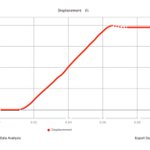
The graph isn’t the answer. It’s evidence students can reason from.
Ask:
Where did the pattern change?
What happened at that moment?
What evidence supports your explanation?
Would another trial show the same pattern?
Collect the data. Then analyze, question and explain.
Try real-time data collection in PocketLab Notebook.
Don’t start every investigation by giving students every step.
Ask:
What should we measure?
What should change?
What stays constant?
What evidence would answer our question?
Voyager 2 collects the measurements. Students make the experimental decisions.
Give students room to investigate, analyze and explain.
Explore PocketLab Voyager2: hubs.ly/Q04w6dpc0
We’re back today with another free Back-to-School PD session.
Explore PocketLab Notebook and hundreds of free science activities in the Lesson Library. Find an investigation, customize it for your students and put it to work in your classroom.
Find it. Customize it. Investigate.
Register here: hubs.ly/Q04w6kfP0
Your school can be the laboratory.
Ask a measurable question. Make a prediction. Collect data across locations. Compare the evidence. Explain the pattern.
Science doesn’t have to stay at the lab table.
Explore environmental investigations in the PocketLab Lesson Library.
Collecting a measurement isn’t the finish line.
PocketLab Notebook helps students move from an investigation question to a hypothesis, data collection, analysis and conclusion.
The technology organizes the evidence. Students analyze it, explain what it means and decide what comes next.
Collect the data. Make sense of the evidence.
Predict the graph before the trial. Then test it.
With PocketLab G-Force, students can measure velocity, position and acceleration, compare the data with their predictions and explain what the evidence shows.
That’s physics students can investigate, not just observe.
Explore thePocketLab G-Force: hubs.ly/Q04w4YXY0
Need a science investigation without starting from a blank page?
PocketLab's Lesson Library has hundreds of free activities you can preview, copy, customize and assign.
Find a starting point. Make it yours. Get students investigating.
Visit: hubs.ly/Q04w4L890
Hundreds of free science activities. One free web app.
Today's Back-to-School PD explores PocketLab Notebook + the free Lesson Library.
Find lessons. Customize them. Assign them. Get students investigating.
Register through Science is Cool: hubs.ly/Q04w3GnG0
Start with a phenomenon.
Observe. Predict. Measure. Analyze. Explain.
The sensor collects the measurement. Students do the science by analyzing the evidence, questioning the results and deciding what the data supports.
Turn questions into evidence.

Anyone else still thinking about #ScIC16?

Science has no borders. Educators joined #ScIC16 from classrooms around the world with one shared goal: help students stay curious.
#ScienceIsCool #STEMeducation

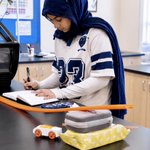
Rising @StratfordSTEM senior Noor is using PocketLab G-Force to investigate how wind affects movement along an inclined track.
Her early data is already shaping a stronger method for the year ahead.
This is student-led science: measure, question, refine and test again. 🔬


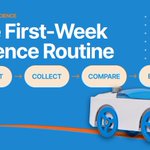
The first-week science routine:
Predict what will happen.
Collect real data.
Compare the evidence.
Explain what changed.
Start with one simple investigation. Build the scientific habits students will use all year.
#PocketLab #ScienceEducation #STEMEducation #BackToSchool

