

Making language the user interface for devices. Representing meaning for machines so they can understand us. Subscribe https://xitter.cf/t.co/5d2SwN852w
Palo Alto
Joined July 2016
- Tweets3.3K
- Following491
- Followers500
- Likes1.6K


Pat Inc retweeted

Find out about how the brain best learns language as language educators @Luke Priddy and @kungfu_english discuss in this podcast. We've all learned at least one!
#LanguageLearning #LearnChinese #LearnMandarin #LearnEnglish #HowToLearnAnyLanguage
youtu.be/aT5G8f8plhc

Pat Inc retweeted

Oxford researchers just published a paper arguing LLMs cannot invent anything. Mathematically impossible.
The reason is simple and brutal. A model trained to predict the next word can never believe something the existing data says is wrong. And every real breakthrough in history started with exactly that belief.
In 1903 every prediction machine on Earth would have told the Wright Brothers that human flight was one to ten million years away. Nine weeks later they flew. Not because they had better data. Because they had a theory the data hadn't caught up to yet.
That is the gap between AI and human thinking. LLMs mirror the past. Humans reason into a future that doesn't exist yet. Oxford just proved mathematically that those are two different things.
I use these models every day. This matches what I see. The new stuff always comes from the human at the keyboard who decides the data is wrong.
LLMs don't think. You do.

Readers added context they thought people might want to know
This paper published 2 years ago has zero mathmatical proofs in it at all. It contains no equations and is a conceptual essay. Claiming from it that anything is mathmatically proven is false and misleading.
Original paper:
pubsonline.informs.org/doi/10.1287/st…


Pat Inc retweeted

The thing I freaking warned founders to engineers to VCs is here. Headline in a business paper:
“AI phobia is America’s new consensus”
“‘Stop us before we end humanity,’ the AI titans keep telling us. Also, ‘trust me and me alone, not my competitors’”
They poisoned the well and pooped in the hot tub. Two CEOs crippled by arrogance either purposely or cluelessly—injured the public perception of AI (and robots).
It looks only get worse and will launch Luddite political careers and elect a new president riding on the back of this new anti AI, anti Clanker donkey.
All of this could have been averted and now we are in a new Luddite timeline.
This stupidity will assure a) No IPO b) Market crashing post IPO burning down. All from avertable public comments and company positions.
This has a slight chance of being averted but past performance now shows future gains in doubling down in arrogance.
You reading this, as much as you may or may not love this tech, are in the 1% that by comparison hold AI’s promise and peril in an educated mind. I know this because somehow my feed reached you.
You represent a well thinking very small and easily trampled minority.
How did this happen?
Thank Dario. From his holier than tho thought pieces to his congressional and presidential emergency meetings to his almost daily fear marketing reports dressed up as academic papers he is the poster boy for the anti movement.
Quite unlike any CEO in history this guy has captivated investors to suppress logic for hopes of a big exit.
I do not dislike Dario personally, however his philosophies are childish and he has convinced LessThinkers to follow him over the cliff. No doubt all with the best of intentions to save us from our selves because they “know better”.
The outcome of course will not be what their cos-play of a philosophy: “we are like the nuclear scientists in the manhattan project making ‘the bomb’” now has the general hard working and very stressed out rest of the world, angry and freaked out.
The problem is clear when you drive across America and talk to common folks. THEY LOVED AI TWO YEARS ago. Now they have dozens of reasons to hate it. They certainly hate the poster boy and Sam (he is another story). But they will take the words of waning and fear seriously, as I expected and use this fear theater marketing from the LessWrong ivory towers as fuel to burn it all down.
I spent most of this summer talking to over 300 random folks around this country and NOT ONE supports the positive things we see with AI here on X every day.
NOT ONE. Bankers, doctors, nurses, lawyers, real estate, restaurant workers to high executives. In the promise this technology offered, flooded are the noise of Dario and now the press and politicians filling the mass minds with a guaranteed hatred if the tech. And no, no acceptance as Dario as savior.
The meeting the pope and having the Anthropic minion mini Dario give a speech has sent many Catholics off to full hatred of AI.
As I said, this can be readjusted but it takes very detailed coordination, communication and money.
I did the first half for free right here : identified the problem, much to my demise as many of my colleagues are having a party, rightly so, on the great daily achievements in the industry.
You folks have tolerated my obvious posting just about daily on the Anthropic game. Trust me Bro, it makes me no friends with the industry even if they don’t like the company.
I am speaking up here because we have 4 months. It will be hard but if understood we have a much better future of clear thinking. If unsuccessful we have a decade of decay and world AI dominance by China, because they have nothing like an Anthropic and if they do get one: BE VERY SCARED BECAUSE THEY HAVE SOMETHING VERY POWERFUL IN AI THEY ARE NOT TALKING ABOUT AND ARE ROLLING UP THE GATES.
This is the way of it.
I want to be very wrong here but my track record on the future says otherwise.
Pray for us.


Pat Inc retweeted

Free newsletter: The OpenAI Bubble, my comprehensive, 15k word thesis about why the AI Bubble and the AI Trade were inflated by OpenAI and can't exist without it, who will be the victims of the bubble bursting, and how we can stop it from happening again.
wheresyoured.at/the-openai-b…

Pat Inc retweeted

Today is a huge win for creatives around the world, as Australia makes it clear it will not bow to pressure from AI companies to legalise the theft of creatives’ work.
From the Australian Prime Minister:
"No company should use Australian books, music, art or news to build or train AI without the artist’s control.
That includes the artist’s control of the price and value of their work.
Anything less, is theft."
Strong, principled words that should serve as a model for governments everywhere.
theguardian.com/technology/2…


Pat Inc retweeted
“I asked a few AI researchers whether they could name any other real-world software that scales so poorly. None of them could think of any. Even outside the world of software, it’s hard to find a comparable example, given that economy of scale is the principle that has made light bulbs, cars, and clothing so affordable. By economic and engineering measures, generative AI might be the worst technology ever deployed” @_alexreisner @TheAtlantic
In “Generative AI is an engineering disaster” theatlantic.com/technology/2…

Pat Inc retweeted
Is it a sign of disillusionment when technooptimist @BrianRoemmele sounds *exactly* like me:?
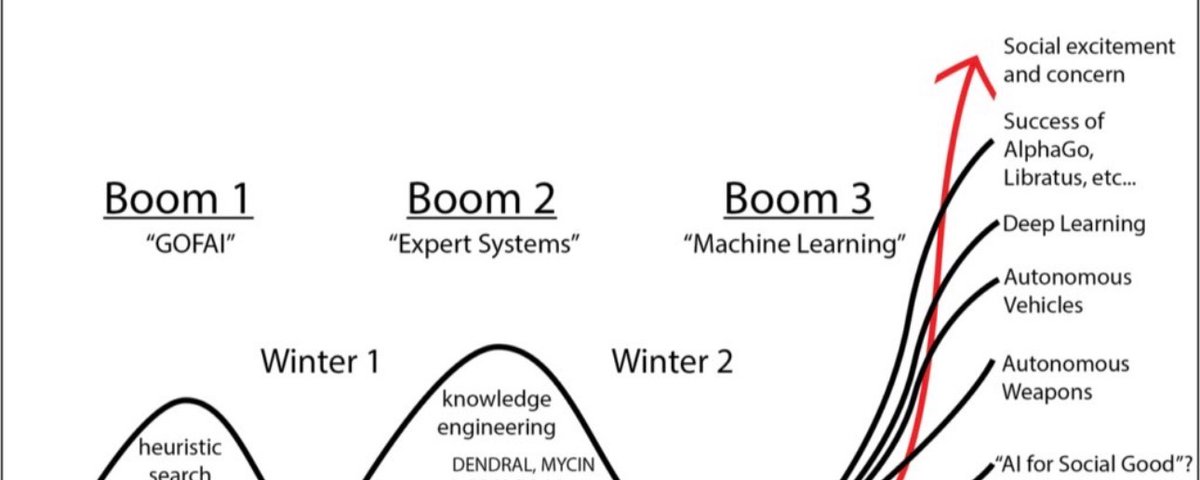
Here he writes that we risk an AI winter from “Over-promising relative to capabilities: Ambitious public claims outpaced demonstrated performance in open-ended environments.”

Pat Inc retweeted
Really grateful that @chrislhayes and @MSNOWNews gave me the space to talk about the unsustainable economics of AI, subsidized subscriptions, and why generative AI is nothing like Uber or Amazon Web Services.

Had a great time talking to @chrislhayes for his AI End Game series on @MSNOWNews , covering the AI bubble, the SaaSpocalypse, the end of tech's era of hypergrowth, and the underlying economic fragility of data centers and the greater AI industry.
youtube.com/watch?v=-Mn-TNLw…

Pat Inc retweeted
My appearance on Bloomberg last week ruffled some feathers because I don't have "skin in the game" (IE: money in the market). This is because AI boosters can't imagine somebody with a moral position on an industry run by grifters and sold with lies.
wheresyoured.at/ai-is-slowin…

Pat Inc retweeted

Let me trace the timeline here because nobody's connecting it.
Step 1: Scrape the entire internet. Every book, every article, every conversation, every piece of art, every forum post. Do it without asking. Do it without paying.
Step 2: Train a model on all of it. Call it "artificial intelligence."
Step 3: Go to BlackRock's Infrastructure Summit and announce: "We see a future where intelligence is a utility, like electricity or water, and people buy it from us on a meter."
Step 3 is where you sell people's own knowledge back to them. On a meter.
They took the collective output of human thought, compressed it into a model, and now they want to charge you by the token to access a version of what you and everyone you know already created.
One Reddit user put it perfectly: "They stole all this data from us, the people, our life's work, creativity, art, by devouring the internet and blowing through all copyright laws. Now they want to sell it back to us in the form of a utility."
Imagine if someone photocopied every book in the public library, burned the library down, and then opened a subscription service for the copies.
That's the metered intelligence business model.
And they're pitching it to infrastructure investors as though they invented water.
This Post is from a suspended account. Learn more
Pat Inc retweeted

A Norwegian neuroscientist spent 20 years proving that the act of writing by hand changes the human brain in ways typing physically cannot, and almost nobody outside her field has read the paper.
Her name is Audrey van der Meer.
She runs a brain research lab in Trondheim, and the paper that closed the argument was published in 2024 in a journal called Frontiers in Psychology. The finding is brutal enough that it should have changed every classroom on Earth.
The experiment was simple. She recruited 36 university students and put each one in a cap with 256 sensors pressed against their scalp to record brain activity. Words flashed on a screen one at a time.
Sometimes the students wrote the word by hand on a touchscreen using a digital pen, and sometimes they typed the same word on a keyboard. Every neural response was recorded for the full five seconds the word stayed on screen.
Then her team looked at the part of the data most researchers had ignored for years, which is how different parts of the brain were communicating with each other during the task.
When the students wrote by hand, the brain lit up everywhere at once.
The regions responsible for memory, sensory integration, and the encoding of new information were all firing together in a coordinated pattern that spread across the entire cortex. The whole network was awake and connected.
When the same students typed the same word, that pattern collapsed almost completely.
Most of the brain went quiet, and the connections between regions that had been alive seconds earlier were nowhere to be found on the EEG.
Same word, same brain, same person, and two completely different neurological events.
The reason turned out to be something nobody had really paid attention to before her work. Writing by hand is not one motion but a sequence of thousands of tiny micro-movements coordinated with your eyes in real time, where each letter is a different shape that requires the brain to solve a slightly different spatial problem.
Your fingers, wrist, vision, and the parts of your brain that track position in space are all working together to produce one letter, then the next, then the next.
Typing throws all of that away. Every key on a keyboard requires the exact same finger motion regardless of which letter you are pressing, which means the brain has almost nothing to integrate and almost no problem to solve.
Van der Meer said it plainly in her interviews.
Pressing the same key with the same finger over and over does not stimulate the brain in any meaningful way, and she pointed out something that should scare every parent who handed their kid an iPad.
Children who learn to read and write on tablets often cannot tell letters like b and d apart, because they have never physically felt with their bodies what it takes to actually produce those letters on a page.
A decade before her, two researchers at Princeton ran the same fight using a completely different method and ended up at the same answer. Pam Mueller and Daniel Oppenheimer tested 327 students across three experiments, where half took notes on laptops with the internet disabled and half took notes by hand, before testing everyone on what they actually understood from the lectures they had watched.
The handwriting group won by a wide margin on every question that required real understanding rather than surface recall.
The reason was hiding in the transcripts of what the two groups had actually written down.
The laptop students typed almost word for word, capturing more total content but processing almost none of it as they went, while the handwriting students physically could not write fast enough to transcribe a lecture in real time, which forced them to listen carefully, decide what actually mattered, and put it in their own words on the page.
That single act of choosing what to keep was the learning itself, and the keyboard had quietly skipped the choosing and skipped the learning along with it.
Two studies. Two countries. Same answer.
Handwriting makes the brain work. Typing lets it coast.
Every note you have ever typed instead of written went into your brain through a thinner pipe. Every meeting, every book highlight, every idea you captured on your phone instead of on paper was processed at half depth.
You did not forget those things because your memory is bad. You forgot them because typing never woke the part of the brain that would have made them stick.
The fix is the thing your grandmother already knew.
Pick up a pen. Write the thing down. The slower road is the faster one.

Pat Inc retweeted

Blowing trillions on data centers is a very expensive way to discover that AI can’t be solved by brute force.
Pat Inc retweeted
"If you plan to rely upon textbooks or written materials with pinyin and characters, but no access to audio content of any kind, it will probably take you many years to learn to write but you’ll not understand what you hear and you won’t be able speak"buff.ly/ZmwEebB

Pat Inc retweeted
AI Improves with Cognitive Science - Part 2
This incorporates the analysis of the science of brains to show why AI struggles with brain-like function: Moravec's paradox.
The answer to how the brain processes information is answered: it doesn't. A different model that distributes a representation of the world is explained in steps. The next article can then use this to explain how human language performs some of the impressive tasks of generalization and understanding.
The issue to solve comes from how computers work. Encoding data and processing it with a program is alien to what a brain does. How would a binary code be created to represent vision or hearing, for example?
Brains are more capable than our best machines today. We talk, move around and use languages that seem to be coded in a way our best scientists have failed to emulate. But that just comes back to how our brain works. Brains aren't based on mathematical models.
Today's article will be a chapter in my upcoming book, but for now as is the goals of science, please read the article and criticise its ideas if you can.
I expect it will be hard to criticise because the model has been used to build a working parser that operates in real time, on a computer, that uses the model as described. It converts the meaning of words and phrases into related representations aligned with the world's languages (refer to the RRG linguistic model).
The article explains what a pattern is, how patterns can be manipulated with exquisite detail as we see in human interaction aacross all our sensory modalities, how motor control works with the same brain material, and how this model can be extended to create language.
The hard work comes from the animal brains that evolved to human brains. When we refer to someone's face, you can almost see them and it doesn't get confused between other people's. What magic does that without data or labels. It's automatic and what brains do!

Pat Inc retweeted

Are you prepared to update this daily @marcusarvan with the new appearances of misalignment like a whack-a-mole game at society's expense 😀 or should I say, 😢?
The next generation of language AI achieves the trustworthy human-machine interface because by design it 'understands' like the human brain.
How? Link in the comments......


Pat Inc retweeted
Do you wish you could just absorb a new language? Your brain does that for you, if you mimic that environment like it learned your first!
Come along on the #SpeechGenie journey to unlock the power of your brain for language learning ...
speechgenie.co
