

Former elephant aging scientist, currently aging scientist on Mastodon: @docmanny@genomic.social Functional genomics in 🦇🐘🐋🐢🐭
Berkeley, CA
Joined September 2015
- Tweets1.4K
- Following531
- Followers413
- Likes1.7K




Good news, @AirCanada saves the day when @united decided they didn't want me to make it to Sydney until TUESDAY
Bad news, the @united app stopped tracking my luggage so I get to spend *even longer* trying to get all of my clothes back.

Hey @united I'm missing my connection to Sydney thanks to 3hrs of consecutive maintenance delays. There's a flight with my SAME class I can get on tomorrow that would salvage my work trip - but I've been on hold for 30 minutes and the app won't let me pick the new flight!!! Help!


1
1
85
Hey @united I'm missing my connection to Sydney thanks to 3hrs of consecutive maintenance delays. There's a flight with my SAME class I can get on tomorrow that would salvage my work trip - but I've been on hold for 30 minutes and the app won't let me pick the new flight!!! Help!

Well, if anyone needs me, I'm joining the great "fuck you" exodus to where the Skies are Bluer. Same handle!
1
3
236
Juan Too Manny Strong Opinions 🇵🇷 retweeted

Apply the legal ‘true malice’ principle to protect research-misconduct sleuths | @gengyan_tang | buff.ly/4fDMBaS

Buenos días a todos en #PuertoRico except @lumaenergypr y los que votaron por 4 años más de PNP, fraude, y corrupción
Y yo ayer mirando a compañías de energía solar 😂
131
A laut er bur-ry cool projects!

The Lauterbur EvoEco Lab at @BiologyUVM is recruiting Fall 2025 PhD students! Interested in computational evolutionary ecology and how animals adapt to pathogens, toxins, and other threats OR interested in hacking complex biological systems with creative code? Please reach out!

Juan Too Manny Strong Opinions 🇵🇷 retweeted

Thank you @CNRS @CNRSbiologie . This reflects the #collective contribution/support from incredible #people from the lab, amazing collaborators, truly inspiring mentors & peers along the way:🙏 to all. For more years of #science 🧬🦇🦍and #DiversityInSTEM ✊

#TalentsCNRS🥉| Lucie Etienne, chercheuse au @CIRI_Lyon, décrypte l'histoire évolutive et fonctionnelle des relations hôtes-pathogènes. Elle a été récompensée de la médaille de bronze du @CNRS.
▶️ buff.ly/3XAmsUB

Juan Too Manny Strong Opinions 🇵🇷 retweeted

For anyone interested in teaching or learning DNA metabarcoding, here’s a great example of a Course-based Undergraduate Research Experience (CURE) in which 49 students learned how to investigate the human skin microbiome of a postgrad student using 16S DNA metabarcoding! 👇
The article, by Sellers et al. (2024 PREPRINT) describes a CURE run by the University of Hull, UK, that aimed to introduce students to the wet lab and bioinformatics skills needed to answer research questions using DNA metabarcoding — in this case 16S rRNA gene metabarcoding using Oxford @nanopore MinION sequencing.
The CURE was an intensive two-week course, with introductory online activities and a write-up period afterwards. The first week focused on the wet-lab work, and the second week on bioinformatics to analyse the data produced.
The course required a small amount of background knowledge of genetics and methods (including PCR and agarose gel electrophoresis), and basic statistics using RStudio (which had been taught in previous courses), but otherwise the students had little lab experience.
The students were also provided with two relevant articles: a review paper on the human skin microbiome and an experimental paper on DNA extraction (the latter being the great modular “Mu-DNA” article linked at the bottom of this post).
The wet lab course was broken into five days in which:
⭐1️⃣ Students were introduced to the practical course, health and safety, and familiarised themselves with pipetting. They then extracted DNA from frozen dead bacterial pellets of E. coli.
⭐2️⃣ They quantified DNA extractions with a Qubit fluorometer, and prepared 16S PCRs from samples to be run overnight.
⭐3️⃣ And visualised PCR products using gel agarose electrophoresis.
⭐4️⃣ The students then prepared their metabarcoding libraries from pre-extracted DNA samples sampled from a postgraduate (with appropriate ethical approval), using the ONT 16S Barcoding Kit; quantified the samples using the Qubit; and visualised by gel electrophoresis. The students could then calculate any adjustments needed to make the different samples of equal molarity before they were multiplexed.
⭐5️⃣ Technical staff then checked the DNA library concentrations, mixed samples together for multiplexing, and ran the samples on a ONT MinION using Flongle flow cells over the weekend.
During the second week, the students:
⭐6️⃣ Learned basic Unix command lines for bioinformatics, supported by a demonstrator.
⭐7️⃣ Analysed a provided fastq file to examine the data; quality-checked and cleaned the data; and then assigned the sequences to a taxonomy using Kraken2. The data was then reformatted to a .csv file for exploration in R.
⭐8️⃣ Conducted ecological community analysis in R using example data and their own data, examining OTU richness in each sample site.
⭐9️⃣ Had a day of independent study to work on their analyses.
⭐🔟 Had a review day with final troubleshooting, opportunities for questions, and assignment requirements, finishing off with a seminar on human microbiomes and details that might be relevant about the subject.
Further details of the two weeks’ activities can be found in the article’s supplementary data.
After the final reports and assessments, the results of the course were:
⭐ All but one group of students successfully amplified the E.coli pellets, and most groups prepared successful libraries for ONT MinION sequencing.
⭐ 86% of students passed the assignment at the first attempt, with remaining students offered a resit opportunity.
⭐ 74% of respondents said they had enjoyed all or most of the practicals.
⭐ Student confidence about lab-work increased from 39% to 84% of respondents.
⭐And overall students felt that the CURE had developed lower and higher learning levels of their ability to engage with research,
One really nice thing about this example (apart from the big impact on these specific students' confidence and skills), is that it demonstrates how undergraduate students with minimal experience of modern molecular methods can be successfully introduced to research-led inquiry via DNA metabarcoding in a very short timeframe.
And in doing so, they can get experience in methods that will help them engage with the potential of next generation sequencing in the future, whether that's in the human microbiome, or in soil ecology, or marine eDNA surveys, or an enormous number of other fields. Many very exciting possibilities!
You can read the article (and find the supplementary data, which is worth checking out) here:
Sellers et al. (2024 PREPRINT). Who Grows There? A Course-based Undergraduate Research Experience to explore the human microbiome through 16S DNA metabarcoding. bioRxiv, 2024-07.
biorxiv.org/content/10.1101/…
Come listen to me wax poetic about aging, bats, and all the crazy things that no one would have thought possible 14 years ago!


5
273
Juan Too Manny Strong Opinions 🇵🇷 retweeted

The Hinojosa Lab website is officially up and running! thehinojosalab.com/
Thank you to my amazing lab manager, Grace, for an end product that is everything I'd hoped for! CHECK IT OUT Y'ALL!!!
Finally got my NOA and I'm excited to get started! #NIHMOSAIC
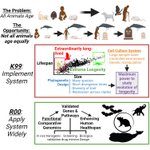
Excited to finally announce that my #K99 is to be funded!
The ultimate goal of my future lab is to understand the evolution of gene regulatory networks governing longevity-associated traits - beginning with somatic mutations and DNA repair (1/6) 🧵


Juan Too Manny Strong Opinions 🇵🇷 retweeted
I am excited to finally announce that the Lauterbur EvoEco lab will be opening in the Biology Department at the beautiful University of Vermont @biologyuvm this fall. Opportunities for grad students and postdocs bridging computational/organismal evolutionary ecology and genomics

Juan Too Manny Strong Opinions 🇵🇷 retweeted

New research from our group. CapTrap-seq, a library preparation protocol for high-fidelity full-length RNA sequencing rdcu.be/dL3z with @carninci @buszczynska and others.
The paper in @NatureComms includes a link to a layman version of the paper in #Catalan (#Català)

Juan Too Manny Strong Opinions 🇵🇷 retweeted

Now out @Nature, our paper on HiDEF-seq: single-molecule DNA sequencing that resolves single-strand changes (mismatches and damage)! go.nature.com/3KG7Njh
Excited to finally announce that my #K99 is to be funded!
The ultimate goal of my future lab is to understand the evolution of gene regulatory networks governing longevity-associated traits - beginning with somatic mutations and DNA repair (1/6) 🧵
(5/6) Thanks to the work of Katia Renault as an undergrad, we can make iPSCs from these cell to look at tissue-specific DNA Repair!
The future Vazquez Lab will be able to study the evolution of longevity using this platform of evolutionary functional genomics - stay tuned!

1
1
589