

Historian | Writer | Author of Standing Firm in the Dixie: The Freedom Struggle in Laurel, Mississippi 📚
Joined July 2021
- Tweets555
- Following207
- Followers69
- Likes575



Pinned Tweet
Black Women, Sanderson Farms, and the Strike for Better Conditions aaihs.org/black-women-sander…
My new article published by @AAIHS


Derrion Arrington retweeted

Zion, Poole & Trey will DOMINATE in transition
But they can't do that, if they can't secure the defensive board & start the break
Looney will help a lot, but someone else has to step up or come in via FA or Trade to help with the DREB
SUBSCRIBE ⬇️
youtube.com/live/yAIzx_XaJd4…
Derrion Arrington retweeted
This upcoming season Zion has to take at least 3 of these catch & shoot threes a game
Easy way to create more scoring opportunities
If you’re working, trust your work
Derrion Arrington retweeted

#OnThisDay in 1964, Unita Blackwell became the Issaquena County delegate for the Mississippi Freedom Democratic Party, which fought to replace Mississippi’s all-white delegation at the 1964 Democratic National Convention.
“We had no idea that we were changing the whole political future of America,” she said. “We were going because we didn’t have shoes for our children and decent houses to stay in and just the everyday life that we wanted.”
Born during the Depression in the impoverished Mississippi Delta, her parents were sharecroppers, and they searched across the South for jobs that would pay them enough to feed them. When Freedom Summer came, she joined the civil rights movement and became a field secretary for SNCC. She was one of only eight Black Mississippians who tried to register to vote in Mayersville — only to get turned away.
“Because we didn’t have nothing,” she told the “Eyes on the Prize” documentary, “we couldn’t lose nothing. But we wanted something for ourselves and for our children. And so we took a chance with our lives.”
After she and her husband, Jeremiah, attempted to register to vote, they were fired from their plantation jobs, and the Ku Klux Klan tossed Molotov cocktails at her home.
In 1965, she filed litigation challenging the suspension of 300 students, including her son, Jerry, for wearing SNCC’s “Freedom” pins. The U.S. Supreme Court upheld her case, in which also called for school desegregation. In 1976, she was elected mayor of Mayersville — the first African-American woman to serve as a mayor in Mississippi’s history. Within a few years, the town boasted paved streets, a sewer system and streetlights.
In 1990, she was elected president of the National Conference of Black Mayors. Two years later, she received a MacArthur “genius” grant for her creative work as mayor. In 2006, she published her memoir, “Barefootin’: Life Lessons on the Road to Freedom.” A decade later, the state honored her with a Mississippi Freedom Trail marker.
mississippitoday.org/2024/07…

Derrion Arrington retweeted
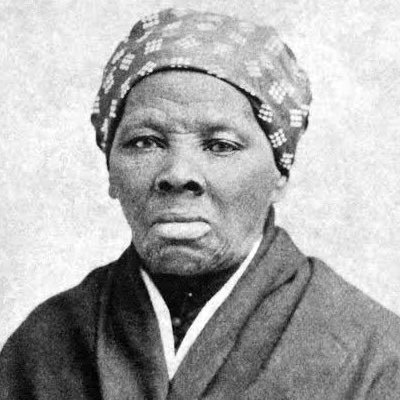
How President Lyndon B. Johnson tried to stop Fannie Lou Hamer's Powerful Testimony by impromptu Press Conference to Get Her off the air, 1964.
Derrion Arrington retweeted

#OTD in 1862, journalist & civil rights activist Ida B. Wells was born in Holly Springs, MS. Wells spent her life exposing the evils of lynching and organizing for racial justice causes. #ANationsStory #APeoplesJourney

ALT A sepia portrait of Ida B. Wells, wearing a lace-adorned blouse, looking off to the side with a composed expression.
Derrion Arrington retweeted
On this day in 1968, Shirley Chisholm became the first Black American Presidential nominee from one of the two major parties.


Derrion Arrington retweeted
#OnThisDay in 1941, Stokely Carmichael, also known as Kwame Ture, was born. Inspired by the sit-ins in the South, he joined the civil rights movement and became a Freedom Rider. Arrested in Jackson, Mississippi, he spent 53 days in Mississippi’s most notorious prison, Parchman, before being released.
It was one of dozens of arrests. He became a leader in the Student Nonviolent Coordinating Committee (SNCC), replacing John Lewis, and popularized the term “black power.” The phrase became a movement, and he became known as “honorary prime minister” of the Black Panther Party.
He died of prostate cancer in 1998.

Derrion Arrington retweeted

"I don’t want equal rights. I want human rights. The rights that...would not have people lynched in the state of MS [or] destroyed the Indians & pushed them out of this country...I’m fighting for more than we have ever had." - Fannie Lou Hamer (1917-1977) Activist & humanitarian.

Derrion Arrington retweeted

With the 7th pick in the NBA Draft, the #Pelicans select Jeremiah Fears from @OU_MBBall 💪
#PelicansDraft | @NewAgeProducts

Derrion Arrington retweeted
Jeremiah Fears to the #Pelicans! 🙌
Derrion Arrington retweeted

Stevie Wonder is blind and plays like 36 instruments
R Kelly can see and can’t read

Derrion Arrington retweeted

Leon Thomas performs ‘Mutt’ at the 2025 #BETAwards
Derrion Arrington retweeted
"Some of the white people will tell us, 'Well, I just don’t believe in integration.' But he been integrating at night a long time. If he hadn’t been, it wouldn’t be as many light-skinned Negroes as it is in here."
- Fannie Lou Hamer (1917-1977) Activist and humanitarian

Derrion Arrington retweeted

FORGOTTEN HERO: WALTER WHITE AND THE NAACP traces the life of this neglected civil rights hero and seeks to explain his disappearance from our history | @AmExperiencePBS
#BlackHistoryMonth
Derrion Arrington retweeted
'The rich tradition of Black Marxist thought—one that includes W. E. B. Du Bois, C. L. R. James, and Frantz Fanon, among many others—emphasizes the centrality of capitalism to racial oppression and the destructiveness of that oppression for all workers.'
jacobin.com/2025/02/black-ma…
Derrion Arrington retweeted
Left of Black | Small Talk with DJ Lynnée Denise on Rock Legend Willie Mae "Big Mama" Thornton
#BlackHistoryMonth
youtube.com/watch?v=syKZzeWT…

Derrion Arrington retweeted
Rosa Ingram and her teen sons were sentenced to death in 1948 after they murdered a white neighbor who attempted to sexually assault their mother.
Thanks to civil rights activists the story gained national press. They were later released on parole for being "model prisoners."
—In 1948 Rosa Lee Ingram, a sharecropper and widowed Mother of four boys, was the center of one of the most-explosive capital punishment cases in history. In 1948 in a one-day trial, Ingram and two of her teenage boys were sentenced to die by electric chair, after an altercation with a White landowner in the state of Georgia.
On November 4, 1947, the landowner reportedly confronted Ingram and three of her sons over livestock entering his land near the small town of Ellaville. John Stratford was armed with a shotgun and pocket knife when he went to have his word with Ingram. Three of Ingram’s boys overheard their mother yelling then rushed over to her armed with farm instruments. Later, the 64-year-old man was found dead by way of blows to the head according to the investigation.
In several accounts and most notably in author Janus Adams‘ “Sister Days: 365 Inspired Moments in African-American Women’s History,” it was said that Stratford struck Ingram in the head with the butt of his rifle after threatening to shoot her mules that allegedly invaded his cornfield. Other historical accounts state that according to later testimony, though, Stratford threatened Ingram with sexual assault before striking her.
Either way, Ingram and her sons, Wallace, 16, and Sammy, 14, were all convicted by an all-White jury to death; Charles, 17, was at the scene but not charged due to lack of evidence.
Although there was an investigation at the scene of the murder, it has been suggested that many who responded to the incident were not officially mandated to do so. As a result, civil rights activists from NAACP branches around the nation leaped in to action to assist Ingram and her boys.
Court-appointed White lawyer S. Hawkins Dykes was aided by the the Civil Rights Congress (CRC) and their fund-raising efforts. Although this move caused some tension with the NAACP, Ingram and her sons were able to get an appeal and their sentences were reduced to life in prison.
National Committee to Free the Ingram Family, led by Mary Church Terrell, was instrumental in continuing to fight on behalf of the Ingram family and worked alongside the CRC and NAACP to ensure their freedom. Working across class and color lines, the case was a rallying cry for women activists and attracted the attention of the media in the North.
These organizations worked tirelessly to keep Ingram’s case alive in the minds of the public, even appealing to President Harry Truman to intervene at one point.
Finally in 1959, the Ingrams were granted parole and released.
The case placed a highlight on the racist and divisive Jim Crow laws of the South and also galvanized African-American women to participate in civil rights activism.
Ms. Ingram lived in Atlanta from the time of her release in prison until her passing in 1980.
🖋️Check out my blog posts on ko-fi.com/africanarchives … and subscribe to get my posts on your email and support
