

Research Director at Wood Mackenzie | Energy markets analyst | Geoscience geek | Reading rocks and price curves | Views my own
Dubai, United Arab Emirates
Joined February 2026
- Tweets471
- Following60
- Followers1.3K
- Likes171



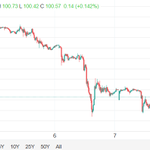

Three commercial vessels attacked in the Strait of Hormuz. US strikes on nearly 90 targets across Iran. President Trump declares the ceasefire "over". Brent responds with a 6% rally to around $78/bbl.
The market is repricing export risk, not physical supply (for now).
Gulf production has recovered faster than expected, but output is still around 4.5 million b/d below pre-conflict levels. The UAE has exceeded 4 million b/d, while Saudi Arabia has recovered to above 7 million b/d.
Iraq remains the key constraint. The issue is getting crude onto ships - not wellhead production. Limited tanker availability and rising war-risk concerns could delay export recovery even if upstream operations continue to improve.
Maritime security is once again setting the oil price.
Demographics are becoming an energy story. Slower population growth could cap long-term energy demand, but AI, electrification and emerging market development will continue to drive electricity and critical mineral demand, increasing pressure on hydrocarbons. The long-term downside is greater for oil and gas than for electrons.

Population growth is a cornerstone of future energy demand. But alarming declines in birth and fertility rates suggest that UN projections for global population may be far too high. A falling global population would have huge implications. Read more: okt.to/0m6RrF

Genel Energy's US$360 million acquisition of Capricorn Energy is a pivotal step in its strategy to diversify beyond the Kurdistan Region, where geopolitical tensions, export disruptions and payment delays have exposed the risks of concentration. The deal more than doubles Genel's production and follows several years in which Capricorn explored, but failed to execute, alternative strategic combinations.
🇮🇶In Iraq, momentum continues to build. Chevron has secured access to evaluate West Qurna 2 through a confidentiality agreement, a potential precursor to operatorship of one of the country's largest oilfields.
Meanwhile, HKN Energy has entered Federal Iraq through the Hamrin redevelopment, targeting a threefold increase in production under Iraq's evolving hybrid contract model.
Together, the developments reinforce Baghdad's push to attract international (mainly US) investment into its core upstream sector.
More on this available to our clients only 👉my.woodmac.com/web/woodmac/d…
Eni and XRG have agreed to take stakes in three unconventional blocks in the Vaca Muerta from YPF, deepening their exposure to Argentina's LNG ambitions. The blocks form the core upstream resource for the proposed Argentina LNG project, which could be sanctioned as early as the second half of 2026.
For XRG, the entry into Vaca Muerta fits a strategy centred on large, long-life unconventional resources linked to export-led monetisation. The tie-in with Argentina LNG frames the acreage as part of an integrated value chain rather than a standalone upstream position.
The partnership with Eni and YPF strengthens the upstream base of the LNG project and aligns resource development with expected export infrastructure timelines.
Our clients have access to the full analysis 👉my.woodmac.com/web/woodmac/d…
Post-ceasefire, Gulf supply is returning faster than many expected. The UAE has restored offshore production within days of operations resuming, demonstrating strong reservoir management and operational execution.
In Iraq and Kuwait, most of the remaining recovery is expected to be constrained by logistics rather than field performance, with the majority of production able to return once export operations fully normalise.
The next question is whether the shipping system can keep pace. Around 5 million b/d of Gulf oil still has to return to the market, requiring a significant increase in tanker availability through the Strait of Hormuz. Vessel traffic and insurance costs have improved markedly since the ceasefire, but rebuilding export capacity will still take some time.
As logistical constraints ease, the conversation is shifting from "Can Gulf supply return?" to "Can the market absorb it?" With oil prices already under pressure, the next major variable may be Riyadh's response rather than Tehran's. Saudi Arabia's strategic choice will be whether to defend prices through continued supply restraint or prioritise market share by flooding the market with barrels.
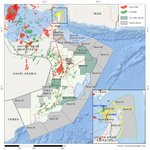
Oman’s offshore push continues: OQ and TPAO have signed concession, gas sales and operating agreements for offshore Block 80, committing at least $90 million over an 8-year exploration programme (3D seismic plus up to four wells).
The location makes the story particularly interesting.
Block 80 sits in Musandam, one of Oman’s least explored offshore regions and an area with both geological upside and strategic positioning along the Oman–Iran and Oman–UAE maritime boundaries.
The larger-than-expected concession area may indicate that Oman has consolidated Blocks 8, 80, 81 and 82 into a single concession structure under Block 80 to create greater scale, improve exploration economics and enhance commercial attractiveness.
Musandam remains one of Oman’s least explored regions. Since 1977, only 12 exploration and appraisal wells have been drilled offshore, yet the area already hosts producing assets and sits close to emerging exploration interest in the Sohar basin.
Offshore currently contributes less than 1% of Oman’s production and remaining resources. Block 80 is unlikely to change that on its own, but its progress will be closely watched as an early indicator of whether Oman can attract sustained interest into offshore exploration.
More analysis for our clients 👉my.woodmac.com/document/3591

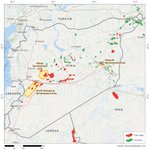
ConocoPhillips and Novaterra Energy have converted their MoU into a development contract targeting 140–170 mmcfd of incremental gas across Tabiyeh, Bilas and North Damascus. The project combines brownfield redevelopment and undeveloped gas resources to support Syria’s domestic supply and power generation needs.
Tabiyeh, previously operated by ConocoPhillips (1998–2005), once produced ~250 mmcfd and supported both domestic supply and EOR. North Damascus includes mature fields feeding the South Palmyra plant. Bilas could supply either South Palmyra expansion or new UCC-linked gas-fired power plants.

SPC is launching its first post–civil war bid round for 4 fields in the MAKK Area (Mahsah, Akissyah, East Khrata, Qusaibeh) in Deir Ez Zor.
The deal structure: Phase 1 rehabilitation + early production runs in parallel with Phase 2 exploration optimisation, followed by full development.
The acreage sits NW of Shell’s former AFPC concession, once Syria’s core producing hub (~400 kb/d peak in 1995, ~100 kb/d by 2010 before war shutdown). MAKK effectively marks the first structured attempt to revive upstream activity in the province following Shell’s exit.
Initial focus is clear: rapid production recovery via rehab and well restarts, targeting Syria’s ~130 kb/d year-end goal. Phase 2 shifts to infill + appraisal drilling (≥5 wells + 1 exploration well), setting up longer-term resource growth.
US and Gulf players continue to lead Syria’s upstream re-entry, with HKN and ConocoPhillips already active.

While all eyes are on Hormuz and the Gulf, Syria has been moving rapidly to rebuild its oil and gas sector. A string of announcements and deals this week suggests momentum is building. Starting with the pipeline.
SPC has launched a $2.7 bn tender for a new 400 kb/d heavy crude pipeline from Hasaka to Banias (expandable to 600 kb/d). This goes beyond infrastructure and suggests Damascus is positioning for a recovery in upstream production.
At $124k per inch-km (including pumping infrastructure), costs look broadly in line with regional benchmarks. Reusing the existing corridor also suggests a focus on accelerating timelines and limiting capex.
This follows HKN's Rumailan entry, Gulfsands lifting Force Majeure and leaves open longer-term upside if Chinese operators eventually return.

The other hot question is the sharp drop in oil prices. This is not justified by immediate fundamentals - vessel tracking data shows only relatively limited additional oil has actually returned to flowing through the Strait.
However, Brent was always a binary market in this scenario. A prolonged closure would have created a non-linear upside, with prices potentially pushing above US$150/bbl in the coming months. The mere prospect of reopening has therefore removed that tail-risk premium and effectively burst the spike scenario.
The question over the weekend is whether the Strait is open or closed. Spent part of my Monday morning trying to answer this, and the reality is more ambiguous than the binary framing suggests.
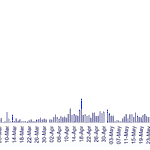
• Wood Mackenzie's data show that ships of all categories passing through has clearly recovered from the extreme lows (~50 vessels transited on 20 June up from just one on 13 June, but has fallen again by half to 25 vessels on 21 June). This remains well below pre-conflict norms (~200 vessels).
• Flows have not stopped at any point, which means “closure” is not operationally accurate, even if political signals suggest otherwise
• What we are seeing instead is selective, uneven movement: VLCCs loading Iranian crude at Kharg, Saudi crude transits, and QatarEnergy LNG cargoes all still getting through
• At the same time, activity remains highly sensitive to security headlines, with IRGC announcements alone enough to trigger an immediate drop in flows
• Freight rates remain ~3x pre-crisis levels, and chartering is increasingly dependent on bespoke contractual risk clauses
The answer: the Strait is neither fully open nor meaningfully closed. It is operating in a constrained, politically priced equilibrium where flows continue, but confidence has not yet returned.

Oil market fundamentals played a significant role in reaching the MoU between the US and Iran. The market had been relying on accelerated inventory drawdowns to offset the loss of more than 11 million b/d of crude supply, alongside around 3 million b/d of refining capacity for product exports.
Both commercial stocks and Strategic Petroleum Reserves were moving towards tighter levels, raising concerns about system resilience. With US inventories at Cushing approaching operational minimums, President Donald Trump acknowledged on 15 June that “we run out of reserves in about four weeks”.
Similar concerns about a looming supply and inventory constraint had been building across global markets, reinforcing pressure for a diplomatic resolution.
The ceasefire and MoU are encouraging, but not guarantees. The deal could still unravel. Continued Israeli military activity in Lebanon remains a credible trigger for renewed regional escalation. If tensions rise again, the Strait would likely shut once more and the recovery clock resets.
Over the coming weeks and months, the key question will be whether the ceasefire holds and whether the parties can translate the MoU into a durable peace agreement. The risk of renewed hostilities remains significant, not least given ongoing tensions in Lebanon.
In addition, uncertainties surrounding mine-clearance operations and logistical bottlenecks affecting transit through the Strait, even if the peace agreement endures, remain important factors that will influence the pace of recovery in oil and LNG exports.
For oil, Gulf supply is expected to return progressively rather than all at once. Our analysis suggests around 70% of shut-in crude volumes could recover within three months and ~90% within six months, assuming transit through the Strait of Hormuz fully normalises by August.
Recovery should be fastest in Saudi Arabia and the UAE, supported by reservoir quality, infrastructure resilience and export flexibility, while Kuwait and Iraq are likely to follow a slower path.
For gas, Qatar is positioned for a faster rebound. Restart preparations at Ras Laffan and improving shipping conditions support a recovery of around 80% of LNG production within three months, with a best-case scenario reaching similar levels in as little as two months.
The pace of shipping normalisation, rather than upstream readiness, now becomes the critical variable.
One of the more surprising outcomes of the Gulf disruption is that the physical oil imbalance appears materially smaller than the headline supply losses suggest.
While gross Middle East production shut-ins reached ~11 million b/d at peak, the effective market disruption was closer to 5–6 million b/d. Two factors explain the gap: a sharp decline in global oil demand (down >5 million b/d in May versus February) and the continued operation of alternative export routes bypassing the Strait of Hormuz.
Infrastructure resilience mattered. Saudi Arabia’s Yanbu system and the UAE’s Fujairah/Adcop corridor acted as partial release valves, maintaining flows despite repeated disruption and reducing the market’s exposure to a full Hormuz closure.
Also, inventories absorbed much of the shock. Strategic reserves, oil on water and refined product stocks provided temporary cover, while US inventories, particularly at Cushing, tightened materially and emerged as the market’s key stress indicator.