

Promoting the human rights of people with intellectual & developmental disabilities and supporting full inclusion in the community throughout their lifetimes.
- Tweets4.9K
- Following735
- Followers1.3K
- Likes561






ALT Pic 1 – Sarah deserves to be heard. Illustration of a doctor and another person speaking to a third individual who is seen from behind. Text boxes around them read, “listening”, “diagnosis”, “belief”, and “care”. Sarah’s story has before and after columns. The before column reads, “in pain, not fully heard, did not feel understood”. The after column reads, “a doctor listened, took her concerns seriously, helped her get the right care”. Listening can change someone’s entire care experience. Logos for Disability Health Action Network and The Arc of Pennsylvania. QR code in bottom right corner.

ALT Pic 2 – Good care starts with listening. A small change like speaking more clearly, giving more time, or using a different tool can make care feel safer and more respectful. Number one. Listen; hear the patient’s concerns fully. Number two. Believe; take their pain and symptoms seriously. Number three. Understand; learn before making decisions. When providers slow down and listen, patients can feel safer, respected, and better supported. QR code in bottom right corner.


ALT Logo for The Arc of Pennsylvania. Headshot of Sarah Taglang. A quote from Sarah reads, “I’m great at my job because I help individuals that do not have services and I help them get to the right Arc in the local counties.”


ALT Logo for The Arc of Pennsylvania. November 11 to 13, 2026. 3 days of Zoom classes with course assignments and self-paced online content. Training qualifies individuals to provide Supported Employment with Pennsylvania’s Office of Vocational Rehabilitation and Office of Developmental Programs.

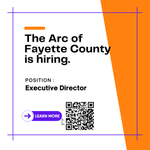
ALT The Arc of Fayette County is hiring. Position – executive director. QR code in bottom middle.

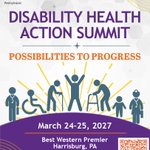
ALT Logo for The Arc of Pennsylvania. Disability Health Action Summit. Possibilities to progress. Icons of people with various disabilities and medical professionals are placed along a slight arch with a sunburst behind them. In the middle is an icon of a person with both arms raised in the air. March 24 to 25, 2027. Best Western Premier, Harrisburg, Pennsylvania. QR code in bottom right.

ALT Pic 1 – Emotional support is part of care. A quote reads, “Our son spent almost 3 months in Children’s Hospital of Philadelphia last summer. During that time he had extensive support from the child life team who provide emotional support before procedures and during everyday activities. Their support made an enormous difference to our son and had, I believe, a huge impact on his recovery.” Logos for Disability Health Action Network and The Arc of Pennsylvania. QR code in bottom right corner.

ALT Pic 2 – What this response tells us. Everyone in the healthcare setting from non-clinical and support staff to providers can have a major impact on the healthcare experience. Giving additional emotional support before procedures and during daily activities can help patients and families feel more supported. Support staff can help reduce stress, build trust, and improve the overall care experience. Logos for Disability Health Action Network and The Arc of Pennsylvania. QR code in bottom right corner.

ALT A piece of paper is tacked up against a plaid background in tan, brown and orange colors. Logo for The Arc of Pennsylvania.

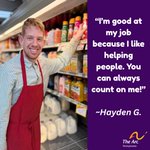
ALT Photo of Hayden G smiling as he stocks shelves in the refrigerated section of a market. He is wearing a red work apron. A quote from Hayden reads, “I’m good at my job because I like helping people. You can always count on me!” Logo for The Arc of Pennsylvania.

ALT A man wears an orange ¾ zip pullover with the logo for The Arc of Pennsylvania. Visit our online store. The border is fall leaves.

ALT Logo for The Arc of Pennsylvania. A large white text box outlined in red is stamped over a description of the Making Employment Work training. The text box reads, “closed” in large red letters.

ALT A world map in the shape of a globe, filled with a mosaic of photos of people with cerebral palsy. A circular banner wraps around the globe, repeating the words “50 MILLION. 50 MILLION. 50 MILLION.” Bold text reads: “There are 50 million people with cerebral palsy globally. That’s 50 million reasons for change.”

ALT Logos for Include Me and The Arc of Pennsylvania. What’s plain language and how do I help my child access an accessible version of important documents?

ALT Training should be practical and engaging. Illustration of 3 people at a whiteboard wearing white clinical jackets speaking to a group of seated people. Training should be practical, engaging, easy to remember, connected to real life experiences, and helpful in everyday healthcare settings. Better training can lead to better care. Logos for Disability Health Action Network and The Arc of Pennsylvania. QR code in bottom right corner.

ALT Proclamation by Governor Josh Shapiro declaring October 2026 as Down Syndrome Awareness Month. The document features the Commonwealth of Pennsylvania seal and official signatures. Logo for The Arc of Pennsylvania.

ALT Logo for Disabled Authors Day. Celebrating Disabled Authors Day. QR code in bottom right corner.

ALT A laptop is open on a desk. A Slice of PIE, Communication from the Policy Information Exchange, Volume 27, Issue 3, Fall 2026. Pennsylvania and National Policy news impacting people with disabilities and their families. Logo for the Pennsylvania Developmental Disabilities Council. QR code in bottom right corner.

ALT Five small circular photos of people at work are set amongst a backdrop of illustrated fireworks. Celebrating value and talent. Logo for The Arc of Pennsylvania. QR code in bottom right corner.