
PhD Candidate @ArchimedesUnit & NTUA
Athens / Marseille
Joined March 2016
- Tweets89
- Following370
- Followers257
- Likes481


Pinned Tweet
1/n
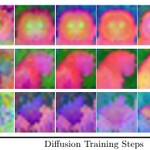
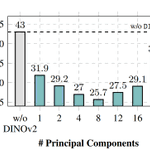
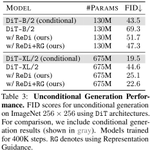
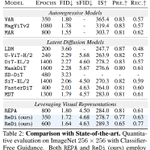
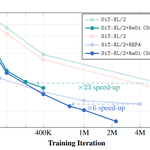
Introducing CoReDi: Coevolving Representations for Joint Image–Feature Diffusion
Joint diffusion boosts image generation by injecting semantic features.
But one assumption goes unquestioned: the feature space is fixed.
What if it was learned instead? 🧵👇

Thodoris Kouzelis retweeted

In the past 1 month, there appeared 2 papers by 2 different research groups which develop the exactly same idea of learning what model should predict (not only v- or x-pred) for pixel space with same formulation. (sic!) soumik-kanad.github.io/mflow… (ours)
hanshengchen.com/anisoflow/


In the past 1.5 weeks, there appeared 2 papers by 2 different research groups which develop the exactly same (and embarrassingly simple) trick to improve convergence of image/video diffusion models by 20-100+% (sic!)
arxiv.org/abs/2502.14831
arxiv.org/abs/2502.09509


Thodoris Kouzelis retweeted

New survey on Continuous Diffusion and Flow Language Models is out! 🌊💬
One of my first papers, back in early 2025, was on continuous simplex flows. After working on discrete diffusion, I wanted to try controllable sequence generation with flow matching, which naturally operates in continuous spaces. But at the time, I found them much harder to train well than discrete diffusion. 🥲
2026 has changed this picture completely! 🚀 It’s been super exciting to watch continuous LMs take off, but with the rapid advancements, it’s also becoming harder to keep up with all the new work across pre-training, few-step generation, guidance, and scaling 🥹
So together with @chandavidlee, @FEijkelboom, and @jw9730, we put together a survey that consolidates the continuous LM literature and its key insights into 37 pages. It covers everything from the early work before the so-called “winter” of continuous LMs to the wave of new papers in 2026 🌟
More in thread! 🧵

Thodoris Kouzelis retweeted

1/9
We built CoBit for language. Then we asked: what happens if we use the same architecture for images, speech and proteins?
Turn each modality into bits. Flatten. Denoise.
The surprise: how little had to change.
arxiv.org/abs/2610.14349

Thodoris Kouzelis retweeted

1/10 🔮 Can a world model learn to make its own future more predictable?*
In Latent-Foresight, we jointly learn a compact latent representation of visual foundation model (VFM) features and a generative dynamics model that predicts their future.
Here's how 👇
Thodoris Kouzelis retweeted

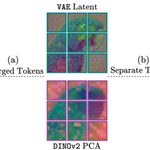
With ReDi, @ThKouz, Nikos, and team, we showed the benefits of jointly modeling images and semantic features through diffusion.
Now, @MathiasOllu and Nikos bring this idea to continuous diffusion LMs, jointly denoising tokens and semantic clusters. Love this! 🔥

Thodoris Kouzelis retweeted

DINO & friends play a big role in visual diffusion models nowadays, adding a semantic component to the generative process.
This work does the same for continuous diffusion language models, constructing coarse-grained semantic representations through clustering. It seems to help!
Thodoris Kouzelis retweeted

Hey all, we have a new paper: Dino Forcing Flow Models: Do not denoise what you can predict.
Tldr; Denoising image and predicting (not denoising) related deterministic information (like dino) provides a model with faster convergence!
Read the paper here: arxiv.org/abs/2610.11751v1

Thodoris Kouzelis retweeted

Bitstream language diffusion is cool, but what about bistream diffusion for everything?
Happy to share:
Multimodal Co-Generation With Continuous Bitstream Diffusion
Highly reliable and high performance training on many modalities without any modality-specific calibration!

Thodoris Kouzelis retweeted
What kind of privileged information helps MLLMs see better with on-policy distillation (OPD)?
In Where-OPD, we show that spatial guidance, trained only on synthetic scenes, yields broad improvements in real-world visual perception.
Great work led by @sophia_sirko and the team!

Thodoris Kouzelis retweeted

🚀 Introducing Next-Concept Modeling (NCM): our new paradigm for fast, parallel, coarse-to-fine text generation.
Compared to strong diffusion language models (DLMs) at similar parameter size, NCM achieves:
⚡ Up to 31× faster generation on downstream tasks like summarization and machine translation with comparable or better quality.
🏎️ 10–21× faster unconditional generation across TinyStories, LM1B, and OpenWebText, with comparable or better generative perplexity and using 3–5× fewer training tokens.
🧩 Better performance on reasoning tasks like Sudoku, outperforming both AR and diffusion baselines with fewer sampling steps.
With @ishanskhare, @IddahMlauzi, @ekellbuch, @simran_s_arora, @Azaliamirh, and @HazyResearch.
More details in the thread 🧵👇
Jointly training continuous DLMs with coarse semantic clusters turns out to work well. Happy to see joint diffusion ideas progressing to language :)
🚀Improve Continuous Diffusion LMs by making them denoise hierarchical token representations!
We introduce Hierarchical Continuous Diffusion LMs (H-CDLMs), which diffuse tokens *and* coarse semantic clusters jointly.
➡️ Better generations for less compute🧵

9
458
Thodoris Kouzelis retweeted

Can diffusion models generate high-quality images without CFG?
Yes! We introduce ✨Correction Training for Diffusion Models✨, which significantly improves sample quality without relying on classifier-free guidance.
Project page: sunovivid.github.io/correcti…
🧵 (1/n)
Thodoris Kouzelis retweeted

DINOv2 has never seen a caption, and Qwen3 has never seen an image. We still aligned their embedding spaces without a single image-caption pair.
It even works when the images and the captions come from different datasets.
Project page: dominik-schnaus.github.io/un…
⬇️
Thodoris Kouzelis retweeted

My favorite artist has always been M.C. Escher. His "Print Gallery" has been hanging in my home for years.
Recently I bumped into a 3B1B video about it that was really awesome and I thought it would be cool to generate such art. A bit out of my comfort zone, but luckily @Sophie0tq took the lead (🧵).
Thodoris Kouzelis retweeted

1/n 🚀 New paper 𝚆𝚑𝚎𝚛𝚎-𝙾𝙿𝙳
In on-policy self-distillation, the student learns from a privileged version of itself.
In recent methods, privilege often comes from a better view of the image.
What if, instead of a better view, the teacher knew where to look? 👀

Thodoris Kouzelis retweeted

We’ll be @eccvconf next week to present our most recent research! We’ll present 3 papers in the main track & 2 papers in Workshops. We'll also speak in 2 workshops & 1 tutorial. Here is a quick overview on the works we’ll be presenting in Malmö #eccv2026 valeoai.github.io/posts/eccv…

Thodoris Kouzelis retweeted
New blog post: continuous diffusion for language is back!
This research direction receded into the background for a while, but as of this year, it is once again a hot topic. I wrote down a historical perspective and some thoughts on the recent revival.
sander.ai/2026/08/24/continu…

Thodoris Kouzelis retweeted

We're releasing MuScriptor, the best open model for multi-instrument transcription to date, created in collaboration with @MireloAI.
Give it a recording in any genre: pop, classical, metal, jazz, whatever, and it transcribes the individual instruments into MIDI. Link in 🧵
Thodoris Kouzelis retweeted
Good morning #ICML2026🥱 Last day of the main conference already!
Join us this afternoon at 3:30PM for the diffusion circle, where we will cut through the noise and iteratively refine our collective understanding through flowing conversations. Bring your friends!

📢 Diffusion circle at @icmlconf 2026: join us Thursday July 9 at 3:30PM at the information desk / job board, we'll head out from there and find a spot to sit. No agenda, just get together and talk shop.
Please tell your friends and tag people who might be interested!

Thodoris Kouzelis retweeted

Actually the idea of generating on the continuous embedding space is not new. Our ICML'26 paper CCDD has already done so: arxiv.org/abs/2510.03206
ELF can be viewed as a special case of CCDD where the discrete schedule is set to such that all tokens are decoded at the last step.


I'm a simple man, I see a Kaiming He paper, I click.
ELF: Embedded Language Flows
This is very interesting, getting continuous diffusion models working for text!
"Unlike existing DLMs, ELF predominantly stays within the continuous embedding space until the final time step, where it maps to discrete tokens using a shared-weight network."
@sedielem you might like this one!
