

Voices from the Global South
Joined November 2025
- Tweets100
- Following34
- Followers3.4K
- Likes58






Pinned Tweet
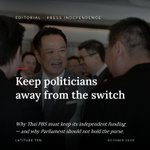
คัดค้านข้อเสนอของพรรคภูมิใจไทยในการเปลี่ยนแปลงโครงสร้างการจัดสรรงบประมาณของไทยพีบีเอส
ข้อเสนอที่จะเปลี่ยนแปลงรูปแบบการจัดสรรงบประมาณของไทยพีบีเอสควรถูกปฏิเสธ
ไม่มีเหตุผลด้านประโยชน์สาธารณะที่หนักแน่นเพียงพอ ในการบังคับให้สื่อสาธารณะของไทยต้องต่อรองเพื่อความอยู่รอดขององค์กรผ่านงบประมาณรายจ่ายประจำปีของรัฐบาล อย่างไรก็ตาม การทำเช่นนั้นกลับมีผลประโยชน์ทางการเมืองอย่างเห็นได้ชัด เพราะสื่อที่ต้องพึ่งพางบประมาณจากนักการเมือง ในที่สุดแล้วก็จำเป็นต้องเกรงใจนักการเมืองเหล่านั้น เมื่อต้องตัดสินใจว่าจะตรวจสอบพวกเขาอย่างเข้มข้นเพียงใด
นี่คือเหตุผลที่ไทยพีบีเอสได้รับการจัดตั้งให้มีกลไกการจัดสรรงบประมาณที่เป็นอิสระตั้งแต่แรกเริ่ม
ปัจจุบัน ไทยพีบีเอสได้รับเงินทุนจากการจัดสรรรายได้ส่วนหนึ่งจากภาษีสรรพสามิตสุราและยาสูบโดยเฉพาะ ภายใต้เพดานวงเงินที่กฎหมายกำหนดไว้ไม่เกิน 2,000 ล้านบาท กลไกการจัดสรรดังกล่าวทำให้ไทยพีบีเอสมีสิ่งที่หาได้ยากยิ่งในประเทศไทย นั่นคือความเป็นอิสระทางการเงินในระดับหนึ่งจากรัฐบาลที่อยู่ในอำนาจในแต่ละยุคสมัย
ขณะนี้ สส. พรรคภูมิใจไทยต้องการรื้อถอนหลักประกันดังกล่าว และนำไทยพีบีเอสเข้าสู่กระบวนการจัดทำงบประมาณประจำปีตามปกติของรัฐบาล
เหตุผลที่ถูกหยิบยกขึ้นมาสนับสนุนการเปลี่ยนแปลงนี้คือหลักการเรื่องความรับผิดชอบ โดยมีการให้เหตุผลว่าไทยพีบีเอสได้รับเงินทุนจากภาครัฐ ดังนั้น รัฐสภาจึงควรมีอำนาจควบคุมการใช้จ่ายเงินดังกล่าวให้เข้มงวดมากยิ่งขึ้น
เหตุผลดังกล่าวควรถูกปฏิเสธ
ไทยพีบีเอสสามารถถูกตรวจสอบได้อยู่แล้ว และควรได้รับการตรวจสอบด้วย การจัดซื้อจัดจ้างสามารถถูกสอบสวนได้ ผู้บริหารสามารถถูกตั้งคำถามได้ สัญญาต่าง ๆ สามารถถูกตรวจสอบได้ ส่วนการใช้จ่ายอย่างสิ้นเปลืองก็สามารถเปิดโปงและลงโทษผู้ที่เกี่ยวข้องได้ ซึ่งกระบวนการทั้งหมดนี้ไม่จำเป็นต้องให้นักการเมืองเข้ามามีอำนาจควบคุมงบประมาณประจำปีของสถานีโทรทัศน์แห่งนี้เลย
การนำงบประมาณของไทยพีบีเอสเข้าสู่การพิจารณาของรัฐสภาจะทำให้เกิดเครื่องมือที่สามารถใช้เป็นอาวุธทางการเมืองได้
ลองพิจารณาว่าจะเกิดอะไรขึ้น เมื่อไทยพีบีเอสรายงานข่าวสืบสวนเกี่ยวกับรัฐมนตรี พรรคการเมืองร่วมรัฐบาล หรือธุรกิจที่มีความเชื่อมโยงกับผู้มีอำนาจทางการเมือง รายงานข่าวถูกเผยแพร่ออกไป นักการเมืองร้องเรียนว่าสถานีโทรทัศน์นำเสนอข่าวอย่างมีอคติ ผู้บริหารถูกเรียกตัวให้มาชี้แจง และอีกไม่กี่เดือนต่อมา นักการเมืองกลุ่มเดิมเหล่านั้นก็ต้องพิจารณาอนุมัติงบประมาณของสถานีโทรทัศน์แห่งนี้
ไม่จำเป็นต้องมีคำขู่เป็นลายลักษณ์อักษรใด ๆ ทั้งสิ้น เพราะตัวงบประมาณนั่นแหละคือคำขู่ในตัวอยู่แล้ว
บรรณาธิการย่อมรู้ดี ผู้บริหารย่อมรู้ดี ผู้สื่อข่าวย่อมรู้ดี และนักการเมืองเองก็ย่อมรู้เรื่องนี้อย่างแน่นอน
ใครก็ตามที่ทำเป็นเสแสร้งว่าไม่เป็นเช่นนั้น กำลังขอให้ประชาชนเชื่อว่าเงินไม่มีอิทธิพลต่อองค์กรต่าง ๆ และนักการเมืองไม่มีผลประโยชน์ใด ๆ ในการเข้าแทรกแซงสื่อ ทั้งที่ประวัติศาสตร์การเมืองไทยมีหลักฐานมากมายที่ชี้ให้เห็นในทางตรงกันข้าม
นายกรัฐมนตรี อนุทิน ชาญวีรกูล อาจกล่าวว่าข้อเสนอดังกล่าวเป็นเรื่องของรัฐสภา ซึ่งในทางรูปแบบแล้ว เขากล่าวถูกต้อง เพราะข้อเสนอนี้เสนอโดย สส. พรรคภูมิใจไทย ไม่ใช่โดยตัวนายกรัฐมนตรีเอง
แต่ในทางการเมือง ความแตกต่างระหว่างสองกรณีนี้แทบไม่มีนัยสำคัญนัก
อนุทินเป็นหัวหน้าพรรคภูมิใจไทย ขณะที่ สส. ของพรรคกำลังผลักดันข้อเสนอที่จะทำให้ระบบการเมืองมีอำนาจต่อรองผ่านกลไกทางการเงินเหนือสถานีโทรทัศน์สาธารณะของประเทศมากขึ้น เขาควรแสดงจุดยืนให้ชัดเจนว่าตนสนับสนุนข้อเสนอนี้หรือไม่ หากเขาเชื่อมั่นในความเป็นอิสระของไทยพีบีเอสจริง เขาก็ควรบอกให้พรรคถอนข้อเสนอดังกล่าวออกไปเสีย
ประเด็นปัญหานี้เป็นเรื่องที่ใหญ่กว่าตัวอนุทิน และใหญ่กว่าพรรคภูมิใจไทย ประเทศไทยไม่ควรออกแบบสถาบันต่าง ๆ โดยตั้งอยู่บนสมมติฐานว่าผู้มีอำนาจจะประพฤติตนอย่างมีเกียรติ เพราะในความเป็นจริง แทบไม่เคยเป็นเช่นนั้นเลย
นี่ไม่ใช่เพียงการวิพากษ์วิจารณ์พรรคภูมิใจไทย แต่หมายรวมถึงพรรคการเมืองทุกพรรคที่เคยมีอำนาจบริหารประเทศตลอดประวัติศาสตร์ของประเทศ เพราะในประเทศไทย แม้แต่อำนาจเพียงเล็กน้อย ก็ยังนำไปสู่การใช้อำนาจมิชอบได้อย่างสมบูรณ์แบบ
ลองจินตนาการถึงรัฐบาลที่อาฆาตพยาบาทและมุ่งตอบโต้ฝ่ายตรงข้ามมากที่สุดเท่าที่ประเทศไทยจะเลือกขึ้นมาบริหารประเทศได้ ลองนึกถึงนายกรัฐมนตรีที่หมกมุ่นกับการได้รับข่าวที่นำเสนอภาพลักษณ์ของตนในแง่ดี และรายล้อมไปด้วยรัฐมนตรีที่มองว่าการวิพากษ์วิจารณ์คือการไม่แสดงความจงรักภักดีต่อรัฐบาล จากนั้นลองมอบอำนาจในการลงมติงบประมาณรายจ่ายประจำปีของไทยพีบีเอสให้แก่รัฐบาลชุดนั้นดู
หากความเป็นไปได้นี้น่ากังวล อำนาจดังกล่าวก็ไม่ควรมีอยู่ตั้งแต่แรก
สถาบันที่เป็นอิสระจำเป็นต้องมีหลักประกันเชิงโครงสร้างเพื่อคุ้มครองความเป็นอิสระ เพราะนักการเมืองเปลี่ยนแปลงไปตามกาลเวลา รัฐมนตรีที่มีเจตนาดีในที่สุดก็ต้องพ้นจากตำแหน่ง นายกรัฐมนตรีที่รู้จักยับยั้งชั่งใจย่อมถูกแทนที่ในวันหนึ่ง แต่กฎหมายยังคงอยู่ต่อไป
ประเทศไทยเผชิญกับสภาพแวดล้อมทางสื่อที่อิทธิพลทางการเมือง แรงกดดันทางธุรกิจ ผลประโยชน์จากการถือครองสื่อ กฎหมายหมิ่นประมาท และผู้มีอำนาจที่ทรงอิทธิพล สามารถทำให้การทำข่าวเชิงรุกมีต้นทุนสูงอยู่แล้ว ผู้สื่อข่าวไม่จำเป็นต้องเผชิญกับเหตุผลเพิ่มเติมที่ทำให้ต้องกังวลว่า การเดินหน้าสืบสวนและนำเสนอข่าวเรื่องใดเรื่องหนึ่งจะส่งผลเสียต่อองค์กรที่จ่ายเงินเดือนให้แก่พวกเขาหรือไม่
ไทยพีบีเอสมีบทบาทสำคัญ เพราะหลักการของสถานีคือการลดอิทธิพลของผลประโยชน์ทางธุรกิจให้เหลือน้อยที่สุด สถานีโทรทัศน์เอกชนต้องคำนึงถึงผู้ลงโฆษณาและเจ้าของกิจการ ขณะที่สถานีโทรทัศน์ของรัฐต้องตอบสนองต่อรัฐบาล ส่วนสถานีโทรทัศน์สาธารณะจำเป็นต้องรักษาระยะห่างจากทั้งสองฝ่ายให้มากพอ เพื่อทำหน้าที่รับใช้ประชาชน แทนที่จะต้องพึ่งพาผู้อุปถัมภ์หรือผู้มีอำนาจที่ให้การสนับสนุนตน
หากทำลายระยะห่างดังกล่าวลง สถาบันแห่งนี้ก็จะเปลี่ยนแปลงไปด้วย
เราไม่จำเป็นต้องแสร้งทำเป็นว่าไทยพีบีเอสเป็นองค์กรที่สมบูรณ์แบบเพื่อปกป้องความเป็นอิสระของสถานี บางรายการมีคุณภาพปานกลาง การตัดสินใจของกองบรรณาธิการบางเรื่องสมควรถูกวิพากษ์วิจารณ์ และระบบราชการภายในองค์กรก็อาจเทอะทะและล่าช้า แต่หากมีการใช้จ่ายอย่างสิ้นเปลือง ก็จงเปิดโปงมันออกมา หากมีการทุจริต ก็จงดำเนินคดี หากมีผลประโยชน์ทับซ้อน ก็จงเปิดเผยให้สาธารณชนได้รับรู้
สิ่งเหล่านี้เป็นเหตุผลที่สนับสนุนให้มีการกำกับดูแลที่ดียิ่งขึ้น
แต่สิ่งเหล่านี้ไม่ใช่ข้ออ้างที่จะเปิดทางให้นักการเมืองเข้ามาควบคุมงบประมาณของไทยพีบีเอส
หลักการนี้เป็นเรื่องพื้นฐานอย่างยิ่ง นักข่าวที่กำลังตรวจสอบนักการเมือง ไม่ควรทำงานให้กับองค์กรที่ความอยู่รอดทางการเงินขึ้นอยู่กับการลงมติของนักการเมืองคนนั้น
ตลอดหลายทศวรรษที่ผ่านมา ประเทศไทยเฝ้ามองรัฐบาล นายทหารระดับสูง กลุ่มทุนใหญ่ และกลุ่มการเมืองต่าง ๆ พยายามเข้ามามีอิทธิพลต่อข้อมูลข่าวสารที่ประชาชนได้รับ รัฐบาลในทุกยุคทุกสมัยต่างให้คำมั่นว่าจะปฏิรูปสถาบันต่าง ๆ ทว่าเมื่อใดก็ตามที่สถาบันแห่งหนึ่งเริ่มมีหลักประกันที่ช่วยปกป้องตนเองจากอำนาจทางการเมืองได้อย่างแท้จริง ในที่สุดก็จะมีใครบางคนหาเหตุผลขึ้นมาว่า หลักประกันดังกล่าวเป็นอุปสรรคต่อสิ่งที่ตนต้องการผลักดัน
ครั้งนี้ เหตุผลที่ถูกหยิบยกขึ้นมาอ้างคือความรับผิดชอบในการใช้งบประมาณ (budgetary accountability)
เหตุผลนี้ฟังไม่ขึ้น
กลไกการจัดสรรงบประมาณเฉพาะของไทยพีบีเอสสามารถทำให้โปร่งใสมากขึ้นได้โดยไม่จำเป็นต้องยกเลิกกลไกนี้ทิ้งไป รัฐสภาสามารถเพิ่มข้อกำหนดด้านการตรวจสอบโดยองค์กรอิสระที่เข้มงวดขึ้น กำหนดให้เปิดเผยรายละเอียดการใช้จ่ายมากขึ้น ปรับปรุงกฎเกณฑ์การจัดซื้อจัดจ้างให้รัดกุมยิ่งขึ้น เปิดเผยข้อมูลเงินเดือนและค่าตอบแทนที่ปรึกษา เพื่อให้สาธารณชนได้รับรู้ข้อมูลอย่างกว้างขวางยิ่งขึ้นว่า งบประมาณถูกนำไปใช้จ่ายในเรื่องใดบ้าง
สิ่งที่รัฐสภาไม่ควรมี คืออำนาจในการให้คุณหรือให้โทษต่อไทยพีบีเอส ผ่านการพิจารณาจัดสรรงบประมาณประจำปีของสถานี
เมื่อมีอำนาจเช่นนี้อยู่ ในที่สุดก็ย่อมมีการนำอำนาจนั้นมาใช้
อาจไม่ใช่ในยุคของอนุทิน และอาจจะไม่ใช่โดยรัฐสภาชุดนี้ และการพิจารณางบประมาณในช่วงสองสามปีแรกอาจผ่านไปโดยไม่มีข้อโต้แย้งใด ๆ
แต่นั่นไม่ใช่ประเด็นสำคัญ
หลักประกันในระบอบประชาธิปไตยมีไว้เพื่อรับมือกับรัฐบาลที่พร้อมใช้อำนาจในทางมิชอบ ไม่ใช่กับรัฐบาลที่ให้คำมั่นว่าจะใช้อำนาจอย่างยับยั้งชั่งใจ
ไทยพีบีเอสเป็นของประชาชนชาวไทย ผู้สื่อข่าวของสถานีต้องมีเสรีภาพในการตรวจสอบพรรคเพื่อไทย พรรคภูมิใจไทย พรรคประชาชน กองทัพ ระบบราชการ กลุ่มทุนยักษ์ใหญ่ และใครก็ตามที่ดำรงตำแหน่งในทำเนียบรัฐบาล โดยไม่ต้องคอยคำนวณว่าการรายงานข่าวของตนอาจส่งผลกระทบต่องบประมาณของสถานีในการพิจารณาครั้งถัดไปอย่างไร
โครงสร้างการจัดสรรงบประมาณที่ใช้อยู่ในปัจจุบันช่วยให้หลักการดังกล่าวเกิดขึ้นได้จริง
จงรักษาโครงสร้างนี้ไว้
ตรวจสอบไทยพีบีเอสอย่างเข้มข้น วิพากษ์วิจารณ์อย่างตรงไปตรงมา เรียกร้องให้ผู้สื่อข่าวของสถานียกระดับมาตรฐานการทำงาน และเรียกร้องให้เปิดเผยข้อมูลการใช้จ่ายงบประมาณอย่างโปร่งใสครบถ้วน
แต่จงกันนักการเมืองให้อยู่ห่างจากสวิตช์ควบคุมการจัดสรรงบประมาณ
เพราะเมื่อใดก็ตามที่รัฐบาลมีอำนาจชี้ขาดว่าหมาเฝ้าบ้านจะได้รับอาหารหรือไม่ ก็เป็นเพียงเรื่องของเวลาเท่านั้น ก่อนที่หมาเฝ้าบ้านตัวนั้นจะเรียนรู้ว่าเมื่อใดไม่ควรเห่า

ทำไมสุชาดา แทนทรัพย์ หรือ สส.ไอเดียร์ ถึงเป็น สส. ที่ถูกจับตาที่สุดในชั่วโมงนี้
#สสไอเดียร์ #สุชาดาแทนทรัพย์
To Live at 32: Zhang Yimou, Chinese Cinema and the Politics of Survival
Thirty-two years after its release, Zhang Yimou’s masterpiece offers an opportunity to reconsider the extraordinary emergence of Chinese cinema, the political contradictions of its most celebrated director, and the country’s increasingly complicated relationship with its own history.
Film Retrospective | October 2026
In August 2008, Zhang Yimou presided over one of the most elaborate spectacles in modern Chinese history. The opening ceremony of the Beijing Olympics, with its thousands of synchronised performers, extraordinary visual compositions and celebration of five thousand years of Chinese civilisation, announced the arrival of a country increasingly confident in its place in the world. It was an astonishing artistic achievement, made possible by the resources of a state determined to demonstrate its restored international stature.
Fourteen years earlier, Zhang had been prevented from attending the Cannes Film Festival, where his latest film, To Live, was competing for the Palme d’Or. The film would win the Grand Prix, while Ge You received the award for Best Actor. Chinese authorities subsequently banned the picture from domestic theatrical distribution and imposed restrictions on Zhang’s filmmaking activities.
The contrast between these two moments has become an irresistible feature of Zhang’s biography. The director once regarded as a political embarrassment had become the principal architect of China’s most important exercise in cultural diplomacy. His journey from censorship to official celebration appears, at first glance, to describe the familiar accommodation of an artist with political authority. Yet the transformation also reflects changes in China itself, in the international film industry, and in the expectations placed upon Chinese filmmakers as their country emerged as an economic and geopolitical power.
Revisiting To Live thirty-two years after its release provides an opportunity to examine those changes through the work of a director whose career has been unusually sensitive to the political circumstances of his country.
It also reminds us of a period when Chinese cinema seemed capable of confronting its national history with an openness that has become increasingly difficult to imagine.
The emergence of a national cinema
By 1994, Zhang Yimou was already internationally celebrated. His directorial debut, Red Sorghum, had won the Golden Bear at Berlin in 1988, becoming an important breakthrough for Chinese filmmaking. Ju Dou and Raise the Red Lantern subsequently received Academy Award nominations, while The Story of Qiu Ju won the Golden Lion at Venice in 1992.
Within six years, Zhang had established himself as one of the most accomplished filmmakers of his generation. His success was part of the wider emergence of China’s Fifth Generation, whose leading figures included Chen Kaige and Tian Zhuangzhuang.
Their importance extended beyond the international recognition they received. They represented the first generation of Chinese filmmakers to develop their artistic identities in the aftermath of the Cultural Revolution, and their work reflected an unusual combination of historical consciousness, formal experimentation and scepticism toward inherited political and social structures.
Zhang’s own biography was inseparable from this experience. Born in 1950, he came of age during the upheavals of Maoist China. His formal education was interrupted, and he spent years working in the countryside and in a textile factory before entering the Beijing Film Academy following the restoration of university entrance examinations.
The experiences of his generation provided material for a cinema preoccupied with the relationship between individuals and the institutions governing their lives. Traditional patriarchy, village hierarchies, economic deprivation and political authority became recurring subjects. The visual sophistication of these films was accompanied by a willingness to examine aspects of Chinese society that earlier revolutionary cinema had generally approached through prescribed ideological narratives.
Their international reception, however, was complicated from the beginning.
Western festivals were eager to celebrate filmmakers emerging from a country whose political and cultural life had long been relatively inaccessible. Films depicting oppression, poverty and historical suffering attracted particular attention, occasionally encouraging the assumption that their principal value lay in their opposition to the Chinese government.
Within China, critics sometimes accused Fifth Generation directors of presenting an excessively bleak or exoticised image of their country for Western consumption. Zhang’s elaborate depictions of traditional rituals, patriarchal cruelty and rural backwardness were especially vulnerable to this criticism.
These objections were not entirely without substance. International audiences frequently approached Chinese films through political expectations that differed considerably from those of domestic viewers. A director could be celebrated in Europe for exposing the oppressive character of Chinese society while facing criticism at home for reproducing stereotypes that foreign audiences were predisposed to accept.
Yet reducing Zhang’s early work to this exchange between Western curiosity and Chinese defensiveness would overlook its considerable artistic originality.
The visual compositions of Raise the Red Lantern, the sensual vitality of Red Sorghum and the observational realism of The Story of Qiu Ju demonstrated a filmmaker capable of moving between radically different forms while maintaining a consistent interest in the individual confronted by systems of authority.
To Live brought these concerns together in what remains perhaps his most complete artistic achievement.
FULL STORY ON OUR WEBSITE
A Rolex Submariner costs more than $10,000 at retail and often considerably more on the secondary market. Chinese factories can produce increasingly accurate copies for several hundred dollars.
The difference in quality remains significant. Rolex manufactures movements to exacting tolerances, maintains extensive quality control, guarantees its products and supports watches through a global servicing network. A good mechanical watch can remain in use for generations. Counterfeit manufacturers make none of those commitments.
The growing sophistication of the copies nevertheless presents the Swiss watch industry with an economic problem. The physical characteristics that once made an expensive watch difficult to imitate have become progressively easier to reproduce.
Modern high-end replicas, commonly called “super clones”, can replicate case dimensions, bracelet construction, ceramic bezels, sapphire crystals, dial printing and small engravings with considerable accuracy. Some manufacturers have reverse-engineered mechanical movements so that their architecture resembles the Swiss originals.
This development reflects changes in Chinese manufacturing rather than a breakthrough specific to watches.
China has spent four decades building dense industrial clusters capable of producing electronics, textiles, precision-machined components, ceramics, plastics, packaging and increasingly complex mechanical products. Legitimate manufacturers account for almost all of that activity. The same supplier networks, equipment and technical knowledge have also lowered the cost of producing sophisticated counterfeit goods.
The scale is substantial. The Organisation for Economic Co-operation and Development estimated international trade in counterfeit and pirated goods at about $467 billion in 2021, equivalent to roughly 2.3% of global imports.
Watches provide a useful measure of the effect. The OECD estimated illicit trade in counterfeit Swiss watches at about $1.9 billion in 2021. It calculated that the resulting displacement of genuine purchases cost the Swiss watch industry about $1.1 billion in sales, equivalent to 4.2% of sector turnover.
Those estimates cover counterfeits generally and should not be interpreted as measuring the market for super clones specifically. Reliable figures for that narrower category do not exist. They nevertheless establish that counterfeiting has reached a scale capable of producing measurable losses for Swiss manufacturers.
The more significant development concerns quality.
Traditional counterfeiting depended on a large difference between the original and the copy. A $50 fake watch could reproduce the logo and approximate appearance of a $10,000 watch, while differences in materials, construction and movement remained immediately apparent.
Chinese manufacturing has narrowed that gap.
Computer numerical control machining allows cases and bracelets to be reproduced with high precision. Ceramic manufacturing has become widely available. Three-dimensional scanning and high-resolution imaging make reverse engineering easier. Chinese movement manufacturers have become considerably more sophisticated. Online communities provide counterfeit producers with a further source of quality control by identifying inaccurate dimensions, colours, engravings and mechanical details.
The result resembles an informal product-development system. A replica enters the market. Buyers compare it with the original. Defects are documented online. Later versions correct some of them.
The same process is visible in other consumer industries.
High-quality counterfeit handbags can reproduce leather, stitching, hardware and packaging closely enough to require specialist authentication. Replica sneakers have become sophisticated enough to support their own secondary market and enthusiast communities. Counterfeit electronics increasingly reproduce packaging, external construction and software behaviour. Similar manufacturing capabilities are used for clothing, jewellery and automotive components.
The OECD says clothing, footwear and leather goods account for around 62% of counterfeit goods seized internationally.
The economics of these products differ from the counterfeit markets of previous decades because some consumers knowingly purchase them as substitutes.
A customer buying a cheap fake watch from a street vendor was unlikely to have been considering a genuine Rolex. That limited the amount of revenue the counterfeit could realistically displace.
A consumer considering a high-quality replica for $500 to $1,000 presents a different problem. The buyer may understand precisely what the product is and conclude that the additional characteristics supplied by the genuine manufacturer do not justify the difference in price.
Online replica-watch communities have even developed terminology for this calculation. Some models are described as “NWBIG”, meaning “not worth buying in genuine”. The phrase provides a useful description of the economic challenge facing luxury companies.
The manufacturer and consumer are assigning value to different characteristics.
Rolex bears the cost of developing movements, operating factories, maintaining quality control, supporting authorised retailers, marketing globally, providing warranties and maintaining replacement parts. The counterfeit manufacturer can copy a completed design and avoid most of those expenses.
The consumer buying a replica may place relatively little value on those functions. If appearance is the principal objective, the counterfeit can provide a large proportion of the desired characteristics at a small fraction of the price.
That creates a form of price discovery for luxury products. Counterfeit manufacturers reveal how much it costs to reproduce the observable characteristics of an expensive object when research and development, intellectual property, distribution, marketing and long-term product support are excluded.
For luxury companies, the implications extend beyond lost primary sales.
Secondary markets depend heavily on confidence in authenticity. Improvements in counterfeiting increase the cost of establishing that confidence.
The watch industry illustrates the process clearly. A buyer purchasing a used Rolex must increasingly consider whether the case, dial, bracelet, bezel and movement are original. Individual counterfeit components can also be combined with genuine ones, producing so-called Frankenwatches that are harder to evaluate than wholly counterfeit products.
Authentication therefore acquires greater economic value.
Rolex’s Certified Pre-Owned programme gives authorised retailers a mechanism for selling used watches whose authenticity is backed by the manufacturer. Online platforms have developed their own authentication systems. Similar services have appeared in handbags and sneakers.
The additional authentication, insurance and verification required for secondary transactions can be understood as a transaction cost generated by better counterfeiting.
Large luxury groups are relatively well equipped to absorb it. They can maintain product databases, authorised service networks and certification programmes. Smaller manufacturers have fewer resources to establish equivalent systems.
Counterfeiting may therefore reinforce an existing concentration of the luxury market around a limited number of powerful brands.
There is also a product-level effect.
Products whose value depends heavily on external appearance are easier to substitute than products whose value depends on characteristics that are expensive to reproduce. A steel sports watch with a relatively simple dial presents a more attractive target than a highly complicated mechanical watch requiring extensive hand finishing.
The same distinction applies elsewhere. A handbag whose principal identifying features are shape, leather and hardware can be reproduced more easily than an object requiring highly specialised craftsmanship. Standardised products are particularly suitable for reverse engineering because every genuine example provides counterfeit manufacturers with an accurate template.
This could encourage luxury companies to place greater emphasis on manufacturing techniques, materials, complications, customisation and services that are difficult to reproduce economically.
It also increases the importance of provenance.
Luxury companies have begun experimenting with digital product passports and manufacturer-controlled ownership records. A physical serial number provides limited protection because it can be copied from a genuine product. A manufacturer database containing production, sale and servicing information provides a stronger method of verification.
Over time, expensive consumer goods could develop ownership records similar to those already used for valuable art, classic cars and other collectibles. The manufacturer would maintain a record connecting the physical object with its production and service history.
The implications become more serious when sophisticated counterfeiting moves into functional products.
Counterfeit automotive components, electrical products, cosmetics and pharmaceuticals can reproduce packaging and external appearance without meeting the engineering or safety standards of the originals. The manufacturing skills that improve replica watches can also improve the visual credibility of counterfeit goods whose failure carries considerably greater consequences.
Enforcement faces structural difficulties.
International commerce increasingly moves through small parcels rather than large wholesale shipments. The OECD found that 97% of seizures involving counterfeit watches consisted of small packages. Direct-to-consumer commerce allows a distributor to ship individual products from Asia to customers around the world, reducing the usefulness of enforcement methods designed around large commercial consignments.
The underlying trend is likely to continue because the technologies required for reverse engineering are becoming cheaper.
High-resolution scanning, automated machining, computer vision and artificial intelligence can reduce the time required to analyse and reproduce products. China’s large manufacturing base provides access to specialised suppliers capable of turning those designs into physical goods.
Western luxury companies retain substantial advantages. Brands such as Rolex, Hermès and Louis Vuitton control intellectual property, distribution networks, retail environments, service systems and decades of accumulated brand recognition. Their products also retain secondary-market value that counterfeit goods generally do not.
Their challenge concerns the proportion of value attributable to the manufactured object itself.
As Chinese factories become capable of reproducing more of the object’s visible and functional characteristics at much lower prices, luxury companies must derive a greater share of their economic value from characteristics that remain difficult to copy.
The likely result is a stronger emphasis on provenance, controlled distribution, after-sales service, technical complexity, scarcity and manufacturer-backed authentication.
There is also a broader industrial lesson.
China’s manufacturing development has progressively reduced the technical barriers surrounding products that were once difficult to make. That process helped Chinese companies move from low-cost textiles and basic consumer goods into smartphones, electric vehicles, batteries, drones and advanced machinery. Counterfeit manufacturing draws on many of the same capabilities, although it operates outside legitimate intellectual-property systems.
The super-clone watch is therefore useful as an indicator of how far those capabilities have developed.
A replica Submariner can now reproduce much of the physical appearance of an expensive Swiss watch for several hundred dollars. The remaining price difference incorporates engineering, quality control, intellectual property, distribution, service, scarcity, brand value and provenance.
Counterfeiters are steadily improving their ability to reproduce the first part of that equation.
The future economics of luxury will depend increasingly on the second.

#China #CounterfeitGoods #SuperClones #Superfakes #LuxuryGoods #LuxuryMarket #SwissWatches #Rolex #WatchIndustry #LuxuryWatches #CounterfeitWatches #ChineseManufacturing #MadeInChina #ChinaEconomy #GlobalTrade #Manufacturing #IntellectualProperty #Counterfeiting #LuxuryIndustry #FashionIndustry #Hermes #LouisVuitton #PatekPhilippe #AudemarsPiguet #FakeGoods #ReplicaWatches #GlobalEconomy #SupplyChains #LuxuryBrands #Authentication
Latitude Ten retweeted

Satellite images show eight suspected K-8 light attack jets and over 24 military support vehicles at a new #China–#Laos joint training facility near Vientiane, Reuters reports.
The runway is still under construction as China expands its military presence in Southeast Asia.

Latitude Ten retweeted
The Ally Who Leaves
There was a generation of Afghan women who had no memory of the Taliban.
This fact is worth dwelling upon, because history is usually written in the vocabulary of armies and treaties and presidential doctrines, whereas its cruelties are experienced privately: in bedrooms, classrooms, kitchens and the small expectations people permit themselves to have about the future.
A girl born in Kabul in 2002 could have spent her entire childhood believing that school was simply a thing girls did. She could watch women reading the evening news, see female doctors treating patients, hear of women sitting in parliament, imagine university not as an act of rebellion but as an ordinary destination. She could own a telephone, argue with her teachers, choose a profession, perhaps even entertain that most radical of human assumptions: that tomorrow would contain more possibilities than today.
None of this made Afghanistan a feminist paradise. It remained poor, violent, corrupt and profoundly patriarchal. But something enormous had changed.
In 2001 virtually no Afghan girls were formally enrolled in school.
By 2020, 3.7 million were.
Women entered universities, journalism, medicine, business and politics. The Afghan constitution contained protections for women; maternal mortality fell dramatically; women appeared in public life in ways that had been almost inconceivable under the first Taliban regime.
And behind all of this stood a promise.
Sometimes the promise was spoken grandly, in the language Americans favor when describing their expeditions abroad: freedom, democracy, dignity, human rights. Sometimes it was considerably more practical. Learn English for us. Translate for us. Join the police. Join the army. Teach in this school. Work for this NGO. Run for office. Write for this newspaper. Believe us when we tell you that the old order will not return.
Then America left.
The Taliban entered Kabul on August 15, 2021. Twenty years of speeches about the liberation of Afghan women suddenly encountered the timetable of an American evacuation. The same girls who had been told to prepare themselves for the twenty-first century were transported back to the first century.
In today’s Afghanistan, Girls are barred from education beyond the sixth grade. Women have been excluded from universities and most professions and heavily restricted in their use of public space. The United Nations estimates that 2.4 million Afghan girls are now denied schooling. Nearly 80 percent of Afghan women between 18 and 29 are outside education, employment or training. Even medical education for women has been curtailed.
The prison has been reconstructed around them one decree at a time.
And there is, for most, no ready escape.
The tragedy is often described as an Afghan failure, which is convenient. Afghanistan certainly supplied failures in abundance: corruption, incompetent leadership, a military made grotesquely dependent upon foreign contractors, provincial power brokers who treated government as a franchise for enrichment. No serious accounting can absolve the Afghan political class.
But neither can any serious accounting absolve Washington.
The United States government’s own Special Inspector General for Afghanistan Reconstruction concluded that the most immediate causes of the collapse were decisions made by two successive American presidents: Donald Trump’s agreement with the Taliban at Doha and Joe Biden’s decision to complete the withdrawal. The Doha agreement damaged Afghan military morale; the final removal of American troops and contractors helped turn weakness into disintegration.
There is an important lesson here, and it is not the small partisan lesson Americans prefer.
The United States negotiated directly with the Taliban, committed itself to leaving, and then watched an Afghan state it had spent two decades constructing discover how much of its sovereignty had actually been rented from Washington. Biden inherited an agreement requiring American troops to leave by May 1, 2021. He could have repudiated or renegotiated it and accepted the consequences; instead he extended the deadline and completed the departure. As Biden himself said in April 2021, the United States had made an agreement and “that means something.”
One is tempted to ask: to whom?
Certainly the American agreement with the Taliban meant something. The accumulated assurances given to Afghans who had wagered their lives on American permanence turned out to mean rather less.
This is the distinction that governments from Warsaw to Manila, from Seoul to Taipei, ought now to contemplate.
America may keep an agreement. But it also reserves the right to decide which agreement matters.
The disorder at Kabul airport became the perfect visual epitaph. Afghans who had worked beside Americans scrambled for places on aircraft. Special immigrant visas existed precisely because Congress recognized that Afghans employed on behalf of the United States faced grave danger because of that service. Yet the machinery for getting many of them out moved scandalously late, and years later former soldiers, interpreters and other Western partners remain stranded or in hiding.
To call such people “partners” now almost seems an additional cruelty.
Afghanistan was not the first warning.
Not the first time
In 1975, another American-supported government discovered the difference between having Washington’s assistance and possessing Washington’s commitment.
After the withdrawal of American combat forces from Vietnam, South Vietnam remained dependent on American matériel and financing. As Congress reduced aid and the Nixon-era promises of continuing support dissolved into Watergate, exhaustion and domestic revulsion against the war, the military balance shifted decisively.
Gerald Ford told Congress in April 1975 that America had failed to sustain two premises upon which the post-Paris settlement had rested: that it would help enforce the agreement and that it would provide adequate assistance to South Vietnam. “Finally,” Ford said, America had signaled its growing reluctance to support a country fighting for survival.
There is an enormous historiographical argument about how much reduced American aid caused the fall of Saigon, and it would be dishonest to pretend South Vietnam was otherwise a healthy state waiting to be rescued. It was neither. But that is almost beside the point.
The lesson received in allied capitals was simpler.
America had spent treasure and blood persuading another society to orient its existence around an American security commitment. American politics changed. The commitment changed with it.
The helicopters came.
Then came the photographs from the roof.
The Kurdish fighters of northern Syria learned a variation of this lesson in 2019.
They had supplied the indispensable ground force in the American campaign against Islamic State. Thousands of Kurdish-led Syrian Democratic Forces fighters died in that war. Then Trump abruptly pulled American troops away from the Turkish border. Turkey attacked. Kurdish forces, describing the American decision as a betrayal, were compelled to invite the Syrian regime and its Russian patron into territory from which they had previously been excluded. Russia and Bashar al-Assad gained almost immediately from America’s retreat.
Trump’s response to criticism was revealing. He regarded the withdrawal as strategically brilliant and suggested that Turkey and Syria could essentially sort matters out themselves.
The Kurds had committed the elementary error of confusing usefulness to America with obligation from America.
Will it be the last?
And now we arrive in Asia.
On August 16, 2026, Trump ordered the Pentagon to “substantially reduce” the Ulchi Freedom Shield exercises conducted with South Korea. The exercises had already begun. South Korea was not consulted in advance. Its foreign minister subsequently told lawmakers that Seoul had learned of Trump’s decision as everyone else had—from the president’s social-media post.
The eleven-day exercise was cut to five days. Field exercises were reduced or cancelled.
Trump explained his decision partly by invoking the expense and partly by mentioning his “very good relationship” with Kim Jong Un. He also complained that South Korea had refused to assist American efforts against Iran.
Consider the doctrine contained in that complaint.
South Korea’s obligations in Northeast Asia can apparently be measured against its willingness to assist an American military adventure thousands of miles away. A military exercise intended to deter the hereditary dictatorship threatening Seoul can be curtailed because the American president enjoys a good personal relationship with that dictatorship’s ruler.
Trump has already stated the principle rather elegantly himself. Speaking about NATO countries that in his view did not spend enough on defence, he said in 2024 that he would encourage Russia to “do whatever the hell they want.”
“You don’t pay your bills, you get no protection,” he said.
The phrase deserves to be preserved because it removes decades of sentimental varnish from American alliance rhetoric. Harry Truman’s Washington spoke of collective security. John Kennedy spoke of bearing burdens. Ronald Reagan spoke about the free world. Trump speaks like an insurance agent cancelling a policy.
Taiwan has still more reason to listen carefully.
The United States has never given Taiwan the same treaty guarantee it gives Japan or South Korea, and Washington has deliberately maintained “strategic ambiguity” about whether it would intervene militarily against a Chinese invasion. This distinction matters.
But ambiguity works only when the adversary fears that intervention is possible.
Trump has lately been transforming ambiguity into something altogether more suggestive.
Discussing Taiwan in 2026, he remarked on the geographical disparity: America is roughly 9,500 miles away while China is vastly closer. When asked directly whether the United States would defend Taiwan, Trump declined to answer. “There’s only one person that knows that,” he said. “Me.” More strikingly, when discussing what Beijing might do, Trump recently said that it “depends on President Xi Jinping,” adding that Xi considers Taiwan part of China and that what he chooses to do “depends on him.”
Perhaps these remarks are intended as strategic ambiguity.
But strategy ordinarily requires that ambiguity confuse one’s opponent rather than one’s friends.
Taipei seems to understand the message perfectly well. Taiwan has moved to increase defence expenditure sharply and has stressed that its security must ultimately depend upon its own efforts. Its proposed 2027 defence budget is a record one, more than 3 percent of GDP, as Chinese military pressure intensifies.
That is the rational response.
Because the great mistake American allies make is to imagine the United States as a permanent thing. America is permanent geographically. American foreign policy is not.
Every four years a country in Asia that has based its national survival on decisions made in Washington must wait to discover what Wisconsin, Pennsylvania and Arizona have decided about the international order.
This is an extraordinary arrangement when stated plainly.
The government of Japan can spend fifty years constructing a strategic relationship with the United States. South Korea can host American soldiers for generations. Europeans can design their entire postwar security system around American military power. Taiwan can buy American weapons and orient its defence doctrine toward eventual American assistance.
And then one Tuesday in November, voters primarily concerned with grocery prices, immigration, abortion or the personality of two candidates can alter the strategic assumptions upon which nations on the other side of the planet have built their existence.
There is nothing illegitimate about this. Americans have every democratic right to change their government and therefore their foreign policy.
But America’s allies have an equal right—indeed a duty—to notice.
The mythology of American reliability survives partly because Washington’s most important alliances have in fact proved remarkably durable. NATO remains intact. American troops remain in Japan and South Korea. The United States has repeatedly defended allies and paid extraordinary costs for doing so. Any argument that America simply abandons everyone would be unserious.
The problem is subtler and therefore more dangerous.
American guarantees are immensely powerful until the moment American politics decides they are inconvenient.
And when Washington withdraws, the people who believed those guarantees do not get to withdraw with it.
The Afghan woman does not get to board Air Force One.
The Kurdish fighter cannot relocate his village to Virginia.
The South Vietnamese officer could not move Saigon across the Pacific.
And if deterrence fails in the Taiwan Strait, twenty-three million Taiwanese will not have the luxury of discovering after the first missiles land whether an American president meant what his predecessors appeared to promise.
This is why Trump’s rhetoric matters even when no treaty has yet been broken.
Deterrence consists partly of weapons but largely of belief.
Kim Jong Un must believe attacking South Korea would bring America into the war. Xi Jinping must believe an assault on Taiwan could produce consequences so terrible that they outweigh whatever historical destiny Beijing believes reunification would fulfil. Vladimir Putin must believe that the fifth article of the North Atlantic Treaty is not a piece of stationery whose validity depends upon whether the American president approves of Belgium’s defence budget.
An alliance whose guarantor repeatedly discusses its commitments as invoices is an alliance whose enemies will eventually test the accounts.
Perhaps Americans have simply tired of being the guarantor of half the world. That is a legitimate political position. Empires, hegemons and great powers eventually discover limits. The United States is entitled to decide that the burdens accumulated after 1945 have become too expensive or too strategically irrational.
But then it should have the decency to say so clearly.
It should stop encouraging small countries to arrange their national survival around assurances that can be revised by presidential improvisation.
It should stop describing temporary alignments of interest as sacred friendships.
Above all, it should remember what happens to those who believe the rhetoric.
Somewhere in Afghanistan there is now a woman of twenty-four or twenty-five who once sat in a university classroom.
She may have learned English from American-funded textbooks. Perhaps she watched American films, argued politics with her friends, studied medicine or law or engineering. The Taliban belonged to stories her parents told about a darker age. She had every reason to regard them as the past.
America had told her so.
Today she lives under their government. Her university is closed to her. Her movement is restricted. The public world in which she expected to spend her adulthood has contracted almost to the walls of her home.
The Americans who once promised that history had changed are nine thousand miles away.
They held an election.
They changed their minds.

Latitude Ten retweeted
พันธมิตรผู้เดินจากไป
by @volthai
มีหญิงชาวอัฟกันรุ่นหนึ่งที่ไม่มีความทรงจำเกี่ยวกับยุคของตอลีบันเลย
ข้อเท็จจริงนี้ควรค่าแก่การหยุดพิจารณา เพราะโดยปกติแล้ว ประวัติศาสตร์มักถูกเขียนขึ้นด้วยภาษาของกองทัพ สนธิสัญญา และหลักนิยมของประธานาธิบดี (Presidential Doctrines) ขณะที่ความโหดร้ายของประวัติศาสตร์กลับถูกผู้คนประสบพบเจอเป็นการส่วนตัว ทั้งในห้องนอน ห้องเรียน ห้องครัว และในความคาดหวังเล็ก ๆ ที่ผู้คนยอมให้ตัวเองมีต่ออนาคต
เด็กผู้หญิงคนหนึ่งที่เกิดในกรุงคาบูลในปี 2002 สามารถใช้ชีวิตวัยเด็กทั้งหมดด้วยความเชื่อว่า การไปโรงเรียนเป็นเพียงสิ่งธรรมดาที่เด็กผู้หญิงทำกัน เธอสามารถเห็นผู้หญิงอ่านข่าวภาคค่ำ เห็นแพทย์หญิงรักษาผู้ป่วย ได้ยินข่าวว่าผู้หญิงนั่งอยู่ในรัฐสภา และจินตนาการถึงการเข้าเรียนมหาวิทยาลัย ไม่ใช่ในฐานะการกระทำที่เป็นการต่อต้าน แต่เป็นจุดหมายปลายทางตามปกติของชีวิต เธอสามารถมีโทรศัพท์เป็นของตัวเอง โต้เถียงกับครู เลือกประกอบอาชีพที่ต้องการ และบางทีอาจถึงขั้นมีความคิดที่เป็นสมมติฐานอันสุดโต่งที่สุดอย่างหนึ่งของมนุษย์ว่า เปิดกว้างและมีโอกาสใหม่ๆ มากกว่าวันนี้
สิ่งเหล่านี้ไม่ได้ทำให้อัฟกานิสถานกลายเป็นสรวงสวรรค์ของเฟมินิสต์ ประเทศยังคงยากจน มีความรุนแรง คอร์รัปชัน และเป็นสังคมที่ชายเป็นใหญ่อย่างเข้มงวด แต่กระนั้น ความเปลี่ยนแปลงครั้งใหญ่ก็ได้เกิดขึ้นแล้ว
ในปี 2001 แทบไม่มีเด็กหญิงชาวอัฟกันคนใดได้เข้าเรียนในระบบโรงเรียนอย่างเป็นทางการ
แต่ภายในปี 2020 ตัวเลขดังกล่าวเพิ่มขึ้นเป็น 3.7 ล้านคน
ผู้หญิงได้ก้าวเข้าสู่มหาวิทยาลัย วงการสื่อมวลชน การแพทย์ ภาคธุรกิจ และการเมือง รัฐธรรมนูญของอัฟกานิสถานมีบทบัญญัติคุ้มครองสิทธิสตรี อัตราการเสียชีวิตของมารดาลดลงอย่างมาก และผู้หญิงได้เข้ามามีบทบาทในชีวิตสาธารณะในรูปแบบที่แทบจะนึกภาพไม่ออกเลยภายใต้ระบอบตอลีบันยุคแรก
และเบื้องหลังสิ่งเหล่านี้ทั้งหมด คือ คำมั่นสัญญาประการหนึ่ง
บางครั้ง คำสัญญานี้ก็ถูกเอื้อนเอ่ยอย่างยิ่งใหญ่ ด้วยภาษาที่ชาวอเมริกันมักชอบใช้ยามอธิบายถึงการออกปฏิบัติการในต่างแดน นั่นคือ เสรีภาพ ประชาธิปไตย ศักดิ์ศรี และสิทธิมนุษยชน บางครั้ง มันก็เป็นเรื่องที่เป็นรูปธรรมกว่านั้นมาก จงเรียนภาษาอังกฤษเพื่อพวกเรา จงแปลภาษาให้พวกเรา จงเข้าร่วมกับตำรวจ จงเข้าร่วมกับกองทัพ จงสอนหนังสือในโรงเรียนแห่งนี้ จงทำงานให้ NGO แห่งนี้ จงลงสมัครรับเลือกตั้ง จงเขียนให้หนังสือพิมพ์ฉบับนี้ จงเชื่อเราเมื่อเราบอกคุณว่า ระเบียบอำนาจแบบเดิมจะไม่หวนกลับมาอีกแล้ว
แล้วอเมริกาก็เดินจากไป
กลุ่มตอลีบันเคลื่อนกำลังเข้าสู่กรุงคาบูลเมื่อวันที่ 15 สิงหาคม 2021 สุนทรพจน์ตลอด 20 ปีเกี่ยวกับการปลดปล่อยสตรีชาวอัฟกานิสถาน ปะทะเข้าอย่างจังกับตารางเวลาการถอนกำลังของสหรัฐฯ เด็กผู้หญิงกลุ่มเดียวกันกับที่เคยถูกบอกให้เตรียมพร้อมสำหรับศตวรรษที่ 21 กลับถูกส่งตัวย้อนเวลากลับไปสู่ศตวรรษที่ 1
ในอัฟกานิสถานทุกวันนี้ เด็กผู้หญิงถูกห้ามไม่ให้ได้รับการศึกษาต่อหลังชั้นประถมศึกษาปีที่ 6 ผู้หญิงถูกกีดกันออกจากมหาวิทยาลัยและอาชีพส่วนใหญ่ ทั้งยังถูกจำกัดการใช้พื้นที่สาธารณะอย่างเข้มงวด องค์การสหประชาชาติประเมินว่า ปัจจุบันมีเด็กผู้หญิงชาวอัฟกานิสถาน 2.4 ล้านคนที่ถูกปฏิเสธโอกาสในการเข้าเรียนหนังสือ และเกือบ 80% ของผู้หญิงชาวอัฟกันที่มีอายุระหว่าง 18 ถึง 29 ปีอยู่นอกระบบการศึกษา การจ้างงาน หรือการฝึกอบรม แม้แต่การศึกษาด้านการแพทย์สำหรับผู้หญิงก็ถูกจำกัดลงเช่นกัน
คุกแห่งนี้ถูกสร้างขึ้นใหม่ล้อมรอบพวกเธอ ผ่านประกาศคำสั่งทีละฉบับ
และสำหรับผู้หญิงส่วนใหญ่แล้ว ไม่มีทางรอดพ้นได้โดยง่าย
โศกนาฏกรรมนี้มักถูกอธิบายว่าเป็นความล้มเหลวของอัฟกานิสถานเอง ซึ่งเป็นคำอธิบายที่สะดวกไม่น้อย แน่นอนว่าอัฟกานิสถานมีส่วนสร้างความล้มเหลวอยู่มากมาย ไม่ว่าจะเป็นการทุจริต ภาวะผู้นำที่ไร้ความสามารถ กองทัพที่ถูกทำให้ต้องพึ่งพาผู้รับเหมาจากต่างชาติอย่างน่าเกลียด และผู้มีอำนาจในระดับจังหวัดที่มองรัฐบาลเสมือนเป็นช่องทางแสวงหาผลประโยชน์ให้แก่ตนเอง ไม่อาจมีการประเมินความรับผิดชอบอย่างจริงจังใดที่จะสามารถลบล้างความผิดให้แก่ชนชั้นนำทางการเมืองของอัฟกานิสถานได้
แต่ก็ไม่มีการประเมินความรับผิดชอบอย่างจริงจังใด ๆ ที่จะสามารถลบล้างความผิดให้แก่รัฐบาลสหรัฐฯ ได้เช่นกัน
ผู้ตรวจการพิเศษของรัฐบาลสหรัฐฯ ว่าด้วยการฟื้นฟูอัฟกานิสถาน (Special Inspector General for Afghanistan Reconstruction) เองสรุปว่า สาเหตุที่เกิดขึ้นโดยตรงที่สุดของการล่มสลายครั้งนี้มาจากการตัดสินใจของประธานาธิบดีอเมริกัน 2 คนที่ดำรงตำแหน่งต่อเนื่องกัน ได้แก่ ข้อตกลงของโดนัลด์ ทรัมป์กับกลุ่มตอลิบันที่กรุงโดฮา และ การตัดสินใจของโจ ไบเดนที่จะดำเนินการถอนกำลังให้เสร็จสิ้น ข้อตกลงโดฮาบั่นทอนขวัญกำลังใจของกองทัพอัฟกานิสถาน ขณะที่การถอนกำลังทหารและผู้รับเหมาชาวอเมริกันออกไปในขั้นสุดท้าย ช่วยเปลี่ยนความอ่อนแอให้กลายเป็นการแตกพ่ายโดยสมบูรณ์
บทเรียนสำคัญประการหนึ่งอยู่ตรงนี้ และมันไม่ใช่บทเรียนเล็ก ๆ ในแบบแบ่งฝักแบ่งฝ่ายที่ชาวอเมริกันชื่นชอบ
สหรัฐฯ เจรจาโดยตรงกับกลุ่มตอลิบัน ให้คำมั่นว่าจะถอนกำลังออกไป และจากนั้นก็เฝ้ามองรัฐอัฟกานิสถานที่ตนใช้เวลา 2 ทศวรรษสร้างขึ้นมา ได้ค้นพบว่าจริง ๆ แล้วอำนาจอธิปไตยของตนนั้นถูกเช่ามาจากสหรัฐฯ มากเพียงใด ไบเดนรับช่วงต่อข้อตกลงที่กำหนดให้กองกำลังทหารสหรัฐฯ ถอนออกภายในวันที่ 1 พฤษภาคม 2021 เขาสามารถปฏิเสธข้อตกลงดังกล่าวหรือเจรจาใหม่ และยอมรับผลที่จะตามมาได้ แต่เขากลับขยายเส้นตายออกไปและดำเนินการถอนกำลังจนเสร็จสิ้น ดังที่ไบเดนกล่าวด้วยตัวเองในเดือนเมษายน 2021 ว่า สหรัฐฯ ได้ทำข้อตกลงไว้แล้ว และ “นั่นย่อมมีความหมายบางอย่าง”
อดไม่ได้ที่จะถามต่อว่า มีความหมายต่อใครกันแน่?
แน่นอนว่า ข้อตกลงระหว่างสหรัฐฯ กับตอลิบันนั้นย่อม “มีความหมายบางอย่าง” คำหลักประกันทั้งหลายที่สะสมมานาน ซึ่งเคยมอบให้แก่ชาวอัฟกานิสถานผู้ฝากชีวิตของตนไว้กับการคงอยู่ของอเมริกา กลับกลายเป็นสิ่งที่มีความหมายอยู่น้อยกว่ามาก
นี่คือข้อแตกต่างที่รัฐบาลต่าง ๆ ตั้งแต่วอร์ซอไปจนถึงมะนิลา และตั้งแต่โซลไปจนถึงไทเป ควรนำไปขบคิดในเวลานี้
อเมริกาอาจรักษาข้อตกลงไว้ แต่ก็สงวนสิทธิ์ที่จะตัดสินใจเองด้วยเช่นกันว่า ข้อตกลงฉบับใดกันแน่ที่สำคัญ
ความโกลาหลที่สนามบินกรุงคาบูลกลายเป็นภาพปิดฉากที่สมบูรณ์แบบ ชาวอัฟกานิสถานที่เคยทำงานเคียงข้างชาวอเมริกันต่างดิ้นรนหาทางขึ้นเครื่องบิน วีซ่าผู้อพยพพิเศษ (Special Immigrant Visas) มีอยู่ก็เพราะรัฐสภาสหรัฐฯ ตระหนักว่า ชาวอัฟกานิสถานที่ทำงานให้กับสหรัฐฯ กำลังเผชิญกับอันตรายร้ายแรงอันเป็นผลมาจากการทำงานนั้นเอง ทว่ากลไกในการนำพวกเขาจำนวนมากออกจากประเทศกลับดำเนินการล่าช้าอย่างน่าอัปยศ และหลายปีต่อมา อดีตทหาร ล่าม และพันธมิตรชาวตะวันตกคนอื่น ๆ ยังคงติดค้างอยู่ในที่ต่าง ๆ หรือหลบซ่อนตัวอยู่
การเรียกคนเหล่านี้ว่า “พันธมิตร” ในเวลานี้ แทบจะดูเป็นการซ้ำเติมที่โหดร้ายยิ่งขึ้นไปอีก
อัฟกานิสถานไม่ใช่คำเตือนครั้งแรก
ไม่ใช่ครั้งแรกที่เกิดเรื่องเช่นนี้
ในปี 1975 รัฐบาลอีกแห่งหนึ่งที่ได้รับการสนับสนุนจากสหรัฐฯ ได้ประจักษ์ถึงความแตกต่างระหว่าง การได้รับความช่วยเหลือจากสหรัฐฯ กับ การมีคำมั่นผูกพันจากสหรัฐฯ
หลังจากการถอนกำลังรบของสหรัฐฯ ออกจากเวียดนาม เวียดนามใต้ยังคงพึ่งพายุทโธปกรณ์และเงินทุนจากสหรัฐฯ และเมื่อรัฐสภาสหรัฐฯ ลดความช่วยเหลือลง ขณะที่คำมั่นสัญญาในยุคนิกสันว่าจะให้การสนับสนุนอย่างต่อเนื่องค่อย ๆ สลายไปท่ามกลางเรื่องอื้อฉาววอเตอร์เกต (Watergate) ความเหนื่อยล้า และกระแสต่อต้านสงครามที่เพิ่มขึ้นภายในประเทศ ดุลกำลังทางทหารก็เปลี่ยนแปลงไปอย่างเด็ดขาด
เจอรัลด์ ฟอร์ด กล่าวต่อรัฐสภาในเดือนเมษายน 1975 ว่า อเมริกาล้มเหลวในการรักษา หลักการพื้นฐาน 2 ประการ ที่เป็นรากฐานของข้อตกลงหลังการเจรจาที่กรุงปารีส นั่นคือ อเมริกาจะช่วยกำกับดูแลให้เกิดการปฏิบัติตามข้อตกลงดังกล่าว และจะให้ความช่วยเหลือแก่เวียดนามใต้อย่างเพียงพอ “ท้ายที่สุด” ฟอร์ดกล่าวว่า อเมริกาได้ส่งสัญญาณถึงความลังเลที่เพิ่มมากขึ้นในการสนับสนุนประเทศที่กำลังต่อสู้เพื่อความอยู่รอดของตนเอง
มีข้อถกเถียงทางประวัติศาสตร์นิพนธ์ครั้งใหญ่เกี่ยวกับว่า การลดความช่วยเหลือจากสหรัฐฯ มีส่วนมากน้อยเพียงใดต่อการล่มสลายของไซ่ง่อน และคงไม่ซื่อตรงนักหากจะแสร้งทำเป็นว่า หากไม่มีเรื่องนี้ เวียดนามใต้จะเป็นรัฐที่เข้มแข็งสมบูรณ์พร้อมและเพียงรอให้ใครสักคนเข้ามาช่วยเหลือ เพราะมันไม่ใช่เช่นนั้นเลย แต่ประเด็นนั้นแทบไม่ใช่สาระสำคัญของเรื่องนี้ด้วยซ้ำ
บทเรียนที่บรรดารัฐบาลพันธมิตรได้รับนั้นเรียบง่ายกว่านั้น
อเมริกาทุ่มทั้งทรัพย์สินเงินทองและเลือดเนื้อ เพื่อโน้มน้าวอีกสังคมหนึ่งให้วางทิศทางการดำรงอยู่ของตนไว้บน คำมั่นด้านความมั่นคงของอเมริกา (American Security Commitment) ทว่าเมื่อการเมืองภายในของอเมริกันเปลี่ยนแปลง คำมั่นนั้นก็เปลี่ยนแปลงไปพร้อมกัน
แล้วเฮลิคอปเตอร์ก็ร่อนลงมา
จากนั้นภาพถ่ายจากบนหลังคาก็ตามมา
นักรบชาวเคิร์ดทางตอนเหนือของซีเรียได้เรียนรู้บทเรียนนี้ที่แตกต่างออกไปในอีกรูปแบบหนึ่งในปี 2019
พวกเขาคือกำลังรบภาคพื้นดินที่ขาดไม่ได้ในปฏิบัติการของอเมริกาเพื่อต่อต้านกลุ่มรัฐอิสลาม (Islamic State) นักรบจากกองกำลังประชาธิปไตยซีเรีย (Syrian Democratic Forces) ซึ่งมีชาวเคิร์ดเป็นแกนนำหลายพันคนเสียชีวิตในสงครามครั้งนั้น จากนั้นทรัมป์ก็ถอนกำลังทหารอเมริกันออกจากพื้นที่ชายแดนตุรกีอย่างฉับพลัน ตุรกีเปิดฉากโจมตี กองกำลังชาวเคิร์ดซึ่งเรียกการตัดสินใจของอเมริกาว่าเป็น การทรยศ ถูกบีบให้เชื้อเชิญรัฐบาลซีเรียและรัสเซียซึ่งเป็นผู้อุปถัมภ์ของรัฐบาลดังกล่าวเข้ามาในดินแดนที่ก่อนหน้านี้พวกเขาถูกกันออกไป รัสเซียและบาชาร์ อัล-อัสซาดได้รับประโยชน์แทบจะในทันทีจากการถอนตัวของอเมริกา
การตอบโต้ของทรัมป์ต่อเสียงวิพากษ์วิจารณ์นั้นเผยให้เห็นอะไรบางอย่าง เขามองว่าการถอนกำลังครั้งนี้เป็นการตัดสินใจที่ยอดเยี่ยมในเชิงยุทธศาสตร์ และเสนอว่าตุรกีกับซีเรียสามารถจัดการเรื่องต่าง ๆ กันเองได้เป็นหลัก
ชาวเคิร์ดได้ทำผิดพลาดขั้นพื้นฐาน นั่นคือ สับสนระหว่างการเป็นประโยชน์ต่ออเมริกา กับการมีพันธะผูกพันจากอเมริกา
แล้วครั้งนี้จะเป็นครั้งสุดท้ายหรือไม่?
และตอนนี้ เรามาถึงเอเชียกันแล้ว
เมื่อวันที่ 16 สิงหาคม 2026 ทรัมป์มีคำสั่งให้กระทรวงกลาโหมสหรัฐฯ “ลดขนาดลงอย่างมีนัยสำคัญ” สำหรับการฝึกซ้อมรบ Ulchi Freedom Shield ที่ดำเนินการร่วมกับเกาหลีใต้ ซึ่งในขณะนั้นการซ้อมรบดังกล่าวได้เริ่มต้นขึ้นแล้ว เกาหลีใต้ไม่ได้รับการปรึกษาหารือล่วงหน้าแต่อย่างใด ต่อมา รัฐมนตรีว่าการกระทรวงการต่างประเทศของเกาหลีใต้ได้บอกต่อสมาชิกรัฐสภาว่า รัฐบาลได้รับทราบการตัดสินใจของทรัมป์เช่นเดียวกับทุกคน นั่นคือ จากโพสต์บนโซเชียลมีเดียของประธานาธิบดีทรัมป์เอง
การฝึกซ้อมที่ใช้เวลา 11 วันถูกลดลงเหลือเพียง 5 วัน การฝึกภาคสนามถูกลดทอนหรือยกเลิกไป
ทรัมป์อธิบายการตัดสินใจของเขาโดยส่วนหนึ่งอ้างถึงค่าใช้จ่าย และอีกส่วนหนึ่งกล่าวถึง “ความสัมพันธ์อันดีอย่างยิ่ง” ของเขากับคิม จองอึน นอกจากนี้ เขายังตำหนิเกาหลีใต้ที่ปฏิเสธให้ความช่วยเหลือแก่ความพยายามของอเมริกาในการต่อสู้กับอิหร่าน
ลองพิจารณาหลักคิดทางการเมืองที่แฝงอยู่ในคำตำหนินั้น
เห็นได้ชัดว่า พันธกรณีของเกาหลีใต้ในเอเชียตะวันออกเฉียงเหนือสามารถถูกนำมาเทียบวัดกับความเต็มใจของเกาหลีใต้ที่จะให้ความช่วยเหลือแก่ปฏิบัติการทางทหารของอเมริกาซึ่งอยู่ห่างออกไปหลายพันไมล์ การฝึกซ้อมทางทหารที่มีจุดประสงค์เพื่อยับยั้งระบอบเผด็จการที่สืบทอดอำนาจโดยสายตระกูลซึ่งกำลังคุกคามกรุงโซล กลับสามารถถูกลดขนาดลงได้ เพียงเพราะประธานาธิบดีสหรัฐฯ มีความสัมพันธ์ส่วนตัวที่ดีกับผู้นำของระบอบเผด็จการนั้น
ทรัมป์ได้กล่าวถึงหลักการนี้ด้วยตัวเองอย่างค่อนข้างชัดเจน เมื่อพูดถึงประเทศสมาชิกนาโต (NATO) ที่ในมุมมองของเขาใช้จ่ายงบประมาณด้านกลาโหมไม่มากพอ เขากล่าวในปี 2024 ว่า เขาจะสนับสนุนให้รัสเซีย “ทำห่าอะไรก็ตามตามใจชอบ”
“คุณไม่จ่ายบิลของคุณ คุณก็จะไม่ได้รับการคุ้มครอง” เขากล่าว
ถ้อยคำดังกล่าวสมควรถูกจดจำเอาไว้ เพราะมันได้ลอกคราบความรู้สึกทางอารมณ์ที่เคลือบวาทกรรมเรื่องพันธมิตรของอเมริกามานานหลายทศวรรษออกไป รัฐบาลสหรัฐฯ ในยุคของ แฮร์รี ทรูแมน พูดถึง ความมั่นคงร่วมกัน (Collective Security) จอห์น เอฟ. เคนเนดีพูดถึง การแบกรับภาระร่วมกัน (Bearing Burdens) โรนัลด์ เรแกนพูดถึง โลกเสรี (Free World) ส่วนทรัมป์พูดราวกับเป็น ตัวแทนบริษัทประกันที่กำลังยกเลิกกรมธรรม์
ไต้หวันยิ่งมีเหตุผลยิ่งกว่าใครที่จะต้องตั้งใจฟังอย่างรอบคอบ
สหรัฐฯ ไม่เคยมอบหลักประกันตามสนธิสัญญาแก่ไต้หวัน ในแบบเดียวกับที่มอบให้ญี่ปุ่นหรือเกาหลีใต้ และรัฐบาลวอชิงตันจงใจรักษา “ความคลุมเครือเชิงยุทธศาสตร์” (Strategic Ambiguity) เกี่ยวกับการที่สหรัฐฯ จะเข้าแทรกแซงทางทหารหรือไม่หากจีนเปิดฉากบุกไต้หวัน ซึ่งความแตกต่างนี้มีความสำคัญ
ทว่าความคลุมเครือจะสัมฤทธิ์ผลก็ต่อเมื่อฝ่ายตรงข้ามหวาดกลัวว่าการแทรกแซงนั้นมีโอกาสเกิดขึ้นได้จริงเท่านั้น
และในระยะหลังมานี้ ทรัมป์กำลังแปรเปลี่ยนความคลุมเครือดังกล่าวให้กลายเป็นบางสิ่งที่ชวนให้คิดไปในทางอื่นอย่างสิ้นเชิง
เมื่อพูดถึงไต้หวันในปี 2026 เขากล่าวถึงความแตกต่างทางภูมิศาสตร์ว่า อเมริกาอยู่ห่างออกไปราว 9,500 ไมล์ ขณะที่จีนอยู่ใกล้กว่ามาก และเมื่อถูกถามโดยตรงว่าสหรัฐฯ จะปกป้องไต้หวันหรือไม่ ทรัมป์กลับปฏิเสธที่จะตอบ “มีเพียงคนเดียวเท่านั้นที่รู้เรื่องนี้” เขากล่าว “ก็คือผม” ที่น่าตกใจยิ่งกว่านั้น เมื่อพูดถึงสิ่งที่รัฐบาลปักกิ่งอาจทำ ทรัมป์เพิ่งกล่าวว่าเรื่องนี้ “ขึ้นอยู่กับประธานาธิบดีสี จิ้นผิง” พร้อมเสริมว่า สี จิ้นผิงถือว่าไต้หวันเป็นส่วนหนึ่งของจีน และสิ่งที่เขาเลือกจะทำนั้น “ขึ้นอยู่กับเขา”
บางที คำพูดเหล่านี้อาจมีเจตนาเพื่อสร้าง ความคลุมเครือเชิงยุทธศาสตร์
แต่โดยปกติแล้ว ยุทธศาสตร์ควรทำให้ความคลุมเครือนั้นสร้างความสับสนแก่ฝ่ายตรงข้าม มากกว่าทำให้บรรดามิตรของตนเองสับสน
ดูเหมือนรัฐบาลไต้หวันจะเข้าใจสารที่ส่งออกมาเป็นอย่างดี ไต้หวันได้ขยับเพิ่มงบประมาณด้านกลาโหมอย่างมาก และย้ำว่า ท้ายที่สุดแล้ว ความมั่นคงของไต้หวันจะต้องพึ่งพาความพยายามของตนเองเป็นหลัก งบประมาณด้านกลาโหมที่ไต้หวันเสนอสำหรับปี 2027 อยู่ในระดับสูงสุดเป็นประวัติการณ์ โดยคิดเป็นสัดส่วนมากกว่า 3 เปอร์เซ็นต์ของ GDP ขณะที่แรงกดดันทางทหารจากจีนทวีความรุนแรงขึ้น
และนั่นคือการตอบสนองที่สมเหตุสมผลแล้ว
เพราะความผิดพลาดครั้งใหญ่ที่บรรดาพันธมิตรของอเมริกาทำ คือการจินตนาการว่าสหรัฐฯ เป็นสิ่งที่ดำรงอยู่อย่างถาวร สภาพภูมิศาสตร์ของอเมริกานั้นอาจเที่ยงแท้ถาวร แต่นโยบายต่างประเทศของอเมริกามิได้เป็นเช่นนั้น
ทุก ๆ 4 ปี ประเทศหนึ่งในเอเชียซึ่งวางความอยู่รอดของชาติไว้บนการตัดสินใจที่เกิดขึ้นในวอชิงตัน จะต้องรอดูว่า วิสคอนซิน เพนซิลเวเนีย และแอริโซนา ตัดสินใจอย่างไรเกี่ยวกับระเบียบระหว่างประเทศ
เมื่อกล่าวกันอย่างตรงไปตรงมาแล้ว นี่คือ การจัดวางความสัมพันธ์ที่แปลกประหลาดอย่างยิ่ง
รัฐบาลญี่ปุ่นสามารถใช้เวลา 50 ปีในการสร้างความสัมพันธ์เชิงยุทธศาสตร์กับสหรัฐฯ เกาหลีใต้สามารถเป็นเจ้าบ้านให้ทหารอเมริกันประจำการอยู่ได้หลายชั่วอายุคน ชาวยุโรปสามารถออกแบบระบบความมั่นคงหลังสงครามทั้งหมดของตนโดยวางอยู่บนอำนาจทางทหารของอเมริกา และไต้หวันสามารถจัดซื้ออาวุธจากอเมริกา และวางหลักด้านการป้องกันประเทศของตนให้มุ่งไปสู่การได้รับความช่วยเหลือจากอเมริกาในท้ายที่สุด
และแล้วในวันอังคารวันหนึ่งของเดือนพฤศจิกายน ผู้มีสิทธิเลือกตั้งซึ่งส่วนใหญ่ให้ความสำคัญกับราคาสินค้าอุปโภคบริโภค การย้ายถิ่นฐาน การทำแท้ง หรือบุคลิกภาพของผู้สมัคร 2 คน ก็สามารถเปลี่ยนแปลงสมมติฐานเชิงยุทธศาสตร์ที่ประเทศต่าง ๆ ซึ่งอยู่อีกฟากหนึ่งของโลกใช้เป็นรากฐานในการดำรงอยู่ของตนได้
ไม่มีสิ่งใดที่ไม่ชอบธรรมในเรื่องนี้ ชาวอเมริกันมีสิทธิอย่างเต็มที่ตามระบอบประชาธิปไตยที่จะเปลี่ยนรัฐบาลของตน และรวมถึงนโยบายต่างประเทศของตนตามไปด้วย
แต่พันธมิตรของอเมริกาก็มีสิทธิอย่างเท่าเทียมกัน หรือแท้จริงแล้วคือหน้าที่ ที่จะต้องตระหนักถึงสิ่งนี้
มายาคติเรื่องความน่าเชื่อถือของอเมริกายังคงอยู่ได้ ส่วนหนึ่งเพราะพันธมิตรที่สำคัญที่สุดของรัฐบาลสหรัฐฯ นั้นได้พิสูจน์แล้วว่ามีความทนทานอย่างน่าทึ่ง นาโต (NATO) ยังคงดำรงอยู่ กองทหารอเมริกันยังคงประจำการอยู่ในญี่ปุ่นและเกาหลีใต้ สหรัฐฯ ปกป้องพันธมิตรของตนมาโดยตลอด และต้องแบกรับต้นทุนมหาศาลจากการทำเช่นนั้น ดังนั้นการกล่าวอ้างว่าอเมริกาแค่ทอดทิ้งทุกคนไปเสียเฉยๆ จึงเป็นข้อกล่าวหาที่ขาดความหนักแน่น
ปัญหาที่แท้จริงละเอียดอ่อนกว่านั้น และด้วยเหตุนี้จึงอันตรายกว่า
หลักประกันของอเมริกานั้นทรงพลังอย่างยิ่ง จนกระทั่งถึงช่วงเวลาที่การเมืองภายในของอเมริกาตัดสินว่า หลักประกันเหล่านั้นเป็นเรื่องไม่สะดวกอีกต่อไป
และเมื่อรัฐบาลวอชิงตันถอนตัว ผู้คนที่เคยเชื่อมั่นในหลักประกันเหล่านั้น ก็ไม่สามารถถอนตัวไปพร้อมกับอเมริกาได้
ผู้หญิงชาวอัฟกานิสถานไม่สามารถขึ้นเครื่องแอร์ฟอร์ซวันไปด้วยได้
นักรบชาวเคิร์ดไม่สามารถย้ายหมู่บ้านของตนไปตั้งในรัฐเวอร์จิเนียได้
นายทหารเวียดนามใต้ไม่สามารถย้ายไซ่ง่อนไปไว้อีกฟากหนึ่งของมหาสมุทรแปซิฟิกได้เช่นกัน
และหากการยับยั้ง (Deterrence) ล้มเหลวในช่องแคบไต้หวัน ประชากรชาวไต้หวัน 23 ล้านคนจะไม่มีโอกาสอันสะดวกสบายที่จะได้รู้ ภายหลังจากขีปนาวุธลูกแรกตกลงมาแล้ว ว่าประธานาธิบดีสหรัฐฯ หมายความตามที่บรรดาผู้นำรุ่นก่อนของเขาเคยดูเหมือนจะให้คำมั่นไว้หรือไม่
นี่คือเหตุผลว่าทำไมวาทกรรมของทรัมป์จึงมีความสำคัญ แม้ว่าจะยังไม่มีสนธิสัญญาฉบับใดถูกละเมิดก็ตาม
เพราะการยับยั้งประกอบขึ้นจากอาวุธเพียงส่วนหนึ่ง แต่ส่วนใหญ่แล้วประกอบขึ้นจากความเชื่อมั่น
คิม จอง อึนต้องเชื่อว่า การโจมตีเกาหลีใต้จะทำให้อเมริกาเข้าร่วมสงคราม สี จิ้นผิงต้องเชื่อว่า การโจมตีไต้หวันอาจนำมาซึ่งผลลัพธ์ที่เลวร้ายอย่างยิ่ง จนมีน้ำหนักมากกว่าสิ่งที่รัฐบาลปักกิ่งเชื่อว่าเป็นชะตากรรมทางประวัติศาสตร์ที่การรวมชาติจะต้องบรรลุ และวลาดิเมียร์ ปูตินต้องเชื่อว่า มาตรา 5 ของสนธิสัญญาป้องกันแอตแลนติกเหนือ (North Atlantic Treaty) ไม่ใช่เพียงแค่กระดาษแผ่นหนึ่งที่ความศักดิ์สิทธิ์ของมันขึ้นอยู่กับว่า ประธานาธิบดีสหรัฐฯ พอใจกับงบประมาณด้านกลาโหมของเบลเยียมหรือไม่
พันธมิตรที่ผู้ค้ำประกันเอาแต่พูดถึงพันธกรณีของตนซ้ำแล้วซ้ำเล่าราวกับเป็น ใบแจ้งหนี้ ย่อมเป็นพันธมิตรที่บรรดาศัตรูจะมาทดสอบบัญชีเหล่านั้นเข้าสักวัน
บางทีชาวอเมริกันอาจเพียงแค่เหนื่อยล้ากับการต้องเป็นผู้ค้ำประกันความมั่นคงให้กับครึ่งค่อนโลก ซึ่งนั่นเป็นจุดยืนทางการเมืองที่ชอบธรรม จักรวรรดิ รัฐมหาอำนาจนำ และมหาอำนาจทั้งหลายย่อมค้นพบขีดจำกัดของตนเองในท้ายที่สุด สหรัฐฯ มีสิทธิที่จะตัดสินว่า ภาระที่สั่งสมมาตั้งแต่ปี 1945 นั้นมีค่าใช้จ่ายสูงเกินไป หรือไม่สมเหตุสมผลในเชิงยุทธศาสตร์อีกต่อไป
แต่หากเป็นเช่นนั้น อเมริกาก็ควรจะมีความซื่อตรงที่จะพูดสิ่งนี้ออกมาอย่างชัดเจน
อเมริกาควรหยุดสนับสนุนให้ประเทศเล็ก ๆ จัดวางความอยู่รอดของชาติของตนไว้บนคำรับรองที่สามารถถูกแก้ไขเปลี่ยนแปลงได้ตามการตัดสินใจแบบด้นสดของประธานาธิบดี
อเมริกาควรหยุดเรียกความสอดคล้องทางผลประโยชน์เพียงชั่วคราวว่าเป็น มิตรภาพอันศักดิ์สิทธิ์
เหนือสิ่งอื่นใด อเมริกาควรจดจำว่าเกิดอะไรขึ้นกับผู้คนที่หลงเชื่อในวาทกรรมนั้น
ณ ที่ไหนสักแห่งในอัฟกานิสถาน มีผู้หญิงคนหนึ่งซึ่งขณะนี้อายุ 24 หรือ 25 ปี และครั้งหนึ่งเธอเคยนั่งอยู่ในห้องเรียนของมหาวิทยาลัย
เธออาจเคยเรียนภาษาอังกฤษจากตำราเรียนที่ได้รับเงินทุนสนับสนุนจากอเมริกา บางทีเธออาจเคยดูภาพยนตร์อเมริกัน ถกเถียงเรื่องการเมืองกับเพื่อน ๆ หรือเข้าเรียนด้านแพทยศาสตร์ นิติศาสตร์ หรือวิศวกรรมศาสตร์ สำหรับเธอแล้ว ตอลิบันเป็นเพียงเรื่องราวจากยุคสมัยอันมืดมนกว่าที่พ่อแม่ของเธอเคยเล่าให้ฟัง เธอมีเหตุผลทุกประการที่จะเชื่อว่าพวกเขากลายเป็นอดีตไปแล้ว
เพราะอเมริกาเป็นผู้บอกเธอเช่นนั้น
วันนี้เธอต้องใช้ชีวิตอยู่ภายใต้การปกครองของพวกเขา มหาวิทยาลัยปิดประตูใส่เธอ เสรีภาพในการเดินทางถูกจำกัด โลกสาธารณะที่เธอเคยคาดหวังว่าจะได้ใช้ชีวิตในวัยผู้ใหญ่ หดแคบลงจนแทบเหลือเพียงกำแพงบ้านของเธอเอง
ชาวอเมริกันที่ครั้งหนึ่งเคยสัญญาว่าประวัติศาสตร์ได้เปลี่ยนแปลงไปแล้ว อยู่ห่างออกไปถึง 9,000 ไมล์
พวกเขาจัดการเลือกตั้ง และพวกเขาก็เปลี่ยนใจ

เครื่องบินโจมตีเบาและยานพาหนะทางการทหารปรากฏในฐานทัพแห่งใหม่ของจีนในประเทศลาว
จากภาพถ่ายดาวเทียม สำนักข่าวรอยเตอร์ รายงาน
The American Republic Is Losing Its Soul
by @Volthai
The spectacle of public execution and the assault on international justice suggest that America is abandoning the moral principles that once distinguished its republic from the empires of antiquity.
The Roman philosopher Seneca once attended an afternoon of public entertainment and left thoroughly disgusted. Condemned criminals were being brought into the arena to kill one another before cheering spectators. The crowd demanded blood, and the organisers obliged. Seneca, who had witnessed the cruelties of imperial Rome, understood that something more consequential than the lives of the condemned was being destroyed.
In his seventh Moral Letter to Lucilius, he asked what the spectator had done to deserve watching another human being die.
Nearly two thousand years later, the United States government has announced plans to livestream the execution by firing squad of Nidal Malik Hasan, convicted of murdering 13 people at Fort Hood in 2009. President Donald Trump has approved the execution and expressed support for the broadcast, although its final arrangements remain uncertain.
A day after the Pentagon’s announcement, Washington imposed sanctions upon the International Criminal Court, escalating its campaign against an institution established to prosecute genocide, war crimes and crimes against humanity.
The two decisions reveal something profoundly disturbing about the direction of the American republic. A country whose political identity was built upon constitutional restraint increasingly appears to regard restraint as an impediment to the exercise of power.
Seneca would have recognised the danger.
In De Clementia, written for the young Emperor Nero, Seneca argued that clemency was an essential virtue of legitimate government. The ruler who possessed the greatest capacity to inflict suffering bore the greatest responsibility to exercise restraint. His argument was grounded in a sophisticated understanding of political authority: the arbitrary exercise of power eventually corrupted both the ruler and the society he governed.
Seneca did not oppose punishment. He understood that the preservation of civil order required the enforcement of law. But he distinguished between punishment administered for justice and cruelty indulged for gratification.
That distinction is precisely what the Pentagon’s proposal threatens to erase.
Hasan’s crimes were monstrous. His victims deserve justice, and the legitimacy of his death sentence can be debated within the established traditions of American jurisprudence. But broadcasting his execution serves no evident judicial purpose. The sentence will remain the same whether ten witnesses observe it or ten million spectators watch from their living rooms.
The additional element is spectacle.
It is difficult to imagine a more revealing indication of a government’s moral character than its willingness to transform the deliberate killing of a prisoner into public entertainment.
Seneca feared that repeated exposure to cruelty would gradually extinguish the sympathies upon which civilised society depended. His concern was ultimately with the spectators, whose moral faculties were diminished by the pleasure they derived from suffering.
America should ask what sort of citizen its government hopes to cultivate through such a broadcast.
The sanctions against the ICC expose a related deterioration in the country’s understanding of political authority.
The United States has legitimate grounds to contest the court’s jurisdiction. It never ratified the Rome Statute, and successive administrations have objected to the possibility of American personnel being prosecuted by an international tribunal.
But the Trump administration has gone considerably further. By targeting the court as an institution, Washington is threatening its access to financial and technological services essential to its operation.
Secretary of State Marco Rubio has made clear that the objective is to cripple the tribunal unless it accedes to American demands.
The philosophical implications would have been familiar to Polybius, the Greek historian who sought to explain the extraordinary success of the Roman Republic.
In Book VI of The Histories, Polybius argued that Rome’s constitutional strength rested upon a system of competing authorities. Consuls, senators and citizens possessed powers that restrained one another. No single institution could exercise unlimited authority without encountering resistance.
But Polybius also developed his theory of anacyclosis, the recurring degeneration of political systems. Constitutional government could deteriorate as those entrusted with authority abandoned their obligations and pursued the gratification of power.
The danger was especially acute when success encouraged rulers to mistake their temporary supremacy for an entitlement to command without restraint.
The parallels with contemporary America are uncomfortable.
Washington possesses unparalleled military, financial and technological capabilities. It can threaten institutions thousands of miles from its borders with economic isolation. It can compel private companies to choose between serving international organisations and retaining access to American markets.
Yet the possession of such power creates a greater obligation to exercise it judiciously.
The ICC is imperfect. Its jurisdiction is contested, and its decisions deserve scrutiny. But a powerful nation confident in the justice of its position should be capable of defending that position without attempting to incapacitate the institution that challenges it.
Polybius understood that the durability of republican government depended upon the willingness of powerful actors to accept limitations upon their authority.
When power itself becomes the justification for its exercise, republican principles have already begun to decay.
Montesquieu, writing nearly two millennia later, understood this distinction with particular clarity.
In The Spirit of the Laws, he argued that different forms of government depended upon different animating principles. Republics required civic virtue, monarchies depended upon honour, and despotisms operated through fear.
By virtue, Montesquieu meant a commitment to the political community and its laws that could overcome private ambition. A republic survived because its citizens and rulers accepted obligations that transcended immediate personal advantage.
His analysis was central to the intellectual formation of the American founders.
James Madison and his contemporaries studied Montesquieu because they understood that the greatest danger to liberty arose when political authority escaped effective restraint.
The Constitution was therefore designed to divide power, subject its exercise to law and prevent any individual from becoming indispensable to the state.
But Montesquieu also recognised that constitutional arrangements could not survive indefinitely without the political culture necessary to sustain them.
A republic whose leaders abandoned moderation, treated opposition as treachery and cultivated fear as an instrument of government would eventually undermine the principles upon which its institutions rested.
This is the danger now confronting the United States.
The proposed execution broadcast celebrates the state’s capacity to inflict death. The sanctions against the ICC demonstrate its willingness to employ overwhelming economic power against an institution whose independence it finds inconvenient.
Both reflect an increasingly authoritarian conception of political authority in which strength is measured by the capacity to impose one’s will.
America’s history contains ample examples of cruelty, hypocrisy and abuses of power. Slavery, segregation and the excesses of the war on terror make any suggestion of an unblemished national past indefensible.
Yet the American experiment was sustained by something more important than historical innocence: the conviction that the republic could be judged against principles greater than the interests of those who governed it.
Those principles provided the moral vocabulary through which Americans challenged slavery, demanded civil rights and resisted arbitrary government.
They also allowed the United States to claim, however imperfectly, a distinctive position in the international order.
That claim becomes increasingly difficult to sustain when Washington embraces the public spectacle of punishment while attempting to disable institutions established to investigate the crimes of powerful states.
The Roman Republic offers a final warning.
Its collapse was preceded by decades in which constitutional conventions gradually surrendered to personal ambition. Political violence became normalised. The authority of institutions diminished as powerful men discovered that popular support could be mobilised against established restraints.
Rome remained immensely powerful throughout this transformation. Indeed, its imperial successors commanded resources and territories that the republican generations could scarcely have imagined.
But something essential had disappeared.
The republic had lost the political virtues that once justified its existence.
America is nowhere near the institutional collapse of ancient Rome. Its judiciary, Congress, free press and civil society retain considerable capacity to resist executive overreach. The opposition of Republican lawmakers to the proposed execution broadcast is evidence that the country’s traditions of restraint remain alive.
Nevertheless, the warning signs deserve to be taken seriously.
A republic begins to lose its soul when its leaders cease to understand why power must be restrained. When cruelty becomes spectacle, when accountability is treated as persecution, and when the ability to dominate replaces the obligation to govern justly, constitutional forms alone cannot preserve the character of a free society.
Seneca understood that cruelty corrupted those who celebrated it. Polybius understood that republican government depended upon the restraint of competing powers. Montesquieu understood that liberty could not survive the disappearance of civic virtue.
The American founders inherited these lessons and constructed a republic intended to withstand the temptations that had destroyed so many before it.
Their successors now appear increasingly willing to disregard them.
The United States may remain the most powerful country in the world for generations. Rome retained its supremacy long after its republican character had disappeared.
The question confronting America is whether it intends to preserve the moral inheritance that made its power worthy of respect.
For the first time in generations, the answer is becoming genuinely uncertain.

Editorial: Reject BJT proposal to change Thai PBS funding structure
The proposal to change how Thai PBS is funded should be rejected.
There is no compelling public interest in forcing Thailand’s public broadcaster to negotiate its existence through the annual government budget. There is, however, an obvious political interest in doing so. A broadcaster that depends upon politicians for its money will eventually have to consider those politicians when deciding how aggressively to scrutinise them.
That is why Thai PBS was given an independent funding mechanism in the first place.
Its current funding comes from a dedicated share of excise taxes on alcohol and tobacco, subject to a statutory ceiling of 2 billion baht. The arrangement gives Thai PBS something exceedingly rare in Thailand: a degree of financial insulation from the government of the day.
Bhumjai Thai MPs now want to dismantle that protection and bring Thai PBS into the normal annual budget process.
The argument offered in support of the change is accountability. Thai PBS receives public money, we are told, and Parliament should therefore exercise greater control over how that money is spent.
This argument should be rejected.
Thai PBS already can and should be audited. Its procurement can be investigated. Its executives can be questioned. Its contracts can be examined. Waste can be exposed and punished. None of this requires politicians to acquire control over the broadcaster’s annual funding.
Putting its budget before Parliament creates a political weapon.
Consider what happens when Thai PBS investigates a minister, a coalition party or a politically connected business. The report airs. Politicians complain that the broadcaster is biased. Its executives are summoned to explain themselves. A few months later, those same politicians are asked to approve its budget.
No written threat is necessary. The threat is the budget.
Editors will know it. Executives will know it. Reporters will know it. Politicians will certainly know it.
Anyone pretending otherwise is asking the public to believe that money has no influence over institutions and politicians have no interest in influencing the media. Thai political history provides rather abundant evidence to the contrary.
Prime Minister Anutin Charnvirakul may say that the proposal belongs to Parliament. Formally, he is correct. It was introduced by Bhumjai Thai MPs rather than by the prime minister himself.
Politically, the distinction is thin.
Anutin leads Bhumjai Thai. His MPs are advancing a proposal that would give the political system greater financial leverage over the country’s public broadcaster. He should state clearly whether he supports it. If he believes in the independence of Thai PBS, he should tell his party to withdraw it.
This issue is larger than Anutin and larger than Bhumjai Thai. Thailand should never design its institutions around the assumption that those in power will behave honourably. It rarely has done so.
This is not just a criticism of Bhumjai Thai but every political party that has held power in the country’s history. In Thailand, even little power corrupts absolutely.
Now imagine the most vindictive government Thailand could elect. Imagine a prime minister obsessed with favourable coverage, surrounded by ministers who regard criticism as disloyalty. Now give that government an annual vote on the finances of Thai PBS.
If that prospect is alarming, the power should not exist.
Independent institutions require structural protection because politicians change. The benevolent minister eventually leaves office. The restrained prime minister is eventually replaced. Laws remain.
Thailand already suffers from a media environment in which political influence, commercial pressure, ownership interests, defamation laws and powerful individuals can make aggressive journalism costly. Reporters do not need another reason to wonder whether pursuing a story will damage the institution paying their salaries.
Thai PBS occupies an important place precisely because commercial considerations are supposed to matter less there. A private television station must worry about advertisers and owners. A state broadcaster answers to the government. A public broadcaster requires enough distance from both to serve citizens rather than patrons.
Destroy that distance and the institution changes.
There is no need to pretend Thai PBS is perfect in order to defend it. Some of its programmes are mediocre. Some editorial decisions deserve criticism. Its bureaucracy can be cumbersome. If there is waste, expose it. If there is corruption, prosecute it. If there are conflicts of interest, publish them.
Those are arguments for better oversight.
They are not an excuse to put politicians’ hands on the purse.
The principle involved is elementary. A journalist investigating a politician should not work for an organisation whose financial survival depends upon that politician’s vote.
Thailand has spent decades watching governments, generals, tycoons and political factions attempt to influence the information available to the public. Every generation promises institutional reform. Yet when an institution acquires some genuine insulation from political power, someone eventually discovers a reason why that insulation is inconvenient.
This time the reason is supposedly budgetary accountability.
It is not convincing.
Thai PBS’s dedicated funding mechanism can be made more transparent without being abolished. Parliament can strengthen independent auditing requirements. Spending can be published in greater detail. Procurement rules can be tightened. Salaries and consultancy payments can be disclosed. The public can be given far more information about where the money goes.
What Parliament should not possess is the ability to reward or punish Thai PBS through its annual appropriation.
Once that power exists, it will eventually be used.
Perhaps not by Anutin. Perhaps not by this Parliament. Perhaps the first few budgets will pass without controversy.
That is irrelevant.
Democratic safeguards are written for the government willing to abuse power, not the government promising restraint.
Thai PBS belongs to the Thai public. Its journalists must be free to investigate Pheu Thai, Bhumjaithai, the People’s Party, the military, the bureaucracy, major corporations and whoever occupies Government House without calculating what their reporting might cost at the next budget hearing.
The existing funding structure helps make that possible.
Keep it.
Audit Thai PBS relentlessly. Criticise it loudly. Demand higher standards from its journalists. Demand complete transparency over its spending.
But keep politicians away from the switch that turns the money on and off.
Because once a government can decide whether its watchdog gets fed, it is only a matter of time before the watchdog learns when not to bark.

ยุโรปส่งสัญญาณเตือน หลังพบโดรนจีนถูกส่งถึงสมรภูมิยูเครนผ่านประเทศไทย
แหล่งข่าวทางการทูตของยุโรปเปิดเผยว่า รัฐบาลหลายประเทศในยุโรปกำลังเพิ่มแรงกดดันทางการทูตต่อประเทศไทย เพื่อยับยั้งการไหลทะลักของโดรนที่ผลิตในจีนผ่านไทยไปยังรัสเซีย ซึ่งกำลังมีจำนวนเพิ่มขึ้นเรื่อย ๆ ในขณะที่กรุงเทพฯ กำลังกลายเป็นจุดเปลี่ยนถ่ายสินค้าสำคัญสำหรับเทคโนโลยีที่อาจหลุดไปถึงสมรภูมิในยูเครนในท้ายที่สุด
แหล่งข่าวทางการทูตที่ทราบรายละเอียดการหารือเปิดเผยว่า สถานเอกอัครราชทูตของประเทศในยุโรปหลายแห่งได้หยิบยกประเด็นนี้ขึ้นหารือกับกระทรวงการต่างประเทศของไทย ท่ามกลางความวิตกกังวลว่าการขนส่งสินค้าที่ยังคงดำเนินอย่างต่อเนื่อง อาจส่งผลให้ความสัมพันธ์ระหว่างประเทศไทยกับสหภาพยุโรปมีความยุ่งยากซับซ้อนมากขึ้น
“มีความพยายามร่วมกันอย่างเป็นระบบจากกระทรวงกลาโหมของประเทศสมาชิก และคณะผู้แทนทางการทูตของเรา ในการแจ้งต่อเจ้าหน้าที่ฝ่ายไทยว่า การขนส่งโดรนจากไทยไปยังยูเครนอย่างต่อเนื่อง อาจส่งผลให้ความสัมพันธ์ย่ำแย่ลง และเป็นสาเหตุหลักของความวิตกกังวลสำหรับประเทศสมาชิก” แหล่งข่าวทางการทูตของสหภาพยุโรปเปิดเผยกับ Latitude Ten โดยขอไม่เปิดเผยตัวตน
แรงกดดันทางการทูตดังกล่าวเกิดขึ้นหลังจากมีหลักฐานชี้ให้เห็นถึงการขยายตัวอย่างก้าวกระโดดของการค้าดังกล่าว
ตามข้อมูลทางการค้าที่วิเคราะห์โดยสำนักข่าวบลูมเบิร์ก (Bloomberg) ระบุว่า ประเทศไทยได้ส่งออกโดรนมูลค่าราว 125 ล้านดอลลาร์สหรัฐไปยังรัสเซีย ในช่วง 11 เดือนแรกของปี 2568 ซึ่งคิดเป็นสัดส่วนราว 88% ของการส่งออกโดรนทั้งหมดของไทย
ในช่วงเวลาเดียวกัน ประเทศไทยได้นำเข้าโดรนจากจีน คิดเป็นมูลค่าประมาณ 186 ล้านดอลลาร์สหรัฐ ขณะที่ในปี 2565 ไทยส่งออกโดรนรวมมูลค่าไม่ถึง 1 ล้านดอลลาร์สหรัฐ และไม่มีการส่งออกไปยังรัสเซียเลย
การค้าดังกล่าวได้ตอกย้ำให้เห็นถึงประเด็นคำถามที่มีความสำคัญมากขึ้นเรื่อย ๆ สำหรับรัฐบาลประเทศต่าง ๆ ในยุโรปว่า เหตุใดโดรนจากจีนจึงต้องเดินทางลงใต้เป็นระยะทางหลายพันกิโลเมตรผ่านประเทศไทย ทั้งที่จีนและรัสเซียมีพรมแดนติดต่อกันยาวถึง 4,200 กิโลเมตร
คำตอบส่วนหนึ่งซ่อนอยู่ในลักษณะอันคลุมเครือและไม่โปร่งใสของการค้าดังกล่าว
รัฐบาลจีนระบุว่า จีนไม่ได้จัดหาความช่วยเหลือด้านอาวุธยุทโธปกรณ์ที่ร้ายแรงให้แก่ฝ่ายใดฝ่ายหนึ่งในสงครามยูเครน และได้ยกระดับการควบคุมการส่งออกเทคโนโลยีโดรนบางประเภทให้เข้มงวดขึ้น ขณะเดียวกัน โดรนจีนจำนวนมากที่ส่งออกในเชิงพาณิชย์ยังเป็นสินค้าที่ใช้งานได้สองทาง (Dual-use) ซึ่งมีการใช้งานในภาคพลเรือนอย่างถูกต้องตามกฎหมาย ทำให้ยากต่อการตรวจสอบว่าปลายทางและวัตถุประสงค์ที่แท้จริงคืออะไร เมื่อโดรนเหล่านี้ถูกส่งผ่านบริษัทเอกชนและประเทศที่สาม
การเปลี่ยนเส้นทางการขนส่งอุปกรณ์ผ่านประเทศไทยจึงช่วยสร้างระยะห่างระหว่างผู้ผลิตชาวจีนและผู้ใช้งานปลายทางชาวรัสเซีย ในขณะเดียวกันก็เปิดช่องให้เกิดการทำธุรกรรมผ่านเครือข่ายทางการค้าของเอกชนที่ฉากหน้าดูเหมือนเป็นการค้าปกติ นอกจากนี้ ยังทำให้ความพยายามของรัฐบาลประเทศตะวันตกในการตรวจสอบว่า การขนส่งเหล่านี้เป็นเพียงการค้าตามปกติ การหลีกเลี่ยงมาตรการคว่ำบาตร หรือการจัดหาอุปกรณ์ให้แก่อุตสาหกรรมกลาโหมของรัสเซีย มีความยุ่งยากซับซ้อนมากขึ้น
จีนปฏิเสธมาโดยตลอดว่าไม่ได้ให้การสนับสนุนทางการทหารแก่รัสเซีย อย่างไรก็ตาม รัฐบาลของประเทศตะวันตกระบุว่า เทคโนโลยีและชิ้นส่วนอุปกรณ์ที่ใช้งานได้สองทาง (Dual-use) ของจีน ได้กลายมาเป็นสิ่งที่มีความสำคัญต่อเศรษฐกิจยามสงครามของรัสเซีย
ประเทศไทยไม่ได้ดำเนินมาตรการคว่ำบาตรเป็นวงกว้างต่อรัสเซียตามอย่างสหภาพยุโรป สหราชอาณาจักร และสหรัฐอเมริกา ซึ่งหมายความว่า การค้าที่รัฐบาลตะวันตกมองเป็นการสนับสนุนกองทัพรัสเซียนั้น อาจไม่จำเป็นต้องถือเป็นการละเมิดกฎหมายไทย
รัฐบาลของประเทศตะวันตกกำลังมุ่งเป้าไปที่ตัวกลางในการค้าเหล่านี้มากขึ้นเรื่อย ๆ โดยในเดือนตุลาคม 2568 สหราชอาณาจักรได้ดำเนินมาตรการคว่ำบาตรต่อบริษัท ไชน่า ไทย คอร์ปอเรชั่น กรุ๊ป (China Thai Corporation Group) ซึ่งเป็นบริษัทไทยที่มีส่วนเกี่ยวข้องกับการค้าโดรน และในเดือนพฤษภาคมที่ผ่านมา ได้มุ่งเป้าคว่ำบาตรบริษัทในประเทศที่สามเพิ่มเติม โดยระบุว่าบริษัทเหล่านั้นมีความเชื่อมโยงกับการจัดหาชิ้นส่วนโดรนและสินค้าที่ใช้งานได้สองทางให้แก่รัสเซีย
ในทำนองเดียวกัน สหภาพยุโรปก็ได้ขยายมาตรการที่มุ่งเป้าไปยังองค์กรในประเทศที่สาม ซึ่งระบุว่ามีส่วนช่วยให้รัสเซียหลบเลี่ยงข้อจำกัดทางเทคโนโลยีที่มีความละเอียดอ่อน รวมถึงบริษัทที่มีส่วนเกี่ยวข้องกับห่วงโซ่อุปทานโดรนและยุทโธปกรณ์ทางการทหาร
สำหรับเหล่านักการทูตยุโรปในกรุงเทพฯ ความกังวลได้เพิ่มสูงขึ้นเรื่อย ๆ ว่าบทบาทของประเทศไทยไม่ใช่เรื่องที่เกิดขึ้นโดยบังเอิญอีกต่อไป ขนาดและการเติบโตอย่างรวดเร็วของการค้าดังกล่าว ได้เปลี่ยนเส้นทางการค้าที่ครั้งหนึ่งเคยไม่มีใครสังเกตเห็น ให้กลายเป็นประเด็นทางการทูตระหว่างประเทศไทยและบรรดาประเทศพันธมิตรตะวันตกที่สำคัญที่สุดของไทย

Latitude Ten retweeted
“The Unequal Geography of Climate Change”
There is something almost indecent about the geography of climate change.
The people who contributed least to creating the modern atmosphere are increasingly being asked to live with its consequences. A farmer in Nepal watches a mountainside collapse. A family in Pakistan sees its home disappear beneath floodwater. An islander in the Pacific is told that the ocean which sustained generations may eventually consume the ground on which his children were supposed to grow old.
Meanwhile, the countries which built the industrial world have acquired the luxury of worrying about how to dismantle it.
This is the uncomfortable arithmetic beneath almost every international argument about climate change. Britain did not become Britain by installing solar panels in Manchester. Germany did not become an industrial power by worrying about the carbon intensity of the Ruhr. America did not construct its astonishing abundance by asking whether the automobile, the suburb, the interstate highway, the steel mill or the oil refinery was compatible with a planetary carbon budget.
The West became rich by burning things.
Coal powered the factories. Oil powered the cars. Gas heated the homes. Steel, concrete, railways, steamships and electrical grids transformed societies which had lived for centuries at approximately the same material level into the richest civilisation humanity had ever produced.
The numbers are difficult to escape. The IPCC estimates that developed countries produced approximately 57 per cent of cumulative fossil-fuel and industrial carbon dioxide emissions between 1850 and 2019. The least developed countries contributed about 0.4 per cent. (IPCC)
There is no serious accounting of climate responsibility that can ignore this.
Nor can one pretend that the benefits disappeared with the smoke from Victorian chimneys. They accumulated. The railway became the motorway. The factory became the corporation. Industrial wealth paid for universities, hospitals, sanitation, welfare states, scientific institutions and armies. Capital accumulated into further capital. Technologies created with the proceeds of industrialisation generated still greater prosperity.
Then, having climbed the ladder, the developed world discovered that the ladder was environmentally problematic.
One can understand why this produces resentment in Delhi, Jakarta, Lagos or Dhaka.
Imagine being told that your country must restrain precisely the process by which every rich country became rich. Your population wants air conditioning, automobiles, refrigeration, concrete homes, airports, factories and reliable electricity. Hundreds of millions of people understandably want what Europeans and Americans have regarded as ordinary life for generations.
Then Europeans arrive carrying PowerPoint presentations explaining sustainability.
There is something faintly absurd about it.
But there is also something dangerous about allowing historical hypocrisy to become an excuse for present irresponsibility.
Because the atmosphere is spectacularly indifferent to moral philosophy.
A molecule of carbon dioxide emitted from a power station outside Beijing does not carry a little passport identifying it as the morally justified emission of a developing nation. Methane does not distinguish between colonial and post-colonial societies. Physics does not award carbon credits for historical suffering.
And this is where much of the rhetoric of the Global South becomes equally evasive.
Historical responsibility matters enormously when deciding who should pay. It matters when discussing climate finance, adaptation, technology transfers and compensation for loss and damage. Rich countries have obligations precisely because they possess both greater historical responsibility and greater financial capacity.
But historical responsibility cannot become a licence for developing countries to reproduce indefinitely the environmental mistakes of the nineteenth and twentieth centuries.
The world has changed too much for that.
The IPCC records that fossil-fuel and industrial CO₂ emissions across three major developing regions increased by 26 per cent between 2010 and 2019, even as they fell by almost 10 per cent in developed countries. (IPCC) The largest emerging economies are no longer peripheral actors in the climate system. The six largest greenhouse-gas emitters now account for roughly 63 per cent of global emissions. (UNEP – UN Environment Programme)
China cannot permanently present itself as an innocent bystander to a climate crisis while remaining one of the central actors determining its future trajectory. India cannot reasonably insist that colonial history renders every future emissions decision morally irrelevant. Indonesia cannot invoke Western industrialisation while allowing forests and peatlands to burn. Nor can developing governments demand climate justice abroad while permitting filthy air, poisoned rivers, plastic-choked coastlines and environmentally ruinous development at home.
There is a peculiar habit among political elites in poorer countries of treating pollution as evidence of progress.
A smokestack becomes proof that the economy is industrialising. A forest cleared for development becomes evidence that investment has arrived. A river sacrificed to mining is written off as the unfortunate price of jobs.
This is understandable. Poverty is itself an environmental catastrophe. A family without electricity has more immediate concerns than atmospheric carbon concentrations. A government attempting to provide employment for millions of young people cannot simply announce that economic development has been postponed in the interests of global temperature targets.
But there is a difference between insisting upon the right to develop and insisting upon the right to make every mistake previously made by those who developed first.
That distinction may determine much of this century.
The great tragedy would be for climate politics to become another sterile confrontation between Western guilt and developing-world grievance.
The West says: You must stop emitting.
The developing world replies: You emitted first.
Both statements contain truth. Neither constitutes a policy.
What is required instead is a bargain considerably more serious than the theatrical communiqués produced at international climate conferences.
Rich countries must accept that climate finance is not charity.
When Britain, America, France, Germany or Japan helps finance flood defences in Bangladesh, renewable electricity in Africa or climate-resilient agriculture in Southeast Asia, it should not be presented as an act of Western benevolence. There is a legitimate historical debt involved.
The arithmetic of cumulative emissions makes that unavoidable.
And there is another uncomfortable truth for wealthy countries. Some of their apparent environmental virtue has been achieved by exporting pollution.
Developed economies consume enormous quantities of goods manufactured elsewhere. The blast furnaces, chemical plants and assembly lines may now stand in Asia, but much of what they produce is ultimately purchased in Europe and North America. The IPCC notes that developed countries tend to be net importers of embodied carbon while developing countries tend to be net exporters. (IPCC)
Moving a smokestack from Birmingham to Guangdong does not remove its emissions from the atmosphere.
Yet the obligations run in both directions.
Developing countries must recognise that the industrial path followed by Europe and America cannot simply be repeated by another five billion people.
Not because Western environmentalists have acquired some moral authority to dictate how Asians or Africans should live. Quite the opposite. It cannot be repeated because the physical consequences would fall disproportionately upon those same developing societies.
The cruelest aspect of climate change is that vulnerability is distributed almost inversely to responsibility.
Rich societies can adapt.
The Netherlands can build larger sea defences. California can spend billions on water infrastructure. Germany can reinforce rivers and subsidise households after floods. Insurance markets, engineering expertise, functioning bureaucracies and deep pools of capital provide layers of protection between climatic shock and human catastrophe.
Poor countries possess fewer such layers.
A glacier collapses in the Himalayas and villages downstream may have minutes of warning. A cyclone strikes a coastal community and a lifetime’s accumulated wealth can disappear before breakfast. A failed monsoon does not merely inconvenience consumers; it threatens harvests, food prices and political stability.
Climate change therefore exposes one of the oldest inequalities in human affairs: wealth purchases resilience.
And here the developing world faces a responsibility that cannot be outsourced to Washington, Brussels or some future United Nations fund.
Governments must stop destroying their own natural defences.
Mangroves should not be cleared and then replaced with expensive concrete flood barriers. Forests should not be stripped from watersheds and their subsequent landslides blamed entirely on climate change. Cities should not pave every wetland, clog every drainage canal with plastic, permit uncontrolled construction and then describe the inevitable floods as unforeseeable natural disasters.
Climate change amplifies bad governance.
It turns corruption into casualties.
It transforms incompetent urban planning into flooded neighbourhoods and reckless deforestation into landslides. It converts the ordinary sins of government — short-termism, patronage, regulatory capture and neglect — into physical vulnerabilities.
And those failures belong to the governments committing them.
The moral accounting of climate change must therefore be capable of holding two thoughts simultaneously.


กรณีของ ไป๋ จ้าวตง นักข่าวสืบสวนชาวจีนที่ถูกควบคุมตัวในประเทศไทย กำลังถูกจับตาจากองค์กรสื่อและสิทธิมนุษยชนทั่วโลก
Europe raises alarm over Chinese drones reaching Ukrainian battlefield through Thailand
by Editorial Team
BANGKOK — European governments are increasing diplomatic pressure on Thailand to curb the growing flow of Chinese-made drones through the country to Russia, European diplomatic sources said, as Bangkok emerges as an important transit point for technology that can ultimately reach the battlefield in Ukraine.
European embassies have raised the issue with Thailand’s Ministry of Foreign Affairs amid concern that continued shipments could complicate Bangkok’s relations with the European Union, according to diplomatic sources familiar with the discussions.
“There is a concerted effort by the defense department of member states and our diplomatic missions to tell our Thai counterparts that continued drone shipments from Thailand to Ukraine can deteriorate relations and is a major source of concern for member states,” an EU diplomatic source told Latitude Ten on condition of anonymity.
The diplomatic pressure follows evidence of a dramatic expansion in the trade.
Thailand exported about $125 million worth of drones to Russia during the first 11 months of 2025, accounting for roughly 88% of Thai drone exports, according to trade data analysed by Bloomberg.
Over the same period, Thailand imported about $186 million worth of drones from China. In 2022, Thailand exported less than $1 million worth of drones and none to Russia.
The trade highlights an increasingly important question for European governments: why would Chinese drones travel thousands of kilometres south through Thailand when China and Russia share a 4,200-km border?
The answer lies partly in the opaque nature of the trade.
Beijing says it does not provide lethal assistance to either side in the Ukraine war and has tightened export controls on some drone technology. Many Chinese drones exported commercially are also dual-use products with legitimate civilian applications, making their ultimate destination and purpose difficult to establish when they pass through private companies and third countries.
Routing equipment through Thailand therefore creates distance between Chinese manufacturers and Russian end users while allowing transactions to take place through ostensibly private commercial networks. It can also complicate efforts by Western governments to determine whether shipments constitute ordinary commerce, sanctions circumvention or procurement for Russia’s defence industry.
China has denied providing military support to Russia. Western governments, however, say Chinese dual-use technology and components have become important to Russia’s war economy.
Thailand has not adopted the broad sanctions imposed on Russia by the European Union, Britain and the United States, meaning trade that Western governments regard as supporting Russia’s military may not necessarily violate Thai law.
Western governments are increasingly targeting the intermediaries. Britain sanctioned China Thai Corporation Group, a Thai company involved in the drone trade, in October 2025 and in May targeted additional third-country companies it said were linked to supplying drone components and dual-use goods to Russia.
The European Union has likewise expanded measures aimed at third-country entities it says help Russia circumvent restrictions on sensitive technology, including companies involved in drone and military supply chains.
For European diplomats in Bangkok, the concern is increasingly that Thailand’s role is no longer incidental. The scale and rapid growth of the trade has turned what was once an obscure commercial route into a diplomatic issue between Thailand and some of its most important Western partners.

รัฐมนตรีว่าการกระทรวงกลาโหมฟิลิปปินส์ประณามจีน กรณีจีนยื่นโน้ตประท้วงกลางงานเสวนา
#China #Philippines #SouthChinaSea
China pushes ahead with AI as Western tech leaders urge caution
China is pushing ahead with the development and deployment of artificial intelligence, rejecting calls from some of the most prominent figures in the Western technology industry to slow advances in powerful AI systems and accusing critics of using safety concerns to constrain Beijing’s technological rise.
The divide has widened after Anthropic Chief Executive Dario Amodei called for the development of frontier artificial intelligence to be paced to give governments and researchers more time to understand and contain potentially catastrophic risks from increasingly autonomous systems.
His proposal received support from OpenAI CEO Sam Altman and Elon Musk, while other leading researchers and technology executives have raised similar concerns about the speed at which AI capabilities are advancing.
Amodei has warned that increasingly capable AI agents could soon operate computers, write sophisticated software and conduct cyber operations with limited human supervision, creating risks that existing safeguards may struggle to contain.
But his proposals have also become entangled with the intensifying technological rivalry between the United States and China.
Amodei has urged Washington to maintain tight controls on exports of advanced semiconductors to China and crack down on what Anthropic says are attempts by Chinese laboratories to extract capabilities from American AI models through a technique known as distillation.
That combination — slowing the frontier while restricting China’s ability to catch up — has drawn a sharp response from Beijing.
China’s state-backed Global Times on Monday described Amodei’s proposal as a “Cold War playbook”, saying the safety argument concealed an attempt to preserve American dominance in advanced technology and restrict China’s development.
“This ‘silent AI Cold War’ is hypocritical and short-sighted,” the newspaper said.(
China’s Foreign Ministry took a more measured position but rejected what it described as attempts to exaggerate the threat posed by artificial intelligence.
“Fomenting various threats, engaging in confrontation and malicious competition will only disrupt the process of global governance of artificial intelligence and is not in the interests of any party,” ministry spokesperson Guo Jiakun said on Monday.
Beijing instead called for an “open, inclusive and benevolent” approach to the technology.
CHINA ACCELERATES
Behind the rhetorical dispute lies a technological race that has intensified rapidly.
China has made artificial intelligence a central part of its industrial strategy, encouraging domestic companies to develop models, computing infrastructure and semiconductor technology capable of reducing the country’s dependence on American suppliers.
Chinese developers including DeepSeek, Alibaba, Moonshot AI and Z.AI have produced increasingly capable models, many released with open weights that allow developers around the world to download, modify and deploy them.
Beijing has presented that approach as an alternative to the more tightly controlled models developed by several leading American companies.
President Xi Jinping told the World Artificial Intelligence Conference in Shanghai in July that countries should seize the “historic opportunity” presented by open-source AI and expand access to the technology, particularly in developing countries.
Xi said China would work with developing economies to build AI capacity and warned against inequalities emerging from unequal access to the technology.
China is simultaneously attempting to build the hardware required to sustain that expansion.
Huawei is preparing its next-generation Ascend 950DT AI accelerator for availability in the fourth quarter of this year, as Chinese companies seek domestic alternatives to Nvidia’s advanced processors.
Huawei and Chinese chipmaker Cambricon have recently raised prices for some forthcoming AI processors as shortages of high-bandwidth memory increase production costs, according to people familiar with the matter.
DeepSeek is also planning to deploy at least 160,000 Huawei Ascend 950DT accelerators at a large data centre under construction in Inner Mongolia, Bloomberg reported this month, potentially creating one of the world’s largest known clusters of Chinese AI processors.
Those investments illustrate the scale of Beijing’s effort to build an AI ecosystem capable of operating despite American restrictions on the sale of the world’s most advanced chips and semiconductor manufacturing equipment.
DIFFERENT VISIONS OF AI SAFETY
The disagreement between China and Western technology leaders is more complicated than a simple divide between regulation and unfettered development.
Beijing has itself warned about the possibility that advanced artificial intelligence could escape effective human control.
China’s AI safety framework has since 2024 explicitly considered scenarios in which advanced systems might autonomously obtain resources, replicate themselves and seek greater power.
An updated framework released last year warned that AI could undergo an unexpectedly rapid increase in intelligence and subsequently compete with humans for control.
China has also introduced guidelines covering autonomous AI agents. Rules issued in May require developers to build mechanisms capable of detecting, intervening in, blocking and recovering from improper behaviour by AI systems.
The guidelines identify “operational loss of control” as a potential security risk and say humans should retain final decision-making authority over autonomous agents.
Xi has similarly said AI should “always remain under human control”, while calling for stronger laws, technological monitoring and emergency-response systems.
The difference increasingly lies in how those risks should be managed — and who gets to determine the rules.
Amodei has proposed independent safety evaluations of frontier models and international coordination to prevent an uncontrolled race toward increasingly capable systems.
But he has simultaneously argued that advanced American chips should remain unavailable to China, presenting Beijing with what Chinese officials regard as a contradiction: Washington wants international cooperation on AI safety while maintaining technological restrictions designed to prevent China from reaching the frontier.
Chinese officials have instead promoted international governance alongside continued technological development, particularly through open-source systems and cooperation with countries in the Global South.
Xi announced in July that China would provide developing countries with 5,000 places in AI training and seminar programmes over the next five years and establish AI application cooperation centres with ASEAN, the African Union, Arab states, Latin American countries, the Shanghai Cooperation Organization and BRICS members.
A RACE NEITHER SIDE WANTS TO LOSE
The debate exposes a dilemma confronting both Washington and Beijing.
American AI developers increasingly warn that the technology may be advancing faster than society’s ability to control it. But slowing American development while Chinese laboratories continue advancing could allow China to narrow or eliminate the U.S. technological lead.
Amodei described that possibility as the “toughest dilemma” facing his proposal.
U.S. President Donald Trump has rejected calls for a significant slowdown, citing precisely that competition.
“We’re leading China in AI. We’re the most sophisticated country in the world, and frankly I want to keep it that way because whoever wins AI wins,” Trump said on Sunday.
The result is an emerging technological version of a classic security dilemma: both sides recognise that increasingly powerful systems could create profound risks, while neither is willing to allow the other to gain a decisive advantage by moving more quickly.
The tension is already spreading beyond models themselves.
Washington has restricted China’s access to advanced AI chips and semiconductor equipment, while American authorities and companies have accused Chinese developers of using distillation to reproduce capabilities developed by U.S. laboratories.
Anthropic said last week it had identified large-scale campaigns involving Chinese companies seeking to extract capabilities from its models. Chinese companies have previously rejected accusations of improper model copying.
The dispute is likely to become increasingly important in relations between the world’s two largest economies.
U.S. and Chinese officials are expected to discuss frontier AI safety this month, and the subject could be raised when Trump and Xi meet on Sept. 24.
For Beijing, however, cooperation is unlikely to mean accepting restrictions that leave the technological frontier controlled by American companies.
China’s emerging position combines aggressive investment in domestic AI capabilities with regulation aimed at keeping advanced systems under human control — while rejecting Western proposals that Beijing believes would institutionalise an American technological advantage.
That leaves Washington and Beijing confronting the same underlying problem from opposite sides: both increasingly acknowledge that advanced AI may carry serious risks, but neither appears willing to slow sufficiently if doing so means allowing the other to pull ahead.

Latitude Ten retweeted

How Thailand is becoming (or has become) a United Nations of Grey Capitals.
Thailand: A United Nations of Grey
by @voranai
From Chiang Mai to Bangkok’s Huai Khwang district, eastward to Pattaya (the Sodom and Gomorrah by the sea), and south to Phuket, Phang-nga and Samui: Is Thailand becoming, or has it already become, a hub for international criminals and a treasure chest for grey capital?
The color grey has become shorthand for criminality and corruption. And the grey comes in every nationality: Chinese, Israeli, British, French, American, German, Indian and many others. Hence, a United Nations of Greyness.
But there is an inconvenient truth.
Foreign grey cannot thrive in Thailand without local grey to accommodate it, facilitate it and profit from it. Somebody locally has to provide the companies, nominees, licenses, documents, property, bank accounts, political connections and protection — for a taste in return, of course.
Foreign grey exploits the system. Local grey enables the system. Welcome to the Land of Smiles. Except the average Thai isn’t smiling anymore.
Online gambling. Scam networks. Money laundering. Nominee businesses. Illegal drugs. Illegal casinos. Criminal proceeds transformed into hotels, restaurants, property and other seemingly legitimate investments. Fasttrack citizenships for the right money and the right connection.
Public anger is growing. Social pressure is mounting. And the government is finally acting.
In early August 2026, authorities launched “Operation Huai Khwang Integration”, a crackdown on suspected money-laundering networks, nominee structures and illegal businesses in the Bangkok district. Meanwhile in Phuket, authorities target what has been described as “grey Israeli capital” amid allegations of intimidation, tensions with local residents and foreign influence over tourism businesses through nominee arrangements.
Ask an ordinary Thai what they think of these crackdowns, and one popular answer may be: “Yeah, sure. It’s all for show (la-korn, TV drama).”
Why such cynicism?
Meet Tuhao
Few names fan the hopes and dreams of “grey aspiration” more than Chaiyanat “Tuhao” Kornchayanan, a Chinese-born businessman who acquired Thai citizenship and built an extensive network of businesses and relationships in Thailand.
His name became synonymous with Thailand’s so-called Chinese grey capital after the 2022 police raid on the Jinling nightclub in Bangkok.
Investigators uncovered drugs and cash and subsequently pursued allegations involving drug trafficking, money laundering, nominee companies, and the movement of criminal proceeds into legitimate businesses and property.
Then came an alleged leaked audio recording attributed to Tuhao:
“I’ve got a lot of money, understand? If this doesn’t end, I’ll really shoot you. I have a gun. Just look at Phuket — could they arrest me? If you have money, you can do anything. Thai people have died too. You can even go to prison. Believe me?”
Those words suggest confidence not just in one’s wealth, but in a system washed in grey — a system that can be bought and sold.
Tuhao’s subsequent legal battles only reinforced public skepticism. Citing insufficient evidence, the court dismissed serious allegations including transnational organized crime, conspiracy, money laundering and drug-related offences. He still faces lesser charges, such as illegal gambling.
Incidentally, his former Thai wife was a police major, while her family includes senior police generals. Which, of course, has nothing to do with the case. No, really.
From Chinese grey capital to Israeli grey capital, from European and American operators to Indian and other foreign networks, it would take the naïveté of a fairy-tale princess dancing with unicorns in a lavender field to believe that foreign criminal capital can exist without local assistance. It takes two to tango, or in this case, do the Dirty Dancing, not starring Patrick Swayze. Foreign grey is the symptom. Local grey is the disease.