

We're seeking to enrich the conversations about Religions #AlwaysSeeking
Joined February 2020
- Tweets1.8K
- Following105
- Followers17.4K
- Likes79

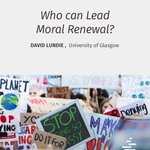



Climate activists, religious figures, civil rights campaigners. Ask people why they follow any of them and you'll hear the same words: authentic, courageous, caring. Grantee David Lundie is asking whether those words actually mean the same thing across different moral frameworks.
Learn more about this project: bit.ly/4iQ3KQx

When Notre-Dame Cathedral caught fire in 2019, the response wasn't just grief. Observers described it as an existential crisis for the world.
Why would a physical building carry that kind of weight?
Grantee Matthew Niermann and his co-investigator Julio Bermudez are building the evidence to answer that question. Using eye-tracking, biometric sensors, and AI-driven scene analysis, they're studying how sacred architecture shapes spiritual understanding across Catholic, Evangelical Protestant, and non-religious participants. One finding is already striking: regardless of religious background, people in more beautiful spaces are more compelled to think about life's meaning.
They're calling the field they're establishing Experimental Theological Aesthetics. What they find may reshape how we build, and why.
Learn more about this project: bit.ly/4oVG818

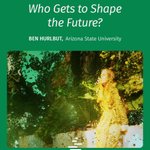
The future isn't shaped by science alone. It's shaped by the people making decisions about science, and the cultural, spiritual, and religious values they bring into every lab, boardroom, and policy meeting.
Grantee Ben Hurlbut at @ASU is examining how those forces work, and what it would mean to take religious perspectives seriously as a voice in those decisions.
Learn more about this project: bit.ly/4fNIQRl

Society's hardest problems don't wait for religious and secular communities to agree on everything. Grantee Austin Tiffany is researching whether shared virtues could be the starting point for working together.
bit.ly/3Uoz6U0

Long before organized religion, people had practices for illness, failed crops, and misfortune. Grantee Pascal Boyer calls these wild religions, and argues they persist because they take up the question people ask first: why me?
Learn more about this project: bit.ly/3Jq4c8g

Analytic philosophy is effective at analyzing logical structures. Continental philosophy, through phenomenology and hermeneutics, has long been central to inquiry into humility, accountability, forgiveness, and love.
Grantee Judith Wolfe at the University of St Andrews is launching collaborations in philosophical theology in the continental tradition, as a complement to the analytic work at the Logos Institute.
Learn more about this project: bit.ly/4cHGSka

"Individuals develop purposes rather than discover them."
Grantee Kendall Cotton Bronk interviewed young adults from religious and non-religious backgrounds about the patience that process requires.
Learn more about this project: bit.ly/4gEEUTs

Templeton Religion Trust retweeted

"We propose that universities that are committed to progressive policies simply say so."
In a new @washingtonpost op-ed, HxA President John Tomasi and Harvard Professor Tyler VanderWeele encourage progressive schools to model themselves after religious colleges.
"They should tell students, faculty and the public that, like religious colleges, they have opted to teach and pursue knowledge through a particular lens: roughly, the lens of progressive politics."

Medieval manuscripts are full of things that are not the text: headings, cross-references, illustrations, and notes crowded into the margin.
Grantee Garrick Allen and his team are measuring how those elements affect readers, using eye-tracking and physiological responses on manuscripts from five religious traditions at the Chester Beatty Library.
Learn more: bit.ly/3wTYmJjf

That makes Africa the most Christian continent on earth. And yet, Africa often remains under-resourced and under-represented when it comes to global conversations pertaining to the advancement of world Christianity. The Nagel Institute has devoted itself to the study of world Christianity, and is, more specifically, seeking to promote a deeper understanding of world Christianity, to partner with study centers to strengthen Christian intellectual movements in the global south and east, and to provoke a reorientation of thought in the North Atlantic region toward the concerns arising from world Christianity.
Learn more: bit.ly/3KzFpDc

Most of us can feel for a stranger in pain. Acting on it is a different thing.
Grantee Patty Van Cappellen at @DukeU studies that gap. She treats compassion as a precursor to doing, so her studies measure what people actually choose: whether to read the emotional account of someone suffering or the factual one, how far away that person feels, and how much responsibility they feel to help.
She put that question to Christian, Muslim, and Buddhist participants alike to see whether religious practice changes the answer.
Learn more about this project: bit.ly/3U0uxPj


Grantee Jonathan Berger, a composer and professor at Stanford University, travels to cathedrals, mosques, temples, and ancient burial chambers to record what he calls a space's acoustic signature. Then he rebuilds those acoustics in the lab and studies how people respond.
Learn more about this project: bit.ly/3UJJ4ja

The evidence is overwhelming that meaning-making systems are universal across societies, past and present. However, specifics vary considerably. In tribal, indigenous societies, for example, some people assimilate a wealth of knowledge about nature.
Can that be categorized as science?
Pluralism sounds like a belief you either hold or you don't. Grantee Katie Bringman Baxter and her team treat it as a skill people can actually learn.
They focus on colleges, where students, faculty, and staff of every religious and secular background already share the same classrooms, dorms, and dining halls. @interfaithusa builds the training and tools to turn that proximity into real relationships, then works alongside campuses to put them into regular use.
Learn more about this project: bit.ly/3UM6Kn3

Most religious traditions place mystical experience at their heart. But scholarship has often treated it as ineffable, niche, or hard to study with rigor.
PRISM is a new five-year initiative working to change that. It supports an international network of scholars across 8 countries: Finland, Germany, Italy, the UK, Spain, Sweden, Belgium, and the United States.
Their work spans Hinduism, Buddhism, Judaism, Christianity, and Islam, along with the ways mystical experience reaches across them.
The goal: build more inclusive theories, compare traditions across cultures, and bring evidence-informed research to questions that have been with humans for millennia.
Learn more about this initiative: bit.ly/4x8MsVJ

PRISM (a Program in the Study of Mysticism) is a new, five-year Templeton Religion Trust initiative exploring mysticism as the transcendent, transformative dimension at the heart of religious life across history and diverse traditions.
At the heart of PRISM is an expansive way of understanding mysticism. It recognizes varying interpretations of three key elements:
• encounters with something beyond ordinary understanding
• a sense of unity that dissolves the boundary between self and other
• a transformation in how a person sees and lives in the world


