

Business Development Partner at @VictusGlobal // Project Ambassador // Tier 𝟙 KOL// Love Memecoins
Joined March 2022
- Tweets12.5K
- Following2.8K
- Followers16.6K
- Likes13.5K





Pinned Tweet
I just rethought what “decentralized infrastructure” actually means and it pushed me to make a move.
Here’s what I discovered about BTFS, why it matters for Web3 + AI, and why I’m paying close attention
@BitTorrent @justinsuntron #BTFS #TRONEcoStar

WIN Is Up 260% in Four Months. But the Bigger Story Goes Beyond Price. 📈
A move from $0.00001694 to $0.00006115 will attract attention. The more interesting question is what’s happening beneath the chart.
During the same period, WINkLink completed its first buyback-and-burn round, permanently removing approximately 67.357 billion WIN tokens—reportedly equivalent to about 6.78% of circulating supply.
That’s a measurable change in token supply.
But price appreciation and token burns are two different signals. A burn reduces supply; it doesn’t guarantee sustained demand or higher prices.
The Utility Behind WIN
WINkLink provides oracle infrastructure for the TRON ecosystem, connecting smart contracts with external information such as market prices.
That connection matters because DeFi protocols, automated strategies, and other blockchain applications often need reliable off-chain data to execute their logic.
For an infrastructure project, the longer-term questions extend beyond token performance:
➠ Are applications continuing to use its oracle services?
➠ Can it deliver data reliably and securely?
➠ Is demand for its infrastructure expanding?
➠ Does the token’s economic model connect meaningfully to that demand?
📊 The Bigger Picture
The reported burn provides a concrete supply-side data point. The price movement reflects market activity, while adoption and usage help assess the underlying service’s relevance.
These factors can interact, but none should be treated as proof of the others.
The real test isn’t just how much WIN has moved or how many tokens have been burned. It’s whether WINkLink continues to provide infrastructure that applications need.
@justinsuntron @WinkLink_Oracle
#TRONEcoStar

Digital Ownership Is Moving Beyond the Screen.
For years, digital collectibles existed primarily on screens. Now, artists are exploring ways to connect digital ownership with something people can physically experience.
Beeple’s BIOLOGICAL COLLECTIBLE is one example, combining five artworks released in both NFT and physical forms.
The NFT provides an on-chain record associated with the digital collectible, while the physical piece gives the artwork a tangible presence.
The result? An experience that bridges digital and traditional collecting.
■ What Makes Hybrid Collectibles Interesting?
➜ Two ways to experience art: Collectors can engage with a work digitally and physically.
➜ Digital provenance: Blockchain records can help establish a transparent history of the token, depending on how the collection is structured.
➜ More creative possibilities: Artists can experiment with physical materials, software, and interactive elements across different formats.
➜ A wider audience: Hybrid formats can appeal to collectors who value physical objects, digital assets, or both.
But combining a physical object with an NFT doesn’t automatically create lasting value.
■ What Really Matters?
For a physical-digital collectible to work, several things need to be clear:
→ How the NFT is linked to the physical artwork
→ How authenticity and ownership are verified
→ Whether the artwork itself has lasting artistic merit
→ How intellectual property rights are handled
→ Whether owning both formats offers a meaningful experience
An NFT alone doesn’t automatically prove ownership of the associated physical item or transfer copyright. Those rights depend on the collection’s terms and legal arrangements.
■ Where AINFT Fits In
AINFT operates at the intersection of AI, NFTs, and digital creativity—a space where accessible creative tools could open new possibilities for artists and collectors.
As these technologies evolve, the opportunity isn’t simply to tokenize existing art. It’s to explore new ways of creating, presenting, and experiencing digital works.
The bigger idea: The future of digital art doesn’t have to be a competition between screens and physical objects.
Digital provenance can complement physical presence, while tangible experiences can give digital collectibles another dimension of meaning.
Technology expands the possibilities. Artistic quality, trust, and the experience itself are what give a collectible reasons to matter beyond the novelty.
@AINFTcom @justinsuntron #TRONEcoStar

Smart contracts are only as reliable as the data they receive.
DeFi needs accurate prices. GameFi needs verifiable randomness. Smart contracts need dependable external data to execute as intended.
That’s where WINkLink comes in.
➠ Price Feeds: Supplies market data to support DeFi lending, trading, and derivatives.
➠ Verifiable Randomness (VRF): Helps applications deliver provably fair outcomes for games, NFT drops, and other use cases.
➠ Real-World Data: Bridges external information with on-chain applications, expanding what smart contracts can do.
➠ Ecosystem Utility: Supports use cases across DeFi, GameFi, NFTs, and other data-driven applications.
Why does this matter?
Without reliable oracle infrastructure, smart contracts can struggle to respond correctly to events outside the blockchain. WINkLink helps connect those external inputs to on-chain execution.
It may not always be the most visible part of the ecosystem, but the data layer plays a critical role in making blockchain applications useful.
WINkLink: Connecting data to decentralized execution.
Explore the ecosystem: t.me/WINkLink_Oracle
@justinsuntron @WinkLink_Oracle #TRON #TRONEcoStar

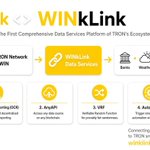
WINkLink: The Data Infrastructure That Connects TRON Smart Contracts to the Real World
A blockchain can execute code exactly as programmed.
But it cannot natively access an exchange price, a sports result, a flight status, or information stored in an external API.
This is the oracle problem: smart contracts often need information that exists beyond the blockchain itself.
WINkLink addresses this challenge by connecting external data sources with blockchain applications, allowing smart contracts on TRON to consume off-chain information.
1. From External Data to On-Chain Execution
The basic workflow is straightforward:
➜ External sources provide data
➜ Oracle nodes retrieve and process the information
➜ Reports are submitted to the blockchain
➜ Smart contracts consume the resulting data
This connection allows on-chain applications to respond to information that originates outside the network.
2. Off-Chain Reporting: Coordinating Multiple Nodes
WINkLink’s Off-Chain Reporting (OCR) model is designed to coordinate observations from multiple oracle nodes rather than relying solely on an individual node’s submission.
The general process involves:
➜ Nodes exchanging information over a peer-to-peer network
➜ Nodes producing signed observations
➜ Observations being consolidated into a report
➜ Required signatures supporting the report
➜ The aggregate report being submitted on-chain for verification
The goal is to coordinate data reporting efficiently while maintaining cryptographic verification. Multiple nodes can improve resilience, but they do not automatically guarantee that the underlying data is accurate.
3. AnyAPI: Beyond Price Feeds
Oracle infrastructure isn’t limited to cryptocurrency prices.
WINkLink AnyAPI enables developers to connect smart contracts with supported external APIs and customized data sources.
Potential applications include:
➜ Airline and flight information
➜ Sports results
➜ Traffic conditions
➜ External service data
➜ Custom information processed before delivery on-chain
This expands the range of applications that can use real-world information in their logic.
4. VRF and Automation
WINkLink also extends beyond conventional data feeds.
➜ Verifiable Random Function (VRF): Generates random outputs accompanied by cryptographic proofs that a consumer can verify. This can support applications such as blockchain gaming and randomized distributions.
➜ Automation: Supports monitoring predefined conditions off-chain and triggering smart-contract execution when configured requirements are met.
Together, these capabilities extend oracle infrastructure into randomness and automated execution.
5. Why This Matters for TRON
DeFi protocols, real-world asset platforms, prediction markets, games, and automated applications can all depend on information originating outside the blockchain.
Smart contracts execute the rules. Oracle infrastructure supplies the external information those rules may require.
That makes data connectivity an important component of a more capable on-chain economy.
The Bigger Picture
AI can help applications interpret information.
Oracles connect applications to external data.
Smart contracts execute predefined logic.
Each layer serves a different purpose.
WINkLink’s role is to help bridge external information and TRON-based applications, enabling smart contracts to respond to events beyond the blockchain.
A blockchain can execute its code. Oracle infrastructure helps it interact with information from the world around it.
Explore: winklink.org
@justinsuntron @WinkLink_Oracle #TRONEcoStar

AI is moving beyond the chatbot subscription model. B.AI is building around what comes next.
Rather than locking users into one model and one payment system, B.AI connects three key layers of the AI economy:
◈ Models: Access 70+ AI models for different tasks.
◈ Identity: Give AI agents on-chain identities.
◈ Payments: Pay with cards or crypto through a unified access and settlement layer.
The goal is to connect AI capabilities, agent identity, and payments in one ecosystem.
The reported numbers are notable: 1.51 trillion tokens processed in a single day and over 2.9 million users. These figures point to meaningful platform activity beyond simple experimentation.
For users, the practical benefit is flexibility: choose models based on the task, rather than relying on a single provider for everything.
The bigger idea? AI needs more than intelligence. It needs identity, access, and an economy that connects them.
@justinsuntron @BAI_AGI #TRONEcoStar

TRON Handles Roughly 73% of Stablecoin Transfer Volume. Ethereum Follows at 15%.
The stablecoin race isn’t just about how many protocols a blockchain hosts. It’s also about how much value moves across its network.
According to CoinDesk Research’s Q3 2026 figures, as of September 30, TRON accounted for roughly 73% of stablecoin transfer volume, compared with approximately 15% for Ethereum.
That’s a substantial gap and an important signal about where stablecoin activity is concentrated.
■ Why the 73% Share Matters
➜ Settlement activity: Low-cost transfers and broad USDT availability have helped make TRON an important network for moving digital dollars.
➜ A significant lead: TRON’s reported transfer-volume share was nearly five times Ethereum’s. The two networks serve overlapping but different use cases, so volume alone doesn’t capture the full picture.
➜ A substantial USDT base: TRON-based USDT supply reportedly exceeded $92.7 billion during Q3, reinforcing the network’s role in stablecoin circulation.
■ Transfer Volume vs. Supply
These metrics tell different stories.
• Transfer volume measures how much stablecoin value moves across a network over time.
• Supply measures how much stablecoin value is issued or held on that network, depending on the metric’s methodology.
Both help explain TRON’s position in the stablecoin market, but neither independently tells us how many unique people are using the network or how much new capital is entering it.
■ What This Means for Web3
Stablecoin adoption depends on practical fundamentals: accessible wallets, predictable fees, reliable settlement, and liquidity where users need it.
TRON’s reported Q3 figures suggest it has established a significant position in that infrastructure layer.
The next question is whether this activity translates into sustained user growth, broader payment adoption, and continued demand for on-chain dollars.
The takeaway: TRON’s stablecoin transfer-volume share is a major metric to watch—but understanding the market requires looking at volume, supply, costs, and actual usage together.
🔗 Research: folkapp.link/link/wqR4P0V
@trondao @justinsuntron #TRONEcoStar

The next leap in AI may not come from one smarter model, but from multiple agents working together.
Imagine one agent researching information, another analyzing the findings, a third executing tasks, and a coordinating agent managing the entire workflow.
This is the idea behind multi-agent AI: instead of relying on one assistant for everything, specialized agents collaborate to tackle more complex objectives.
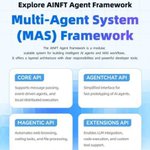
AINFT is exploring this approach through its Multi-Agent System architecture, giving developers a framework to build modular agents that communicate, coordinate, and adapt to different tasks.
What stands out about the AINFT framework?
■ Modular architecture — Build independent agents that can be combined, upgraded, and expanded.
■ Unified APIs — Connect AI models, external tools, databases, and custom workflows through a common development layer.
■ AgentChat — Support communication and context sharing between agents working on related tasks.
■ Magentic Intelligence — Coordinate specialized agents around different responsibilities for structured reasoning and execution.
■ Flexible extensions — Expand capabilities through plugins, custom tools, and third-party services.
What could developers build?
➺ Autonomous digital assistants
➺ Enterprise automation workflows
➺ Research and analysis systems
➺ Intelligent customer-service applications
➺ AI-powered Web3 tools
➺ Specialized multi-agent business solutions
The real shift is architectural.
Rather than asking one model to do everything, developers can divide complex tasks among specialized agents and coordinate their outputs toward a shared goal.
But more agents don’t automatically mean better results. Effective coordination, reliable context sharing, error handling, and human oversight remain essential.
As AI advances toward systems that can use tools and execute multi-step workflows, the infrastructure connecting models, agents, and services will become increasingly important.
AINFT is building toward this layer, exploring how independent agents can operate together as part of a larger system.
Build agents. Connect intelligence. Automate complex workflows.
The next generation of AI applications may depend not just on smarter models, but on how effectively they work together.
@AINFTcom @justinsuntron #TRONEcoStar

TRON kept building through Q3.
■ $2.21 trillion in stablecoin settlement
■ $30 trillion+ in cumulative transaction volume
■ New institutional access through a U.S. spot staked TRX ETF and Anchorage Digital’s native TRX staking and TRC-20 custody support.
These developments highlight two sides of TRON’s progress: substantial stablecoin settlement activity and expanding infrastructure for institutional participation.
The transaction figures show the scale of activity across the network, while the institutional developments introduce additional ways to access and manage TRON-based assets.
The next question is how these milestones translate into sustained usage, deeper liquidity, and broader adoption.
📖 Explore the full Q3 2026 report from @nansen_ai 👇
nansen.ai/post/tron-q3-2026-…
@justinsuntron @trondao #TRONEcoStar

Decentralized file sharing shouldn’t stop at the desktop.
People increasingly use their phones to manage files, access media, and handle everyday digital tasks. Bringing peer-to-peer (P2P) technology to mobile helps make decentralized file sharing accessible beyond traditional desktop users.
That’s where BitTorrent Android fits in.
Why does mobile P2P matter?
➜ Direct peer-to-peer transfers — Devices can exchange file data through a network of peers rather than depending entirely on a central distribution server.
➜ Distributed file delivery — When enough peers are available, different participants can supply pieces of the same file, potentially improving distribution efficiency.
➜ Mobile convenience — Users can manage downloads and files within a familiar Android environment.
➜ Lower barriers to entry — A mobile-friendly experience makes established P2P technology more accessible to people who rarely use desktop clients.
➜ Room for broader utility — Better mobile experiences help decentralized distribution adapt to changing expectations around accessibility and convenience.
The bigger picture
Technology adoption isn’t determined by architecture alone. It also depends on whether the product fits naturally into people’s lives.
Even a powerful protocol can struggle when the user experience is complicated. Making P2P technology easier to use can help bring its benefits to a broader audience.
Of course, decentralization doesn’t guarantee faster downloads in every situation. Performance still depends on peer availability, network conditions, file distribution, and device limitations.
The opportunity is to combine the strengths of peer-to-peer distribution with the convenience people expect from mobile applications.
The next stage of adoption may depend less on teaching everyone how the technology works and more on making it work seamlessly for them.
Would you use a mobile-first P2P app as your primary way to manage and transfer large files?
@BitTorrent @justinsuntron #TRONEcoStar

The future of AI × Web3 won’t be built by technology alone. It will be shaped by the communities behind it.
Innovation grows when developers experiment, creators share ideas, users provide feedback, and people with different perspectives work toward common goals.
That’s the opportunity behind the AINFT community.
Bringing together interests in artificial intelligence, NFTs, digital ownership, and Web3 development, AINFT creates a space for people to explore how these technologies can work together.
What can community members explore?
➜ Connect with builders — Exchange ideas with creators, developers, and Web3 enthusiasts.
➜ Explore AI × digital assets — Discover new possibilities for NFTs and intelligent digital experiences.
➜ Stay informed — Follow ecosystem updates, product developments, and community initiatives.
➜ Share feedback — Contribute perspectives that can help inform product development.
➜ Learn and collaborate — Connect with people exploring similar technologies and turn conversations into potential projects.
A strong community is more than a collection of followers. It can help ideas develop faster, surface useful feedback, and create opportunities for collaboration.
As AI and Web3 continue to evolve, communities that encourage experimentation and meaningful participation can help shape how these technologies are used.
Curiosity starts the conversation. Collaboration turns ideas into possibilities.
🌐 Website: ainft.com/
💬 Join the community: t.me/ainftEN
@AINFTcom @justinsuntron #TRONEcoStar

Millions of users create reach. Daily engagement reveals another side of the story.
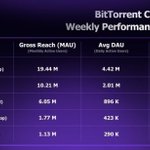
BitTorrent’s latest weekly client matrix shows how its desktop, web, and Android products compare in audience size and daily activity.
The numbers:
➜ µTorrent Desktop: 19.44M MAU | 4.42M DAU | 22.7% stickiness
➜ µTorrent Web: 10.21M MAU | 2.01M DAU | 19.7% stickiness
➜ µTorrent Android: 6.05M MAU | 896K DAU | 14.8% stickiness
➜ BitTorrent Desktop: 1.77M MAU | 423K DAU | 23.9% stickiness
➜ BitTorrent Web: 1.13M MAU | 290K DAU | 25.8% stickiness
What stands out?
µTorrent Desktop leads in overall audience size, while BitTorrent Web records the highest stickiness at 25.8%.
In simple terms, stickiness measures daily active users as a share of monthly active users. It offers a useful snapshot of how frequently people return, although it doesn’t tell the whole story of retention or user satisfaction.
The distinction matters:
⇨ Reach shows how many users a product attracts over a month.
⇨ Engagement shows how much of that audience uses it daily.
Both are valuable, but each answers a different question about product performance.
Looking ahead, the opportunity is to build on BitTorrent’s established distribution while continuing to improve utility across peer-to-peer infrastructure, decentralized storage, and Web3 applications.
Scale brings users in. A useful experience gives them reasons to return.
Which should be the bigger priority for long-term growth: expanding reach or increasing daily engagement?
@BitTorrent @justinsuntron
#TRONEcoStar

B.AI has crossed 1 trillion tokens in daily throughput. The user base is approaching 3 million.
The numbers highlight growing activity, but the bigger story is the infrastructure being built around AI access.
B.AI is working to bridge Web2 and Web3 through a combination of:
➜ Unified APIs to simplify access to multiple AI models.
➜ Intelligent model scheduling to help match workloads with suitable models.
➜ Fiat payments and digital currency settlements to reduce friction in accessing AI services globally.
The goal is to make powerful AI capabilities easier to access without forcing users to navigate unnecessary technical and payment barriers.
The next layer is the AI Agent economy.
By connecting identity, payments, communication, and execution, B.AI aims to support workflows where AI agents can do more than generate responses—they can coordinate tasks and interact within a broader digital ecosystem.
The real test will be how reliably these components work together, how accessible the infrastructure becomes, and whether users can turn that access into practical results.
Scaling AI is one milestone. Making AI easier to use, pay for, and coordinate is the larger challenge.
📖 Full report from @ChainCatcher_
@justinsuntron @BAI_AGI #TRONEcoStar

𝗦𝗺𝗮𝗿𝘁 𝗰𝗼𝗻𝘁𝗿𝗮𝗰𝘁𝘀 𝗻𝗲𝗲𝗱 𝗰𝗼𝗱𝗲 𝘁𝗼 𝗲𝘅𝗲𝗰𝘂𝘁𝗲. 𝗧𝗵𝗲𝘆 𝗻𝗲𝗲𝗱 𝗿𝗲𝗹𝗶𝗮𝗯𝗹𝗲 𝗱𝗮𝘁𝗮 𝘁𝗼 𝗿𝗲𝘀𝗽𝗼𝗻𝗱.
Smart contracts follow predefined rules, but they cannot independently access external information such as market prices, real-world events, or off-chain data.
That creates an important distinction: a contract can define exactly when an action should happen, but it may need an external data source to determine whether the conditions have been met.
Logic defines the rules. Data informs the decision.
Consider a decentralized lending protocol. Its code may establish collateral requirements and liquidation thresholds, but accurate price information is needed to assess whether a borrower’s position has crossed a critical limit.
Without a reliable connection to external data, even well-written contract logic can produce poor outcomes.
𝗛𝗼𝘄 𝗼𝗿𝗮𝗰𝗹𝗲 𝗻𝗲𝘁𝘄𝗼𝗿𝗸𝘀 𝗯𝗿𝗶𝗱𝗴𝗲 𝘁𝗵𝗲 𝗴𝗮𝗽
➜ Source relevant information from outside the blockchain.
➜ Deliver that information on-chain according to the oracle network’s design.
➜ Allow smart contracts to evaluate the data against their programmed conditions.
➜ Enable automatic execution when those conditions are satisfied.
This connection extends what blockchain applications can do without requiring every piece of external information to originate on-chain.
𝗪𝗵𝘆 𝗶𝘁 𝗺𝗮𝘁𝘁𝗲𝗿𝘀 𝗳𝗼𝗿 𝗪𝗲𝗯3
Oracle infrastructure supports applications that depend on information beyond their own networks, including:
➜ DeFi protocols that require asset prices and collateral valuations.
➜ Games and applications that use verifiable randomness.
➜ Smart contracts triggered by external events.
➜ Tokenized assets that depend on off-chain information.
But automation alone does not guarantee reliability. Data freshness, source quality, oracle security, and smart contract design all influence the outcome.
𝗪𝗵𝗲𝗿𝗲 𝗪𝗜𝗡𝗸𝗟𝗶𝗻𝗸 𝗳𝗶𝘁𝘀
@WinkLink_Oracle provides oracle infrastructure designed to connect external data with smart contracts, helping blockchain applications access information they cannot obtain independently.
As Web3 applications become more dependent on external information, this connection becomes increasingly important.
Code defines the possible actions. Reliable data helps determine when those actions should occur.
@WinkLink_Oracle @justinsuntron
#WINkLink #TRONEcoStar

𝗪𝗜𝗡 𝗕𝘂𝘆𝗯𝗮𝗰𝗸 & 𝗕𝘂𝗿𝗻: 𝗙𝗼𝗹𝗹𝗼𝘄 𝘁𝗵𝗲 𝗿𝗲𝗰𝗼𝗿𝗱, 𝗻𝗼𝘁 𝗷𝘂𝘀𝘁 𝘁𝗵𝗲 𝗵𝗲𝗮𝗱𝗹𝗶𝗻𝗲.
A buyback-and-burn announcement tells you what a project says is happening. The real picture comes from the program details, historical records, and on-chain transactions that support the claim.
WINkLink’s Buyback & Burn page gives the community a central place to explore the program and follow its progress.
1. 𝗢𝗻𝗲 𝗽𝗹𝗮𝗰𝗲 𝘁𝗼 𝘁𝗿𝗮𝗰𝗸 𝘂𝗽𝗱𝗮𝘁𝗲𝘀
Instead of searching across multiple channels, users can start with a dedicated page to review announcements, past figures, and available transaction links. This makes it easier to follow new developments and compare them with previous rounds.
2. 𝗞𝗻𝗼𝘄 𝘁𝗵𝗲 𝗱𝗶𝗳𝗳𝗲𝗿𝗲𝗻𝗰𝗲 𝗯𝗲𝘁𝘄𝗲𝗲𝗻 𝗮 𝗯𝘂𝘆𝗯𝗮𝗰𝗸 𝗮𝗻𝗱 𝗮 𝗯𝘂𝗿𝗻
These are two separate actions:
□ Buyback: Tokens are purchased.
□ Burn: Tokens are permanently removed from circulation.
One does not automatically confirm the other. When reviewing an update, ask:
□ Was the action announced or completed?
□ Were the tokens actually purchased?
□ Has the burn been executed?
□ Is there a transaction reference to verify it?
3. 𝗣𝘂𝘁 𝗵𝗶𝘀𝘁𝗼𝗿𝗶𝗰𝗮𝗹 𝗳𝗶𝗴𝘂𝗿𝗲𝘀 𝗶𝗻𝘁𝗼 𝗰𝗼𝗻𝘁𝗲𝘅𝘁
A single update shows one moment. Historical records help reveal how the program develops over time.
Compare execution dates, token amounts, and reported spending. Remember that the purchase cost and the market value of tokens at the time of burning can differ as prices change.
A larger burn does not necessarily mean a larger budget. Token prices and execution conditions matter.
4. 𝗩𝗲𝗿𝗶𝗳𝘆 𝘁𝗵𝗲 𝗼𝗻-𝗰𝗵𝗮𝗶𝗻 𝗲𝘃𝗶𝗱𝗲𝗻𝗰𝗲
Transaction links allow users to examine timestamps, token amounts, addresses, and relevant contract actions.
The important question is whether the evidence supports the specific claim. A token transfer alone does not establish that a permanent burn occurred; the destination and mechanism matter.
5. 𝗠𝗮𝗸𝗲 𝘁𝗿𝗮𝗻𝘀𝗽𝗮𝗿𝗲𝗻𝗰𝘆 𝗮 𝗵𝗮𝗯𝗶𝘁
A dashboard is a starting point, not a substitute for verification.
📌 Need context? Read the update.
📊 Need perspective? Compare the history.
🔎 Need evidence? Inspect the transaction.
The goal is simple: understand what was announced, distinguish it from what was executed, and follow the evidence over time.
Explore: winklink.org/
@WinkLink_Oracle @justinsuntron
#TRONEcoStar

The $JST Buyback & Burn program is entering a new chapter.
After five completed rounds and the full utilization of historical JustLend revenue reserves, JUST DAO has introduced an upgraded mechanism focused on long-term sustainability.
Three developments stand out:
➜ A new revenue source: GasFree revenue is now part of the buyback mechanism.
➜ Additional surplus: A reported $20.34M surplus has been injected into the ecosystem.
➜ A longer-term approach: The updated mechanism aims to connect buyback activity more closely to sustainable ecosystem revenue.
The bigger question is how these changes translate into consistent buyback activity over time. Revenue sources, reserve management, and transparent reporting will be important indicators to watch.
Thanks to @CryptoSlate for covering the update.
📖 Read the full story:
cryptoslate.com/jst-buyback-…
@justinsuntron @DeFi_JUST #TRONEcoStar

The $JST Buyback & Burn program is entering a new phase.
The mechanism is evolving under unified governance by JUST DAO, with updated rules for treasury reserves, revenue allocation, and future buybacks.
Here’s what’s changing:
■ $50M minimum treasury reserve
Designed to maintain a financial buffer for risk mitigation, emergency redemptions, and liquidity support.
■ Revenue-linked buybacks
Buybacks will be tied to sustainable quarterly revenue generated across the JUST ecosystem.
■ Phased use of surplus funds
Treasury funds above the reserve threshold will be released in phases to support future buybacks.
The central idea is to connect buyback activity more closely to ecosystem revenue while maintaining a defined reserve for financial resilience.
The important details are how revenue is calculated, how the reserve is maintained, and how surplus funds are deployed over time.
A buyback mechanism is only as meaningful as the rules and transparency behind it.
📖 Read the official announcement:
support.just.network/hc/en-u…
@justinsuntron @DeFi_JUST #TRONEcoStar

Transparency starts with visibility.
On a blockchain, transactions leave a record. The key is having the tools to explore that data and understand what’s happening.
@TRONSCAN_ORG gives users a real-time window into activity across the TRON network, helping them inspect transactions, track token transfers, and explore on-chain data.
That visibility matters. It allows users to verify activity independently rather than relying solely on announcements or third-party claims.
Blockchain transparency is most useful when people can access the data, examine the details, and draw their own conclusions.
Full context in the @MetaMask thread 👇🧵
@justinsuntron @trondao #TRONEcoStar


TRONSCAN 🔍
TRON’s first blockchain explorer gives anyone transparent, real-time access to on-chain data across @trondao. 🧵

📊 Q3 on TRON wasn’t quiet. The numbers tell the story.
◈ $2.21 trillion in stablecoin settlement
◈ 1.07 billion successful transactions during the quarter
◈ 18 million average monthly active addresses, up 9.8% quarter over quarter
These figures point to TRON’s continued role in stablecoin settlement, alongside sustained on-chain activity and a growing monthly active-address base.
But the real takeaway goes beyond the headline numbers: settlement volume shows how much value moved, transaction counts show network activity, and active addresses offer another view of participation. Each measures a different part of the picture.
Want the full breakdown of TRON’s Q3 performance?
📖 Read the report from @nansen_ai:
nansen.ai/post/tron-q3-2026-…
@justinsuntron @trondao #TRONEcoStar

TRON’s next chapter could extend beyond crypto-native assets.
Justin Sun has shared plans to bring tokenized equities and U.S. Treasuries onto the TRON network, while work on post-quantum security continues.
These are two distinct developments, but both point toward a broader question: how can blockchain infrastructure support more real-world financial activity while preparing for future security challenges?
Tokenized equities and Treasuries could expand the types of assets users can access on-chain. Post-quantum security research addresses a different, longer-term challenge: preparing cryptographic systems for potential advances in quantum computing.
The real measure of progress will be implementation, accessibility, regulatory compliance, and security not announcements alone.
If these plans move forward, they could broaden what people can do on TRON beyond transferring tokens and using DeFi.
📰 Read more from @Crypto_Briefing:
cryptobriefing.com/justin-su…
@justinsuntron @trondao #TRONEcoStar