







Diana retweeted

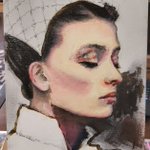
Alison Pullen whose interiors are done by painting onto the pages of magazines, often 'World of Interiors.' The result is an image of the room which is dominant, but also coexists with a foundation of photographs of totally different objects that seem to reflect at the surface.


Diana retweeted

Louis Sullivan (1856 to 1924): Applied organic, plant-like terra cotta and iron ornament to early skyscraper design, bridging functionalism and natural form.
When a bank director was considering hiring him but hesitated because other architects had bid lower for a conventional classical design, Sullivan is said to have replied: “A thousand architects could design those buildings. Only I can design this one.” He got the commission.
He is also the source of the famous motto “form ever follows function.”


Diana retweeted
The info about ROCOCO SCULPTORS is from GROK. Images credit to many sites.
Rococo sculpture was an 18th-century art style characterized by theatricality, sensuality, asymmetry, scrolling curves, and dynamic movement.
Étienne-Maurice Falconet (1716–1791) was a prominent French sculptor known for graceful, light-hearted, and mythological works.
When Catherine II of Russia gave him the honorific title roughly meaning “Your Highborn”, the self-made sculptor, from a poor artisan family, replied that it suited him perfectly because he was born in an attic.

Diana retweeted
Claude Michel, known as Clodion (1738–1814): A French sculptor famous for intimate, sensual terracotta reliefs and statuettes depicting nymphs, satyrs, and bacchantes.
Catherine the Great tried to lure him to Russia (as she had with Falconet and others), but he turned her down and went back to Paris instead.


Diana retweeted

What is a museum, if not time holding its breath?
~Winged Victory of Samothrace, c. 200–190 BC

Diana retweeted
This is "Ruth" (c. 1880) by Italian sculptor Giovanni Ciniselli. It captures the biblical figure in a quiet moment of deep thought, holding a bundle of wheat from the fields she gleaned to survive.


Diana retweeted

Evil detests beauty because beauty is proof of a transcendental order, of objective Goodness and Truth.
To attack beauty is to wage war against the possibility of transcendence.
Beauty is a great affront to nihilism. It testifies to that which is greater than the individual, because to create a beautiful thing is to acknowledge that you are answerable to standards higher than your own. Beauty is often called a great evangelist for this reason.
This is why they outright destroy beauty or try to subvert your perception of it by promoting ugliness or triviality. Beauty is neither neutral nor trivial — your ability to discern the beautiful from the ugly is intimately connected to your capacity to recognize the divine.
Dietrich von Hildebrand once declared that "beauty is the archenemy of mediocrity." Why?
Beauty elevates a person toward truth, goodness, and the divine. The antitheses to beauty drag the soul down into nihilism and worship of the self.


