

Strengthening Decision Value Chains Through Data. Reshaping Businesses With #GenerativeAI #ChatGPT and #AI. Closing the Gap Between Ambition and Action.
San Jose, CA
Joined August 2018
- Tweets1.7K
- Following203
- Followers1K
- Likes4.7K





Pinned Tweet
How #ArtificialIntelligence contributes in daily life. (A day in the life of AI) :
#AI #ML #MachineLearning #DigitalTransformation #DigitalMarketing #tech #Data #DataScience #100DaysOfCode #100DaysOfMLCode

The biggest wealth transfer in history: The current gap between those who have embraced the shift and started moving, and those waiting for its announcement in the news bulletins, is the difference between survival and ruin.
This Post is from a suspended account. Learn more
OpenAI, Anthropic, and Google are all very close to cracking RSI or already have. It will get scary and exciting at the same time.

Some rumors I've heard. I'll start with Google, then Anthropic and OpenAI.
Google: Insiders say Google has either cracked RSI (recursive self-improvement) or is very close. Their pace has picked up fast in recent months. They went from GPT-5 level to Opus 5.5 level in months, and speculation is that RSI made that possible.
Anthropic: About a week ago, Anthropic started a new pretraining run. It is not Fable 5.5 but what would become Fable 6, or something bigger, to catch up to OpenAI's Bel.
OpenAI: Bel (it may have another codename) is the model behind the math results OpenAI published a few days ago, and RSI apparently helped there too.
From what I'm hearing, OpenAI, Anthropic, and Google are all very close to cracking RSI or already have. It will get scary and exciting at the same time.
For a century, companies protected value through people, processes, data, routines, customer memory, and the tacit knowledge buried in daily operations.
Foundation models threaten to flatten that advantage because the same general intelligence can be used by everyone.
TechTalk™ HQ 🌐 retweeted

Anthropic CEO worries we're 6-12 months away from a swarm of AI agents capable of taking over the ENTIRE internet
Calls for immediate, global 1-2 year slowdown in AI development
Time to trust the people building the technology over the people merely investing in it


We Must Pace the Frontier: I’ve written a new essay on why the AI industry should slow down, with a three-part plan for doing so.
Anthropic is unilaterally committing to the first of these steps. We’ll provide third-party evaluators with permanent, employee-level access to our systems, so that they can verify adherence to our safety measures, report on incidents, and assess models’ alignment during training.
You can read the full post here: darioamodei.com/post/we-must…


TechTalk™ HQ 🌐 retweeted
The zilch layer in AI is the model layer. The real money in AI is in compute, energy, and applications. How many have all 3?
Without Chinese open weight models, OpenAI and anthropic would have been happy oligopolies and made trillions.
TechTalk™ HQ 🌐 retweeted

“Loop engineering” is a hot buzzphrase after mentions of it by Boris Cherny (Claude Code’s creator) and Peter Steinberger (OpenClaw's creator) went viral on social media. Loops are now a key part of how we get AI agents to iterate at length to build software. In this letter, I’d like to share my 3 key loops, shown in the image below, for building 0-to-1 products. These loops guide not just how I build software, but also how I decide what software to build.
Agentic coding loop: Given a product specification and optionally a set of evals (that is, a dataset against which to measure performance), we can have an AI agent write code, test its work, and keep iterating until the code is bug-free and meets its specification. This idea of closing the loop took off around the end of last year, and it has been a game changer in enabling coding agents to work longer productively without human intervention. For example, over the weekend, I was building an app for my daughter to practice typing, and my coding agent could easily work for around an hour, using a web browser to check what it had built multiple times before getting back to me, without needing my intervention.
The engineering loop executes quickly. Every few minutes, the coding agent might build and test a new version of the software. I hear frequently from developers who are finding new ways to engineer more effective engineering loops. This is an active area of invention!
Developer feedback loop: In this loop, a developer examines the current product and steers the coding agent to improve it. Last year, a lot of developers (including me) were acting as the QA (quality assurance) function for our coding agents, manually finding bugs and then asking the agent to fix them. But with coding agents much more able to test their own code, the amount of time we need to spend on this function has decreased significantly. This allows us to make higher-level product decisions, such as what key features to offer, where the UI needs improvement, and so on.
The developer-feedback loop operates over time intervals between tens of minutes and hours — that's how frequently a developer might review a product and give feedback. In the case of the typing app, I changed my mind a few times about the visual design, what cat costumes she can unlock as she learns (she loves cats), and the user flow for a grown-up to log in and steer the child's learning experience.
When a developer has a clear vision for what to build, it is still a lot of work to translate that vision into a specification for a coding agent to implement. Further, after the developer has seen an implementation, they might update (or perhaps clarify) the spec to steer it toward what they want. If you find that the system repeatedly runs into certain problems, building a set of evals for the agent becomes useful.
AI-native teams are increasingly using AI to help shape product direction, for example, automating the gathering and analysis of usage data, summarizing written and verbal customer feedback, or carrying out competitive analysis. However, for pretty much all the products I’m involved in, I see humans as having a significant context advantage over current AI systems — we know a lot more than the AI system about the users and the context the product has to operate in — and thus humans play a critical role. Many people describe this human contribution as “taste,” but I prefer to think of it as humans having a context advantage, since that gives us a clearer path to helping AI systems get better. This also speaks to why this step can’t be automated: So long as the human knows something the AI does not, human-in-the-loop is needed to to inject that knowledge into the system.
External feedback loop: This includes a wide range of tactics like asking a few friends for feedback, launching to alpha testers, or putting the code into production with A/B testing. These tactics are usually slow, rarely taking less than hours and sometimes taking days or even weeks. This data informs the developer vision, which in turn continues to drive the detailed product spec, which in turn drives the coding agent.
With coding agents speeding up software development, more engineers are starting to play a partial product management role. For many engineers who are growing into this role, the hardest part is shaping the product vision and striking a balance between building (bridging the gap between vision and spec) and getting user feedback to evolve the vision. It is important to do both!
I will write more about how to do this in future posts, but for now, I find it encouraging that engineers are playing an expanded role (just as product managers and designers now do more engineering).
[Original text: The Batch]

TechTalk™ HQ 🌐 retweeted

Palantir's CEO just exposed Sam Altman and Dario Amodei for robbing every Fortune 500 company.
Within two minutes, Alex Karp took the entire frontier AI industry apart on national television.
His exact words:
"Every single enterprise in this country, these people are LIVID. They are paying for tokens that create no value. These people are stealing the weights and alpha of my business."
He literally said the entire frontier AI business model is intellectual property extraction dressed up as a subscription.
Then he also destroyed the pricing model with a single question that Silicon Valley still refuses to answer:
"If it was so valuable, let's say I can make you $1 billion tomorrow. Wouldn't I say I'll make you $1 billion and I want 30 percent? Why are they charging for tokens if it's so valuable?"
That question breaks the industry.
If OpenAI and Anthropic's models truly delivered the productivity gains the labs claim, they would take equity or a share of the profit they generate. They would not sell access by the million tokens.
Token pricing is itself the CONFESSION that the product cannot produce reliable value at scale. If it did, they would price for the value. But they price for the compute because that is what they are actually selling.
Karp went even further...
He called the entire arrangement "a wealth tax that does not help the poor. It just punishes."
American businesses are transferring the alpha of their operations, meaning the workflows, the customer data, the strategy memos, the internal models that make them competitive, directly into the training pipelines of a handful of Silicon Valley labs. Once those labs retrain, the customer's own edge becomes the next enterprise product sold back to their competitors.
And the part the AI industry does not want anyone thinking about:
Every enterprise running its confidential documents, its customer conversations, and its financial models through a frontier model is potentially teaching that model HOW to replace them.
The vendor collects the token fee AND the compounding intelligence about that customer's business. That is the mechanism. And that is why Karp used the word "stealing."
He claims this is why every executive he meets is furious in private and silent in public. Nobody wants to be the CEO who called out the labs and then discovered their next competitor was built on their own leaked workflows.
The entire AI industry has been priced for perfection on one assumption:
That frontier labs produce durable, defensible value that justifies infinite compute spend.
But Karp just told us that the customers do not believe that assumption anymore. They believe they are being taxed without benefit, watched without consent, and copied without recourse.
The moment enterprises stop believing, the whole valuation stack shakes.
A reusable test for judging whether any AI company’s margins are owned or merely borrowed?
Why the fastest-growing software revenue in history coexists with collapsing pricing power — and why both are true?

Frontier labs are posting historic revenue growth — roughly a $30B annualized run rate at the leader by April 2026, a figure Salesforce needed two decades to reach — while the price of the intelligence they sell collapses underneath them.

Frontier labs are posting historic revenue growth — roughly a $30B annualized run rate at the leader by April 2026, a figure Salesforce needed two decades to reach — while the price of the intelligence they sell collapses underneath them.
NVIDIA Trains 671B-Parameter MoE Model Across 8,192 GPUs, Lifts Throughput 51% with Software-Only Optimization.

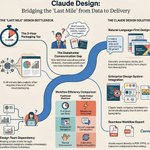
This move signals a clear pivot beyond the chat interface: #Anthropic is betting that the next productivity frontier isn’t text generation, it’s turning unstructured ideas into polished, shareable deliverables. From analysis to executive-ready presentation in a single workflow.
Anthropic just launched Claude Design in research preview on April 17, a new AI-powered visual creation tool based on Claude Opus 4.7. It allows users to generate prototypes, slide decks, one-pagers, and branded assets from natural language prompts, no design background needed.

Breaking 🚨: Microsoft commits $10B (1.6T yen) in Japan from 2026-2029 for AI infrastructure and cybersecurity, partnering with SoftBank and Sakura Internet. Includes training 1M engineers by 2030, aligning with PM Takaichi’s tech growth and security goals.
Breaking 🚨: DeepSeek’s V4 model will run on Huawei chips with Alibaba, ByteDance, and Tencent ordering hundreds of thousands of units. DeepSeek collaborated with Huawei and Cambricon to optimize code, creating variants for Chinese hardware amid U.S. restrictions.
GPT-5.4 supports up to 1M tokens of context, allowing agents to plan, execute, and verify tasks across long horizons. OpenAI In practice, this means an agent can hold an entire financial model, its historical versions, and the analysis instructions in a single context.

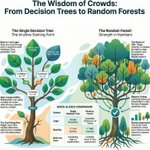
#DecisionTrees and #RandomForests AI techniques form the backbone of countless smart business decisions, whether you’re predicting customer churn in a retail setting, detecting fraudulent transactions in banking, or forecasting patient outcomes in healthcare.
