

Software consulting company with a vision on how software engineers can be part of the newspace industry and how we can work together towards a fantastic future
- Tweets971
- Following460
- Followers148
- Likes8.7K







ALT Diagram: training keeps floating-point latent weights while T34 weights are used in every forward pass and shipped in one ONNX file, with int8 embedding and head and fp16 elsewhere. ONNX Runtime runs the same file as the yardstick; the browser checks size and SHA-256, loads it on WebGPU or the CPU, self-tests, and falls back to WebAssembly SIMD if the GPU self-test fails. The four latent values are illustrative.

ALT Five Dice training: loss over 18,000 steps with warmup and cosine decay, and validation every 2,000 steps with mean regret per decision falling from 0.039 to 0.0010 points and best-move agreement rising from 93.5 to 98.6 percent.

ALT Woodpip start screen: four game cards for Four in a Row, Five Dice, Reversi and Backgammon with their pieces, the line "Classic games and a worthy opponent, a few minutes at a time", and "No account, no ads, no cookies".


ALT Precisit poster: M6 FP8 speed 2.08x, the measured rate of the fp8 e4m3 lane against the same chip's own f16 lane. Lower left: bit layout for fp4, fp8 e4m3, fp8 e5m2, bf16, f16 and f32 with elements per 32-bit word and the size of a 4096-square matrix, 8.4 MB to 67.1 MB. Right: a heat table of seven lanes across M5 Air, M5 Pro, M5 Max and M6 with the ratio to each chip's own f16 lane and absolute GOPS below - int8 1.84 to 2.35x, fp8 e4m3 1.08x, 1.04x, 0.99x and 2.08x on M6 at 29,044 GOPS, fp4 0.93 to 1.07x, f32 0.48 to 0.62x. Three rules for kernel builders at the bottom and the source repository in the footer.


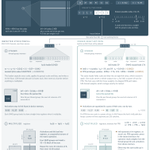
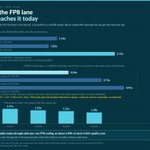
ALT Infographic: Apple M6 doubles the FP8 lane. Panel 01, the lane: fp8 e4m3 versus f16 in the matrix unit, 1.16x on M5 Air, 1.02x on M5 Max and 2.12x on M6. Panel 02, block scales do not get the lane: MXFP8 with a UE8M0 scale plane reaches 0.54x of plain fp8 on M6, 0.76x on M5 Air and 0.91x on M5 Max; per core the scaled path is flat across generations while plain fp8 doubled. Panel 03, what reaches the model: FP8 prefill against stock 4-bit on M6 is 1.37x, 1.33x, 1.31x and 1.28x at 512, 2048, 4096 and 8192 tokens, at +1.0% perplexity against +5.6% for stock 4-bit. Measured with MPP matmul2d and Qwen3-8B prefill in MLX 0.32.3.


