






Taylor Ashy retweeted

Balyasny founder Dmitry Balyasny on why University of Alabama kids can do just as well as Ivy League kids at his fund:
"Kids from, you know, Harvard and Princeton, and they've done great, and we've taken kids from, you know, University of Alabama, and they've done great"
"Everybody's hardworking and has a level of intellect in this business"
"We also love like looking at places where the school is like, okay, not top 20, it's like top hundred"
"Like we love those kinds of kids."

I'm in my 40s. The most scared/disoriented people in my network are the ones that have the following resume => went to an Ivy League school, went into consulting for Bain or BCG or investment banking for a bulge bracket bank then MBA at Harvard/Stanford and then career progression in high income tech W2 or hedge funds/private equity.
A number of these individuals in the last 5 years have been unexpectedly let go in their early 40s with 2-3 kids in private school and a burn rate they socially struggle to walk away from (kids have close friends now, business connections at the private school their kids go to, living in a high cost location makes it easier to network, etc).
These are the people literally have only been told they are excellent their entire lives and now are in year 3-4 (no exaggeration) of trying to land a new job. Some are willing to "settle" for working for mid 6 figures (some even less) just to cover their burn rate with a young family.
AI probably makes this dynamic happen earlier in one's career going forward for some of these perfect resumes individuals. Good chart from @Jack_Raines in his book Young Money


Taylor Ashy retweeted

This video should unsettle anyone who takes the United States seriously as a nation.
Because it exposes something dangerous: the trivialization of the world's most consequential office. It shows how carelessly the power, credibility, and accumulated moral authority of a superpower can be squandered for a few seconds of viral attention.
In any other major democracy, this behavior from a head of state would trigger a constitutional crisis. Paris would burn. Berlin would convene emergency sessions. In the Nordic countries, resignation would follow within hours. Across functioning democracies, the public, institutions, and political class would recognize this for what it is: an assault on the dignity of the state itself. Leaders are not free to perform as entertainers without consequence. National honor is not personal property, it's held in trust.
But the United States is not just another country with a provocateur in charge. It is the linchpin of global order. It maintains formal alliances and security guarantees with forty to fifty nations. It underwrites the financial architecture, trade systems, and diplomatic frameworks that billions of people depend on daily. When the American president speaks—or posts—it doesn't land as satire, meme, or personal whim. It reads as a signal about what the country is becoming.
American power has never relied solely on carrier strike groups or economic output. It has rested on something more fragile and more valuable: trust. The belief that beneath domestic turbulence lies institutional seriousness, predictability, and a baseline commitment to dignity. That belief is now disintegrating in real time.
Millions of American companies operate globally. They negotiate multibillion-dollar contracts in environments where reputation is currency. Boardrooms in Frankfurt, Singapore, and Dubai aren't debating whether a post was clever—they're asking whether the United States remains a reliable partner. Whether agreements signed today will be honored tomorrow. Whether American leadership has devolved from institutional to purely theatrical.
Consider tourism, which sustains millions of American jobs—airlines, hotels, restaurants, museums, entire regional economies. Soft power isn't an abstraction. It materializes in flight bookings, conference locations, study-abroad programs, and decades of accumulated goodwill. A quiet, decentralized boycott doesn't require government action—only a collective sense that a nation no longer respects itself.
Now picture this image being studied by foreign ministers, central bank governors, defense strategists, and sovereign wealth fund managers. Picture them asking a coldly rational question: How do we write binding thirty-year agreements with a country whose public face will be this, relentlessly, for years to come? How do we plan for the long term when the tone is impulsive, mocking, and unbound by the gravity of office?
This is where the real calculus begins. Trillions in foreign capital depend on confidence that America is stable, credible, and rule-governed. That confidence is now being traded for what, exactly? Applause from an online mob? A dopamine rush from manufactured outrage? Content designed to dominate the news cycle rather than serve the national interest?
Every serious nation eventually confronts this choice: burn long-term credibility for short-term spectacle, or safeguard the reputation previous generations bled to build. The United States spent eighty years constructing an image of reliability, restraint, and leadership under pressure. That image wasn't born from perfection—it came from a visible commitment to standards that transcended impulse.
This isn't a partisan issue. Europeans who value democratic norms recognize something ominously familiar here. Americans—Democrat and Republican alike—who believe in responsibility and restraint should see it too. Power attracts scrutiny. Leadership demands discipline. A superpower cannot behave like a reality TV contestant without paying a price.
The presidency is not a personal broadcast channel. It's a symbol carried on behalf of 330 million people and countless international partners who never voted but whose lives are shaped by American decisions anyway. Every post either reinforces or erodes the idea that America can be counted on when it matters most.
So the question is no longer whether this is offensive. The question is whether this is who America chooses to be: a nation that trades a century of hard-won reputation for viral moments. A country that replaces statecraft with content creation. A republic governed like a season of reality television.
History offers a harsh lesson here. Great powers don't fall because enemies mock them. They collapse when they begin mocking themselves—publicly, proudly, and without grasping the cost until it's far too late.
Stay connected,
Follow Gandalv @Microinteracti1

Taylor Ashy retweeted

Iceland is the world’s biggest consumer of SSRIs. They’ve had less than 10 gun homicides since 2020; in the US, there have been over 90,000.
Japan is one of the largest video game markets in the world. They have 10 gun deaths per year; the US has nearly 50,000.
It’s the guns.

RFK JR on Mass Shootings: There are many things that happened in the 1990’s that could explain these. One is the dependence on psychiatric drugs… there could be connections with video games
Readers added context they thought people might want to know
RFK Jr presents a disproven theory for mass shooters;
Video games have been proven time & time again to not influence violent behavior.
This claim has been around for almost 40 years & has been repeatedly disproven.
ox.ac.uk/news/2019-02-1…
theguardian.com/games/2020/jul…
royalsocietypublishing.org/doi/10.1098/rs…
Taylor Ashy retweeted

When President Clinton banned assault rifles in 1994, mass shootings dropped by 43%. After Republicans let the ban expire in 2004, they increased by 243% — please don’t tell me bans don’t work, because I don’t want to hear it.
Taylor Ashy retweeted
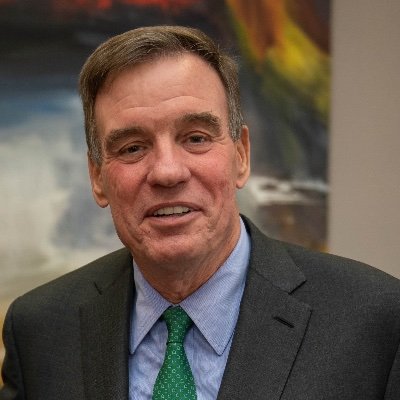
General Haugh has served our country in uniform, with honor and distinction, for more than 30 years. At a time when the United States is facing unprecedented cyber threats, as the Salt Typhoon cyberattack from China has so clearly underscored, how does firing him make Americans any safer?

Taylor Ashy retweeted

Jordan has just released this ad featuring Jalen Hurts after winning Super Bowl 59:


Taylor Ashy retweeted

No one:
Alabama fans: “OK, so Kalen DeBoer is just 49 years old, right? I mean, if he can coach until he’s the same age as Nick Saban when he retired, that’s 23 more good years. Jalen Hurts is just 25 right now too, so by that point, he’ll be a prime 48 years old. He should be plenty experienced by then after a long, successful NFL career.
“So I mean… in theory, we can win at least another… 20, maybe even 25 more national championships over the next 50 years.”

Taylor Ashy retweeted

‘Bama is wild because when they’re down 10, they don’t gaf and just keep firing.
Then when they’re up 5, they don’t gaf and keep firing.
Unflappable bunch.
Fun game.

Taylor Ashy retweeted

An idea that I can't stop thinking about:
The Capability Gap
Alabama coach Nick Saban refers to the Capability Gap in this clip from a discussion with Holly Rowe:
"We oftentimes talk about what someone's potential is, but I think to put it in better terms...the Capability Gap is what you're capable of relative to what you're doing...if you understand the truth about that, you can actually take information that can help you close that gap."
The Capability Gap is a simple idea with powerful implications across all areas of your life.
It requires an understanding of:
1. Your full capability
2. Your current delivery
In my experience, I would argue that most people underestimate their full capability and overestimate their current delivery.
In other words, they think their Capability Gap is very small, when in reality it's much larger than they realize.
Having mentors, coaches, friends, and family members who help you see the truth about your full capability and keep you honest on your current level of delivery is everything.
This isn't about sports, this is about your life:
Do you have people in your life who help you think bigger about what you're capable of?
Do you have people in your life who tell you that your current delivery isn't good enough?
We all need those people in our lives.
We need people who push us to get uncomfortable, to think bigger, and to be better.
We need people who push us to be better partners, parents, friends, siblings, colleagues, community members, and leaders.
Find the people who tell you the two truths:
1. What you're truly capable of
2. What you're currently delivering on
Identify your Capability Gap and then work relentlessly to close it!
If you enjoyed this or learned something, share it with others and follow me @SahilBloom for more in future!