
Writer, Blogger, Historian, Lawyer, Animal Lover and Party Animal.
Kent, United Kingdom
Joined January 2012
- Tweets6.1K
- Following1.9K
- Followers725
- Likes15.4K


Truda Thurai retweeted

“I wanted to do more for the war effort than baking sausage rolls.” - Bletchley Park Codebreaker Betty Webb MBE.
#WW2 #SecondWorldWar

Truda Thurai retweeted

In 1920, British troops in the Syrian desert were digging defensive trenches when they uncovered a wall covered in brightly colored ancient paintings.
They had found Dura-Europos, a Roman frontier city on the Euphrates River that had been abandoned for almost 1,700 years.
Around 256 AD, the Sasanian Persian army came to take it. The Romans knew it was coming. To strengthen the western wall, they tore into the buildings along it and piled a massive earth ramp up against the inside of the wall. Houses, a synagogue, and a small Christian church were packed full of dirt and buried.
It didn't save the city. The Persians took it anyway, and Dura was never really lived in again.
But that emergency ramp ended up preserving everything inside it. The synagogue's walls were still covered in painted biblical scenes. The church turned out to be one of the oldest known Christian churches anywhere. And archaeologists found Roman shields, including the only surviving example of the classic curved rectangular legionary shield, still showing its painted design.
Then there's the tunnel.
The Persians dug a mine under one of the towers to collapse it. The Romans heard them and dug a countermine to attack them underground.
In the 1930s, excavators found the bodies of around 20 Roman soldiers piled up in that countermine, still with their weapons and armor. Near them was one Persian soldier.
Decades later, archaeologist Simon James took a fresh look at the evidence. He found traces of sulfur and bitumen in the tunnel. His theory was that when the Persians heard the Romans breaking through, they lit a fire of sulfur and tar and drove the choking smoke into the Roman tunnel. The Romans would have been dead or unconscious within minutes.
Then the Persians stacked the bodies to block the tunnel and set it on fire.
If he's right, it's the oldest archaeological evidence of chemical warfare ever found.
The lone Persian may have been the man who lit the fire, caught in his own smoke.
The Romans buried half the city trying to save it. It didn't work, but 1,700 years later, it's the reason we can still see it.

Truda Thurai retweeted

The little irises, on the other hand, the reticulata irises for instance, gain by being given enough space to expand their lovely heads in liberty. There bulbs should not be set nearer than a couple of inches apart. #gardening


Truda Thurai retweeted

In our life there is a single color, as on an artist palette which provides the meaning of life and art. It is the color of love.
- Marc Chagall

Truda Thurai retweeted

Nasceva oggi, a Venezia nel 1697, il pittore Canaletto. Egli ha contribuito più di tutti a forgiare nelle nostre menti immagini chiare della Venezia settecentesca. Venezia come città di festa, piena di vita, come città delle maschere, è un'immagine scolpita nel nostro background culturale e indelebile. La dobbiamo, su tutti, a lui.
#17ottobre

Truda Thurai retweeted

May 5, 1945. Hitler has been dead for five days. The war in Europe is almost over.
In a castle in the Austrian Alps, American soldiers, German soldiers, and a group of elderly French prisoners grab rifles and get ready to fight the SS.
Together.
The castle was called Schloss Itter. The Nazis had turned it into a prison for very important people. Not ordinary prisoners. Trophies.
Inside were two former prime ministers of France, Paul Reynaud and Édouard Daladier. Two of France's top generals, Maxime Weygand and Maurice Gamelin. A famous tennis champion, Jean Borotra. And the older sister of Charles de Gaulle.
As the Reich collapsed in early May, the SS guards panicked and ran. The prisoners suddenly found themselves in charge of a castle, with weapons left behind, and a serious problem.
Waffen-SS units were still roaming the area. Fanatics who would gladly kill them all.
They needed help. Fast.
One of the castle's prisoners, a Yugoslav handyman, slipped out on a bicycle to find the Americans. Separately, a German army officer named Major Josef Gangl also went looking for them.
Gangl was a Wehrmacht officer who had turned against the Nazis and was secretly working with the Austrian resistance. He wanted to protect the prisoners too.
He found an American tank commander named Captain Jack Lee.
Lee was 27, tough, cigar chewing, and willing to do something insane. With a single Sherman tank and a handful of American soldiers, he drove up into the mountains alongside Gangl and a few of his German troops.
They reached the castle on May 4.
The French prisoners were not exactly thrilled to see a tiny rescue force. They had expected an army. Instead they got a few Americans, a few Germans, and one tank.
The next morning, the SS attacked.
Somewhere between 100 and 150 Waffen-SS troops hit the castle with machine guns, mortars, and anti-tank weapons. The defenders fought back from the walls and windows. Americans and Germans side by side.
The French prisoners refused to hide. Some of them, including Reynaud, picked up weapons and joined in.
The Sherman tank was knocked out. The defenders were running out of ammunition. It looked like the castle would fall.
Then Jean Borotra, the tennis star, volunteered to make a run for it. He jumped the wall, slipped past the SS, and sprinted through the countryside to find American reinforcements.
He found them. And he insisted on coming back with them to finish the fight.
During the battle, Major Gangl saw Paul Reynaud exposed to gunfire and moved to pull him to safety. A sniper shot Gangl dead.
He had survived the whole war as a German soldier, only to die defending French prisoners from the SS in its final days.
That afternoon, the American relief force arrived and broke the attack. The SS were scattered and captured. The prisoners were saved.
Jack Lee received the Distinguished Service Cross. In Austria, Josef Gangl is remembered as a hero, and a street is named after him.
It is believed to be the only battle of the war where American and German soldiers fought together on the same side.

Truda Thurai retweeted

Newt Pond, Eric Ravilious, 1932. Depicting a scene at Great Bardfield in #Essex. After being sold to a private collection at @ChristiesInc some years ago, the artwork is now on loan to @TownerGallery.

Truda Thurai retweeted

Hey flower lovers! 🌹
Let’s meet “Diablesse de Mers”, a shrub rose of rare beauty.
Created by Dominique Massad in France (2014).
Intense jasmine scent, keeps repeating, stays compact at 80–100 cm.
Honest notes from my garden: it’s a slow grower and can show black spot later in the season.
Still worth it for that color and fragrance? What do you think?

Truda Thurai retweeted

From The Telegraph:
Donald Trump has been threatened with “sanctions” by a judge for refusing to co-operate in the defamation case he has brought against the BBC, court papers reveal.
Judge Enjoliqué Lett rapped Mr Trump on Friday over his lack of co-operation with the court during the discovery process, when each side can compel the other to provide relevant evidence.
The BBC’s lawyers filed five separate motions seeking the US president’s compliance and claimed Mr Trump was having to be dragged “kicking and screaming” to co-operate.
According to the latest filings, submitted on Friday by Judge Lett, “the court has admonished the plaintiff for his lack of participation to no avail”.
“The court expects strict compliance,” he added, “the failure of which will lead to sanctions.” Legal experts warned the president could face having his suit dismissed in the most extreme case.
“Potential sanctions in civil litigation might include award of attorney’s fees and costs and even the dismissal of the plaintiff’s lawsuit,” Jason Sullivan, a lawyer, said.
Dmitry Bam, a professor at the University of Maine Law School, said sanctions could be escalated if Mr Trump continued his defiance.
“That could again include attorney’s fees, fines, treating certain facts as presumed established against Trump, all the way up to dismissing the case. Most judges would only take that last step as a matter of last resort.
“Beyond the case, the court could hold Trump in contempt for violating a discovery order. Even the President must follow ordinary civil procedure rules,” Prof Bam added.
Truda Thurai retweeted
One ancient king is the reason we use the word "mausoleum." What happened after he died is even stranger.
His name was Mausolus. He ruled Caria, a region on the southwest coast of modern Turkey, in the 4th century BC. He was technically a governor under the Persian Empire, but he ran things like an independent king and built his capital at Halicarnassus into a showpiece city.
He was married to his own sister, Artemisia. When Mausolus died in 353 BC, she was so consumed by grief that, according to Roman writers, she mixed his ashes into her drink and swallowed them.
Then she set out to build him the greatest tomb the world had ever seen. She hired the most famous Greek sculptors alive and held a contest where the best writers of the day competed to deliver speeches praising her dead husband.
Artemisia wasn't just a mourner. When the island of Rhodes saw a grieving widow on the throne and sent a fleet to take her city, she hid her ships, let the Rhodians land, and captured their fleet. Then she sailed those Rhodian ships straight back to Rhodes, decorated with victory wreaths. The people of Rhodes thought their own navy was coming home in triumph and let them right in.
She took the island and put up a statue of herself in Rhodes celebrating the conquest. Later the Rhodians couldn't bring themselves to tear it down, so they built a wall around it so nobody could see it.
She died about two years after her husband, before the tomb was finished. Pliny says the sculptors stayed and completed it anyway, without pay, because they knew it would make them famous.
They were right. The Mausoleum at Halicarnassus became one of the Seven Wonders of the Ancient World and stood for over 1,500 years until earthquakes brought it down. In the 1400s and 1500s, crusader knights hauled away its stones to build a castle that still stands in Bodrum today.
Every mausoleum on earth is named after him.

Truda Thurai retweeted
In 1996, an amateur archaeologist was walking along the Tollense River in northern Germany when he spotted a human arm bone sticking out of the riverbank.
Lodged in the bone was a flint arrowhead.
Archaeologists eventually started digging, and they kept finding bodies. The remains of more than 140 people so far, along with horses. And they've only excavated a small part of the valley.
The bones dated to around 1250 BC. Most of them were young men. Many had wounds that never healed, because they died from them. Arrowheads stuck in bone. Skulls smashed by blunt weapons. Wounds from behind, as if men were cut down while running.
This was a battle. Probably the oldest large-scale battlefield ever found in Europe.
Before Tollense, most historians thought Bronze Age northern Europe was a world of small villages and small fights. Raids, feuds, maybe a few dozen men at a time.
Tollense blew that up. Based on how many died and how much ground the fighting covered, researchers have estimated that a few thousand men might have taken part.
Some of them had old healed injuries, too. These weren't farmers grabbing whatever was nearby. Some look like men who had fought before.
The weapons were a mix. Bronze swords and spearheads. Bronze and flint arrowheads. And wooden clubs, including one shaped like a baseball bat and one shaped like a croquet mallet.
Then it gets stranger. Chemical tests on teeth suggest many of the dead didn't grow up anywhere near the valley. And in 2016, archaeologists found what looks like one warrior's personal kit, a bundle of bronze tools and scrap metal. The style points to someone from southern central Europe, hundreds of miles away.
So who was fighting whom, and why here? Nobody knows for sure. One theory is that the battle was over a causeway crossing the river, part of a trade route.
There's no written record of it. No names, no winner, no story.
Just a riverbank full of young men, 3,000 years old, and a war nobody knew had happened.

Truda Thurai retweeted
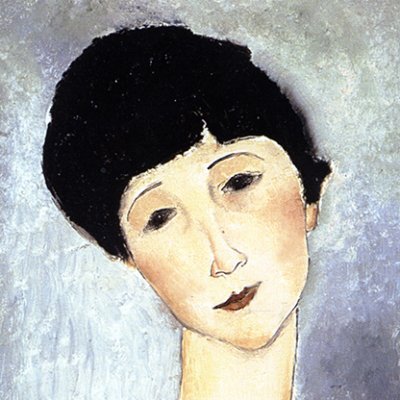
What if we told you this patch of grass is hiding a woman?
For more than a century, nobody knew that there was another painting hiding beneath ‘Patch of Grass’. It wasn't until researchers examined the work with X-rays that the hidden portrait of a woman emerged.
Vincent occasionally reused canvases, painting over earlier work. In this case, one small painting preserves two very different moments in his artistic journey.
The hidden image offers a rare glimpse of his transition from the dark tones of his Dutch period to the brighter palette he developed in Paris.
1 ‘Patch of Grass’, 1887 © Kröller-Müller Museum
2 Image credit TU Delft



Truda Thurai retweeted

National badger day and I could post another 10 pictures of them, I've loved capturing them so much.
A lot of that has been in relation to trying to help them during the horrors of culling.
They are magnificent creatures and we should always try to protect them.


Truda Thurai retweeted

Sir Nicholas Winton (1909-2015) was a British stockbroker who saved 669 predominantly Jewish children from Nazi-occupied Czechoslovakia just before WWII. Winton kept his heroic efforts private, telling almost no one—not even his wife—about the rescues. In 1988, his wife Grete found a hidden attic scrapbook containing the complete lists of the children, photographs, and the names of their British foster parents. Winton received global recognition later in life, including being knighted by Queen Elizabeth II in 2003...
In late 1938, 29-year-old London stockbroker Nicholas Winton cancelled a Swiss skiing trip to travel to Prague after a friend alerted him to a growing refugee crisis caused by the Nazi occupation of the Sudetenland. Appalled by the destitute conditions in the camps, Winton established an impromptu rescue organization to evacuate imperiled Jewish children. Operating out of a hotel room, he cataloged applications from thousands of desperate parents, forged transit permits, bribed officials, and pushed the British Home Office to process entry visas while securing foster homes and financial guarantees for each child.
Between March and August 1939, Winton organized eight train transports through Germany and the Netherlands to Britain, successfully rescuing 669 children. A ninth train carrying 250 more children was scheduled to leave on September 1, 1939, but was blocked when Germany invaded Poland and borders closed; almost all of those children later perished in the Holocaust. When World War II erupted, Winton quietly closed his operation, joined the Royal Air Force, and returned to private life, never speaking of his wartime efforts, not even to his own wife, Grete.
His heroics remained unknown for 50 years until 1988, when Grete found an old leather-bound scrapbook in their attic containing complete lists of the children, foster family contact details, and official documents. She passed the notebook to a Holocaust historian, leading to Winton's invitation to the BBC television show That's Life!. On live television, the host asked if anyone in the studio audience owed their life to Nicholas Winton, and dozens of adults surrounding him stood up simultaneously. Knighted by Queen Elizabeth II in 2003, "the British Schindler" passed away in 2015 at age 106, leaving behind an estimated 6,000 living descendants of the children he saved.
Despite his grand humanitarian legacy, Nicholas Winton was actually born Nicholas Wertheim to German-Jewish parents who had anglicized their surname to Winton in 1938 to avoid anti-German sentiment in Britain. Furthermore, Winton was not a lone operator; he relied heavily on a small group of lesser-known volunteers on the ground in Prague, most notably British teacher Trevor Chadwick and worker Doreen Warriner, who braved direct Gestapo surveillance to handle local logistics, gather passports, and board children onto trains while Winton managed fundraising, bureaucracy, and foster placement back in London. Winton also never considered himself a hero, once remarking that his mission was simply a practical problem to be solved, and he went on to live a remarkably full life outside his wartime acts, competing as an elite fencer who nearly made the 1940 British Olympic team.
#archaeohistories

Truda Thurai retweeted

Christi Belcourt, Métis visual artist who creates paintings inspired by Métis and First Nations historical beadwork #womensart


