

Metabolic, behavioral, physiological & inhalation research since 1886. Better data, fewer animals. Planning a study? Ask our scientists 👇
Worldwide
Joined June 2013
- Tweets563
- Following3.8K
- Followers675
- Likes116








Does your sucrose test make your mice depressed?
It sounds provocative, but for many labs it is a real question.
The sucrose preference test is one of the most widely used readouts of anhedonia, a core symptom of depression. To measure how much each mouse drinks from the water and sucrose bottles, the classic protocol houses animals alone.
It often adds water or food deprivation first, and tests in short sessions during the light phase. Social isolation is itself a stressor and can induce depressive-like behavior, so the test may change the very phenotype you want to measure.
There is another way.
In the IntelliCage home-cage system, up to 16 mice live together in one cage. Each mouse carries an RFID transponder, and every corner offers a choice between two bottles, for example water and sucrose. The system records which mouse visits, which bottle it chooses, and every single lick, 24/7.
What this means for your experiment:
- Individual sucrose preference, measured in group-housed mice
- No isolation, no deprivation, no handling during the test
- Continuous data through the dark phase, when mice are naturally active
- Time courses over days or weeks, not a single snapshot
Example: @IgorBranchi’s group recently followed anhedonia over three weeks of diazepam treatment in enriched vs. stressful conditions, showing how strongly the environment shapes treatment outcome (Poggini et al., Neuroscience 2026).
Keep your animals socially housed. Reduce experimental stress. Capture every lick.
linkinghub.elsevier.com/retr…

A single-celled alga swimming towards light has just led to a @NobelPrize.
The 2026 The Nobel Prize in Physiology or Medicine goes to @KarlDeisseroth, Peter Hegemann and Georg Nagel for optogenetics, the technology that lets researchers switch specific neurons on and off with pulses of light.
In the early 2000s, Hegemann and Nagel discovered channelrhodopsin, a light-sensitive protein from green algae. When blue light hits it, the channel opens, ions flow into the cell and a small electrical signal is generated.
Deisseroth and his colleagues then introduced the gene encoding channelrhodopsin into neurons and showed that light alone could make those cells fire and communicate with their neighbours. The impact on neuroscience has been enormous.
For the first time, researchers could move beyond correlation and test causality: activate one defined cell population, in one brain region, with millisecond precision, and watch what the animal does. Circuits behind feeding, fear, reward, social behaviour, sleep and energy balance have been mapped this way.
As Per Svenningsson, chair of the Nobel Committee, put it: "Optogenetics provides opportunities for mapping the brain in a way that we could once only dream of."
One practical challenge remained for many labs. Classic optogenetics relies on fibre-optic cables tethered to the animal's head. Tethers restrict movement, can alter natural behaviour, make social and group-housed experiments difficult, and complicate long-term studies in complex arenas or home cages.
This is where wireless optogenetics changes the experiment. NeuroLux, available through TSE Systems, uses small, battery-free, fully implantable devices powered wirelessly, so mice and rats can move, explore and interact freely while specific circuits are stimulated on demand.
Combined with behavioural and metabolic phenotyping, it becomes possible to ask how a defined neuronal population shapes behaviour, food intake or energy expenditure under conditions much closer to natural life.
Congratulations to Karl Deisseroth, Peter Hegemann and Georg Nagel, and to the many scientists worldwide whose work has turned a light-sensing alga into one of the most powerful tools in biology.
Planning circuit-level studies in freely moving animals? Our team is happy to discuss how wireless optogenetics can fit into your experimental design.
tse-systems.com/products/neu…
#NobelPrize #Optogenetics #Neuroscience #WirelessOptogenetics #NeuroLux #BehavioralPhenotyping #PreclinicalResearch #TSESystems

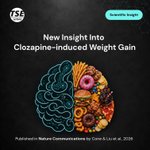
Clozapine remains one of the most effective antipsychotic drugs available, yet for many patients the price is hyperphagia, weight gain and insulin resistance.
These metabolic side effects are a leading reason people stop treatment. Without a rodent model that reproduces them, the underlying mechanism has remained elusive.
Chen Liu's lab at @UTSWMedCenter, together with Roger Cone's group at the @UMich, has now closed that gap. Published in @Nature, their dietary model reproduces the human picture in female mice: excess fat gain, hepatic lipid accumulation, elevated leptin and impaired glucose tolerance.
The team then asked where the extra weight comes from. Using TSE PhenoMaster (tse-systems.com/products/phe…), they followed individual mice before and after switching to the clozapine diet. Within days the mice ate far more, mostly in the dark phase, adding about 11.8 kcal per day. Energy expenditure rose by only about 1.2 kcal per day, while activity and RER remained unchanged.
Continuous intake and expenditure data like these make the case clear: overeating, not a metabolic slowdown, drives the positive energy balance.
The mechanism turned out to be unexpected. Clozapine does not bind the orthosteric site of MC4R and does not engage canonical Gαs signaling. Instead, it strengthens the coupling between MC4R and the Kir7.1 potassium channel, increasing inward potassium currents and silencing MC4R neurons in the paraventricular hypothalamus. Mice lacking Kir7.1 in MC4R neurons were protected from clozapine-induced weight gain, yet still gained weight on olanzapine, which points to drug-specific pathways. In mice that had already become obese on clozapine, the Kir7.1 inhibitor ML418 reduced food intake, body weight and fat mass and improved glucose tolerance. It also left clozapine's ability to suppress amphetamine-induced hyperlocomotion intact.
These findings suggest that the metabolic and antipsychotic effects of clozapine can be separated, with MC4R–Kir7.1 coupling as a tractable target for protecting the metabolic health of patients who depend on these drugs.
Congratulations to Li Li, @CIRIAHERNANDEZ2, Luis Eduardo Diaz Gimenez, and all co-authors.
nature.com/articles/s41467-0…

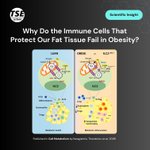
Why do the immune cells that protect our fat tissue fail in obesity?
Metabolic disease often starts quietly in visceral fat, where immune cells called ILC2s help keep the tissue healthy. In obesity, they are among the first to disappear, and until now it wasn't clear why.
Christoph Wilhelm's lab at @UniBonn traced it to a metabolic enzyme, ACC1. When a high-fat diet floods ILC2s with lipids, ACC1 is switched down, the cells' energy balance collapses, and they can no longer mature or do their job.
Mice lacking ACC1 in these cells developed inflamed, enlarged fat tissue and became hyperglycemic after only two weeks on a high-fat diet. Boosting NAD⁺ with nicotinamide riboside brought the cells back and restored healthy tissue.
There's a lesson for drug development too. ACC inhibitors have struggled in metabolic disease trials, and this study suggests one reason: blocking ACC may also disarm the immune cells that protect fat tissue.
Using TSE PhenoMaster (tse-systems.com/products/phe…), the team showed that whole-body energy expenditure and food intake were unchanged, even under cold challenge. The damage was local to the fat tissue, not a shift in overall energy balance. That's the kind of distinction that keeps a mechanism honest.
Congratulations to @Fokaragiannis, @DagmarWachten and all co-authors, published in @Cell_Metabolism.
Read the full publication: cell.com/cell-metabolism/ful… #ObesityResearch #MetabolicHealth #ImmuneCells #VisceralFat #ACC1 #NADBoost #CellMetabolism #TissueHealth #LifeScience #TSESystems

In September we hosted our PhenoMaster User Workshop in Berlin, and it turned out to be exactly the kind of gathering we had hoped for.
17 participants joined us from Germany, Austria, Switzerland, and the Netherlands - all PhenoMaster users looking to get more out of the system they work with every day. We went through practical tricks to squeeze more out of the setup, dug deeper into the analytics software that makes running experiments so much smoother, and left plenty of room for questions.
We were glad to welcome Prof. @EvertSchothorst and Dr. Kathrin Zierler, who shared their scientific work with the group, alongside hands-on sessions from our own team and lab best practices from Pierre-Louis Ruffault - all expertly moderated by @JasminRemmes.
What stood out most, though, wasn't only the agenda - it was watching researchers from different labs and countries actually talk to each other: comparing notes, swapping tips, catching up on what's happening in the field. That's exactly what we set out to build: not just a workshop, but a space for the PhenoMaster community to meet.
More workshops are already in the works. Stay tuned.
🤖 Made with AI


What changes when mice don't know they're being watched?
Prof. Emeritus David Wolfer has used IntelliCage since the very beginning. In our latest interview, he shares what changed once constant handling was taken out of the equation: 24/7 behavior tracking, social housing instead of isolation, and cognitive data that used to be out of reach.
He also weighs in on a debate every behavioral scientist has an opinion on: does automation oversimplify complex behavior, or does it finally let us see it clearly? Read the full interview with Prof. Wolfer 👇

Our team recently took part in the Chinese Neuroscience Conference (CNS2026), where our IntelliCage system was a big draw for visitors.
Many were interested in how it simplifies daily work for scientists, automating data collection and reducing manual handling in behavioral research, so researchers can focus on the science itself.
Thank you to everyone who stopped by to chat, ask questions, and learn more about IntelliCage.
#Neuroscience #IntelliCage #TSESystems


We are heading to the 13th Helmholtz Diabetes Conference with a brand-new star to show off.
Meet our colleagues Holger Russig and Jasmin Remmes on-site, get a look at the BMR Speakman Chamber, built for precise basal metabolic rate measurements in rodents, and learn about our latest innovation in indirect calorimetry technology, CaloMax HS.
📍 Come find us at the booth. We would love to talk with you!
#Diabetes #MetabolicResearch #RodentResearch @HelmholtzMunich @helmholtz_diabc #TSESystems

ALT TSE Systems booth at the Helmholtz Diabetes Conference, featuring the BMR Speakman Chamber and CaloMax indirect calorimetry system for rodent metabolic research.
We closed the summer season the best way possible - together!
Our TSE Systems summer party kicked off with a boat trip through Berlin, cruising past the city's skyline before docking for an afternoon of team-building games, perfect weather, and a lot of laughs along the way.
The highlight? Our colleague-voted awards, celebrating the people who make our team what it is:
🐦 Early Bird - always first through the door
🌙 Late Bird - night owl energy, right up to the end
☀️ Sunshine of the Company - the smile that brightens every day
💻 Tech Champion - the go-to technical problem solver
Congrats to our winners, and thank you to everyone who made the day so memorable. Summer may be over, but the team spirit is not going anywhere.
#TeamSpirit #TSESystems #SummerParty #CompanyCulture


A potassium channel most of us have never heard of may be driving high blood pressure in ways researchers are only now starting to understand.
Hypertension is a major risk factor for cardiovascular and renal disease, yet the mechanisms linking ion channel dysfunction to hypertension remain poorly understood. The voltage-gated potassium channel Kv1.3, encoded by Kcna3, regulates membrane potential and cellular excitability, but its role in hypertension has stayed unclear.
Prof. Dr. Xiaoliang Jiang and his team at the Chinese Academy of Medical Sciences investigated this question using Kcna3 knockout mice, transcriptomic profiling, and pharmacological inhibition to study how Kv1.3 shapes blood pressure regulation and renal homeostasis.
The team monitored continuous ambulatory blood pressure in conscious, freely moving mice using Stellar (tse-systems.com/products/ste…) implantable system. Over a 3 week observation period, systolic, diastolic, and mean arterial pressure were all significantly elevated in Kcna3 knockout mice compared with wild-type controls.
This study identifies Kv1.3 as a novel regulator of blood pressure and renal homeostasis. From a translational perspective, targeting Kv1.3 or its downstream signalling components may offer a promising new therapeutic strategy for hypertension and the renal injury that often accompanies it.
Continuous, long term telemetry data like this gave the team the confidence to distinguish a real, stable hypertensive phenotype from short term fluctuations. Congratulations to Prof. Dr. Jiang and the whole team on this work.
Read the full study here: mdpi.com/2218-273X/16/9/1262
#Hypertension #Kv13 #Telemetry #InVivoResearch #RAAS #KidneyHealth #TSESystems

GPR158 is a G protein-coupled receptor (GPCR) abundantly expressed in the brain that plays an important role in synaptic organization and function.
Prof. Dr. Laurie Sutton, PhD, from the University of Maryland, Baltimore (UMB), and her team investigated the role of GPR158 in spatial learning, cognitive flexibility, and working memory using traditional behavioral tests and automated home-cage paradigms.
In a socially enriched test environment provided by the IntelliCage (tse-systems.com/products/int…), female GPR158 knockout mice showed impaired spatial learning but intact working memory.
These findings highlight the value of automated home-cage paradigms for studying mouse models whose behavior may be sensitive to stress, environmental conditions, and social interactions. Unlike standard behavioral tests, which provide brief snapshots of behavior in novel environments, automated home-cage testing enables continuous assessment in a familiar, socially enriched setting.
A great example of why the testing environment is as important as the test itself.
Read the full publication: pmc.ncbi.nlm.nih.gov/article…
#Neuroscience #BrainResearch #BehavioralScience #ResearchInnovation #LifeScience #PreclinicalResearch #TSESystems #IntelliCage

A mouse eats 3–4g of food a day. One day - 35g. Real result, or outlier?
Left in your data, a single point like that can skew your whole analysis. TSE Analytics detects outliers automatically (IQR, Z-scores, visual plots) and cleans them out in one click. #PhenoMaster

Ever spent more time wrangling your research data than actually analyzing it?
We built TSE Software Analytics to change that.
In our new video, see how TSE Analytics takes you from messy datasets to publication-ready insights. FAST.
👉 Watch the video and see it in action!
#PhenoMaster #DataAnalytics #PreclinicalResearch #TSESystems
We would like to invite you to the PhenoMaster NG DACH User Day, a one-day workshop taking place in Berlin this September. This hands-on event is built for PhenoMaster NG users who want to go beyond the manual. Work directly with the hardware, guided by TSE experts.
On the agenda:
✅ Hands-on sessions with PhenoMaster NG hardware
✅ Software deep-dive: new features & workflows for power users
✅ Peer exchange with fellow metabolic phenotyping researchers
✅ TSE company tour
The program features invited experts Prof. Evert van Schothorst (Wageningen University & Research) and Dr. Kathrin Zierler (University of Graz).
Participation is free of charge and includes catering and a certificate of participation.
Don't miss this opportunity - places are limited and filling fast.
👉 Send us your request by using the "Contact Us" formular:
eu1.hubs.ly/H0xy6KZ0

Melbourne, get ready. In two weeks, our distributor @AIMedical brings TSE Systems solutions to the 6th Metabolic Diseases: Breakthrough Discoveries in Diabetes & Obesity conference.
Diabetes and obesity research live at the crossroads of behavior, metabolism, and biology. Our systems help you map all three.
From metabolic phenotyping to behavioral analysis - the data that connects pathogenesis to therapy, in one system.
Down under for the conference? Find the AIMedical team and see CaloMax HS, our latest innovation in rodent indirect calorimetry.
#MetabolicDiseases2026 #Diabetes #Obesity #MetabolicPhenotyping #TSESystems #AIMedical #CaloMax

When your system can't fit the whole cohort, you split the study into batches — then comes the tedious part: manually merging Excel files, matching animal columns, and adjusting start times by hand. It's slow, and one misaligned timestamp can compromise your whole dataset.
With TSE Analytics, it's one click:
1. The Merge Data Set function combines data sets even if they differ in start time, number of animals, or recording duration
2️. If recordings started at different times, use the Adjust function to automatically align them
3️. Then simply choose your merging mode — Continuous Merge appends one data set after another, while Overlap Merge aligns multiple data sets over the same recording period
4️. The new merged data set is created instantly and appears in the Data Set panel, ready for downstream analysis Built to work seamlessly with PhenoMaster, TSE Analytics turns a tedious, error-prone step into a single click.
Contact us today to learn more about SW Analytics capabilities to streamline your metabolic data analysis: eu1.hubs.ly/H0xtXnv0

We are excited to be part of the Kern Lipid Conference 2026, August 10–12 in Breckenridge, Colorado!
This year's focus: lipids and lipoproteins in cardiometabolic and neurodegenerative disease. That's exactly where we come in.
Our metabolic phenotyping tools turn rodent data into the bigger picture, linking lipid biology to energy expenditure, feeding behavior, and whole-body physiology.
Attending? Visit our booth and let's talk about your research.
#KernLipidConference #LipidResearch #Cardiometabolic #Neurodegenerative #TSESystems

Smart Waiter brings weight-based intake monitoring directly into the home cage — no manual weigh-ins, no wires, and no complicated setup to get it running.
🔹 Automated weighing built in — every feeder and drinker has its own scale, logging intake continuously and automatically
🔹 Truly wireless — feeders, drinkers and control unit communicate with no cabling in the animal room
🔹 Easy setup — up and running quickly, with no dedicated infrastructure required
🔹One touchscreen, full control — monitor and manage every connected unit (up to 64) from a single 7" display, or remotely via browser from any PC, tablet or phone
The result: less hands-on time, more consistent data, and a straightforward path to protocols built around precise feeding and drinking windows.
Contact us to discuss SmartWaiter adaptation to your existing cage type.
Learn more about Smart Waiter:
Wireless Feeding Control with Smart Waiter - TSE Systems (eu1.hubs.ly/H0xkbf60)
#FeedingBehavior #RodentResearch #WirelessMonitoring #AnimalWelfare #TSESystems
