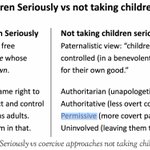
Irrespective of age, people have to do what they themselves think is right. Most people (especially children!) also want to hear others’ moral theories. Taking Children Seriously does not mean children must grow up without the guidance they want.
“[W]e are bound to fall ill if... we are unable to love.”
- Sigmund Freud, 1914, On Narcissism: An Introduction
Love and attachment are a necessary part of taking children seriously.

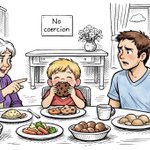
ALT Featured today on taking children seriously dot com: Love 💜 Love is: this person is amazing exactly the way they are, and they can change if they want to and they don’t have to. 💙 A commitment to figuring it out 🩵 The boy who would not be tamed 💚 The joy of special family dinners without coercion 💛 Generous-hearted solution-focused love vs “When a solution is not found, is it always the parents who must bear the brunt of the sacrifice?” 🧡 The joy of consensual parenting ❤️ The Simpsons—the ‘best teacher in the world’ vs the love of Lisa’s family ♥️ The can-do attitude versus the can’t-do attitude 🤍 A chat about Taking Children Seriously 🩷 Instead of Cry It Out, try bedtime anarchy
It might feel like a loving action to coercively stop a child doing something you find concerning, but actually you are disconnected from them, no longer creatively engaging with them. You are trying to make them into a person they don’t want to be.
Replying to @TCSparents
Even parents who hit their kids believe they're loving them. It's such a bizarre twisting of reality.
Taking Children Seriously retweeted
息子がいじめで不登校になった時、動画やゲームばかりで心配になったけど、児童精神科で、嫌な事を忘れる為だから無理にやめさせなくても良いと言われ、朝は起こしてサイクリングや川遊び等を一緒に楽しみながら、敢えて禁止せずに好きなだけさせていたら、動画から興味のある事を見付け夢中になり、→
ネット依存で子ども豹変 スマホ没収すると包丁を持って暴れる、学校をサボり出す 4700校調査で見えた実態
tokyo-np.co.jp/article/48224…
東京新聞デジタル
Parents once openly demanded obedience. Now, we no longer raise our voice, we raise our empathy. We smile softly and tell ourselves we’re listening, we’re connecting, we’re helping. Yet behind our well-meaning soft smiles and empathy, the (coercive) control remains. The difference is that now we do not call it control; we call it love.
If you are carrying around life-blighting resentment against your parents, what is that costing you?
Whatever terrible things they did, what is the impact on YOU of holding on to that resentment?
Resentment is like drinking poison and expecting the other person to die.
Taking Children Seriously retweeted
Watch your own speech for
- “he needs to…”
- “I want her to…”
- “it would be great if he…”
This will raise your awareness of your agenda for your child.
Then let it go.
If the conversations of parents or teachers are anything to go by, it seems that many adults have elaborate plans for what children should turn into, and almost none for listening to what the children actually want.
Some parents try to force their children to behave morally. But when doing the right thing is an act of forced submission rather than volition, we shouldn’t be surprised if the children lose their joy in doing right, and drop the very idea that doing right is worthwhile.
Taking Children Seriously retweeted
The eternal binary - yell at your kids or do nothing, there is no creative problem solving like what you'd do with an adult conflict.
If your family has a dynamic whose effect is that people get hurt, there is another way you could live, that would not have that property. To find that way, it is vital to stop thinking about who should get hurt (or whose fault it is), and start thinking about how to solve it. ⬇️
When it comes to chronic problems in families, there is only one thing worse than focusing on who should get hurt, and that’s focusing on whose fault it is.
takingchildrenseriously.com/…
Taking Children Seriously retweeted
“If you acquire an idea in a way that does not solve a problem but exacerbates it, then you lose for the future all information about whether it is true or false, and thus have no means of improving it.”
@FitzClaridge in 1994 takingchildrenseriously.com/…
Erm..... I am so glad no one makes me tidy up, or limits my ‘screen time’ (and thinks that despite that coercive micromanagement on their part, I am ‘free’). There is a lot of wisdom in that child’s statement that George Orwell’s 1984 is about the lives of children.
Replying to @TCSparents
Felizmente as restrições do meu filho são ter de arrumar o quarto e arrumar o tsunami que deixa por todo o lado da casa por onde passa e claro, não poder ver televisão nem estar ao telemóvel o dia todo. Fora isso, é bastante livre
Learning is a creative process through which people come to understand what they themselves want to understand, growing in directions they themelves find interesting, resolving conflicts, creating better explanations, and otherwise solving problems they themselves have noticed. Learning happens explicitly and consciously, but it also happens unconsciously, or inexplicitly. When you are learning, by your own lights you are making progress—intellectually, mentally, psychologically, emotionally, in your personality, relationships, values, and aims—even if you can’t articulate what the progress is.
What was once an explicit overriding of children’s ideas is now an emotional one—the same coercion, veiled in virtue. Parents compel in the name of compassion, but that does not loosen the bouble bind.
Parenting, n. A process by which parents industriously mould children either to resemble everyone else or to outshine them, depending on parental prejudices. Either way, the parent treats the child as a means to the parent’s ends, believing it to be ‘for the child’s own good’.
When parents decide what children should become, they stop seeing the child in front of them. The child turns into their pet building project.
What we are trying to do instead, is to understand what matters to this particular child now, and to support the child in exploring that, in achieving their own aims, in solving their own problems.