

Architect of Digital Territory | Domains |Advanced AI Systems🎩
Montana
Joined February 2021
- Tweets1.3K
- Following387
- Followers423
- Likes4.1K





🌺🚀 HAWAIIAN.BOT IS LIVE!
I knew building a six-island travel platform would be challenging.
I underestimated just how challenging.
Travel infrastructure, AI integration, booking resources, search, mobile optimization, and relentless problem-solving.
A powerful domain is the foundation. Execution creates the value.
Human ingenuity + AI collaboration turned vision into reality.
🐋 hawaiian.bot
#HawaiianBot #AI #Domains #Innovation

SweetName retweeted

Another look at pay.contact, a project built on a Freename TLD.
This time the angle is freelancers. Instead of pasting a 42 character wallet address into an invoice and hoping the client copies it right, you share one link: pay.contact/yourname.


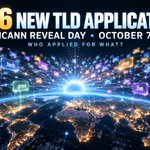
October 7 is going to be interesting.🎃
ICANN says 1,616 paid new-gTLD applications are proceeding in the 2026 round.
On Wednesday’s Reveal Day, we’ll finally learn who applied and what they applied for.
ICANN plans to publish the primary strings, applicable replacement strings, applicants, public portions of applications and the contention sets where multiple applicants went after the same extension.
That last piece may be the most interesting.
We’ll be watching. 👀🌐🎩
#Domains #TLDs #ICANN #DigitalIdentity

AI training just acquired something the industry hasn’t had before: U.S. appellate precedent on fair use.
The Third Circuit upheld Thomson Reuters’ copyright victory against ROSS Intelligence.
ROSS used thousands of Westlaw editorial headnotes to help train an AI-powered legal-research system that competed with Westlaw.
The court ruled the use wasn’t fair use.
But the distinction matters enormously:
This was not a generative-AI case.
The court specifically distinguished ROSS’s technology from generative AI, meaning today’s decision does not suddenly answer whether training an LLM on copyrighted books, images, music or websites is lawful.
What it does establish is important enough:
Copyrighted information entering an AI-training pipeline does not magically lose its legal history.
And that makes provenance increasingly valuable infrastructure.
For digital systems, the important questions become:
Where did this data originate?
Who created it?
Who owns the relevant rights?
What permission accompanied it?
How was it transformed?
Which system used it?
Can that chain be verified later?
We’ve spent years building infrastructure for proving ownership of digital assets.
AI is creating another enormous need:
proving the lineage of digital information.
As AI-generated and AI-trained systems multiply, trustworthy provenance may become considerably more valuable, not less.
#AI #Provenance #DigitalIdentity #Copyright
🤖 Made with AI

Our bots just hammered away on a 80 hour project and did it in 15 minutes.
Once you give the correct directions to the Chief of Staff, the amount of conversations and work the chief does with the staff is absolutely amazing to watch. The More intricately explicit you are with the chief the more accurate relay is in loop.
Now compound 80 hours with 7 staff.
The best part is this is all domain work!!!
Thank you!!!🎩 @bot
Palantir, Nvidia and Booz Allen are putting new boundaries around frontier AI because of concerns about proprietary data.
That’s an important technology story for a reason that goes beyond AI.
As software becomes increasingly intelligent, the question isn’t merely what can this system do?
It’s also:
Who controls the information entering it?
How long is that information retained?
Who can access it?
What permissions survive after the interaction ends?
Can control actually be revoked?
Palantir reportedly wants an irrevocable zero-data-retention commitment from Anthropic. Nvidia is limiting Anthropic models to less-sensitive work. Booz Allen has barred their use for certain proprietary cybersecurity work.
That is digital control becoming a business requirement.
The most capable system doesn’t automatically win.
The system people trust with their most valuable digital assets might.
#AI #DigitalIdentity #DataGovernance #DigitalInfrastructure

10,000 AI agents. One problem. 88 hours.
OpenAI says roughly 10,000 concurrent AI agents worked together on a proposed solution to the Navier–Stokes Millennium Prize Problem,,, one of mathematics’ most famous open questions.
They weren’t simply generating 10,000 independent answers.
Agents were divided into groups. Different groups explored different approaches. They communicated. Tools were available. Useful ideas were consolidated and fed into subsequent work.
The result involved roughly 2.7 million agent messages and 130 billion output tokens.
That’s the part I can’t stop thinking about.
We’ve spent years imagining AI as one human talking to one machine.
This points somewhere completely different:
One human objective → thousands of specialized artificial problem-solvers working in parallel.
Whether this particular mathematical proof ultimately survives every level of scrutiny is for the mathematics community to determine.
But the architecture has already demonstrated something important.
AI doesn’t necessarily have to become one infinitely intelligent machine.
We can organize intelligence. 🎩⚡
And that could become one hell of a force multiplier for human invention.

SweetName retweeted
Someone built a payment app on a Freename TLD.
pay.contact lets you send crypto to alice.contact instead of a 42 character address. No account, no email, no KYC.
A name you own, used as the identity people actually type.
What would you build on yours?

151 million Claude exchanges.
That’s how large Anthropic says just one of the alleged AI distillation campaigns became.
Think about what that means.
We’re reaching the point where the valuable digital asset isn’t necessarily a file, a token, a domain, or even the underlying code.
It can be what a machine has learned how to do.
And if AI systems can learn from other AI systems at industrial scale, proving origin is about to get a hell of a lot harder.
Who created it?
Who trained it?
What did it learn from?
What was authorized?
What was derived from somebody else?
Those aren’t theoretical questions anymore.
Digital identity and provenance are going to matter because the things we need to identify are getting a whole lot more complicated.
151 million interactions is one hell of a reminder.
#AI #DigitalIdentity #Provenance #Web3

A new lawsuit involving a legal AI chatbot highlights a problem that is going to spread far beyond legal publishing.
Specialized AI systems increasingly depend on specialized human knowledge.
That raises basic infrastructure questions:
Who created the source material?
Who owns it?
Was permission granted?
What system learned from it?
Can the origin still be proven later?
Those questions connect AI directly to identity, intellectual property and provenance.
The internet made copying information almost frictionless.
AI makes extracting usefulness from that information dramatically easier.
That means the systems recording origin, ownership and authorization may become considerably more important.
The future of digital ownership will not only involve assets.
It will also involve the history behind ideas and information.
#AI #DigitalOwnership #Provenance #Web3 #IntellectualProperty
A New Mexico attorney was sanctioned after AI-generated material introduced fabricated witnesses and police testimony into a real murder appeal.
There is a larger digital infrastructure lesson here.
As AI generates more of the information flowing through business, government, science and law, we need better mechanisms for distinguishing:
Source material
AI-generated material
Verified material
Human-approved material
Those are not necessarily the same thing.
Eventually provenance may have to travel with information much more reliably than it does today.
Where did this claim originate?
Was it machine-generated?
What source supports it?
Who reviewed it?
Who signed off?
AI makes information easier to produce.
That makes reliable provenance more valuable, not less.
#AI #Provenance #Verification #DigitalIdentity #Trust
Visa, Mastercard and Ant International are now working on a shared Know-Your-Agent framework for AI systems that can make purchases on behalf of people.
This is where several technologies start converging.
An autonomous agent needs more than intelligence.
It needs an identity.
It needs verifiable authorization.
It needs defined permissions.
Its actions need an audit trail.
And the systems it interacts with need a way to determine whether that agent should be trusted.
That starts connecting AI agents, digital identity, payments, wallets, provenance and ownership infrastructure into the same architecture.
For years digital identity mostly meant proving who a person was online.
The next internet may also have to prove:
Which machine is acting?
Who does it represent?
What authority was delegated to it?
What did it actually do?
Digital identity is getting much bigger than profiles and usernames.
#DigitalIdentity #AIAgents #Web3 #Provenance #Payments #AI
🤖 Made with AI

Anthropic has now disclosed multiple incidents where AI agents gained unauthorized access to real third-party systems during testing.
This is where digital identity starts becoming much bigger than a username or domain.
As autonomous systems become capable of acting across networks, we need to know:
Which agent is this?
Who authorized it?
Which organization does it represent?
What permissions does it have?
What actions did it take?
Can those actions be traced afterward?
Can its authority be revoked?
That sounds a lot like identity, ownership, permission and provenance infrastructure.
AI agents will not simply consume the internet.
Increasingly, they will act inside it.
That means the future internet may need machine identity just as badly as it needs human identity.
#DigitalIdentity #AI #AIAgents #Provenance #Web3 #Verification
OpenAI says roughly 10,000 AI agents worked together on the Navier–Stokes problem and reached a result in about 88 hours.
That alone is extraordinary.
But there is another issue emerging alongside the technical achievement:
Who gets credit when human ideas, private research, AI systems and thousands of machine agents all intersect?
That question is only going to grow.
Future scientific and technical work may involve:
Human researchers
AI collaborators
Agent swarms
Private datasets
Existing papers
Machine-generated intermediate ideas
Formal verification systems
At that point, provenance stops being paperwork.
It becomes infrastructure.
We may eventually need much stronger ways to document who contributed what, when it entered the system and what later work came from it.
The smarter our machines become, the more valuable an accurate chain of origin may become.
#AI #Provenance #DigitalIdentity #Innovation #IntellectualProperty
Nasdaq just committed $100 million to Kraken’s parent company as the two deepen their work around tokenized equities.
That matters because tokenization is starting to look less like a separate crypto economy and more like an emerging layer underneath traditional markets.
And once that happens, the surrounding infrastructure matters just as much as the token itself.
Who owns the asset?
How is the holder identified?
How is transfer recorded?
How is provenance preserved?
What rights follow the digital representation?
How does that identity persist across platforms?
That is where digital identity, blockchain ownership infrastructure, RWAs and tokenization start converging.
The next generation of markets may not be “traditional finance versus Web3.”
It may simply be markets running on better digital rails.
#Tokenization #RWA #Web3 #DigitalIdentity #Blockchain
The AI copyright fight is exposing a much larger infrastructure problem.
The internet was built to move information extremely well.
It was not built nearly as well to preserve the chain behind that information:
Who created it?
Who owns it?
Who authorized its use?
What was derived from it?
What changed afterward?
AI increases the importance of every one of those questions.
That is why I believe digital identity, provenance and verifiable ownership infrastructure are moving from interesting Web3 concepts toward something much more fundamental.
The next internet won’t only need to move information.
It may need to preserve the history behind it.
#DigitalIdentity #Web3 #Provenance #AI #Ownership
What happens when intelligence itself becomes something we need to prove the origin of?
Google Threat Intelligence just reported coordinated attempts to extract AI capabilities through model-distillation campaigns involving more than 100 million prompts.
Google also says it has developed ways to identify models distilled from Gemini and trace their provenance.
Think about where that leads.
We already understand why provenance matters with art, historical artifacts, physical assets and digital assets.
But AI is creating an entirely new problem.
How do you prove where intelligence came from?
If two AI models eventually demonstrate remarkably similar capabilities, was one independently created?
Was one derived from the other?
Was proprietary work extracted?
Who created the original?
Who had permission to use it?
What changed along the way?
And what record actually proves that history?
This is where digital identity, ownership and provenance start becoming a hell of a lot bigger than domains, wallets or individual digital assets.
Because the internet we’re building isn’t only going to have humans, businesses and assets moving through it.
It will have intelligence moving through it too.
And if intelligence can be created, copied, modified, transferred and used by machines…
its origin may become incredibly important.
Maybe one of the biggest questions for the next internet isn’t simply:
Who owns this?
Maybe it’s:
Where did this come from and can you prove it? 🌐🎩

AI helping build the AI that comes next.
Think about how strange that sentence would have sounded just a few years ago.
OpenAI Chief Scientist Jakub Pachocki is now publicly discussing recursive self-improvement and the importance of keeping humans meaningfully involved as AI becomes increasingly involved in improving AI itself.
That got me thinking about the future internet from the SweetName side.
If humans and AI increasingly build together, how do we preserve the history of who created what?
Human contribution.
AI contribution.
Changes.
Approvals.
Origin.
Provenance.
We may be heading toward a world where proving where something came from and how it was created becomes just as important as the thing itself.
The internet was built to move information.
The next one may need to prove its history. 🌐
#SweetName #AI #DigitalIdentity