








Securing my early spot on @cxnfts
join now↓
cxnft.world/c/sweefhty
xitter.cf/cxnfts/status/21104338…

This quoted post is unavailable.

Swift retweeted
It’s called demand.
Most times, the first listing is around $50, but when a fresh mint goes a couple of minutes without sales, people start undercutting each other. Everyone is trying to exit before they’re left holding an onchain photo worth nothing.
If there’s genuine demand, the floor will get swept regardless of the initial listing price.
Swift retweeted
Tiered XP seems to be what most people want
352 votes and 70% went with it.
Now let’s see how @jumperapp decides to reward the people who’ve been around and contributing over time.
$JUMP

For the $JUMP airdrop, which distribution model would you prefer?
What’s your pick? 👇
30%Linear: XP-based rewards
70%Tiered: XP-based tiers
352 votes • Final resultsTiered XP seems to be what most people want
352 votes and 70% went with it.
Now let’s see how @jumperapp decides to reward the people who’ve been around and contributing over time.
$JUMP
For the $JUMP airdrop, which distribution model would you prefer?
What’s your pick? 👇
30%Linear: XP-based rewards
70%Tiered: XP-based tiers
352 votes • Final results Swift retweeted
Since rice is what you want to eat for the rest of your life 😂, let me help you plan it properly.
I’ll give you a 30-day breakdown of how to make that ₦81K last.
But first, let’s look at the numbers.
Spending ₦2,700 daily on food adds up to ₦81,000 monthly.
Of course, buying food outside is convenient. No cooking, washing plates, market runs, or worrying about gas.
But if you live alone, what can ₦81K buy you in the market, and can it last an entire month?
Let’s break it down.
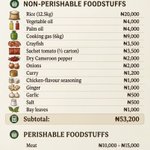
NON-PERISHABLE FOODSTUFFS
Rice (12.5kg) ~ ₦20,000
Vegetable oil ~ ₦4,000
Palm oil ~ ₦4,000
Cooking gas (6kg) ~ ₦9,000
Crayfish ~ ₦3,500
Sachet tomato (½ carton) ~ ₦3,500
Dry Cameroon pepper ~ ₦2,000
Onions ~ ₦2,000
Curry ~ ₦1,200
Chicken-flavour seasoning ~ ₦1,000
Ginger ~ ₦1,000
Garlic ~ ₦500
Salt ~ ₦500
Bay leaves ~ ₦1,000
Subtotal: ₦53,200
PERISHABLE FOODSTUFFS
Meat ~ ₦10,000–₦15,000
If you have a freezer, you can buy meat in bulk for around ₦10K. Without one, you could buy ₦1K worth every two days, spending approximately ₦15K over 30 days.
Fresh tomatoes and pepper ~ ₦10,000
With a fridge, you can buy in bulk. Without one, you’ll need to buy smaller quantities more frequently.
TOTAL: ₦73,200–₦78,200.
That leaves you with ₦2,800–₦7,800 from your ₦81K budget.
These are estimates based on the prices available to me. Actual costs will depend on your location, market prices, quantities, and storage facilities.
And this is just a basic shopping plan centred on rice. You can adjust the ingredients to suit your needs and include other affordable foods.
Now, why cook at home when buying food is more convenient?
First, you have more control over your spending. Instead of paying for every plate, you buy ingredients and prepare multiple portions.
Second, you control what goes into your food: the oil, salt, seasoning, vegetables, and protein.
Third, you can cook once and eat two or three times instead of spending money every time you’re hungry.
For someone like me who works online, I can cook late at night after work or early in the morning before getting started. That way, I have food ready without interrupting my workday.
I’m not saying buying food outside is bad. Sometimes you’re busy, tired, or simply don’t feel like cooking. In those situations, paying for convenience makes sense.
But if you have the time and facilities to cook, preparing your meals at home can help you manage your spending and plan your food better.
One important caveat: This list is heavily centred on rice. You’ll still need to make room for vegetables, beans, eggs, and other affordable protein sources to improve nutritional variety. Depending on your needs and local prices, you may have to adjust the quantities or budget accordingly.
You don’t have to choose one exclusively. Cook at home most days and buy food when you need the convenience.
If you’re living alone and trying to manage your finances, learning to cook might be one of the simplest ways to stretch your money further.


This is three spoons of rice and one beef.
Rice: ₦400 × 3 = ₦1,200
One beef = ₦300
Total = ₦1,500
At night, I eat at a nearby swallow spot. A plate of fufu/yellow eba with two beefs and one sachet of water costs ₦1,200.
Total spent in a day = ₦2,700
There are days I eat only once and days I eat more than twice, but on average, I spend about ₦2,700 daily.
₦2,700 × 30 days = ₦81,000 per month.
T I don't have to spend extra two hours going to the market to buy foodstuffs. I don't have to stress myself cooking or washing plates in the kitchen either. No need to fill gas too
Now, tell me, what can you buy with ₦81k in the market that will last you a whole month without needing to buy anything else?

Since rice is what you want to eat for the rest of your life 😂, let me help you plan it properly.
I’ll give you a 30-day breakdown of how to make that ₦81K last.
But first, let’s look at the numbers.
Spending ₦2,700 daily on food adds up to ₦81,000 monthly.
Of course, buying food outside is convenient. No cooking, washing plates, market runs, or worrying about gas.
But if you live alone, what can ₦81K buy you in the market, and can it last an entire month?
Let’s break it down.
NON-PERISHABLE FOODSTUFFS
Rice (12.5kg) ~ ₦20,000
Vegetable oil ~ ₦4,000
Palm oil ~ ₦4,000
Cooking gas (6kg) ~ ₦9,000
Crayfish ~ ₦3,500
Sachet tomato (½ carton) ~ ₦3,500
Dry Cameroon pepper ~ ₦2,000
Onions ~ ₦2,000
Curry ~ ₦1,200
Chicken-flavour seasoning ~ ₦1,000
Ginger ~ ₦1,000
Garlic ~ ₦500
Salt ~ ₦500
Bay leaves ~ ₦1,000
Subtotal: ₦53,200
PERISHABLE FOODSTUFFS
Meat ~ ₦10,000–₦15,000
If you have a freezer, you can buy meat in bulk for around ₦10K. Without one, you could buy ₦1K worth every two days, spending approximately ₦15K over 30 days.
Fresh tomatoes and pepper ~ ₦10,000
With a fridge, you can buy in bulk. Without one, you’ll need to buy smaller quantities more frequently.
TOTAL: ₦73,200–₦78,200.
That leaves you with ₦2,800–₦7,800 from your ₦81K budget.
These are estimates based on the prices available to me. Actual costs will depend on your location, market prices, quantities, and storage facilities.
And this is just a basic shopping plan centred on rice. You can adjust the ingredients to suit your needs and include other affordable foods.
Now, why cook at home when buying food is more convenient?
First, you have more control over your spending. Instead of paying for every plate, you buy ingredients and prepare multiple portions.
Second, you control what goes into your food: the oil, salt, seasoning, vegetables, and protein.
Third, you can cook once and eat two or three times instead of spending money every time you’re hungry.
For someone like me who works online, I can cook late at night after work or early in the morning before getting started. That way, I have food ready without interrupting my workday.
I’m not saying buying food outside is bad. Sometimes you’re busy, tired, or simply don’t feel like cooking. In those situations, paying for convenience makes sense.
But if you have the time and facilities to cook, preparing your meals at home can help you manage your spending and plan your food better.
One important caveat: This list is heavily centred on rice. You’ll still need to make room for vegetables, beans, eggs, and other affordable protein sources to improve nutritional variety. Depending on your needs and local prices, you may have to adjust the quantities or budget accordingly.
You don’t have to choose one exclusively. Cook at home most days and buy food when you need the convenience.
If you’re living alone and trying to manage your finances, learning to cook might be one of the simplest ways to stretch your money further.
This is three spoons of rice and one beef.
Rice: ₦400 × 3 = ₦1,200
One beef = ₦300
Total = ₦1,500
At night, I eat at a nearby swallow spot. A plate of fufu/yellow eba with two beefs and one sachet of water costs ₦1,200.
Total spent in a day = ₦2,700
There are days I eat only once and days I eat more than twice, but on average, I spend about ₦2,700 daily.
₦2,700 × 30 days = ₦81,000 per month.
T I don't have to spend extra two hours going to the market to buy foodstuffs. I don't have to stress myself cooking or washing plates in the kitchen either. No need to fill gas too
Now, tell me, what can you buy with ₦81k in the market that will last you a whole month without needing to buy anything else?
The demand on @FungoLabs is far more than the supply.
Try your luck here.


Swift retweeted
At a point I thought I was sidelined
But Wait a minute !
Where is our $FRAME airdrop ?💀
Damn😅



Swift retweeted

If you jump lasan, na inside gutter straight.
This should fetch me 3 figs.
Couldn’t jump further because I’m a 10😌
Top 2.7m is no easy feat
Make the $jump Guys

