

Build your own automated, data driven portfolio.
Joined April 2021
- Tweets6.9K
- Following32
- Followers6.7K
- Likes2.9K





Elon Musk says he will give one SpaceX ($SPCX) share to every kid in America next year.
That's about 73 million shares. At Monday's close of $147.96, roughly $10.8 billion.
WHAT HAPPENED
Musk posted on X on Monday: "Next year, I will give one of my SpaceX shares to every kid in America." He added it would be "the first of many."
THE NUMBERS
👶 About 73M Americans under 18 (Census)
💰 About $10.8B at $147.96 a share
📊 Roughly 1.2% of Musk's $908.5B net worth
📈 $SPCX: $135 IPO in June, $211.39 high close, $147.96 now
THE LIKELY ROUTE
Musk hinted at Trump Accounts, the new accounts for kids that launched July 4. Kids born 2025 to 2028 get a $1,000 seed from the Treasury. The money has to sit in low-cost funds that track broad US stock indexes, families can add up to $5,000 a year, and nothing comes out before age 18.
THE CATCH
So far there is only a post. No formal plan has been announced. Nobody knows yet who qualifies, how kids would claim a share, or when they could sell. Donated shares in these accounts can't be sold for 5 years.
THE TAKEAWAY
The accounts are really a set of rules: own the broad market, add on a schedule, wait. A single stock swings a lot (SpaceX has moved more than 30% since June). Rules are what keep a plan steady while the headlines move.
SpaceX reports earnings tonight after the close. Would you rather your kid get one SpaceX share, or $148 in an S&P 500 index fund?
Like the idea of investing by rules instead of headlines? Browse automated, rules-based strategies you can run in a brokerage account you already have: surmount.ai/strategies?utm_s…
Not investment advice.

Tesla ($TSLA) and SpaceX ($SPCX) both report earnings this week. One well-known Tesla bull thinks the bigger news comes after.
Gary Black of Future Fund posted that he expects SpaceX to announce it is buying Tesla for $420 a share, paid in SpaceX stock, in the "next few weeks."
WHAT HAPPENED
Last Thursday Tesla showed its new Roadster in a livestream that Elon Musk shared with the caption "Tesla x SpaceX." Black wrote that the event's purpose was to make the case for a merger.
Neither company has announced anything. This is one investor's guess.
THE NUMBERS
🚀 $SPCX closed at $146.03 on Oct 16, vs a $135 IPO price in June
🚗 $TSLA closed at $354.72 on Oct 16, down 21% this year
🎯 $420 would be about 18% above Tesla's Friday close
📊 SpaceX last quarter: $7.8B revenue (up 92%), $541M net loss
📅 SpaceX reports Tuesday after the close. Tesla reports Wednesday after the close.
WHY IT MATTERS
A deal paid in stock would turn Tesla shareholders into SpaceX shareholders. Headlines like this can move both stocks before anything is confirmed, and Black himself says he is still cautious on Tesla's valuation.
THE TAKEAWAY
Rumors make great headlines and poor plans. Systematic investors set their rules (what to own, how much, when to sell) before the news, so one post on X does not rewrite the portfolio.
Would you rather own Tesla on its own, or as part of SpaceX?

Surmount Markets breaks down both earnings reports in plain English this Friday. Free:
surmount-investing.beehiiv.c…
Not investment advice.

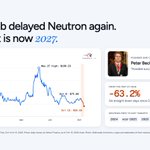
Rocket Lab ($RKLB) just pushed its Neutron rocket to 2027. That's the fourth delay since 2021, and the stock has closed lower six days in a row.
WHAT HAPPENED
On Oct 14, Rocket Lab said Neutron's first flight won't happen until 2027. Engineers found microscopic air voids in the first stage's propellant dome, so a new dome is being built and inspected before the end of Q1.
CEO Peter Beck: "Possible success isn't our standard."
THE SLIPS
🚀 2021: Neutron unveiled, targeting 2024
📅 Then mid 2025
📅 Then 2026
📅 Then Q4 2026, after a tank ruptured in testing in January
⏳ Now 2027
THE NUMBERS
📉 $75.06 on Oct 6 to $55.25 on Oct 15 (-26.4%)
📉 63.2% below its May 27 close of $150.23
📉 About 21% lower this year
WHY IT MATTERS
Neutron is Rocket Lab's bigger rocket, built to take on SpaceX for larger launches. Story stocks often trade on their next big milestone, and this one just moved out again.
THE TAKEAWAY
When one high-conviction stock is a big slice of your portfolio, a single engineering update can set the pace for everything you own. Rules for position size and rebalancing make that call before the headline does.
Would a fourth delay change how much of a story stock you'd hold?

Peter Beck on Neutron, from Bloomberg in August, before this delay: youtube.com/watch?v=CUZ49csv…
Prefer rules you set ahead of time? Run automated, rules-based strategies in the brokerage you already use with Surmount: surmount.ai/strategies?utm_s…
Not investment advice.
Surmount retweeted

Most investing apps either tell you what to buy or make you manage everything yourself.
@surmountinvest sits somewhere in between.
Pick a strategy. Connect your brokerage.
Let the rules handle execution, rebalancing, and position management automatically.
You stay in control. The repetitive work does not.

Michael Burry shorted Micron (solana:MUxEsUKSMACyw5fZf68wxf5FLnZVhtU9CwH8uNNGay1 ) at $1,051.87 in July.
Yesterday it closed at $914.13, down 13% from his entry.
Plot twist: he wasn't holding that short anymore. Here's what the Big Short guy did instead 👇
WHAT HAPPENED
📅 Jul 1: Burry tells his Substack readers he shorted Micron at $1,051.87
📅 Sep 28: He covers the short and swaps it for put options with strikes around $500, expiring in June. Micron closed at $1,053.98 that day, so the short itself ended roughly flat.
📅 Oct 11: In a post called "Consolidating the Big Short," he rolls most of his bets into puts on the Nasdaq-100 and the VanEck Semiconductor ETF ($SMH)
📉 Meanwhile, Micron fell 16% in five trading days, from $1,088.00 on Oct 7 to $914.13 on Oct 14
Quick translation: a short profits if a stock falls, with no deadline. A put is a contract that pays off if the stock falls below a set price (the strike) before it expires. Puts cap what you can lose at the price you paid, but the clock is always running.
WHY BURRY IS BEARISH
He argued memory chips are a boom and bust business: Micron has had 34 drawdowns of more than 30% in 42 years. He also pointed to the stock trading further above its 200 day average than at any point since 1984.
THE OTHER SIDE
Micron just reported record quarterly revenue of $54.23B and guided to about $61.5B for the next quarter. Management has said demand is running well above what it can supply through 2028.
And his Micron puts were struck around $500, about 45% below Wednesday's close.
WHY IT MATTERS
The most famous short seller on Wall Street went from betting on single names to betting mostly on baskets: the Nasdaq-100 and a chip ETF where Micron is about 5% of the holdings. He still kept a few single name puts, including Oracle and Palantir.
When he first swapped to puts, he said he was "moving timelines up" and wanted more leverage. Whatever the reason, a single stock bet asks you to be right three times: on the company, the price, and the timing. A basket only asks you to be right about the group.
THE TAKEAWAY
Systematic investors make these choices before the headline hits: how much goes into any one name, when a position gets cut, and when to spread risk across a basket instead. Rules don't make you right, but they keep one stock from deciding your whole year.
One stock or the whole basket: which would you rather be right about? 👇

Prefer rules over hunches? Browse automated, rules-based strategies that run on the brokerage you already use: surmount.ai/strategies?utm_s…
Not investment advice.
Berkshire Hathaway just bought $330M more of Bending Spoons ($BSP), the company behind Evernote, Vimeo and AOL.
It paid $33 a share. Tuesday's close: $37.86.
By midday, the stock was up about 35%. Here's the deal, the catch, and what it means for everyday investors.
WHAT HAPPENED
Berkshire is buying 10 million new shares directly from Bending Spoons in a private placement at $33 each. It already put $600M into the company's July IPO at $29 a share. Together that's about $930M and a roughly 4% stake.
It's also a window into Berkshire under Greg Abel, who took over as CEO from Warren Buffett at the start of this year. Reuters notes Berkshire has been adding tech exposure under Abel.
THE NUMBERS
💰 $330M new investment, 10M shares at $33
📄 $600M invested at the July IPO ($29/share)
🎯 About 4% total ownership
📉 -40%: BSP's slide from its Aug 11 close ($53.44) to its Oct 2 close ($32.03)
📈 About $51 intraday today vs. Berkshire's $33
WHAT BENDING SPOONS DOES
It buys established apps that have stalled (Evernote, WeTransfer, Vimeo, Eventbrite, AOL), cuts costs, rebuilds them, and puts the cash toward the next acquisition. So far it keeps what it buys instead of reselling.
Revenue grew 126% last quarter, mostly from acquisitions. Organic growth (from businesses it already owned) was 3%. The company says Berkshire's cash adds flexibility for more deals, and it agreed to buy Miro for $1.36B in September.
THE CAVEAT
After today's jump, The Motley Fool puts BSP at more than 16x sales and 130x earnings. Net debt was about $4.1B at the end of Q2, and BofA rates the stock Underperform. Famous investors can be wrong, and one big buy doesn't predict future returns.
THE TAKEAWAY
Berkshire got its shares at $33 in a private deal the public couldn't join. Anyone buying after today's headline paid roughly 55% more.
When a famous investor's move becomes news, the price can move before most people can act. That's why systematic investors decide their rules ahead of time: what to buy, when, and how much, so a headline doesn't make the decision for them.
Would you buy a stock right after a famous investor does, or wait for the dust to settle?
Want your portfolio to follow rules you set ahead of time? Browse automated, data-driven strategies on the Surmount marketplace: surmount.ai/strategies?utm_s…
Not investment advice.
JPMorgan Chase ($JPM) just missed Wall Street's earnings estimates for the first time in nearly three years.
The stock slid about 3% before the open, then turned green.
But the number we can't stop looking at: Jamie Dimon cut JPMorgan's stock buybacks by roughly 84%.
WHAT HAPPENED
The largest US bank reported Q3 2026 results this morning:
💰 Profit: $15.3B, up 6% from a year ago
📄 EPS: $5.57 vs. $5.90 expected
📉 Without a $658M loss on its bond portfolio: $5.75, still short
📈 Revenue: $50.9B, up 8%, just under the ~$51.3B estimate
Before today, JPM had beaten EPS estimates in 16 of its last 20 quarters.
THE BUYBACK CUT
A buyback is when a company spends its cash buying its own shares. Fewer shares outstanding means each remaining share owns a slightly bigger slice of the profits.
🔁 Q2 2026: ~$6.8B of buybacks
🔁 Q3 2026: ~$1.1B
On the earnings call, Dimon said the bank has roughly $30B of extra capital, and that lending and investing it should earn more over time than buying JPM stock at about a 6% earnings yield. The CFO called it keeping "dry powder."
Quick translation: earnings yield = yearly profit ÷ share price. It's the return the business earns on what you'd pay for it today.
WHY IT STANDS OUT
The person who knows JPMorgan best decided his own stock isn't the best home for the bank's spare cash at this price. He also flagged sticky inflation, rising rates and high asset prices as risks shifting "under the surface."
THE CAVEAT
Dimon has called JPM stock pricey before, and shares kept climbing for long stretches after. A CEO's view on valuation is one data point, not a forecast.
THE TAKEAWAY
JPMorgan spends capital in a set order: dividend first, then growth, then buybacks only when the price clears the bar. Same rules every quarter. This quarter the price changed, so the answer did too.
That's the idea behind systematic, rules-based investing: set your criteria before the headline lands, and let the data decide.
If you were running JPMorgan with $30B to spare, would you buy back the stock or put it to work elsewhere? 👇

JPMorgan runs its cash by a set of rules. You can run your portfolio the same way: browse automated, rules-based strategies and connect them to the brokerage account you already have.
surmount.ai/strategies?utm_s…
Not investment advice.
Micron ($MU) just closed under $1,000 for the first time since mid-September.
The memory chip maker has roughly tripled this year. Today it fell 3.9% after a Chinese rival announced a chip breakthrough. And on Friday, Micron revealed the biggest stock buyback authorization in its history.
WHAT HAPPENED
China's ChangXin Memory Technologies (CXMT) says it has made progress on a new memory chip design that packs more data into the same space. It plans to launch a server memory product built on it by the end of 2026.
Memory stocks sold off across the board. Micron, SK Hynix and SanDisk all fell.
THE NUMBERS
📉 $989.04 close today, -3.88%
📈 +444.6% over the past 52 weeks
🏢 $1.12 trillion market value
💰 $35.16B buyback authorization, the largest in Micron's history (it kicks in Dec 9)
🇨🇳 CXMT's share of global DRAM: 10% in Q2 2026, up from 4% a year earlier
WHY IT MATTERS
Micron makes the memory chips AI data centers can't get enough of. Supply has been tight, so prices and profits jumped: about $85B in net income over the last 12 months on $133B of revenue.
That's also why investors watch China so closely. Memory has a long history as a boom and bust business. When new supply shows up, prices can fall fast. A credible new competitor is the bear case in one headline.
THE OTHER SIDE
Analysts point out that CXMT still has to scale production and get its chips approved by big customers, which takes time. And Micron's own DRAM market share actually rose over the same year, from 22% to 24%.
THE SWINGS
In the last 49 trading days, Micron moved 4% or more in a single day 13 times. That's roughly one big swing every 4 trading days.
THE TAKEAWAY
When a stock can gain 444% in a year and still drop 4% on one headline, the hardest part of investing is usually deciding in advance what you'll do. Rules-based strategies write those decisions down before the headline hits: when to buy, when to trim, and how big any single position is allowed to get.
WHAT'S NEXT
TSMC reports earnings Thursday, an early read on AI chip demand.
Are you holding memory stocks through the swings, or did you take profits?

Prefer rules over headlines? Browse automated, rules-based strategies you can run on your existing brokerage account:
surmount.ai/strategies?utm_s…
Not investment advice.
SpaceX ($SPCX) is coming for your phone plan.
One spectrum deal, and AT&T ($T), Verizon ($VZ) and T-Mobile ($TMUS) dropped between 9% and 13% by midday Friday. T-Mobile hit a new 52-week low.
WHAT HAPPENED
On Thursday, SpaceX agreed to buy a nationwide block of 800 MHz "low-band" spectrum from Grain Management. The Wall Street Journal put the price at about $8 billion in cash. The deal still needs FCC approval.
Plain English: spectrum is the set of radio frequencies your phone uses. Low-band signals travel far and pass through walls, which has been the weak spot of Starlink's satellite-to-phone service. Musk called it the final piece SpaceX needs for full phone coverage across America.
THE MOVES (midday, Oct 9)
📉 T-Mobile: -12.6% to $149.75
📉 AT&T: -10.0% to $22.15
📉 Verizon: -9.6% to $41.28
📈 SpaceX: +1.8% to $163.40
📡 Cell tower stocks American Tower and Crown Castle rose, since a SpaceX ground network would need towers
WHY IT STANDS OUT
Telecoms are the classic "sleep well at night" stocks: steady subscribers, big dividends, low volatility. Verizon's beta is just 0.25. A company that wasn't public until June knocked all three down in one session.
Two caveats. AT&T and Verizon went ex-dividend today, so a slice of their drop is the dividend coming out of the price. And the bear case on SpaceX is real: Verizon says spectrum doesn't matter without a network to use it, and JPMorgan thinks SpaceX may need to build an expensive ground network to truly compete.
THE SPACEX ROLLERCOASTER
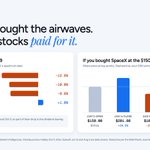
If you bought SpaceX at its $150 public open on June 12:
🚀 June 16: up 34.5%
🕳️ Aug 5: down 27.8%
📍 Today: up about 9%
Retail traders turned net sellers for the first time on Aug 7, just as the stock climbed back toward its $135 IPO price (Vanda Research). It's up about 23% since that day's close. Hindsight is easy. Living through a 46% peak-to-trough drop in seven weeks is harder.
WHAT'S NEXT
📅 FCC review of the deal
📅 Earnings: AT&T Oct 21, Verizon Oct 26, T-Mobile Oct 28
📅 More SpaceX lockup shares unlock after its Q3 report
THE TAKEAWAY
One headline hit both ends of the risk spectrum this week: "safe" stocks repriced overnight, and the hottest IPO of the year swung wildly in both directions. Neither is easy to manage on gut feel in real time. That's why systematic investors set their position sizes, diversification and rebalancing rules before the headline hits.
Would you switch your phone plan to Starlink Mobile if it launched in your area?

Want your portfolio to run on rules instead of headlines? Browse automated, rules-based strategies you can connect to a brokerage you already use:
surmount.ai/strategies?utm_s…
Not investment advice.
Nvidia ($NVDA) paid $17 billion for Groq's AI chip technology and most of its leadership team.
And yet, Nvidia never acquired Groq.
Now the Justice Department is reportedly investigating whether the deal was structured to avoid antitrust review.
Here's what happened:
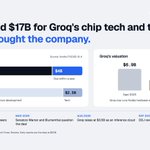
In December 2025, Nvidia signed a "non-exclusive" licensing deal for Groq's AI inference chip technology. It also hired Groq founder Jonathan Ross, president Sunny Madra and a group of engineers.
Early reports put the price at $20 billion. Nvidia's 10-K shows the real number: $13 billion paid at closing, plus $4 billion due within a year.
Of that $17 billion, $14.4 billion was booked as goodwill, mostly tied to the team and future development.
Because it was structured as a license plus hires, the deal was never submitted for the premerger review that large acquisitions usually face.
Meanwhile, Groq's valuation fell from $6.9 billion in September 2025 to $3.5 billion in August 2026.
Groq was once one of the best-known challengers to Nvidia in AI inference, the part of AI that answers your prompts. Today, it operates as an Nvidia Cloud Partner running Nvidia hardware.
To put this in perspective, Nvidia brought in $96.2 billion in revenue last quarter. The entire Groq deal was less than 18% of that.
This is the "acquihire" playbook: license the tech, hire the team, leave the company standing. Microsoft used it with Inflection. Google used it with Character.AI. Meta used it with Scale AI.
Senators Warren and Blumenthal questioned the deal in March. The DOJ has since sent Nvidia a formal request for information, and reports suggest a fine is more likely than unwinding the deal.
So what does this mean for investors?
Headlines said $20 billion. The filing said $17 billion. The verified number often arrives after the first headline.
That gap is why systematic investors build their rules on filings and verified data, decided before the news hits.
Nvidia reports Q3 earnings next, expected around November 18.
Should license-and-hire deals face the same review as acquisitions?

Stories like this, decoded in plain English every Friday. Get the Surmount Markets newsletter, free: surmount-investing.beehiiv.c…
Not investment advice.