

The definitive platform for elite human performance, longevity, and health optimization.
Joined October 2025
- Tweets173
- Following45
- Followers1.6K
- Likes29


Pinned Tweet
More than $21 billion has flowed into longevity. The bigger question now is what actually holds up.
Today, Super Human Network and @BCG launch The Longevity Review 2026, a new annual benchmark built to give the field a clearer reference point.
The report looks at what research supports, what remains unproven, where capital is flowing, and what people around the world actually understand and want.
It combines global research and investment data, BCG consumer research across 19 countries, and perspectives from 14 leading experts, including @davidasinclair, @aubreydegrey, @daveasprey, Andrea Maier and Kayla Barnes-Lentz.
So where does longevity actually stand in 2026?
Download The Longevity Review 2026 at longevityannual.com.

Super Human Network retweeted

Interesting insights into the global longevity zeitgeist @BCG


More than $21 billion has flowed into longevity. The bigger question now is what actually holds up.
Today, Super Human Network and @BCG launch The Longevity Review 2026, a new annual benchmark built to give the field a clearer reference point.
The report looks at what research supports, what remains unproven, where capital is flowing, and what people around the world actually understand and want.
It combines global research and investment data, BCG consumer research across 19 countries, and perspectives from 14 leading experts, including @davidasinclair, @aubreydegrey, @daveasprey, Andrea Maier and Kayla Barnes-Lentz.
So where does longevity actually stand in 2026?
Download The Longevity Review 2026 at longevityannual.com.
Super Human Network retweeted
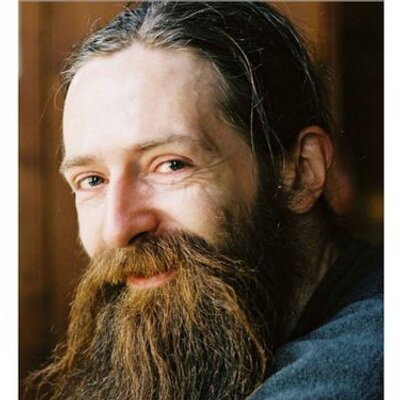
Happy to be featured as one of 14 experts in the first edition of The Longevity Review - a new annual global benchmark developed by Super Human Network and Boston Consulting Group. Check it out!
More than $21 billion has flowed into longevity. The bigger question now is what actually holds up.
Today, Super Human Network and @BCG launch The Longevity Review 2026, a new annual benchmark built to give the field a clearer reference point.
The report looks at what research supports, what remains unproven, where capital is flowing, and what people around the world actually understand and want.
It combines global research and investment data, BCG consumer research across 19 countries, and perspectives from 14 leading experts, including @davidasinclair, @aubreydegrey, @daveasprey, Andrea Maier and Kayla Barnes-Lentz.
So where does longevity actually stand in 2026?
Download The Longevity Review 2026 at longevityannual.com.
Longevity clinics are trying to change how we age before disease shows up.
At Super Human Summit 2026, Dr. Andrea Maier broke down what she thinks these clinics should actually be doing.
Her point was that a longevity clinic shouldn’t feel like a menu where you walk in and choose whatever treatment or intervention happens to be popular.
Instead, the first step should be understanding how your body is aging in much more detail.
Maier says we can increasingly look at the biological age of different systems, including the brain, heart and muscles, and then ask why one area may be aging faster or slower than another.
Rather than treating “biological age” as one single number, the goal becomes figuring out where the weak points are, what may be driving them, and what kind of intervention actually makes sense for that specific person.
That’s what she sees as the real promise of longevity medicine: better diagnostics first, more personalized decisions second.
And once you have that information, she argues, the focus can shift from simply reacting to disease toward actually trying to improve how someone is aging over time.
It’s a very different model of healthcare, and one that could make longevity feel a lot more practical than futuristic.
The full conversation goes even further, with Andrea Maier, Matthew Scholz, Todd McAllister and Phil Newman breaking down what longevity medicine could actually look like over the next decade. youtu.be/M9V74XGa-Qo
The next leap in aging may require us to rewrite the code of life.
Matthew Scholz, CEO of Oisín Biotechnologies, has spent years working at the intersection of gene therapy, biotech and aging.
He said the first therapy his team built took about a decade to go from an idea to the vein of a patient. At the time, there were no approved gene or cell therapies at all.
Now, there are several thousand in clinical development.
That’s a massive shift in a relatively short period of time.
Scholz believes meaningfully improving healthspan and lifespan may eventually require genetic approaches, with gene therapy and synthetic biology opening doors that simply didn’t exist before.
For most of human history, changing the “code of life” was effectively impossible. That’s starting to change.
And that’s what makes this so interesting: the conversation is moving from managing aging to asking whether we can intervene much deeper in the biology itself.
As Scholz put it: “We’ll build things that we can’t understand today.”
At Super Human Summit 2026, Matthew Scholz joined Andrea Maier, Todd McAllister and moderator Phil Newman for a wide-ranging conversation on what longevity looks like beyond the hype, from personalized diagnostics and gene therapy to scaling access and where the field may be headed next.
If you want a clearer picture of what’s actually real in longevity right now, this is one worth watching. youtu.be/M9V74XGa-Qo
Alzheimer’s could become a $1 trillion-a-year problem in the U.S. The science trying to change that is getting much more ambitious.
At Super Human Summit 2026 in Stockholm, @juliankissa sat down with @bettslacroix of Retro Biosciences to talk about aging, Alzheimer’s, and where longevity research could go next.
One area @RetroBio_ is exploring involves Yamanaka factors, proteins that can reprogram cells and, when used partially, are being studied for their potential to push older cells toward a younger state.
Joe says Retro developed new versions that were about 50X more efficient at reprogramming than the natural versions they tested, with stronger results in some of their aging-reversal assays.
That doesn’t mean Alzheimer’s is solved.
But if scientists get better at understanding and changing the biology of aging itself, the way we approach diseases like Alzheimer’s could look very different in the years ahead.
Watch the full conversation from Super Human Summit 2026! youtu.be/M9V74XGa-Qo
This machine makes your muscles work harder without simply adding more reps.
At Super Human Summit 2026, we caught up with the @technogym team to see its Biostrength system in action.
In this demo, he pulls 62 kg, then resists 81 kg on the return using Eccentric Overload.
The idea is that instead of keeping resistance the same through the entire rep, the machine increases the load during the eccentric phase, when your muscles are capable of handling more.
It’s a smart example of where strength training is heading: more personalized, more precise, and built around how the body actually moves.
The biggest winners in longevity may not be worth billions... but trillions.
And there may be more than one.
At Super Human Summit 2026 in Stockholm, @bettslacroix told @juliankissa that Alzheimer’s alone could eventually cost the U.S. around $1 trillion per year if we don’t find much better ways to treat it.
And his point goes far beyond one disease.
Joe argues that the diseases tied to aging account for roughly 85% of what we spend medicine on, which is why he believes the companies that meaningfully change how we age could become some of the most valuable in the world.
The ambition isn’t simply to help people live longer on paper. It’s to add more years where people are still healthy, independent, and actually able to enjoy their lives.
His team is aiming at 10 additional years of healthy human lifespan, and Joe believes breakthroughs at that scale could eventually support multiple trillion-dollar companies.
That may sound enormous, but so is the burden they’re trying to solve.
Watch their full conversation from Super Human Summit 2026! youtu.be/Aj6pvAxWJyA
“I’m human. I wouldn’t say I’m superhuman yet.”
We caught up with Retro Biosciences founder @bettslacroix at Super Human Summit 2026, where he joked that he does have one enhancement: a chip implanted in his hand that opens the doors to Retro’s labs.
From there, the conversation turned to a much bigger kind of human enhancement: longevity.
Joe believes scientists are getting better at identifying mechanisms of aging that can actually be targeted. And when we asked whether humans could one day live to 150, his answer was striking: he sees no technological reason why it shouldn’t be possible.
Retro is working toward adding 10 healthy years to human life, including using AI to design new proteins for cellular reprogramming.
We may not be “superhuman” yet. But the definition could look very different a few decades from now.
Watch Joe's full conversation with Julian Issa from Super Human Summit 2026 in Stockholm: youtu.be/Aj6pvAxWJyA
The trillion-dollar race to crack aging has already begun.
At Super Human Summit 2026 in Stockholm, @juliankissa sat down with @bettslacroix to talk about where longevity is actually heading — beyond the hype.
Joe pointed to a brutal reality in drug development: roughly 9 out of 10 drugs entering clinical trials fail. His belief is that AI could eventually help us understand biology well enough to identify better treatments much earlier, instead of spending years guessing what might work.
His team is already experimenting with that idea, using AI to design new proteins that were about 50X more efficient at reprogramming cells than the natural versions they tested against.
The larger goal is even bigger: add 10 healthy years to human life.
And when you consider how much of modern healthcare spending is tied to diseases of aging, Joe believes breakthroughs at that scale could eventually support multiple trillion-dollar companies.

The full conversation with Joe Betts-LaCroix and Julian Issa from Super Human Summit 2026 is now available to watch! Don't miss it. youtu.be/Aj6pvAxWJyA
Super Human Network retweeted

This longevity scientist raised $180 million from Sam Altman to build a company focused on extending human life.
After finishing one of his latest interviews, I collected 9 findings he exposed that left me shocked:
1. Humans are naturally built to avoid exercise:
Researchers just reversed a type of protein damage that builds up as we age.
Researchers from Revel Pharmaceuticals, Calico Life Sciences and the University of Colorado engineered an enzyme called CMLase to remove CML — a type of age-related chemical damage that accumulates on proteins over decades and is linked with inflammation and tissue dysfunction.
To build it, the team screened and evolved more than 500 million enzyme variants until they created one capable of removing CML and restoring the protein’s original lysine.
Then they tested it on actual aged human tissue.
CMLase reduced CML by more than 70% in elderly arterial tissue and more than 55% in older human skin. It also removed accumulated damage from proteins taken from a 64-year-old human lens.
That’s important because most approaches to this type of damage have focused on preventing more from forming. This study suggests that some damage already accumulated over decades may actually be repairable.
There’s a huge caveat: these experiments were performed outside the body, not in living people. We don’t yet know whether CMLase can be safely delivered into humans or whether removing this damage will improve health or lifespan.
But as a proof of concept, it challenges a pretty fundamental assumption about aging: some molecular damage we thought was permanent may not have to be.
Study: Trabosh et al., Nature Communications (2026).

Microplastics were detected in the coronary blood of 84% of heart attack patients in a new study.
Researchers in Italy studied 61 people undergoing coronary angiography, including 19 patients experiencing a STEMI heart attack, 20 with chronic coronary disease, and 22 with normal coronary arteries.
Micro- and nanoplastics were found in:
- 84% of heart attack patients
- 40% of chronic coronary disease patients
- 32% of people with normal coronary arteries
Heart attack patients also had higher concentrations and a greater variety of plastic particles in their blood. Polyethylene was the most commonly detected polymer.
Researchers found that concentrations were actually higher in blood taken from the coronary circulation — the blood supply of the heart — than in peripheral blood.
Smoking and higher exposure to fine-particle air pollution were also associated with greater detection of microplastics, while the heart attack group showed higher levels of inflammatory markers.
But there’s an important limitation: this was a small, cross-sectional study, so it cannot show that microplastics caused the heart attacks.
What it does show is that these particles are reaching the circulation around the heart — and researchers now want to understand whether they could play a role in inflammation and cardiovascular disease.
Study: Paolisso et al., European Heart Journal (2026).

How long could we theoretically live if diseases and aging damage were eliminated?
Their answer: a median lifespan of roughly 146–194 years.
Researchers at the Skolkovo Institute of Science and Technology and the Artificial Intelligence Research Institute focused on somatic mutations — random DNA errors that build up inside our cells over time.
Without that genetic damage, one version of their model produced a median lifespan of 1,759 years.
But once somatic mutations were added back in, lifespan dropped dramatically.
The biggest bottlenecks were the brain and heart, where many important cells divide rarely or not at all, allowing DNA damage to keep accumulating.
That doesn’t mean humans can currently live to 194, or that 194 is a proven biological limit.
It suggests that even if medicine someday controls most age-related disease, repairing DNA damage in long-lived cells may become one of the next major barriers to extreme longevity.
Study: Efimov et al., Somatic mutations impose an entropic upper bound on human lifespan, npj Aging (2026).
