
Cancer, Conflict and Global Health
United Kingdom
Joined May 2015
- Tweets1.4K
- Following429
- Followers3K
- Likes3.9K



Further work on Syria and r4hsss.org program - stregthening cancer systems in post conflict Syria frontiersin.org/journals/can…
Richard Sullivan retweeted

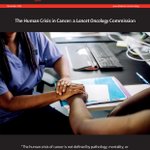
An engaging #ASCO26 session: A Workforce Crisis—A Lancet Oncology Commission
Authors @hedvighricak, @QUBCancerProf, @SullivanProf, @sudhasdc, @m_mutebi, @Dra_CVillarreal, @WilNgwa +
Missed the session?
📽️ Watch: youtu.be/VYr2Bjmxyhg
&
📖 Read: thelancet.com/commissions-do…


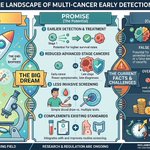
A final word on GRAiL in JAMA - promise, hype and reality - academia.edu/167998188/Multi… @ASCO @myESMO

Richard Sullivan retweeted

Addressing the “Intellectual Wastelands” of Global Cancer Policy - Richard Sullivan
@SullivanProf
oncodaily.com/voices/richard…
#OncoDaily #Oncology #Cancer #Health #Medicine #MedX #MedTwitter

Richard Sullivan retweeted

While civilian injuries in the the Middle East have been widely documented, little is known about civilian trauma pathways. Read our latest in @GlobalHealthBMJ with @GhassanAbuSitt1, @abdulsaterz, @SullivanProf, @gmbowsher, @thewarspace among others.
gh.bmj.com/content/11/5/e021…

Complexities of rebuilding breast cancer care in post-conflict Syria. Critical lessons for the wider world. academia.edu/166153347/Rebui… @R4HSSS @r4hcmena @BreastDocUK @BCCare @SusanGKomen

Brilliant. And absolutely spot on. blogs.bmj.com/bmj/2015/12/11… @RCSEd @IGSS_InciSioN @QueensGlobalOnc

Richard Sullivan retweeted

Quite simply, a brilliantly written review on Chinese Pharma - From 2015 to 2024, over 393 cancer medicines were approved worldwide, 72 were China's branded new medicines. eg; zanubrut, tisleliz, avaprit, toripali, fruquin. @SullivanProf @kjmeetswrld
ascopubs.org/doi/10.1200/GO-…

Richard Sullivan retweeted
What are the immediate and long-term implications of war for cancer care? Our editorial in @bmjoncology explores this question through lessons from Ukraine. With @gmbowsher, @SullivanProf, and Kateryna Denysenko: bmjoncology.bmj.com/content/…

Richard Sullivan retweeted

Our new article about @WHO essential cancer medicines published today in JAMA Oncology with @SullivanProf
We ask: how to implement these medicines?
jamanetwork.com/journals/jam…

Final report from cancer conference organised by the Pontifical Academy of Sciences and the European Academy of Cancer Sciences, held in Vatican City in 2025 pubmed.ncbi.nlm.nih.gov/4139…

Disparity in affordability across targeted and Immune-therapy cancer medicines used in the treatment of Head and Neck cancer doi.org/10.1002/hed.70212

Huge gaps in our understanding of cancer care in refugee and asylum populations. academia.edu/164818349/Cance… @QF @WHO

Richard Sullivan retweeted
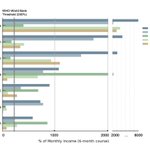
New Correspondence in @TheLancet Cancer medicines remain absent from global access metrics.
#accesstomedicines #globaloncology
@SullivanProf @LSEHealthPolicy @KingsCollegeLon

Report from the Pontifical Academy of Sciences & European Academy of Cancer Sciences meeting held in Vatican City. A complex picture of innovation, global inequity & increasing divergence between science & systems implementation. pubmed.ncbi.nlm.nih.gov/4139… @WHO @EU_Commission

The stark realities of healthcare for displaced people. As conflict's worsen so too does the problem. Yet we are seeing societal attitudes worsen and protection increasingly eroded. thelancet.com/journals/lance…
Richard Sullivan retweeted

Important work by @DavidiTawfiles & our team in @TheLancet: "#Health #equity and displaced people: challenges, progress, and the path forward."
🌍🌎🌏This #InternationalMigrantsDay, heath of those most vulnerable should be a global priority
🔗 thelancet.com/journals/lance…


With #InternationalMigrantDay tomorrow, I’m honored to share our latest in @TheLancet “Health equity and displaced people: challenges, progress, and the path forward.”
thelancet.com/journals/lance…
Grateful to our team for their insight and commitment to the health of displaced.

Global health, security and war and cancer across SSA. wiley.com/en-us/Handbook+of+…

New insights from Access Cancer Care India program (accesscancercare.in/) - the poverty of national cancer plan implimentation. See doi:10.1136/
bmjopen-2025-10875 @WHO
Op ed led by Dr Steven Bradley examining how a new England National Cancer Plan could and should embrace wider vision of innovation doi.org/10.1136/bmj.r2263