
Founder of Skyvern (https://xitter.cf/t.co/aRwSa7swlf)
Joined July 2024
- Tweets2.8K
- Following112
- Followers482
- Likes622








Pinned Tweet
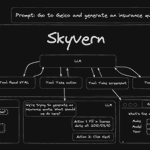
1/ We just raised $2.7M to give AI "hands" to do real work. 🚀
Browser automation has been broken for 20 years. If a button moves 10 pixels, your script breaks.
Meet Skyvern: The open-source agent that fixes the "maintenance tax" of automation.


We did a version of this with our recipes. Every recipe had a “Book a Demo” button. It took us 5 minutes to ship it, and we measured which recipe people wanted to interact with
That gave us concrete signals to help decide what we should build next
So someone had a crazy idea: What if we launched that feature behind a waitlist? Let's not build anything, just put a button that says "Join waitlist" Put the integrations you want to support in the UI.
You can start learning before you start building.
How to test ideas without building a complex feature
One of our customers desperately wanted us to build a new integration out
But we weren't sure if other customers want it. We could spend weeks building it and find out, but we wanted to assert it without all of that effort
What we need to look for is growing engagement. More agents. Volume increasing. How much of their company are they running on Skyvern.
Track whether customers keep coming back. Then track whether they keep finding more reasons to.
But a customer whose usage stays flat and a customer whose usage grows can both be happy or unhappy customers
The question it actually answers is: "Are they continuing to use it?", not "Is our product mission critical for them"
We first started looking at a KPI: paying customers with at least one successful run each week. Across any channel: API, MCP, scheduled, manual runs.
It's a good retention metric, right?
Continued use does not tell me whether people love the product
YC says: "Make sure you have 100 people that love your product before you scale"
Using your product doesn't necessarily mean loving your product. Getting that wrong can bite you in ways you don't expect.


What is the contrarian thing to do here?

Add this to your CLAUDE.md and thank me later
Mannered prose substitutes metaphor and flourish for direct statement. Instead of "a parameter worth varying," the mannered writer produces "a dial worth turning." Instead of "this point still matters," they write "this point earns its keep." The phrases exist to display the writer, not to convey the idea, and readers can tell. That is why mannered prose irritates: it makes the reader work harder so the writer can perform. It is also imprecise. Metaphors drag in connotations the writer did not choose and cannot control. The fix is to say what you mean. When a literal phrase is available, use it.