

|| सा विद्या या विमुक्तये || "Knowledge is that which liberates" An education based on Hindu thought involving ethics, and self-reflection.
Orlando, FL
Joined August 2014
- Tweets4.2K
- Following204
- Followers2.6K
- Likes319




Vālmīki Jayantī honors Maharṣi Vālmīki, the Ādi Kavi, the first poet of the Sanskrit tradition. On the full moon of Āśvina, we remember the sage who, moved by a creature’s grief, spoke the first śloka: mā niṣāda pratiṣṭhāṃ tvam agamaḥ śāśvatīḥ samāḥ.
The tradition teaches that sorrow (śoka) became verse (śloka), and from that verse came the Rāmāyaṇa. In this account, poetry begins in compassion, and knowledge is born from the capacity to feel another’s pain.
The Rāmāyaṇa remains a living source of guidance on dharma, devotion, and duty. We offer our reverence to its author on this auspicious day.
We wish our students, alumni, faculty, and well-wishers a blessed Vālmīki Jayantī. To study Sanskrit and the Rāmāyaṇa tradition, visit hua.edu.
#HUA #ValmikiJayanti #AdiKavi #Ramayana #Sanskrit #SanatanaDharma #HinduStudies


Sharad Pūrṇimā, the full moon of the autumn month of Āśvina, is remembered as a night when the moon showers the Earth with amṛta and Goddess Lakṣmī blesses the homes of devotees.
Through fasting, prayer, lamps, and moonlit kheer shared as prasāda, the tradition joins devotion, nourishment, and gratitude for nature in a single observance.
Swipe to read about her blessings, the significance of kheer, and the traditions of this sacred night.
We wish our students, alumni, faculty, and well-wishers a luminous and blessed Sharad Pūrṇimā.
Explore Hindu Studies, Sanskrit, Yoga, and Ayurveda at hua.edu
#HUA #SharadPurnima #SanatanaDharma #HinduStudies #SaVidyaYaVimuktaye


Quality sleep is not a luxury; it’s essential to your well-being. 🌿
Discover why restful sleep plays a vital role in maintaining balance, supporting overall health, and nurturing the mind and body through an Ayurvedic perspective.
Prioritize your sleep. Restore your balance.
#HUA #Ayurveda #QualitySleep #HolisticWellness #AyurvedicWisdom
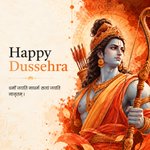
Dussehra: a festival of dharma, devotion, and community
धर्मो जयति नाधर्मः सत्यं जयति नानृतम् ।
Dharma triumphs, not adharma. Truth triumphs, not falsehood.
Dussehra, known in Sanskrit as Vijayādaśamī, is celebrated on the tenth day after Navarātri. In the Rāmāyaṇa tradition it marks Rāma’s victory over Rāvaṇa, the king of Laṅkā, and the triumph of dharma over adharma.
Across communities, the day is observed in many forms. Devotees fast, recite the Rāmāyaṇa, and sing bhajans. Rāmlīlā performances retell the epic, and effigies of Rāvaṇa, Meghanāda, and Kumbhakarṇa are burned at dusk as a symbol of evil undone. Fairs, music, and cultural programs bring families and neighbors together, and pass these values to the next generation.
Beneath the celebration lies a quieter invitation: to practice discipline, courage, and truthfulness in our own lives.
From all of us at the Hindu University of America, a blessed Dussehra.
#Dussehra #Vijayadashami #Ramayana #Ramlila #SanatanaDharma #HinduStudies #HUA


या देवी सर्वभूतेषु शक्तिरूपेण संस्थिता ।
नमस्तस्यै नमस्तस्यै नमस्तस्यै नमो नमः ॥
To the Goddess who abides in all beings as power (śakti), we bow again and again. (Devīmāhātmyam, chapter 5)
The closing of Navarātri invites reflection on the many forms of the feminine divine in the tradition. As Śakti, she is the power that creates, sustains, and dissolves. As Sarasvatī, she is the source of knowledge (vidyā) and the arts. As Lakṣmī, she is prosperity and abundance. The Devīmāhātmyam presents these not as separate deities but as the one Mother who dwells in all beings in many forms.
Vijayādaśamī also affirms that dharma must prevail, and that its triumph often asks for courage and conviction. The tradition’s reading is that honoring the feminine is not only an act of worship but a discipline of balance: courage tempered by wisdom, and both held within compassion.
From all of us at the Hindu University of America, a blessed Vijayādaśamī.
#Vijayadashami #Shakti #DivineFeminine #HinduStudies #HUA

Hindu temples preserve more than sacred spaces—they sustain living traditions, cultural heritage, and community.
Join HUA's Śrī Rādhā-Ramaṇ Vedic Hindu Temple Workshop to explore the enduring significance of Hindu temple traditions.
Register now: hua.edu/workshop/radha-raman…
#HUA #RadhaRaman #HinduTemple #SanatanaDharma #VedicWisdom

Navarātri, Day 9: Siddhidātrī
The ninth and final Durgā is Siddhidātrī, “the giver of siddhis” (siddhi, accomplishment, perfection; dātrī, giver). The tradition speaks of eight classical siddhis, including aṇimā, mahimā, garimā, and laghimā. She is shown seated on a lotus, with four arms bearing a discus, a mace, a conch, and a lotus. According to the Devī Purāṇa, Śiva himself attained the siddhis through her grace, and half of his body became that of the Goddess, giving rise to the Ardhanārīśvara form.
The sequence thus closes with fulfillment. From the mountain-born ground of Day 1, through discipline, protection, creation, motherhood, fierce force, fearlessness, and purity, the path arrives at accomplishment. In the Śākta reading, the highest siddhi is not power but realization, which echoes the Devīmāhātmyam’s teaching that the Mother grants both worldly fulfillment and liberation.
#Navaratri #Siddhidatri #Navadurga #HinduStudies #HUA
Navarātri, Day 8: Mahāgaurī
The eighth of the Navadurgā is Mahāgaurī, “the great fair one” (mahā, great; gaurī, radiant, fair). In the tradition, her complexion was darkened by long years of penance in the forest to win Śiva. Pleased by her tapas, Śiva is said to have bathed her in the waters of the Gaṅgā, restoring a luminous white radiance. She is iconographically shown in white garments, mounted on a bull, holding a trident and a ḍamaru (small drum).
The image of purity regained after austerity is the heart of this form. It follows naturally from Day 2: Brahmacāriṇī is the one who undertakes the discipline, and Mahāgaurī is the one in whom its fruit shines. In many households, this day is also marked by kanyā-pūjana, the worship of young girls as embodiments of the Goddess.
#Navaratri #Mahagauri #Navadurga #HinduStudies #HUA
Navarātri, Day 7: Kālarātrī
The seventh of the Navadurgā is Kālarātrī, whose name means “the dark night” (kāla, time or darkness; rātrī, night). She is the most fearsome of the nine forms: dark in complexion, with disheveled hair, a garland that gleams like lightning, and a donkey as her mount. Yet the tradition holds that she bestows fearlessness on her devotees and is the destroyer of ignorance and fear.
The image invites a reading in which the terrifying aspect and the protective aspect are one. Darkness here is not the opposite of the Goddess but one of her faces, and its end is knowledge. This echoes the Devīmāhātmyam’s own vision of the Mother as the source of both light and darkness.
In the traditional Śākta schema she is commonly associated with the sahasrāra cakra.
#Navaratri #Kalaratri #Navadurga #HinduStudies #HUA
Navarātri, Day 6: Kātyāyanī
The sixth of the Navadurgā is Kātyāyanī, named in tradition for the sage Kātyāyana, to whom she is said to have appeared as a daughter. She is revered as the warrior Goddess who slays Mahiṣāsura, the same episode that the Devīmāhātmyam narrates in its third chapter. She is iconographically shown mounted on a lion, with four or more arms bearing a sword and a lotus.
Her figure also has a devotional dimension. The Bhāgavata Purāṇa (10.22) recalls the young women of Vraja observing a month-long vow to Kātyāyanī in the hope of obtaining Kṛṣṇa as their husband. In this single form, the tradition joins righteous force with sincere devotion.
In the traditional Śākta schema she is commonly associated with the ājñā cakra.
#Navaratri #Katyayani #Navadurga #HinduStudies #HUA
How do space and time shape our relationship with the cosmos?
Explore the interconnected traditions of Vāstu Śāstra and Jyotiṣa with Shri. Bangalore Niranjan Babu in HUA's Space Meets Time webinar.
Register now: hua.edu/webinar/space-meets-…
#SpaceMeetsTime #VastuShastra #Jyothisha #HUA #IndicKnowledge #VedicWisdom

Navarātri, Day 5: Skandamātā
The fifth of the Navadurgā is Skandamātā, “the mother of Skanda.” Skanda, also known as Kārttikeya or Kumāra, is the commander of the divine armies in the tradition. She is iconographically shown seated on a lotus, which is why she is also called Padmāsanā, and holding the infant Skanda on her lap.
The form is notable for its theology of motherhood. The Goddess appears here neither as warrior nor as ascetic, but as a nurturing presence in whom protection and tenderness coexist. The traditional narrative holds that Skanda was born to defeat the demon Tārakāsura, so her motherhood is directed toward the protection of the cosmic order (dharma).
In the traditional Śākta schema she is commonly associated with the viśuddha cakra.
#Navaratri #Skandamata #Navadurga #HinduStudies #HUA
Strong mandirs. Stronger communities.
HUA and HMEC are building partnerships to advance Hindu education, community leadership, and cultural continuity across North America.
Explore conference highlights and future collaborations.
Register now: hua.edu/webinar/hmec-hua-par…
#HUA #HMEC #HinduCommunity #SanatanaDharma #HinduStudies

Navarātri, Day 4: Kushmanda
The fourth of the Navadurgā is Kushmanda. Her name is commonly explained as a compound of ku (small), uṣmā (warmth), and aṇḍa (egg): she who, with a gentle smile, warmed the cosmic egg into being. In this tradition she is the source of the universe at a time when there was only darkness. She is iconographically shown with eight arms, bearing a rosary, a lotus, a discus, a mace, a bow and arrow, and a pot of nectar, seated on a lion.
The form places creation at the center of devotion. The universe does not arise from force but from a smile, an image of creative energy that is joyful and effortless. The lion points to the strength that accompanies that creative power.
In the traditional Śākta schema she is commonly associated with the anāhata cakra.
#Navaratri #Kushmanda #Navadurga #HinduStudies #HUA
Navarātri, Day 3:Chandraghanta
The third of the Navadurgā is Chandraghaṇṭā, whose name joins candra (moon) and ghaṇṭā (bell). It refers to the crescent moon, shaped like a bell, that adorns her forehead. In the tradition she is remembered as Pārvatī after her marriage to Śiva. She is iconographically shown with ten arms, bearing weapons and a lotus, and mounted on a tiger or lion.
The image holds together two qualities that are often set apart: a serene, moonlike countenance and a posture of readiness for battle. She is traditionally invoked as a protector who dispels fear. Her form suggests that composure and strength are not opposed.
In the traditional Śākta schema she is commonly associated with the maṇipūra cakra.
#Navaratri #Chandraghanta #Navadurga #HinduStudies #HUA
Navarātri, Day 2: Brahmacāriṇī
The second of the Navadurgā is Brahmacāriṇī, “she who practices brahmacarya,” the discipline of sustained austerity (tapas) and single-pointed devotion. In the tradition she is remembered as Pārvatī in her ascetic phase, undertaking severe penance to unite with Śiva. She is iconographically shown barefoot, holding a rosary (akṣamālā) and a water pot (kamaṇḍalu).
Where Śailaputrī suggests the steady ground, Brahmacāriṇī suggests what is built upon it: disciplined practice over time. In the traditional Śākta schema she is commonly associated with the svādhiṣṭhāna cakra.
The sequence invites a reading of practice as gradual, with steadiness first and then sustained effort.
#Navaratri #Brahmacharini #Navadurga #HinduStudies #HUA
Navarātri, Day 1: Śailaputrī
The Navadurgā sequence opens with Śailaputrī, “daughter of the mountain” (śaila, mountain; putrī, daughter), the daughter of Himavat. In the tradition she is also remembered as the returning Satī, which makes her a figure of continuity and renewal. She is iconographically shown mounted on a bull (vṛṣabha), bearing a trident and a lotus.
The mountain image suggests steadiness as the first ground of practice. In the traditional Śākta schema, she is commonly associated with the mūlādhāra, the root of the subtle body.
Over these nine days, HUA will share a short reflection on each form
#Navaratri #Shailaputri #Navadurga #HinduStudies #HUA
Happy Navarātri from all of us at the Hindu University of America!
Navarātri, meaning "nine nights," is a beloved festival honoring the Divine Feminine, Durgā, revered as the embodiment of śakti, the power that sustains and renews the world. Across regions, families and communities mark these nights in many ways: prayer, fasting, music, dance, and shared meals.
Many traditions also read the nine nights as an inner discipline: confronting what clouds the mind, cultivating steadiness, and arriving at clarity. On the tenth day, Vijayādaśamī, that inner work turns outward into ethical action and service.
At HUA, we are glad to study and celebrate a tradition that treats strength and wisdom as something to be practiced, not only admired.
Wishing you and your family nine nights of devotion, reflection, and renewed resolve.
#Navaratri #Navadurga #Vijayadashami #HinduStudies #HUA


Temples are more than places of worship they are sacred spaces shaped by history, philosophy, architecture, and devotion.
Explore the deeper meaning of sacred spaces and the evolution of temple development through the lens of Indian traditions.
#HinduTempleArchitecture #SacredSpaces #IndianHeritage #HinduTraditions #TempleArchitecture #SanatanaDharma #HinduStudies #HUA
The question is shifting from "Ayurveda or modern medicine?" to "Where can they complement each other?"
That change was visible in Orlando, at the Gujarati Indian Physicians Convention 2026 (August 19-23), where physicians, healthcare leaders, and educators gathered for continuing medical education and professional exchange.
In a new blog on the HUA site, Dr. Mahadevan Seetharaman, Dean of the California College of Ayurveda, reflects on how CCA and HUA took part in the conversation. He describes:
▪️ A morning of integrative medicine programming, where physicians discussed prevention, lifestyle, nutrition, and mind-body health
▪️ Strong interest among practicing physicians in studying Ayurveda, not to change careers but to complement their clinical knowledge
▪️ Interest in HUA's courses on health, wellness, Yoga, and Hindu knowledge systems
▪️ Questions about quality, sourcing, and testing in Ayurvedic products, which the AyBo initiative is addressing
The blog also recounts Dr. Amit Shah's framing of the two systems. Ayurveda and modern medicine need not be seen as opposing positions, but as complementary approaches joined by a shared goal: human well-being.
For HUA and CCA, the aim is to preserve the depth and authenticity of Ayurveda while building bridges with evidence-informed healthcare.
Read the full blog: hua.edu/blog/cca-hua-ayurved…
#Ayurveda #IntegrativeMedicine #IntegrativeHealth #HinduUniversityofAmerica #CaliforniaCollegeofAyurveda #GIPC2026
