

Wall Street Analyst Kevin
Joined November 2009
- Tweets701
- Following46
- Followers2.7M
- Likes220




Do not let temporary short-term setbacks convince you your entire long life journey is meaningless and wasted, every hardship you endure carries a quiet hidden purpose revealed in perfect natural timing as time moves forward.
While global AI technology stocks are rebounding, the real focus for the South Korean market should not be limited to Samsung Electronics and SK Hynix; rather, the key is whether capital is beginning to flow across the entire semiconductor supply chain.
Our firm has already generated returns exceeding $1 million through investments in the semiconductor and AI supply chains. The recent rebound in US AI and chip stocks further indicates that the market is reassessing the sustainability of AI-related capital expenditure.
As major technology companies continue to build out data centers, demand for components such as HBM, enterprise SSDs, MLCCs, packaging substrates, test sockets, and deposition equipment is rising in tandem.
The South Korean stock market is currently closed for the Chuseok holiday and will resume trading on September 28. Market movements in US tech stocks, the Philadelphia Semiconductor Index, and memory chip companies during this break are likely to be reflected in the opening prices when the Korean market reopens.
Our firm is currently focusing on the following South Korean stocks:
→ 005930 Samsung Electronics | DRAM, NAND, HBM, and advanced packaging
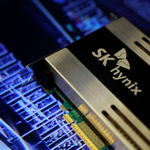
→ 000660 SK Hynix | HBM, advanced DRAM, and enterprise SSDs
→ 402340 SK Square | Holds a stake in SK Hynix; offers valuation linkage potential
→ 009150 Samsung Electro-Mechanics | AI server MLCCs and FC-BGA packaging substrates
→ 095340 ISC | Test sockets for AI and memory chips
→ 058470 Leeno Industrial | Semiconductor test probes and sockets
→ 036930 Jusung Engineering | Deposition equipment for DRAM and advanced processes
→ 240810 Wonik IPS | Wafer manufacturing equipment for DRAM and NAND
→ 042700 Hanmi Semiconductor | HBM advanced packaging and TC Bonder equipment
In terms of the transmission sequence along the supply chain, the first stage typically sees memory giants like Samsung Electronics and SK Hynix being the first to reflect changes in AI demand and product pricing.
The second stage involves memory manufacturers increasing capital expenditure on HBM, DRAM, and NAND, thereby driving new orders for equipment suppliers such as Jusung Engineering, Wonik IPS, and Hanmi Semiconductor. The third phase involves continued growth in AI server shipments, driving demand for Samsung Electro-Mechanics’ high-end MLCCs and FC-BGA substrates, as well as recurring revenue for testing component firms like ISC and Leeno Industrial.
To determine whether this market trend will persist, we need to monitor the following indicators:
→ Whether the rebound in US AI and semiconductor stocks continues
→ Whether Samsung Electronics and SK Hynix attract net buying from foreign investors
→ Whether orders for HBM and enterprise SSDs continue to grow
→ Whether DRAM and NAND prices maintain an upward trend
→ Whether equipment manufacturers' order backlogs translate into revenue
→ Whether lead times for AI server components continue to extend
Our firm assesses that if leading semiconductor stocks rise upon the reopening of the Korean market—accompanied by a significant increase in trading volume and foreign buying—it signals that capital is reaffirming the AI capital expenditure theme.
If capital flows expand beyond Samsung Electronics and SK Hynix to include Samsung Electro-Mechanics, ISC, Leeno Industrial, and Jusung Engineering, it indicates a shift in market momentum from index heavyweights to supply chain companies with tangible orders and earnings upside.
The real focus should not be on every stock associated with the AI theme, but rather on companies capable of converting data center investments into orders, revenue, profits, and cash flow.
Until we reach one million followers, our firm will continue to provide free analysis of the Korean AI and semiconductor supply chain, tracking foreign capital flows, equipment orders, and shifts in server demand to help investors identify the next wave of industry opportunities ahead of the curve.

The direction of the next phase for South Korean memory stocks may well be determined by the upcoming earnings report of a U.S. company.
Our firm has already generated returns exceeding $1 million through investments in the semiconductor and AI supply chains; Micron’s imminent earnings release could serve as a critical catalyst for Samsung Electronics, SK Hynix, and the South Korean HBM supply chain.
Micron is scheduled to announce its earnings on September 30. What the market is truly focused on goes beyond mere revenue and profit growth; the key lies in management's latest assessment of demand across DRAM, NAND, HBM, and AI servers.
Micron, Samsung Electronics, and SK Hynix collectively dominate the global memory chip market. Data disclosed by Micron—such as pricing, inventory levels, capacity utilization, and customer demand—often enables the market to anticipate shifts in the memory cycle ahead of time.
Key indicators to watch in this earnings report include:
→ Whether DRAM and NAND prices continue to rise
→ Whether HBM shipment volumes and customer orders continue to grow
→ Whether demand from AI data centers is driving uptake of enterprise SSDs
→ Whether gross margins are improving due to rising product prices
→ Whether capital expenditure is set to increase further in the coming quarter
→ Whether new capacity additions might lead to future supply-side pressure
If Micron provides positive guidance, the South Korean market may first re-rate Samsung Electronics and SK Hynix, with capital subsequently flowing into companies involved in packaging, equipment, testing, and server components. Our firm is currently focusing on the following South Korean stocks:
→ 005930 Samsung Electronics | DRAM, NAND, HBM, and advanced packaging
→ 000660 SK Hynix | HBM, advanced DRAM, and enterprise SSDs
→ 402340 SK Square | Holds a stake in SK Hynix; offers valuation linkage elasticity
→ 042700 Hanmi Semiconductor | HBM advanced packaging and TC Bonder equipment
→ 009150 Samsung Electro-Mechanics | AI server MLCCs and FC-BGA packaging substrates
→ 036930 Jusung Engineering | Semiconductor deposition equipment
→ 240810 Wonik IPS | DRAM and NAND wafer manufacturing equipment
→ 095340 ISC | AI and memory chip test sockets
→ 058470 Leeno Industrial | Semiconductor test probes and sockets
In terms of the industry value chain's transmission sequence, the first stage typically involves rising memory chip prices, which directly improve the revenue and gross margins of Samsung Electronics, SK Hynix, and Micron.
The second stage sees memory manufacturers increasing capital expenditure to expand HBM, DRAM, and NAND production capacity, leading to new orders for equipment and materials companies.
The third stage is driven by sustained growth in AI server demand, which boosts shipment volumes for enterprise SSDs, MLCCs, packaging substrates, and testing components.
However, the market looks beyond just a strong earnings report. More importantly, Micron must demonstrate that current growth stems from genuine customer orders rather than short-term inventory restocking; it is also crucial to confirm that new capacity will not come online too rapidly, potentially causing a renewed supply glut.
The South Korean stock market is currently closed for the Chuseok holiday, with trading resuming on September 28. As Micron’s earnings report is scheduled for release after the market reopens, the flow of foreign capital into Samsung Electronics and SK Hynix, along with trading volumes for semiconductor equipment stocks, may reflect market expectations in advance.
We anticipate that if Micron confirms robust HBM demand and continued price improvements for DRAM and NAND, capital flows may broaden from memory industry leaders to include Hanmi Semiconductor, Samsung Electro-Mechanics, Jusung Engineering, Wonik IPS, and ISC. What truly matters is not which stocks have already risen, but rather which companies can successfully translate the memory "super-cycle" into actual orders, profits, and cash flow.
Until we reach the milestone of one million followers, our firm will continue to provide free analysis of the South Korean memory and HBM supply chain—tracking Micron’s earnings, product pricing, and equipment order trends—to help investors identify the next wave of industry opportunities ahead of the curve.

What the Hong Kong stock market truly lacks may not be capital, but rather the institutional efficiency to accelerate M&A, restructuring, and spin-off listings for high-quality assets.
Our firm has already generated returns exceeding US$1 million through investments in the Hong Kong-listed technology and AI supply chain sectors, and the latest reform proposals from the Hong Kong Exchanges and Clearing Limited (HKEX) could serve as a crucial institutional catalyst for the next phase of Hong Kong's capital market.
The HKEX has proposed relaxing rules regarding major transactions and spin-off listings for listed companies, specifically by raising the threshold for shareholder approval on major transactions from 25% to 50% of the company's size.
If implemented, transactions falling below this 50% threshold might only require a public announcement, eliminating the need for a general meeting of shareholders or the submission of comprehensive transaction documentation. This would shorten the time required for acquisitions, asset disposals, and business restructuring, while also reducing certain costs associated with capital operations.
The HKEX also proposes streamlining spin-off listing procedures. Eligible Main Board companies could self-assess whether they meet spin-off requirements without needing to seek prior approval for each specific item; additionally, the waiting period for spin-off listings could be reduced from three years to one year for certain companies.
The most immediate significance of this reform is that it enables large technology conglomerates to unlock the value of their business units with greater flexibility.
For large enterprises with diverse operations—such as cloud computing, fintech, logistics, local services, autonomous driving, and smart hardware—spin-off listings can attract external capital and allow the market to re-evaluate the standalone value of individual business segments. Our firm is currently focusing on the following Hong Kong-listed stocks:
→ 0388.HK HKEX (Hong Kong Exchanges and Clearing) | Direct beneficiary of trading, listing, and capital-raising activities
→ 9988.HK Alibaba | Cloud computing, logistics, AI chips, and various technology assets
→ 0700.HK Tencent Holdings | Fintech, cloud computing, gaming, and investment portfolio
→ 3690.HK Meituan | Local services, instant retail, and autonomous delivery businesses
→ 1810.HK Xiaomi Group | Smartphones, automobiles, and AIoT ecosystem
→ 9888.HK Baidu Group | Autonomous driving, AI cloud, and large-scale AI model businesses
→ 9618.HK JD.com | Logistics, retail technology, and supply chain services
→ 1024.HK Kuaishou | Short-form video, e-commerce, and AI applications
In terms of the sequence of benefits, HKEX is likely to benefit first from an increase in listing applications, spin-off projects, and capital transaction activities. Meanwhile, large technology companies could enhance capital allocation efficiency and unlock business value—previously obscured by the group's overall valuation—through spin-offs or asset restructuring.
However, these arrangements are currently in the public consultation phase, and the final implementation timeline and specific terms have yet to be determined. Moving forward, the market should monitor the consultation results, official rules, and which listed companies are the first to submit spin-off or major transaction proposals.
Our firm assesses that while the relaxation of rules will not immediately generate profits, it will improve financing efficiency and asset liquidity within the Hong Kong market. The real focus should be on identifying enterprises that possess high-quality subsidiaries capable of independent financing, generating cash flow, and gaining market recognition.
Future revaluation opportunities for Hong Kong stocks may stem not only from earnings growth but also from value unlocking driven by spin-off listings, asset sales, and business restructuring.
Until we reach one million followers, our firm will continue to provide free analysis on Hong Kong market regulatory reforms, corporate spin-offs, and capital operation opportunities, helping investors identify—ahead of the curve—Hong Kong-listed companies poised for value revaluation.


The next market move for Hong Kong-listed tech stocks may not be driven by earnings reports, but rather triggered by a single statement from the negotiating table between China and the US.
Our firm has already generated returns exceeding $1 million through investments in the AI and semiconductor supply chains; currently, the most critical external variable to watch is the potential signal regarding technology policy emerging from the meeting between Chinese and US leaders.
Key market focuses during this meeting are likely to include AI competition, semiconductor export restrictions, the supply of advanced equipment, and the regulation of technology companies. Any signal indicating a relaxation of restrictions or a further escalation could rapidly alter the valuation logic for Hong Kong-listed internet, chip, and AI companies.
Currently, China and the US are establishing two relatively independent AI supply chains. The US aims to maintain its lead in advanced GPUs, semiconductor equipment, and core software, while China continues to accelerate the development of domestic chips, large-scale models, cloud computing, and data centers.
However, capital flows between the two sides remain deeply interconnected. US financial institutions continue to participate in the financing of Chinese tech companies, while capital from Hong Kong and the mainland is being allocated to US semiconductor and AI firms. Consequently, this meeting will not only influence policy expectations but could also reshape how global capital prices the risk associated with Chinese technology assets.
Our firm is currently focusing on the following Hong Kong-listed stocks:
→ 0981.HK SMIC (Semiconductor Manufacturing International Corporation) | A core player in Chinese wafer fabrication and semiconductor localization
→ 1347.HK Hua Hong Semiconductor | Wafer foundry specializing in specialty processes and mature nodes
→ 9988.HK Alibaba Group | AI chips, large-scale models, cloud computing, and data centers
→ 0700.HK Tencent Holdings | Large-scale models, cloud computing, and AI application ecosystems
→ 1810.HK Xiaomi Corporation | Smartphones, automobiles, AIoT, and on-device AI
→ 9888.HK Baidu Group | Autonomous driving, Ernie (Wenxin) large-scale models, and AI cloud services
→ 0763.HK ZTE Corporation | Servers, networking, and communications infrastructure
→ 0992.HK Lenovo Group | AI servers, AI PCs, and edge computing devices
Should export restrictions be relaxed, SMIC and Hua Hong Semiconductor would likely be the first to benefit through improved equipment supply, better access to technology, and a reduction in market risk premiums; meanwhile, Alibaba, Tencent, and Baidu could benefit from lower AI computing costs and a valuation recovery. If restrictions escalate further, China is likely to intensify its push for semiconductor self-reliance. While this enhances the strategic value of companies like SMIC, Hua Hong Semiconductor, and the domestic equipment supply chain, these firms may simultaneously face short-term pressure regarding equipment procurement and the expansion of advanced manufacturing capabilities.
For Alibaba, Tencent, and Baidu, the market’s focus will shift beyond mere model parameters to whether AI-related capital expenditures can translate into cloud revenue, enterprise orders, and stable cash flows.
Xiaomi and Lenovo represent the trend of AI extending to end-user devices. As AI models integrate into smartphones, PCs, automobiles, and AIoT devices, companies capable of bridging hardware, operating systems, and application ecosystems may see their valuations re-rated.
We believe that the US-China summit will not immediately alter the landscape of technological competition, but it could shape risk appetite for the Hong Kong-listed technology sector in the near term. Key indicators to watch include semiconductor export restrictions, AI chip supplies, the financing environment for tech companies, and the subsequent implementation plans of both sides.
Until we reach the milestone of one million followers, we will continue to provide free analysis of Hong Kong’s AI, internet, and semiconductor supply chains. We will track policy shifts and capital flows between the US and China to help investors identify the next wave of opportunities in the technology sector ahead of the curve.

Alibaba is no longer content with merely developing models and cloud services; it now aims to control the entire stack—chips, models, data centers, and AI-enabled devices.
Our firm has already realized returns exceeding $1 million through investments in the AI and semiconductor supply chains. Alibaba’s newly announced full-stack AI strategy further confirms that companies with true competitive advantages in the future will be those capable of integrating the entire AI infrastructure chain, rather than simply possessing a large-scale model.
Alibaba has unveiled its next-generation proprietary AI chip, the "Zhenwu V900," which delivers approximately three times the performance of its predecessor and is slated for mass production in early 2027. Simultaneously, the company is developing a new generation of AI models ranging from 5 trillion to 10 trillion parameters—up to four times the size of current flagship models.
Even more significant is Alibaba Cloud’s plan to expand its global data center capacity to over 20 GW by 2032. This indicates that Alibaba’s AI strategy now encompasses:
→ AI chips
→ Large-scale model training
→ Cloud computing platforms
→ Data center construction
→ Enterprise AI services
→ AI PCs and smart devices
This represents more than just a product upgrade; it is an attempt by Alibaba to build a comprehensive AI ecosystem capable of replacing overseas suppliers.
Our firm is currently focusing on the following Hong Kong-listed stocks:
→ 9988.HK Alibaba | AI chips, Tongyi models, and the core Alibaba Cloud platform
→ 9698.HK GDS Holdings | Data center construction and operations
→ 3896.HK Kingsoft Cloud | Cloud computing and enterprise AI services
→ 0992.HK Lenovo Group | AI servers, AI PCs, and edge computing devices
→ 0763.HK ZTE Corporation | High-speed networking, servers, and communications infrastructure
→ 0981.HK SMIC | Advanced and mature process wafer foundry services
→ 1347.HK Hua Hong Semiconductor | Specialty process wafer foundry services
→ 0700.HK Tencent Holdings | Cloud computing, large-scale models, and enterprise AI applications
From a supply chain perspective, the continued expansion of Alibaba Cloud’s data center capacity will benefit more than just Alibaba itself. Sectors such as servers, enterprise-grade SSDs, optical communication components, networking equipment, power systems, and data center operators are all likely to see a surge in procurement demand. However, the key to determining whether these stocks can sustain their upward momentum lies not in the hype surrounding the AI concept, but in whether capital expenditure can genuinely translate into equipment orders, cloud revenue, and cash flow. It is particularly important to monitor Alibaba Cloud’s revenue growth, the mass production progress of the Zhenwu V900, the commercialization outcomes of new models, and the actual construction pace of the planned 20GW data center capacity.
Our firm assesses that Alibaba is transforming from an e-commerce and cloud computing company into a full-stack AI platform spanning chips, models, computing power, and end-user devices. The next wave of opportunities may not be confined to 9988.HK but will likely ripple outward across the data center, server, networking equipment, and semiconductor supply chains.
Until we reach one million followers, our firm will continue to provide free analysis of the Hong Kong AI and semiconductor supply chains—tracking Alibaba’s capital expenditure, data center construction, and order trends among related companies—to help investors identify the next industry opportunities ahead of the curve.

Our firm has already realized returns exceeding $1 million through investments in the semiconductor and AI supply chains, and a new investment currently under consideration by SK Hynix could reshape the global supply chain for NAND and enterprise SSDs.
Reportedly, Solidigm—a US-based subsidiary of SK Hynix—is evaluating the construction of a NAND flash memory plant in the United States, with upstate New York identified as a potential location. The project remains in the preliminary discussion stage; the scale of investment, construction timeline, and final site have not yet been determined.
Solidigm is a key player in the global enterprise SSD market, currently relying on its plant in Dalian, China, for a portion of its production capacity. If the US NAND project moves forward, it would not only reduce reliance on a single production base but also help mitigate supply chain pressures arising from potential tariffs, export restrictions, and US policies promoting semiconductor localization.
The significance of this plan lies not merely in the construction of a US factory, but in the possibility that SK Hynix is beginning to realign the global production footprint of its NAND business.
As demand for AI servers surges, data centers require increased deployment of high-capacity NAND and enterprise SSDs. While High Bandwidth Memory (HBM) addresses the need for high-speed memory for AI accelerators, enterprise SSDs handle the tasks of storing and retrieving massive volumes of data. Consequently, demand for both product categories is likely to grow in tandem as investment in AI infrastructure continues to expand. Our firm is currently focusing on the following South Korean stocks:
→ 000660 SK Hynix | Key player in HBM, NAND, and enterprise SSDs
→ 402340 SK Square | Holds a stake in SK Hynix; offers valuation linkage upside
→ 036930 Jusung Engineering | Semiconductor deposition equipment
→ 240810 Wonik IPS | DRAM and NAND wafer manufacturing equipment
→ 095340 ISC | Test sockets for memory and AI chips
→ 058470 Leeno Industrial | Semiconductor test probes and sockets
→ 005290 Dongjin Semichem | Photoresists and semiconductor process materials
→ 357780 Soulbrain | Semiconductor etching and cleaning materials
→ 009150 Samsung Electro-Mechanics | MLCCs for AI servers and FC-BGA packaging substrates
If Solidigm ultimately decides to build a NAND plant in the U.S., market attention will shift from site-selection news to capital expenditure (CAPEX), equipment procurement, and lists of material suppliers. Only equipment and material companies that secure actual orders will be able to translate this news into tangible revenue and cash flow.
At the same time, SK Hynix faces challenges such as higher U.S. production costs, cyclical fluctuations in the NAND industry, and the potential for new CAPEX to squeeze short-term cash flow. Therefore, until a formal investment decision is announced, this remains a potential industry catalyst rather than a confirmed driver of earnings growth.
We assess that rising demand for AI servers is simultaneously driving the expansion of markets for HBM, high-capacity NAND, and enterprise SSDs. Moving forward, the key factors to monitor are not merely whether SK Hynix proceeds with the U.S. plant, but whether the project scale, equipment tenders, customer orders, and capacity utilization rates are consistently validated.
Until we reach 1 million followers, our firm will continue to provide free analysis of the South Korean semiconductor and AI supply chain. We will track the latest developments regarding the Solidigm U.S. plant, enterprise SSD demand, and related equipment orders to help investors identify potential opportunities within the value chain ahead of the curve.


Our firm has already realized returns exceeding $1 million through investments in the semiconductor and AI supply chains, and capital has once again flowed—in real terms—into the same key theme: memory chips.
On the final trading day before the Mid-Autumn Festival break, South Korea’s KOSPI index rose for the fourth consecutive session; Samsung Electronics gained 3.25%, and SK Hynix rose 1.2%. This was not merely a broad market rebound; it reflected market expectations for a sustained improvement in the business outlook for AI servers, HBM (High Bandwidth Memory), and memory chips.
We are currently focusing on the following South Korean stocks:
→ 005930 Samsung Electronics | DRAM, HBM, and advanced packaging
→ 000660 SK Hynix | HBM and enterprise SSDs
→ 402340 SK Square | Holds a stake in SK Hynix; offers valuation-linked upside potential
→ 009150 Samsung Electro-Mechanics | AI server MLCCs and FC-BGA packaging substrates
→ 042700 Hanmi Semiconductor | Advanced packaging equipment for HBM
→ 095340 ISC | Test sockets for AI and memory chips
Going forward, the key factor determining whether the sector can continue its upward trajectory is not just market sentiment, but whether HBM orders, DRAM prices, enterprise SSD demand, and actual orders for equipment manufacturers all grow in tandem.
We anticipate that if overseas memory manufacturers continue to issue positive guidance regarding pricing and demand, capital flows may expand beyond Samsung Electronics and SK Hynix to the equipment, testing, and packaging segments of the supply chain.
Until we reach the milestone of 1 million followers, we will continue to provide free analysis of the South Korean semiconductor and AI supply chains, helping investors identify the next wave of industry opportunities ahead of the curve.


Capital flows within the AI sector are shifting direction; the next wave of opportunities may lie not in GPUs—which have already seen massive gains—but in the data center supply chain, where assets remain underpriced.
In recent years, the market has focused heavily on GPUs and major technology companies. However, as AI infrastructure enters a phase of large-scale deployment, capital is spreading into enterprise SSDs, semiconductor equipment, advanced packaging, AI servers, power infrastructure, and cloud computing services.
We do not buy stocks simply because a company carries the "AI" label; instead, we prioritize enterprises capable of genuinely translating AI demand into orders, revenue, and free cash flow. We are currently prioritizing the monitoring of the following indicators:
→ Customer orders and certification progress
→ Production capacity and equipment utilization rates
→ Capital expenditure and equipment delivery status
→ Trends in revenue and gross margins
→ Improvements in free cash flow
We are currently focusing on the following companies listed in South Korea and Hong Kong:
🇰🇷 South Korean Market
→ 095340 ISC | AI chip test sockets and testing solutions
→ 058470 Leeno Industrial | High-performance test probes and test sockets
→ 036930 Jusung Engineering | Advanced semiconductor deposition equipment
→ 240810 Wonik IPS | Semiconductor front-end equipment
→ 042700 Hanmi Semiconductor | HBM and advanced packaging equipment
→ 009150 Samsung Electro-Mechanics | AI server MLCCs and FC-BGA substrates
→ 267260 HD Hyundai Electric | Data center transformers and power distribution equipment
→ 000660 SK Hynix | HBM, DRAM, and enterprise SSDs
→ 005930 Samsung Electronics | HBM, DRAM, NAND, and advanced foundry services
🇭🇰 Hong Kong Market
→ 1347.HK Hua Hong Semiconductor | Chinese wafer foundry and specialty process technologies
→ 0981.HK SMIC | Advanced and mature process wafer foundry
→ 9698.HK GDS Holdings | Data centers and AI computing infrastructure
→ 3896.HK Kingsoft Cloud | Cloud computing and enterprise AI services
→ 9922.HK Lenovo Group | AI servers, AI PCs, and edge computing
→ 0763.HK ZTE Corporation | High-speed networking, servers, and telecommunications equipment
→ 9976.HK Longsys | Enterprise SSDs and memory semiconductors
→ 0700.HK Tencent Holdings | AI computing power, large models, and enterprise AI applications
Not all companies in the AI supply chain will achieve the same level of earnings growth. The next wave of companies to undergo a genuine market re-rating will likely be those that have secured customer validation and are seeing simultaneous improvements in orders, capacity utilization, revenue, and profit margins.
Moving forward, we will continue to scout the South Korean and Hong Kong markets for companies that have entered the phase where earnings growth is materializing, yet whose valuations do not yet fully reflect their AI-driven growth potential.
While the AI theme can generate short-term hype, it is orders and cash flow that drive sustained share price appreciation. Follow us; we will identify the stocks truly worth watching before the next wave of capital concentration begins.

📊 Key Market News: South Korea, US, and Hong Kong (September 24)
Market Themes Today:
South Korean markets are closed for the Chuseok holiday. US markets remain supported by the AI and semiconductor sectors, while Hong Kong stocks have rebounded, driven by the technology sector. Market focus is centered on high-level US-China meetings and potential shifts in policies regarding trade, AI, and semiconductors.
🇰🇷 South Korean Market
The Korea Exchange is closed on September 24–25 for the Chuseok holiday; there is no trading on the KOSPI or KOSDAQ today.
On the last trading day prior to the break, the KOSPI rose 0.90% to close at 7,080.92 points. Samsung Electronics gained 3.07% and SK Hynix rose 1.25%, with heavyweight semiconductor stocks continuing to support the index.
Regarding capital flows, institutional investors were net buyers of approximately KRW 450.6 billion, while retail investors were net sellers of about KRW 1.52 trillion and foreign investors were net sellers of about KRW 561.9 billion. Despite the index's rise, capital flow patterns remained divergent.
Key Stocks:
→ 005930 Samsung Electronics | HBM, DRAM, and advanced packaging
→ 000660 SK Hynix | HBM and enterprise SSDs
→ 402340 SK Square | Value of SK Hynix stake
→ 009150 Samsung Electro-Mechanics | AI server MLCCs and FC-BGA
→ 042700 Hanmi Semiconductor | HBM and advanced packaging equipment
The South Korean government has proposed doubling domestic semiconductor production capacity over the next five years and building an AI supply chain with greater autonomy and resilience. As the market is currently closed, the impact of policy news and the outcomes of US-China meetings will likely be reflected once trading resumes.
🇺🇸 US Market
US markets continue to exhibit a structure where technology stocks show relative strength while traditional sectors face pressure. The Nasdaq recently hit consecutive record closing highs, with AI and semiconductors remaining key drivers; however, rising oil prices and US Treasury yields have limited further gains for the broader market. Key Stocks:
→ NVDA (NVIDIA) | AI accelerators and data centers
→ AMD | AI chips and server CPUs
→ META | AI assistants and large-scale model applications
→ MU (Micron Technology) | HBM, DRAM, and NAND
→ JPM (JPMorgan Chase) | High-interest-rate environment and bank earnings outlook
The market is awaiting the outcome of the US-China meeting, focusing on whether a trade truce can be extended, as well as issues regarding AI regulation, semiconductor export restrictions, and global supply chains.
Meanwhile, US Treasury yields remain elevated. While the AI investment theme remains intact, volatility in high-valuation tech stocks may continue to widen.
🇭🇰 Hong Kong Market
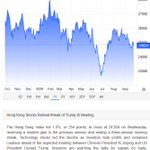
Hong Kong stocks rebounded on September 24; the Hang Seng Index rose approximately 1.3% to close near 25,211 points, recovering some of the losses from the previous trading session, with tech stocks serving as the primary driver.
Key Stocks:
→ 9988.HK Alibaba-W | Cloud computing, AI chips, and data centers
→ 0700.HK Tencent Holdings | AI models, cloud services, and share buybacks
→ 1810.HK Xiaomi Group-W | Smart EVs, smartphones, and AIoT
→ 9888.HK Baidu Group-SW | Large-scale models and intelligent cloud
→ 0981.HK SMIC | Advanced wafer foundry in China
→ 9698.HK GDS Holdings-SW | AI data center infrastructure
Alibaba Cloud announced plans to build or expand data centers in eight countries and regions over the next 12 months, further bolstering market expectations for the cloud computing, AI server, optical communication, and data center supply chains.
In the short term, the Hong Kong market requires monitoring to see if the Hang Seng Index can firmly hold above the 25,000-point mark, while also observing whether the rebound in tech stocks is supported by trading volume and Southbound capital inflows. Key Focus Areas:
→ Statements regarding a trade truce, AI regulation, and semiconductor restrictions arising from the US-China meeting
→ Trends in US 10-year Treasury yields and international oil prices
→ Whether the Hang Seng Index can hold the 25,000-point level
→ Performance of overseas memory chip stocks during the South Korean market holiday
→ Whether Alibaba Cloud’s capital expenditure translates into orders for servers and data center equipment
Our Assessment:
Capital remains concentrated in high-growth sectors such as AI, semiconductors, and data centers; however, a rise in the broader indices does not mean all stocks will benefit equally. Moving forward, the focus should be on tracking actual orders, capital expenditure, capacity utilization rates, and improvements in cash flow, while prioritizing companies that are the first to translate these factors into tangible earnings.


Our firm has already generated returns exceeding $1 million through investments in Hong Kong-listed stocks and the technology sector. Today, we saw a sudden surge in mainland Chinese property stocks; the key driver behind this movement is not a recovery in sales, but rather the likelihood that regulators are taking proactive steps to alleviate Vanke's debt pressure.
Reportedly, Chinese financial regulators have issued "window guidance" to certain banks, instructing them to refrain from classifying Vanke's overdue loans as non-performing loans (NPLs) for the time being, while also considering extensions to repayment schedules and the suspension of certain interest payments.
Following the news, shares of Vanke Enterprise surged by approximately 15% during intraday trading, sparking a broader rally across mainland property stocks, including Ronshine China.
If implemented, this measure would help ease Vanke's short-term cash flow pressures and reduce the risk of a formal default or the contagion of financial risks to the broader financial system. However, this move primarily addresses debt maturity and liquidity issues; it does not signal a comprehensive turnaround in real estate sales, profit margins, or fundamental business conditions.
Our firm is currently focusing on the following Hong Kong-listed stocks:
→ 2202.HK Vanke Enterprise | The central focus of the current debt relief news
→ 3301.HK Ronshine China | A high-beta private mainland developer
→ 0960.HK Longfor Group | A private developer with a relatively robust financial position
→ 1109.HK China Resources Land | A leading diversified developer backed by a state-owned enterprise (SOE)
→ 0688.HK China Overseas Land & Investment | A leading residential developer backed by an SOE
→ 1908.HK C&D International Group | A developer worth monitoring for sales performance and land bank quality
We believe that the sustainability of the rally in mainland property stocks depends not on single-day gains, but on whether banks expand support for loan extensions, whether financing channels recover, and whether contracted sales and cash collection improve.
Until we reach the milestone of 1 million followers, our firm will continue to provide free analysis of the Hong Kong real estate sector and track developments regarding Vanke's debt resolution and policy implementation. Follow us so you don't miss out on the next policy-driven opportunity in the Hong Kong stock market.


Our firm has generated over $1 million in cumulative investment returns; we go beyond merely tracking share price appreciation to assess how the IPOs of subsidiaries reshape the equity value of the parent company.
Kakao’s board of directors has formally opposed Kakao Mobility’s plan to independently list American Depositary Receipts (ADRs) in the U.S.
The proposed U.S. ADR listing was primarily initiated by the private equity firm TPG, utilizing its existing stake in Kakao Mobility rather than involving the issuance of new shares by the subsidiary to raise capital. Kakao believes this plan could adversely affect corporate governance, shareholder interests, and its own control over this core subsidiary.
Key factors to watch moving forward include:
→ Whether TPG modifies or withdraws the ADR listing proposal
→ Whether Kakao Mobility seeks alternative financing channels
→ Any changes to Kakao’s equity stake and control regarding the Mobility business
→ Whether the subsidiary’s valuation is reflected in Kakao’s own market capitalization
→ Whether the Kakao Group revises its listing plans for platform assets
Our firm is currently focusing on the following South Korean stocks:
→ 035720 Kakao | Major shareholder of Kakao Mobility and core platform company
→ 377300 Kakao Pay | Fintech and payment platform
→ 323410 Kakao Bank | Internet bank and key asset within the Kakao ecosystem
→ 035760 CJ ENM | Valuation benchmark for Korean content and platform companies
→ 018260 Samsung SDS | Valuation benchmark for enterprise digitalization, cloud services, and platforms
The crux of this situation is not merely whether Kakao Mobility can list in the U.S., but rather who ultimately captures the listing proceeds, control, and valuation gains. Only a financing plan that simultaneously improves cash flow, mitigates shareholder conflict, and enhances the value of Kakao’s stake is likely to serve as a catalyst for a sustained stock price re-rating.
Until we reach 1 million followers, our firm will continue to provide free analysis on South Korean internet platforms, subsidiary IPOs, and stocks poised for equity value re-rating.

Our firm has generated over $1 million in cumulative investment returns not by chasing storage prices after they rise, but by tracking early signals such as capacity reservations, customer prepayments, and the initiation of equipment orders.
AI servers are driving DRAM and HBM into an extended supply-demand cycle.
Industry reports indicate that the majority of 2027 DRAM and HBM capacity for Samsung Electronics, SK Hynix, and Micron has already been allocated; major customers are currently negotiating 3-to-5-year long-term supply agreements, prepayments, and more stable procurement arrangements.
This implies that AI companies are competing not only for GPUs but also for high-bandwidth memory (HBM) capacity for the years ahead.
If these long-term agreements are finalized, the following impacts may ensue:
→ Memory manufacturers lock in sales volumes and cash flow in advance
→ Prices for HBM and server DRAM receive support
→ Customer prepayments alleviate the financial burden of capacity expansion
→ Incremental capital expenditure gradually translates into equipment orders
→ Testing, packaging, and materials companies gain greater order visibility
Our firm is currently focusing on the following South Korean stocks:
→ 000660 SK Hynix | HBM and server DRAM
→ 005930 Samsung Electronics | HBM, DRAM, and NAND
→ 042700 Hanmi Semiconductor | HBM advanced packaging equipment
→ 036930 Jusung Engineering | Semiconductor thin-film deposition equipment
→ 240810 Wonik IPS | Memory chip front-end manufacturing equipment
→ 095340 ISC | AI and memory chip test sockets
→ 058470 Leeno Industrial | Semiconductor test probes and sockets
→ 009150 Samsung Electro-Mechanics | AI server MLCCs and FC-BGA substrates
In the next phase, market attention may shift from rising memory chip prices to capacity expansion and equipment orders. However, the companies truly worth tracking are those that have secured customer certification, are seeing a growing order backlog, and possess the ability to convert capacity expansion into revenue and cash flow.
Until we reach 1 million followers, our firm will continue to provide free analysis on South Korean stocks within the HBM, server DRAM, and semiconductor equipment supply chains that are likely to see an early inflection point in orders.

Our firm has generated over $1 million in cumulative investment returns not by chasing storage prices after they rise, but by tracking early signals such as capacity reservations, customer prepayments, and the initiation of equipment orders.
AI servers are driving DRAM and HBM into an extended supply-demand cycle.
Industry reports indicate that the majority of 2027 DRAM and HBM capacity for Samsung Electronics, SK Hynix, and Micron has already been allocated; major customers are currently negotiating 3-to-5-year long-term supply agreements, prepayments, and more stable procurement arrangements.
This implies that AI companies are competing not only for GPUs but also for high-bandwidth memory (HBM) capacity for the years ahead.
If these long-term agreements are finalized, the following impacts may ensue:
→ Memory manufacturers lock in sales volumes and cash flow in advance
→ Prices for HBM and server DRAM receive support
→ Customer prepayments alleviate the financial burden of capacity expansion
→ Incremental capital expenditure gradually translates into equipment orders
→ Testing, packaging, and materials companies gain greater order visibility
Our firm is currently focusing on the following South Korean stocks:
→ 000660 SK Hynix | HBM and server DRAM
→ 005930 Samsung Electronics | HBM, DRAM, and NAND
→ 042700 Hanmi Semiconductor | HBM advanced packaging equipment
→ 036930 Jusung Engineering | Semiconductor thin-film deposition equipment
→ 240810 Wonik IPS | Memory chip front-end manufacturing equipment
→ 095340 ISC | AI and memory chip test sockets
→ 058470 Leeno Industrial | Semiconductor test probes and sockets
→ 009150 Samsung Electro-Mechanics | AI server MLCCs and FC-BGA substrates
In the next phase, market attention may shift from rising memory chip prices to capacity expansion and equipment orders. However, the companies truly worth tracking are those that have secured customer certification, are seeing a growing order backlog, and possess the ability to convert capacity expansion into revenue and cash flow.
Until we reach 1 million followers, our firm will continue to provide free analysis on South Korean stocks within the HBM, server DRAM, and semiconductor equipment supply chains that are likely to see an early inflection point in orders.

Our firm has achieved an investment return exceeding $1 million not by chasing every AI-related concept, but by identifying—ahead of the curve—supply chain companies capable of converting orders into revenue and cash flow.
AI investment is shifting from the mere procurement of GPUs to a phase of large-scale data center construction. As computing infrastructure continues to expand, capital is flowing into sectors such as enterprise-grade SSDs, semiconductor equipment, advanced packaging, AI servers, power systems, high-speed networking, and cloud computing. Our firm primarily tracks the following metrics:
→ Customer orders and qualification progress
→ Production capacity and equipment utilization rates
→ Capital expenditure and equipment delivery
→ Changes in revenue and gross margins
→ Free cash flow improvements
We currently focus on the following listed companies in South Korea and Hong Kong:
🇰🇷 South Korean Market
→ 095340 ISC | AI chip test sockets and testing solutions
→ 058470 Leeno Industrial | High-performance test probes and test sockets
→ 036930 Jusung Engineering | Advanced semiconductor deposition equipment
→ 240810 Wonik IPS | Semiconductor front-end manufacturing equipment
→ 042700 Hanmi Semiconductor | HBM and advanced packaging equipment
→ 009150 Samsung Electro-Mechanics | AI server MLCCs and FC-BGA substrates
→ 267260 HD Hyundai Electric | Data center transformers and power distribution equipment
→ 000660 SK Hynix | HBM, DRAM, and enterprise SSDs
→ 005930 Samsung Electronics | HBM, DRAM, NAND, and advanced foundry services
🇭🇰 Hong Kong Market
→ 1347.HK Hua Hong Semiconductor | Chinese foundry and specialty process technologies
→ 0981.HK SMIC | Advanced and mature process foundry services
→ 9698.HK GDS Holdings | Data centers and AI computing infrastructure
→ 3896.HK Kingsoft Cloud | Cloud computing and enterprise AI services
→ 0992.HK Lenovo Group | AI servers, PCs, and edge computing
→ 0763.HK ZTE Corporation | High-speed networking, servers, and telecommunications equipment
→ 9976.HK Longsys | Enterprise SSDs and memory semiconductors
→ 0700.HK Tencent Holdings | Cloud computing, large-scale models, and enterprise AI applications
Our firm believes that companies within the AI supply chain will not yield uniform returns. Going forward, the companies truly capable of sustained valuation re-rating will be those that have secured customer validation, demonstrated continuous order growth and rising equipment utilization rates, and successfully converted capital expenditure into revenue, profit, and free cash flow.
Therefore, moving forward, we will look beyond mere AI-related hype and share price rallies; we will rigorously track metrics such as equipment delivery, capital expenditure, gross margins, cash flow, and customer orders to identify companies that are truly entering the phase where earnings materialize.
Until we reach the milestone of one million followers, our firm will continue to provide—free of charge—research on the AI supply chain backed by data from the South Korean and Hong Kong markets, helping investors identify companies poised for a pivotal shift in orders, production capacity, and cash flow.

A key factor in our firm generating over $1 million in cumulative investment returns was identifying—well before official capacity expansion began—companies likely to secure equipment orders once existing production lines reached full utilization.
Samsung Electronics is exploring an expansion of its advanced 4nm process capacity; the primary driver for this move is not smartphone chips, but rather the base dies used for HBM4 and HBM4E.
The base die sits at the bottom of the HBM stack, serving as the interface between the DRAM and AI accelerators like GPUs. As HBM speeds and capacities increase, the data processing capabilities and power efficiency of the base die become increasingly critical.
Samsung manufactures its HBM4 base dies using its proprietary 4nm process. With its 4nm production lines currently nearing full capacity—and reportedly over half of that output allocated to HBM4 base dies—the company has begun considering further capacity expansion.
Key factors driving this demand include:
→ Both HBM4 and HBM4E utilize 4nm base dies
→ Samsung projects HBM4 revenue to more than triple quarter-over-quarter in Q3
→ HBM4 is expected to account for over 60% of total HBM revenue in the second half of the year
→ HBM5 is slated to adopt the 2nm process with GAA architecture
→ HBM5 aims to deliver operating speeds more than 50% faster than HBM4E
According to Citi's forecasts, global HBM bit demand is projected to surge from 21 billion Gb in 2025 to 127 billion Gb in 2028—a roughly fivefold increase over three years. Demand is expected to reach 75.2 billion Gb in 2027 against a projected supply of 59.4 billion Gb, resulting in a supply-demand gap of approximately 21%. Our firm is currently focusing on the following South Korean stocks:
→ 005930 Samsung Electronics | HBM4, 4nm & 2nm advanced process nodes
→ 240810 Wonik IPS | Semiconductor deposition and heat treatment equipment
→ 036930 Jusung Engineering | Advanced process thin-film deposition equipment
→ 403870 HPSP | High-pressure annealing equipment
→ 319660 PSK | Wafer cleaning and dry strip equipment
→ 042700 Hanmi Semiconductor | HBM advanced packaging equipment
→ 095340 ISC | AI and semiconductor test sockets
The key aspect of this industry shift is that HBM is simultaneously driving demand for DRAM, advanced process technologies, and packaging equipment. The true beneficiaries will be validated by factors such as equipment orders from Samsung Electronics, customer certifications, capacity utilization rates, and cash flow.
Until we reach 1 million followers, our firm will continue to provide free analysis of stocks within the South Korean HBM, advanced process, and semiconductor equipment supply chain that are likely to secure early orders.


Our firm has generated over $1 million in cumulative investment returns by tracking—well in advance—major investments that have yet to materialize but hold the potential to shift order flows across the supply chain.
According to Reuters, Solidigm (a subsidiary of SK Hynix) is evaluating the construction of a NAND flash memory plant in the U.S., with upstate New York being a potential location.
While the project remains in the preliminary discussion stage with no final decision yet made, its successful execution would reduce Solidigm’s reliance on its Dalian, China production base while boosting SK Hynix’s domestic U.S. supply capabilities for NAND and enterprise SSDs.
Key drivers behind this initiative include:
→ U.S. pressure on semiconductor companies to expand domestic production
→ The need to mitigate supply chain strains caused by tariffs and export controls
→ Rising demand for high-capacity NAND and enterprise SSDs fueled by AI servers
→ Potential funding for expansion via financing or an IPO
Construction costs in the U.S. are likely to be significantly higher than in Asia; therefore, the critical factors to monitor are government subsidies, long-term customer orders, mass production costs, and capacity utilization rates. Only when these conditions are confirmed can the project translate into actual revenue for equipment and materials suppliers.
Our firm is currently focusing on the following South Korean stocks:
→ 000660 SK Hynix | HBM, NAND, and enterprise SSDs
→ 042700 Hanmi Semiconductor | Advanced packaging equipment
→ 036930 Jusung Engineering | Semiconductor thin-film deposition equipment
→ 240810 Wonik IPS | Memory chip manufacturing equipment
→ 095340 ISC | AI chip test sockets
→ 058470 Leeno Industrial | Semiconductor test probes and sockets
Whether these equipment companies benefit depends on their inclusion in the supplier list for the U.S. project. Key indicators to watch in the next phase include the site selection, government subsidies, the scale of capital expenditure (CAPEX), and the timing of equipment tenders.
Until we reach 1 million followers, our firm will continue to provide free analysis of South Korean semiconductor companies' overseas expansion plans and the equipment and materials stocks likely to secure early orders.


Our firm has generated over $1 million in cumulative investment returns—not by chasing every AI buzzword, but by identifying—ahead of the curve—hardware companies that actually secure orders.
Following Meta’s launch of the "Muse" AI assistant, market expectations for the commercialization of AI agents have reignited, driving a rebound in US big-tech and semiconductor stocks while attracting capital to the South Korean AI hardware supply chain.
We believe that the continued proliferation of AI applications will ultimately translate into increased demand for inference computing power, high-bandwidth memory (HBM), enterprise SSDs, and advanced packaging. Unlike software concepts that rely merely on market sentiment, hardware companies capable of securing customer validation, boosting capacity utilization, and converting orders into cash flow are better positioned for sustained valuation re-ratings.
We are currently focusing on the following South Korean stocks:
→ 000660 SK Hynix | HBM, high-capacity NAND, and enterprise SSDs
→ 005930 Samsung Electronics | HBM, DRAM, and NAND flash
→ 042700 Hanmi Semiconductor | HBM advanced packaging equipment
→ 058470 Leeno Industrial | Semiconductor test probes and sockets
→ 036930 Jusung Engineering | Semiconductor thin-film deposition equipment
→ 240810 Wonik IPS | Memory chip manufacturing equipment
→ 009150 Samsung Electro-Mechanics | AI server MLCCs and FC-BGA substrates
In the next phase, the key metric to watch is not the hype surrounding AI, but whether there is synchronized growth across HBM and enterprise SSD orders, equipment deliveries, customer validations, and corporate cash flows.
Until we reach 1 million followers, we will continue to provide free analysis of South Korean companies within the AI, semiconductor, and memory supply chains that possess genuine capabilities to convert orders into tangible results.


The true "showdown" in China's memory chip industry may no longer be merely a battle between domestic manufacturers and overseas giants, but rather a head-to-head clash between CXMT (ChangXin Memory Technologies) and YMTC (Yangtze Memory Technologies Corp).
Our firm has long tracked China's semiconductor equipment, materials, and memory supply chains; by analyzing trends in corporate orders, production capacity, and capital expenditure, we have generated over $1 million in investment returns.
According to *DigiTimes*, CXMT and YMTC—companies that previously focused deeply on DRAM and NAND flash memory, respectively—are now entering each other's core markets:
→ YMTC plans to enter the LPDDR5 DRAM sector, aiming to launch pilot production by the end of 2026.
→ CXMT is preparing NAND R&D and production lines in Beijing.
→ The two companies could potentially enter into direct competition as early as 2028.
→ Patents, talent, and supply chain resources are likely to become the primary battlegrounds in the next phase.
Leveraging its Xtacking architecture, YMTC has advanced its NAND stacking technology to 270 layers. Reports indicate the company plans to launch a Phase III project by the end of 2026, targeting an initial monthly DRAM capacity of approximately 25,000 wafers, with LPDDR5 slated as the first product for mass production.
Meanwhile, CXMT is seeking to expand from DRAM into NAND. While the official launch date for its production lines remains undetermined—with large-scale mass production likely not occurring until 2028 or 2029—the project's ultimate success will hinge on technology pathways, patent avoidance strategies, and mass-production yields.
If both companies expand their DRAM and NAND capacities simultaneously, the primary beneficiaries may not necessarily be memory brands, but rather the equipment and material suppliers capable of integrating into the supply chains of both firms. Our firm is currently focusing on the following:
→ 002371 NAURA Technology | Etching, thin-film deposition, and heat treatment equipment
→ 688012 AMEC | Etching and thin-film deposition equipment
→ 688072 Piotech | Semiconductor thin-film deposition equipment
→ 688082 ACM Research (Shanghai) | Wafer cleaning, electroplating, and advanced packaging equipment
→ 688120 Huahai Qingke | CMP equipment and wafer regeneration services
→ 603690 PNC Process Systems | High-purity process systems and wafer cleaning equipment
→ 301308 Longsys | Enterprise-grade SSDs and storage products
→ 603986 GigaDevice | NOR Flash, MCUs, and memory chips
CXMT (ChangXin Memory Technologies) and YMTC (Yangtze Memory Technologies Corp) are currently unlisted; the companies listed above are targets within the relevant industry chain, and their inclusion does not imply that they have secured confirmed orders from these two major manufacturers. Key metrics to track include customer qualification, equipment delivery, capacity utilization rates, and revenue realization.
Until we reach 1 million followers, our firm will continue to provide free analysis regarding orders, production capacity, capital expenditure, and related stock investment opportunities within China's memory industry chain.digitimes.com.tw/tech/dt/n/s…

With four companies simultaneously seeking to raise HK$14.35 billion in Hong Kong, the market presents a dual scenario of rising opportunities and increasing liquidity pressure.
By consistently tracking IPO fundraising, market turnover, and capital flows, our firm has generated over US$1 million in cumulative investment returns. Our focus here extends beyond the successful listing of these four companies; we are examining how this wave of new listings will redistribute capital within the Hong Kong market.
RoboTechnik, Jingwang Electronics, Cybrid Technologies, and Direct Drive Technology plan to raise a combined total of up to approximately HK$14.35 billion through Hong Kong IPOs or secondary listings, with trading expected to commence on September 29.
Breakdown:
→ RoboTechnik | Targeting up to ~HK$5.18 billion; could reach ~HK$6.85 billion if the over-allotment option is exercised.
→ Jingwang Electronics | Targeting up to ~HK$5.1 billion.
→ Cybrid Technologies | Targeting up to ~HK$3 billion.
→ Direct Drive Technology | Targeting ~HK$1.08 billion.
These companies span sectors such as automation equipment, PCBs, semiconductor materials, and intelligent manufacturing, signaling a shift in the Hong Kong IPO market from internet platform companies toward AI infrastructure and advanced manufacturing supply chains.
Directly Benefiting Stocks:
→ 0388.HK HKEX | Increased listing fees, trading volumes, and fundraising activity.
→ 3908.HK CICC | IPO underwriting and investment banking services.
→ 6030.HK CITIC Securities | Securities brokerage and corporate finance services.
→ 6886.HK Huatai Securities | Cross-border investment banking and wealth management services.
Existing Tech Stocks to Watch:
→ 0700.HK Tencent Holdings
→ 9988.HK Alibaba
→ 1810.HK Xiaomi Corporation
→ 3690.HK Meituan
While a heated IPO market benefits HKEX and brokerage firms, concentrated fundraising activity may drain short-term liquidity away from existing tech stocks. If demand for new shares remains robust without a corresponding expansion in turnover for the Hang Seng Tech Index, large-cap tech stocks like Tencent, Alibaba, and Xiaomi could face capital diversion. We believe that whether this wave of IPOs can truly drive a re-rating of Hong Kong stocks hinges on post-listing trading activity, the level of institutional capital participation, and whether the new fundraising attracts long-term capital rather than merely fueling short-term speculation.
Until we reach the milestone of one million followers, we will continue to share—free of charge—data-backed analyses of Hong Kong IPOs, capital flows, and the technology supply chain, helping investors identify the true beneficiaries behind this wave of fundraising ahead of the curve.

